- Company Articles
- Products and Technology
- Product knowledge
- Choosing 60 Aluminum Roller Track Small Wheel: Load Capacity vs. Application Needs

Choosing 60 Aluminum Roller Track Small Wheel: Load Capacity vs. Application Needs
Related Product
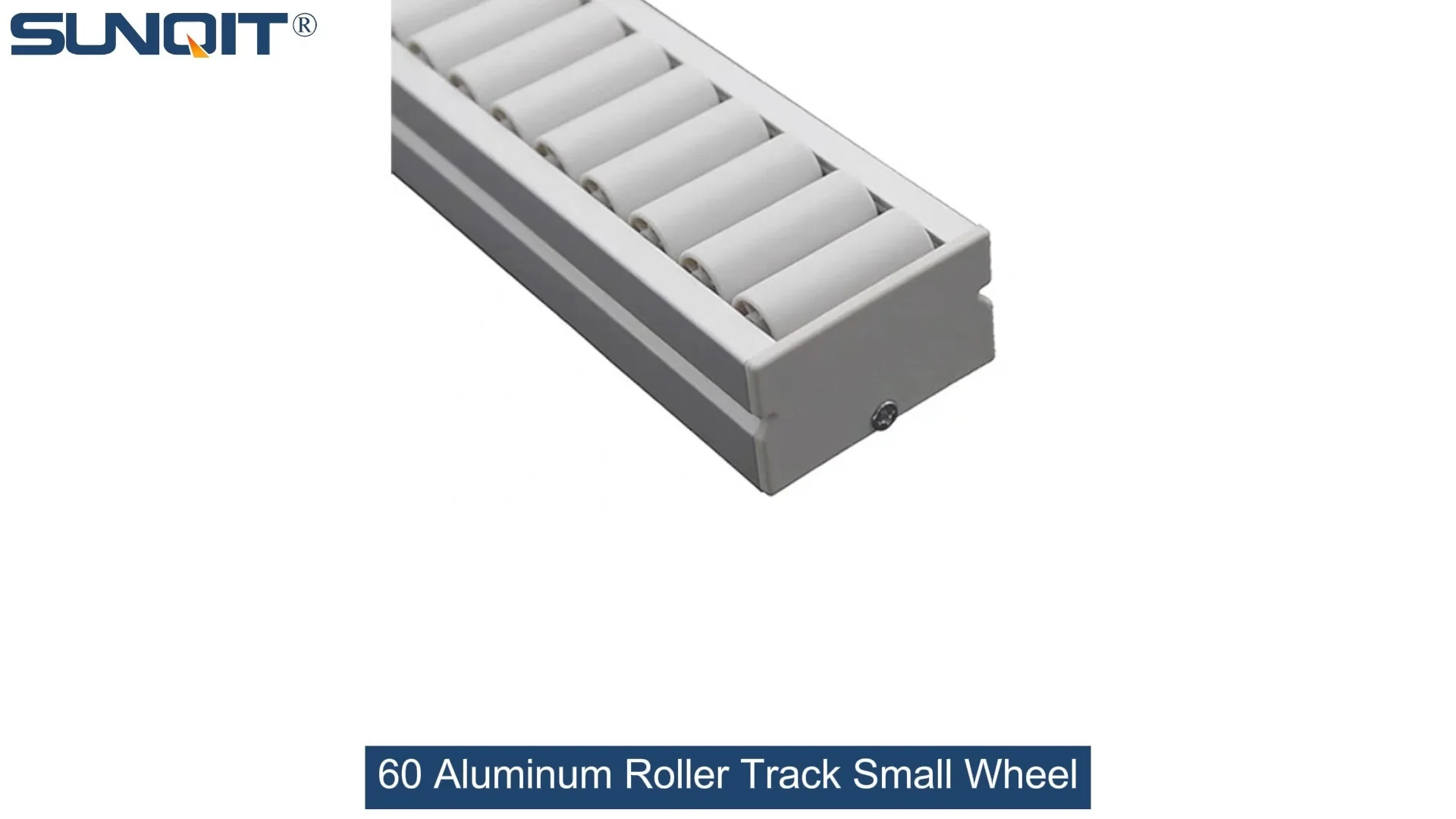
60 Aluminum Roller Track Small Wheel
Modular system roller tracks aluminum gravity roller tracks are an excellent solution for transporting materials within industrial environments, warehouses and distribution centres.
When it comes to building efficient lean systems in manufacturing and warehousing, every component plays a crucial role. One such component that often goes unnoticed but is integral to smooth operations is the roller track. Among the various types available, the 60 aluminum roller track small wheel stands out for its versatility and durability. But how do you know which one to pick? The answer lies in balancing two key factors: load capacity and application needs. In this article, we'll dive deep into what these factors mean, how they interact, and how to make the right choice for your specific use case.
1. What is 60 Aluminum Roller Track Small Wheel?
Before we get into the details of load capacity and applications, let's first understand what a 60 aluminum roller track small wheel is. As the name suggests, it's a roller track made from aluminum alloy, with a width of 60mm (though this can vary slightly depending on the manufacturer). The "small wheel" refers to the rollers attached to the track—these are typically smaller in diameter compared to heavy-duty roller tracks, making them ideal for lighter to medium loads and applications where space is a concern.
Aluminum is chosen for its lightweight yet strong properties. It's resistant to corrosion, which is a big plus in environments where moisture or chemicals might be present. The small wheels are usually made from materials like plastic or stainless steel, each offering different benefits. Plastic wheels are quieter and more cost-effective, while stainless steel wheels are more durable and can handle higher temperatures.
2. Understanding Load Capacity
Load capacity is the maximum weight that a roller track can safely support without breaking or deforming. It's not a one-size-fits-all number; several factors influence it, and understanding these is key to making the right choice.
2.1 Static vs. Dynamic Load Capacity
First, it's important to distinguish between static and dynamic load capacity. Static load capacity refers to the weight the track can hold when it's not moving. Dynamic load capacity, on the other hand, is the weight it can support while the load is in motion—like when items are sliding along the track. Dynamic load capacity is usually lower than static because movement adds stress to the track and wheels.
For example, a 60 aluminum roller track small wheel might have a static load capacity of 100kg per linear meter but a dynamic load capacity of only 70kg per linear meter. This means if you're using it for a conveyor system where items are constantly moving, you need to ensure the dynamic load capacity meets your needs.
2.2 Factors Affecting Load Capacity
Several factors determine the load capacity of a 60 aluminum roller track small wheel:
- Material Thickness: Thicker aluminum profiles can handle more weight. A track with a 2mm thickness will have a higher load capacity than one with 1.5mm thickness.
- Wheel Size and Material: Larger wheels distribute weight better, so they can handle more load. Stainless steel wheels are stronger than plastic ones, so they contribute to higher load capacity.
- Number of Rollers per Meter: More rollers mean the weight is spread over more points, increasing the total load capacity. For example, a track with 10 rollers per meter will hold more than one with 8 rollers per meter.
- Roller Spacing: Closely spaced rollers provide better support for smaller items, ensuring the load is evenly distributed. If the spacing is too wide, small items might get stuck or cause uneven stress on the track.
2.3 Calculating Load Capacity for Your Needs
To calculate the required load capacity, you need to know the weight of the items you'll be moving, how they'll be placed on the track, and whether they'll be static or dynamic. Let's say you're using the track in a flow rack for boxes of electronic components. Each box weighs 5kg, and you typically place 4 boxes per linear meter of track. The total static load per meter is 5kg * 4 = 20kg. But since the boxes will be sliding down the rack (dynamic load), you need to ensure the dynamic load capacity is at least 20kg per meter. It's always a good idea to add a safety margin—maybe 20%—to account for unexpected heavier loads.

3. Key Application Scenarios
The 60 aluminum roller track small wheel is used in a wide range of applications across various industries. Let's look at some of the most common ones and what load capacity they require.
3.1 Flow Racks in Warehouses
Flow racks are a staple in warehouses for picking and storing parts. They allow items to slide down to the picking area, reducing the need for manual lifting. The 60 aluminum roller track small wheel is perfect here because it's lightweight and easy to install.
In this application, the load capacity needed depends on the size and weight of the boxes or bins. For small parts like screws or electronic components, the load per linear meter might be as low as 10-20kg. For larger boxes of tools or parts, it could be 30-50kg per meter. The small wheels ensure smooth sliding, even for lighter items, and the aluminum track is durable enough to handle constant use.
3.2 Conveyor Systems in Assembly Lines
Conveyor systems are used to move components between workstations in assembly lines. The 60 aluminum roller track small wheel is often used in these systems because it's quiet and can handle continuous movement.
Here, the dynamic load capacity is crucial. If you're assembling small appliances, each component might weigh 5-10kg, so the track needs a dynamic load capacity of around 15-20kg per meter. For heavier components like car parts, the load might be higher—up to 50kg per meter. The small wheels help keep the conveyor moving smoothly without jams, which is essential for maintaining production speed.
3.3 Lean Workstations for 3C Assembly
Lean workstations are designed to maximize efficiency and minimize waste. The 60 aluminum roller track small wheel is used here to create flexible work surfaces where parts can be easily moved from one area to another.
In a lean workstation for 3C assembly (like smartphones or tablets), the load capacity needed is relatively low—around 5-15kg per meter. The small wheels are gentle on delicate components, preventing damage. For workstations handling heavier items like small machinery parts, the load capacity might be 20-30kg per meter. The aluminum track is also easy to modify, which aligns with the lean principle of continuous improvement.
3.4 Medical Equipment Manufacturing
Medical equipment manufacturing requires precision and cleanliness. The 60 aluminum roller track small wheel is ideal here because it's easy to clean and resistant to corrosion. The load capacity needed depends on the equipment being assembled. For small devices like syringes or test kits, the load is light—5-10kg per meter. For larger equipment like diagnostic machines, it might be 20-40kg per meter.

4. Matching Load Capacity to Applications (Table)
| Application Type | Typical Dynamic Load Range | Recommended Track Specs | Key Considerations |
|---|---|---|---|
| 3C Assembly Workstations | 5-15 kg/m | 60mm aluminum track, plastic small wheels, 10 rollers/m | Quiet operation, gentle on delicate parts, ESD coating optional |
| Lightweight Flow Racks (Small Parts) | 10-25 kg/m | 60mm aluminum track, stainless steel small wheels, 8 rollers/m | Smooth sliding, corrosion resistance |
| Medium Load Conveyor Systems | 20-40 kg/m | 60mm thick aluminum track (2mm), stainless steel wheels, 10 rollers/m | High dynamic load capacity, durable for continuous use |
| Medical Equipment Assembly Lines | 15-30 kg/m | 60mm aluminum track, stainless steel wheels, ESD coating | Cleanliness, corrosion resistance, static control |
| Warehouse Picking Racks (Medium Boxes) | 25-50 kg/m | 60mm thick aluminum track, heavy-duty stainless steel wheels, 8 rollers/m | High load capacity, stability for heavier boxes |
Let's take a closer look at one of these applications to see how the table works. Suppose you're setting up a flow rack in your warehouse for small electronic components. Each bin weighs 3kg, and you place 5 bins per meter. The total dynamic load is 3*5=15kg/m. From the table, the lightweight flow racks category (10-25kg/m) is the right fit. You'd choose a 60mm aluminum track with stainless steel small wheels and 8 rollers per meter. This ensures the track can handle the load and the stainless steel wheels are durable enough for constant use.

5. Additional Considerations
5.1 ESD Protection
In industries like electronics manufacturing, static electricity can damage sensitive components. Many 60 aluminum roller track small wheels come with ESD coatings or ESD wheels to prevent static buildup. If your application involves static-sensitive items, this is a must-have feature.
5.2 Maintenance Requirements
Regular maintenance is essential to keep the track working smoothly. This includes cleaning the rollers to remove dust and debris, lubricating them to reduce friction, and checking for any bent or damaged parts. A well-maintained track will last longer and perform better.
5.3 Customization Options
Different applications have different needs, so customization is often necessary. Look for suppliers that offer custom lengths, wheel spacing, and materials. For example, if you need a track that's 5 meters long instead of the standard 2 meters, a supplier that can cut it to size is ideal. Custom wheel spacing can also help with specific load distributions.
6. Choosing the Right Supplier
Once you know your load capacity and application needs, the next step is to find a reliable supplier. Here are some tips:
- Check Product Specifications: Make sure the supplier provides detailed specs for load capacity, material thickness, and wheel type.
- Ask for Samples: A good supplier will provide samples so you can test the track's performance before making a large order.
- Look for Customization Services: As mentioned earlier, customization is important for many applications. Choose a supplier that offers this.
- Read Reviews: See what other customers have to say about the supplier's products and service.
- Consider After-Sales Support: A supplier that offers good after-sales support can help with any issues you might have after purchasing.
7. Conclusion
Choosing the right 60 aluminum roller track small wheel is all about understanding your load capacity needs and matching them to the right application. By considering factors like static vs dynamic load, material quality, and customization options, you can ensure that your roller track will perform well and last long. Whether you're setting up a flow rack in a warehouse, a conveyor system in an assembly line, or a lean workstation for 3C assembly, the right roller track will help you create an efficient and smooth operation.
Remember, it's not just about picking the track with the highest load capacity—it's about picking the one that's perfect for your specific use case. Take the time to assess your needs, calculate the required load capacity, and choose a reliable supplier. With the right choice, your roller track will be a valuable asset to your lean system for years to come.