- Company Articles
- Products and Technology
- Product knowledge
- Choosing a Castor Install Base for High-Cycle Trolleys in E-Commerce Fulfillment

Choosing a Castor Install Base for High-Cycle Trolleys in E-Commerce Fulfillment
Related Product
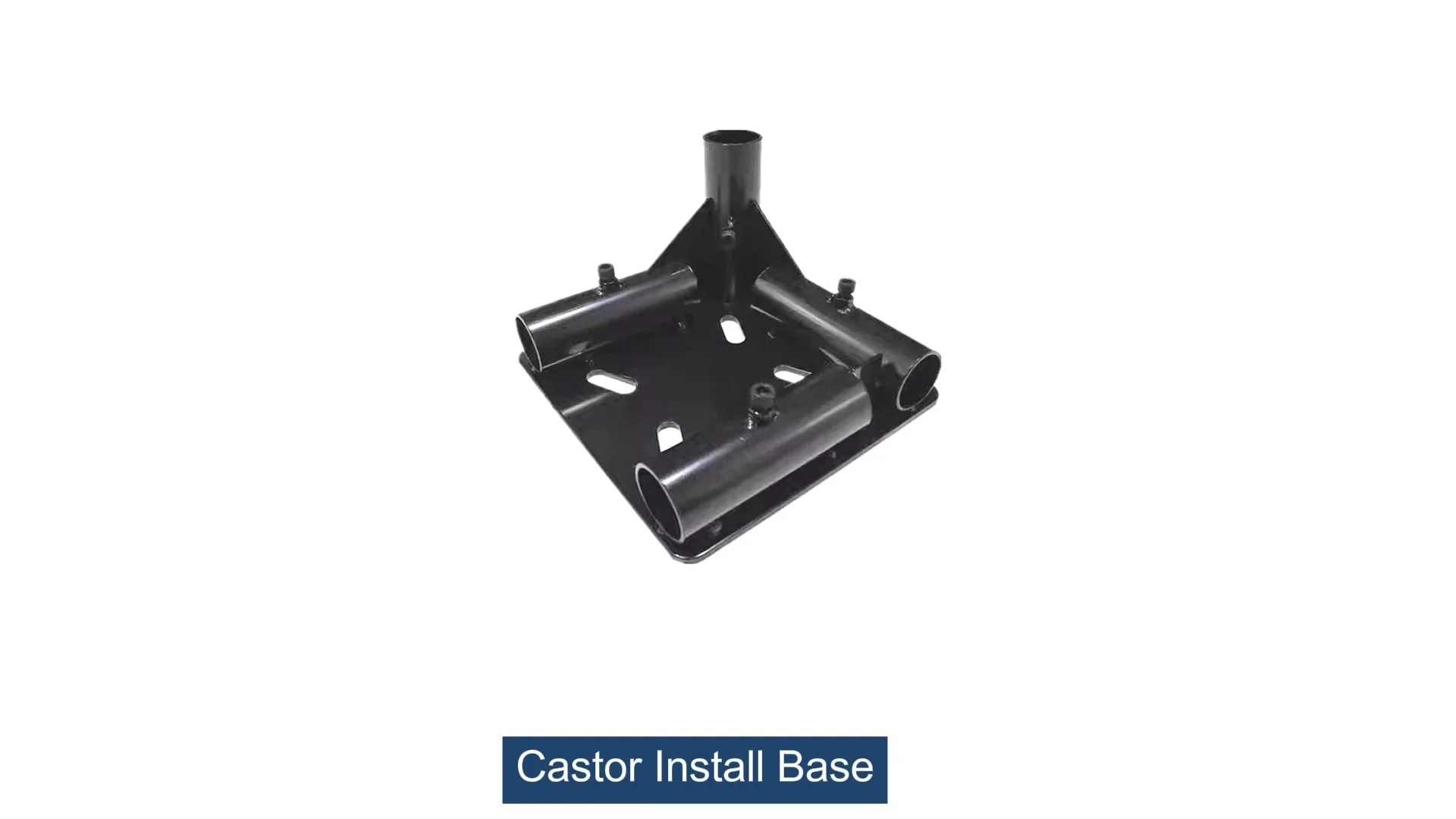
Castor Install Base
Castor install base, used for connection between pipe and castor, it can connect 4 pcs pipe by 1 pcs castor base, to make the structure strong and stable.
In the heart of every e-commerce fulfillment center, there's a rhythm—one dictated by the hum of conveyor belts, the rustle of packaging, and the steady roll of trolleys. These trolleys, often called the "workhorses" of the warehouse, carry everything from small electronics to bulkier household items, weaving through aisles to keep orders moving from shelves to shipping docks. But here's the thing: even the sturdiest trolley is only as reliable as its smallest components. Enter the castor install base—the unassuming metal or plastic plate that connects the caster wheel to the trolley frame. In high-cycle environments, where trolleys might log 50+ trips daily, carrying 200+ pounds of goods, this tiny part becomes a make-or-break factor for efficiency, safety, and cost-effectiveness. Let's dive into why choosing the right castor install base matters, what to look for, and how it ties into building a truly lean system for your fulfillment operations.
The Basics: What Even Is a Castor Install Base?
Before we get into the nitty-gritty, let's clarify: a castor install base is the bridge between your caster wheel and the trolley itself. Think of it as the "foundation" that holds the caster in place, absorbing shocks, distributing weight, and ensuring smooth movement. Without it, your caster wheel is just a loose part—useless for heavy loads or constant motion. These bases come in all shapes and sizes, but they generally fall into two categories: fixed (non-swiveling) and swivel (allowing 360° rotation). Some are simple flat plates with bolt holes; others are reinforced with ribs or gussets for extra strength. Materials range from steel and aluminum to high-grade plastics, each suited to different environments and load requirements.
But why does this matter in e-commerce fulfillment? Because when your trolleys are moving nonstop—darting around corners, stopping abruptly to load/unload, and carrying varying weights—their castor install bases take a beating. A flimsy base might bend under pressure, causing the trolley to wobble. A poorly fitted base could loosen over time, leading to the caster wheel detaching mid-operation. And both scenarios? They're recipes for delays, damaged inventory, and even workplace injuries. In short: the castor install base isn't an afterthought. It's the unsung hero keeping your high-cycle trolleys—and your entire fulfillment process—on track.
Why High-Cycle Environments Demand Specialized Bases
E-commerce fulfillment isn't just "busy"—it's relentless . During peak seasons (think Black Friday or holiday rushes), a single trolley might be in use from the moment the warehouse opens until the last order ships. It's loaded with heavy boxes, pushed over uneven concrete floors, and subjected to countless starts, stops, and direction changes. In these conditions, a generic castor install base—one designed for occasional use in a retail stockroom, for example—will fail fast. Here's why:
1. Constant Stress Tests Durability
High-cycle trolleys don't just move—they endure . Each trip involves vibrations from rough floors, torque from sharp turns, and downward pressure from heavy loads. A base made of thin, low-grade steel might warp after a week of this abuse. Aluminum bases, while lightweight, can crack if they're not reinforced for repeated impact. Even plastic bases, which work for light-duty tasks, will deform under the strain of daily heavy loads. The result? Wobbly trolleys that slow down pickers, require frequent repairs, and ultimately cut into your bottom line.
2. Compatibility Prevents Costly Mistakes
Imagine this: You order heavy-duty caster wheels rated for 500 lbs each, but pair them with a castor install base only rated for 300 lbs. The wheels themselves are fine, but the base bends, causing the trolley to tip. Or worse, you use a base that doesn't align with your trolley's frame holes, forcing your team to drill new ones (and weakening the frame in the process). In high-cycle environments, these mismatches don't just cause downtime—they create cascading problems. A bent base leads to uneven wear on caster wheels, which then damages floors, which then requires floor repairs… the list goes on. This is where lean system principles come into play: by choosing compatible, high-quality components upfront, you eliminate waste (in the form of repairs, delays, and replacement parts) and keep your operation running like a well-oiled machine.
3. Safety Isn't Optional
A trolley with a faulty castor install base isn't just inefficient—it's dangerous. If a base cracks mid-movement, the trolley could tip, spilling inventory or injuring the operator. Loose bases also create "dead zones" where the trolley drags or jolts, increasing the risk of repetitive strain injuries for staff who have to push harder to move it. In fulfillment centers, where safety audits and worker well-being are top priorities, skimping on the base is simply not an option.

5 Key Factors to Choose the Right Castor Install Base
Now that we've established why the castor install base matters, let's break down how to pick the right one. The goal? A base that's strong enough for your loads, durable enough for your environment, and compatible with your existing equipment. Here are the critical factors to consider:
1. Load Capacity: Don't Guess—Calculate
Start with the numbers. What's the maximum weight your trolley will carry? This includes not just the goods, but the trolley itself (the "empty weight"). For example, if your trolley weighs 50 lbs and you regularly load it with 250 lbs of inventory, your total load is 300 lbs. Now, divide that by the number of casters on the trolley (most have 4). That means each caster (and its install base) needs to support at least 75 lbs. But here's the golden rule: always add a 30% buffer . Why? Because loads aren't always evenly distributed—imagine a box shifting to one side during transport. A base rated for 75 lbs might handle that, but a 100 lbs-rated base will do it without strain, extending its lifespan. So for our example, aim for a base with a 100 lbs capacity per caster.
2. Material: Match to Your Environment
Castor install bases are made from three main materials, each with pros and cons. Let's break them down:
- Steel: The heavyweight champion. Steel bases are tough, rigid, and ideal for loads over 200 lbs per caster. They're great for rough floors or outdoor use (if coated to prevent rust). Downside? They're heavier, which can increase operator fatigue over time.
- Aluminum: The lightweight alternative. Aluminum bases are corrosion-resistant (perfect for damp environments like cold storage) and easier to maneuver. They work well for medium loads (100–200 lbs per caster) but can flex under extreme weight.
- Plastic: Best for light-duty tasks (under 100 lbs per caster). Plastic bases are cheap and corrosion-proof, but they're prone to cracking under repeated stress—avoid them in high-cycle fulfillment centers.
3. Compatibility: Caster Wheel, Trolley Frame, and Beyond
Your castor install base has two jobs: connect to the caster wheel and connect to the trolley frame. If either connection is off, the whole system fails. Start with the caster wheel: check the stem size (the metal rod that sticks up from the wheel) and bolt pattern (the number and arrangement of holes on the wheel's mounting plate). Your base must match these exactly—otherwise, you'll end up with a loose or wobbly fit. Next, check the trolley frame: is it made of steel, aluminum, or wood? How thick is the frame? You'll need a base with bolt holes that align with the frame's existing holes (or, if drilling new ones, a base that's thick enough to prevent stripping).
Pro tip: If you're using a turnover trolley and rack system, look for bases labeled as "universal" or "multi-fit." These are designed to work with standard trolley frames and common caster wheel sizes, reducing the risk of compatibility issues.
4. Floor Type: Smooth vs. Rough Surfaces
A concrete floor with cracks and uneven patches puts more stress on castor install bases than a polished warehouse floor. Why? Because every bump jolts the base, causing micro-fractures over time. For rough floors, opt for bases with shock-absorbing features, like rubber gaskets or flexible mounting plates. Swivel bases (which allow the caster to rotate) also benefit from reinforced joints in these environments—otherwise, the constant twisting can loosen bolts.
5. Maintenance: Easy to Inspect, Quick to Repair
In high-cycle environments, downtime is the enemy. You need a castor install base that's easy to check for wear and quick to replace. Look for bases with visible bolt heads (so you can tighten them if they loosen) and simple designs (fewer parts mean fewer things to break). Avoid bases with hidden or proprietary fasteners—these require special tools and slow down repairs.
To help visualize these factors, here's a quick comparison of common base types for high-cycle trolleys:
| Base Type | Best For | Load Capacity (per caster) | Pros | Cons |
|---|---|---|---|---|
| Steel Flat Plate | Heavy loads, rough floors | 200–500 lbs | Durable, rigid, low cost | Heavy, prone to rust (without coating) |
| Aluminum Reinforced | Medium loads, damp environments | 100–250 lbs | Lightweight, corrosion-resistant | More expensive than steel |
| Steel Swivel with Gussets | High maneuverability, tight spaces | 150–300 lbs | 360° rotation, reinforced joints | Complex design; more parts to maintain |

Common Mistakes to Avoid
Even with the best intentions, it's easy to pick the wrong castor install base. Here are the pitfalls fulfillment managers often fall into—and how to steer clear:
Mistake #1: Choosing Based on Price Alone
It's tempting to buy the cheapest base available, especially when outfitting a fleet of trolleys. But in high-cycle environments, "cheap" often means "disposable." A $5 plastic base might last a month; a $15 steel base could last a year. When you factor in replacement costs, downtime, and potential damage to goods, the "cheap" option ends up costing more. Invest in quality upfront—your budget (and your team) will thank you.
Mistake #2: Ignoring Caster and Accessories Compatibility
You can't mix and match caster wheels and bases from different brands and expect them to work. A caster wheel with a 1-inch stem won't fit a base designed for a 0.75-inch stem, no matter how hard you try. Always check the manufacturer's specs for both the wheel and the base, or buy them as a set. And don't forget about accessories like locking pins or washers—these small parts ensure a tight, secure fit between the base and the trolley frame.
Mistake #3: Overlooking Floor Conditions
If your warehouse has uneven floors but you choose a thin steel base without shock absorption, you're setting yourself up for failure. Those constant jolts will weaken the base over time, leading to cracks or bends. Take 10 minutes to walk your warehouse and note floor conditions—rough patches, cracks, or even slopes—before choosing a base.
Case Study: How One Fulfillment Center Cut Downtime by 40% with Better Bases
Let's put this into real-world context. A mid-sized e-commerce fulfillment center in the Midwest was struggling with trolley downtime. Their 50+ turnover trolley and rack fleet was using generic plastic castor install bases, and every week, at least 5 trolleys were out of commission due to bent or cracked bases. Repairs took 2–3 hours per trolley, and pickers were complaining about wobbly carts slowing them down.
The solution? They switched to steel reinforced castor install bases with a 300 lbs per caster capacity (up from the previous 150 lbs). They also added caster accessories like locking washers to prevent bolts from loosening. The results? In the first month, trolley downtime dropped by 40%. Repairs were faster (since the new bases used standard bolts), and pickers reported fewer "sticky" or wobbly trolleys. Over six months, the center saved $12,000 in repair costs and increased order throughput by 15%—all from upgrading a small, often-overlooked part.

Tying It All Together: Castor Install Bases and the Lean System
At the end of the day, choosing the right castor install base is about more than just keeping trolleys rolling—it's about building a lean system. Lean principles focus on eliminating waste: waste of time (from downtime), waste of money (from repairs), and waste of effort (from pushing faulty trolleys). A high-quality castor install base reduces all three.
Think about it: A trolley with a reliable base moves faster, breaks down less, and requires minimal maintenance. That means your team spends less time fixing equipment and more time picking, packing, and shipping orders. It means fewer delays, happier customers, and a more efficient operation overall. In short, the castor install base might be small, but its impact on your lean system is huge.
Final Thoughts: Invest in the Foundation
In the fast-paced world of e-commerce fulfillment, it's easy to focus on big-ticket items like conveyor systems or automated pickers. But the truth is, your operation's success hinges on the small parts—the ones that keep the daily grind moving. The castor install base is one of those parts. It's not glamorous, but it's essential.
So, the next time you're upgrading your trolley fleet, take a moment to evaluate your castor install bases. Consider your load capacity, environment, and compatibility with caster wheels and accessories. Choose materials that can handle your warehouse's unique conditions. And remember: a little investment in the right base today will save you time, money, and headaches tomorrow.
After all, in e-commerce fulfillment, every second counts—and every castor install base? It's one more second you can keep moving forward.