- Company Articles
- Products and Technology
- Procurement Guidelines
- Choosing a Supplier: What to Look for in Three Way Lean Pipe Joint Quality

Choosing a Supplier: What to Look for in Three Way Lean Pipe Joint Quality
Related Product
Three Way Lean Pipe Joint
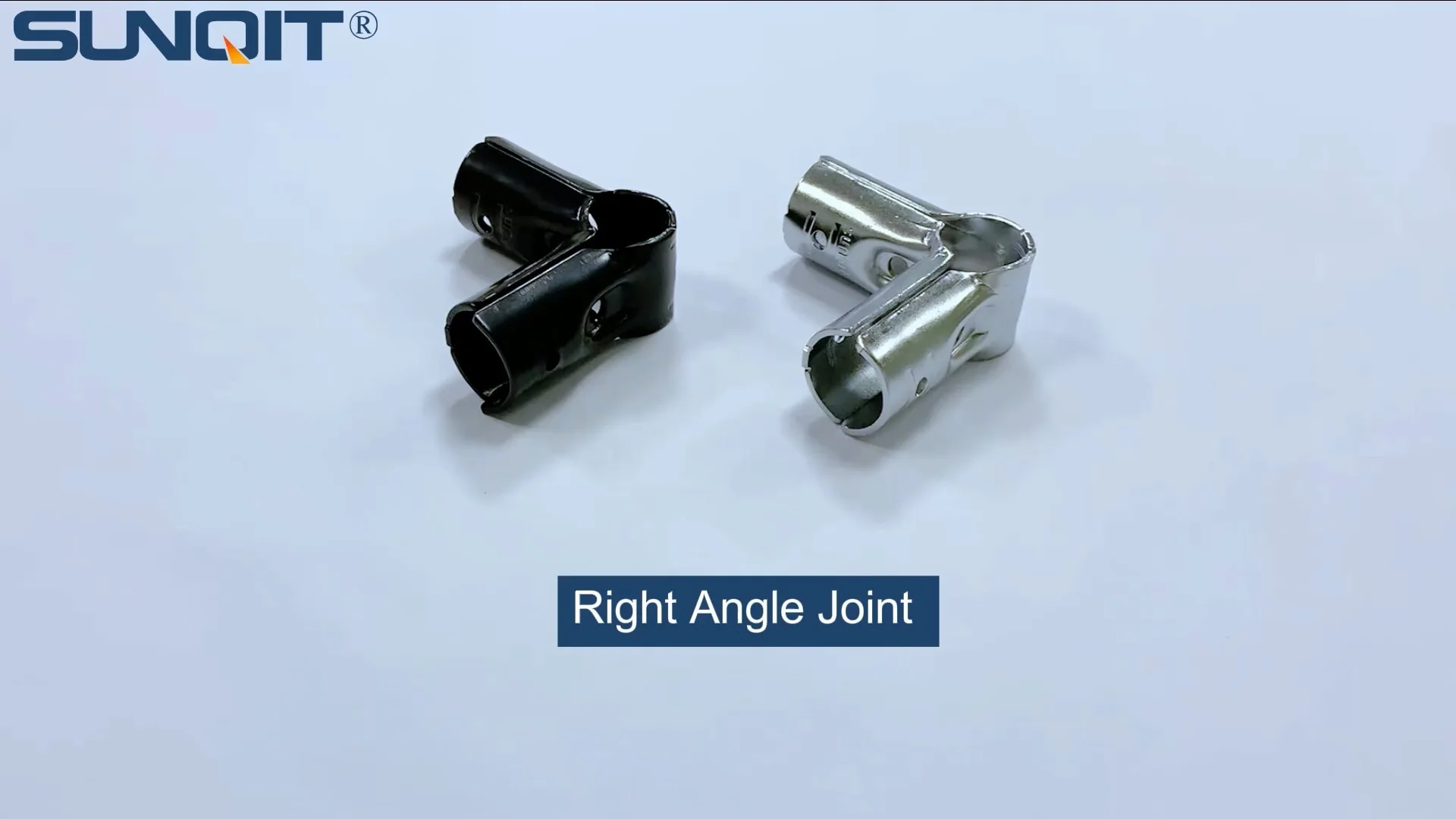
Three way lean pipe joint for 3 pcs 28MM lean pipe connection in straight angle, which used widely in workbench, flow rack, hand trolley frame connection.
Introduction: The Hidden Backbone of Your Lean System
Walk into any well-run manufacturing facility, and you'll notice the rhythm of efficiency: assembly lines moving like clockwork, workbenches organized with precision, and materials gliding smoothly along roller tracks. What you might not see, though, is the unsung hero holding it all together: the
three way lean pipe joint
. These small, unassuming components are the connective tissue of your
lean system
, linking pipes, supporting workbenches, and ensuring stability in everything from material racks to conveyor setups.
But here's the thing: not all three way joints are created equal. A cheap, poorly made joint can turn a streamlined production floor into a nightmare of wobbling workbenches, stuck roller tracks, and unexpected downtime. On the flip side, a high-quality joint becomes invisible in the best way—reliable, durable, and perfectly aligned with your workflow. So when you're on the hunt for a lean pipe supplier , how do you separate the game-changers from the deal-breakers? This article dives into the critical factors that define three way lean pipe joint quality, why they matter, and how to choose a supplier that won't let you down.
But here's the thing: not all three way joints are created equal. A cheap, poorly made joint can turn a streamlined production floor into a nightmare of wobbling workbenches, stuck roller tracks, and unexpected downtime. On the flip side, a high-quality joint becomes invisible in the best way—reliable, durable, and perfectly aligned with your workflow. So when you're on the hunt for a lean pipe supplier , how do you separate the game-changers from the deal-breakers? This article dives into the critical factors that define three way lean pipe joint quality, why they matter, and how to choose a supplier that won't let you down.
What Even Is a Three Way Lean Pipe Joint? And Why Does It Matter?
Let's start with the basics. A three way lean pipe joint is exactly what it sounds like: a connector designed to join three lean pipes (or tubes) at specific angles—usually 90°, 45°, or 135°—to form structures like workbenches, material racks, or flow racks. Think of it as the cornerstone of modular lean systems: without strong, precise joints, your custom-built workbench or roller track setup is just a pile of pipes waiting to collapse.
In a lean manufacturing environment, every component must contribute to efficiency. A loose joint might seem minor, but it can cause a workbench to sag, throwing off assembly line alignment. A brittle joint could snap under the weight of tools, halting production and risking worker safety. Even a joint with poor corrosion resistance can degrade quickly in a factory with humidity or chemical exposure, leading to frequent replacements and unplanned costs.
The bottom line? Your three way joints aren't just parts—they're investments in uptime, safety, and the overall performance of your lean system . And choosing the right lean pipe supplier is the first step in protecting that investment.
In a lean manufacturing environment, every component must contribute to efficiency. A loose joint might seem minor, but it can cause a workbench to sag, throwing off assembly line alignment. A brittle joint could snap under the weight of tools, halting production and risking worker safety. Even a joint with poor corrosion resistance can degrade quickly in a factory with humidity or chemical exposure, leading to frequent replacements and unplanned costs.
The bottom line? Your three way joints aren't just parts—they're investments in uptime, safety, and the overall performance of your lean system . And choosing the right lean pipe supplier is the first step in protecting that investment.

Key Quality Factors: What to Inspect in a Three Way Lean Pipe Joint
So, you're evaluating a supplier's three way lean pipe joints. What should you look for? Let's break it down into five non-negotiable quality factors.
For example, stainless steel joints are ideal for food processing or pharmaceutical facilities where hygiene is critical, as they resist corrosion from cleaning chemicals. Aluminum joints, on the other hand, are lighter and work well with aluminum profile systems, making them perfect for lightweight workbenches or mobile trolleys. Ask your supplier for material certificates—reputable suppliers will happily provide test reports proving their metal meets industry standards (like ISO 9001).
How do you check for precision? Look at the joint's inner diameter (ID) and compare it to your lean pipe's outer diameter (OD). A quality joint will have an ID that's within 0.1mm of the pipe's OD, ensuring a tight, secure fit. Poorly made joints often have inconsistent IDs, leading to loose connections that weaken the entire structure.
Reputable suppliers will provide load test data, often measured in kilograms (kg) or pounds (lbs). For example, a standard steel three way joint should handle at least 300kg of vertical load and 150kg of horizontal load. If a supplier can't share this data, or if their numbers seem too good to be true (e.g., "supports 1000kg!" with no testing proof), walk away.
Common options include zinc plating (for rust resistance), chrome plating (for extra durability and a smooth finish), or anodization (for aluminum joints, adding a hard, corrosion-resistant layer). Run a simple test: rub the joint with a damp cloth—if it leaves a streak of rust or discoloration, the coating is subpar.
Look for features like captive screws (so you don't lose parts during assembly), clear marking for angle alignment (e.g., "90°" or "45°" etched into the joint), and smooth threading that doesn't strip when tightened. Poorly designed joints often have sharp edges (risking cuts), misaligned threads (making assembly a struggle), or loose screws that back out over time.
1. Material Quality: It All Starts with What It's Made Of
Not all metals are created equal. A quality three way joint is typically made from high-grade steel, stainless steel, or aluminum alloys—materials chosen for strength, durability, and resistance to wear. Avoid joints made from cheap, low-carbon steel; they bend easily and rust quickly, especially in industrial settings.For example, stainless steel joints are ideal for food processing or pharmaceutical facilities where hygiene is critical, as they resist corrosion from cleaning chemicals. Aluminum joints, on the other hand, are lighter and work well with aluminum profile systems, making them perfect for lightweight workbenches or mobile trolleys. Ask your supplier for material certificates—reputable suppliers will happily provide test reports proving their metal meets industry standards (like ISO 9001).
2. Precision Engineering: The "Fit" That Makes or Breaks Performance
Ever tried assembling furniture with a screw that's just slightly too loose? Frustrating, right? The same principle applies to three way joints. A well-engineered joint should fit snugly around the lean pipe, with no gaps or play. When you insert the pipe, it should click into place and stay put—no wiggling, no slipping.How do you check for precision? Look at the joint's inner diameter (ID) and compare it to your lean pipe's outer diameter (OD). A quality joint will have an ID that's within 0.1mm of the pipe's OD, ensuring a tight, secure fit. Poorly made joints often have inconsistent IDs, leading to loose connections that weaken the entire structure.
3. Load Capacity: Can It Handle the Heat (and the Weight)?
Your workbench isn't just holding a few tools—it might be supporting heavy machinery, boxes of parts, or even workers leaning on it during assembly. A three way joint's load capacity (the maximum weight it can support without deforming) is critical here.Reputable suppliers will provide load test data, often measured in kilograms (kg) or pounds (lbs). For example, a standard steel three way joint should handle at least 300kg of vertical load and 150kg of horizontal load. If a supplier can't share this data, or if their numbers seem too good to be true (e.g., "supports 1000kg!" with no testing proof), walk away.
Real-World Example:
A automotive parts manufacturer switched to low-cost joints claiming a 250kg load capacity. Within weeks, their material racks (holding 200kg boxes) began sagging. An inspection revealed the joints were deforming under stress—costing the company $10,000 in downtime and replacements. Don't let this be you.
4. Corrosion and Wear Resistance: Built to Last, Not Just to Work
Factories are tough environments. Humidity, oil, chemicals, and constant friction can take a toll on metal components. A quality three way joint should stand up to these challenges with protective coatings or finishes.Common options include zinc plating (for rust resistance), chrome plating (for extra durability and a smooth finish), or anodization (for aluminum joints, adding a hard, corrosion-resistant layer). Run a simple test: rub the joint with a damp cloth—if it leaves a streak of rust or discoloration, the coating is subpar.
5. Design for Assembly: Easy to Install, Easy to Adjust
Lean manufacturing thrives on flexibility—your systems should be easy to reconfigure as workflows change. A good three way joint should support this by being simple to install, adjust, and disassemble without specialized tools.Look for features like captive screws (so you don't lose parts during assembly), clear marking for angle alignment (e.g., "90°" or "45°" etched into the joint), and smooth threading that doesn't strip when tightened. Poorly designed joints often have sharp edges (risking cuts), misaligned threads (making assembly a struggle), or loose screws that back out over time.
| Quality Factor | Signs of a High-Quality Joint | Red Flags (Low-Quality Joint) |
|---|---|---|
| Material | High-grade steel, stainless steel, or aluminum alloy; material certificates provided. | Cheap, bendable metal; no material specs; rusts easily. |
| Precision Fit | Tight, gap-free connection with pipe; consistent inner diameter. | Loose fit; wiggles when assembled; inconsistent sizing. |
| Load Capacity | Tested load ratings (e.g., 300kg vertical); supplier provides test reports. | No load data; vague claims ("heavy-duty!" with no proof). |
| Corrosion Resistance | Zinc/chrome plating or anodization; no rust after damp cloth test. | Visible rust spots; coating rubs off easily. |
| Assembly Design | Captive screws, clear angle markings, smooth threading. | Sharp edges, stripped threads, screws fall out. |

Evaluating the Supplier: It's Not Just About the Joints
A great three way joint is only as reliable as the supplier behind it. Even the best parts can fail if the supplier cuts corners in quality control, shipping, or customer support. Here's how to vet a
lean pipe supplier
beyond the product itself.
1. Certifications: Do They Meet Industry Standards?
Reputable suppliers adhere to international quality standards. Look for certifications like ISO 9001 (quality management), ISO 14001 (environmental management), or compliance with regional standards (e.g., CE marking in Europe). These certifications aren't just logos—they're proof the supplier has processes in place to consistently deliver quality.2. Quality Control Processes: How Do They Ensure Consistency?
Ask the supplier: "What quality checks do your joints undergo before shipping?" A strong answer might include:- Automated dimensional checks (using calipers or laser measurements) for fit precision.
- Load testing on random samples from each batch.
- Corrosion resistance testing (e.g., salt spray tests for 48+ hours).
- Visual inspections for defects like cracks, burrs, or uneven coatings.
3. Customer Support: Will They Have Your Back After the Sale?
Even the best products can have issues. A good supplier stands behind their joints with responsive customer support. Ask:- What's your return policy for defective parts?
- How quickly can you resolve quality issues (e.g., wrong sizes, defects)?
- Do you offer technical support for system design (e.g., helping choose joints for a custom workbench)?
4. Industry Reputation: What Do Other Customers Say?
Do your homework. Check online reviews, ask for references, or reach out to peers in your industry. A supplier with a track record of happy customers (especially in similar sectors) is far less risky than one with no reviews or a history of complaints about poor quality or slow shipping.
Real-World Impact: How Quality Joints Boost Your Lean System
Still on the fence about investing in quality three way joints? Let's look at how they directly impact your bottom line and operations.
Reduced Downtime: No More Stopping for Repairs
A manufacturing line that stops for even an hour costs money—labor, lost production, missed deadlines. Quality joints mean fewer breakdowns, so your line keeps moving. One electronics manufacturer reported a 30% reduction in unplanned downtime after switching to high-quality joints, simply because their workbenches and material racks stayed stable.Lower Maintenance Costs: Spend Less on Replacements
Cheap joints might save you money upfront, but they cost more in the long run. Think about it: if a low-cost joint lasts 6 months and costs $5, vs. a quality joint that lasts 5 years and costs $10, the quality joint is actually cheaper over time ($2/year vs. $10/year). Plus, you avoid the labor costs of constant replacements.Improved Safety: Protect Your Team
A joint that fails can lead to collapsed racks, falling tools, or workers tripping over unstable structures. Quality joints reduce these risks, keeping your team safe and avoiding costly accidents or workers' compensation claims.Better System Flexibility: Adapt Quickly to Change
Lean manufacturing isn't static—you need to reconfigure workbenches, add roller tracks, or adjust material racks as orders change. Quality joints are easy to disassemble and reuse, making reconfigurations fast and cost-effective. Cheap joints, on the other hand, often bend or break when taken apart, forcing you to buy new parts every time you adapt.Common Pitfalls to Avoid When Choosing a Supplier
Even with the best intentions, it's easy to make mistakes when choosing a
lean pipe supplier
. Here are three pitfalls to steer clear of:
Pitfall #1: Choosing Based Solely on Price
"This supplier's joints are 50% cheaper!" Sounds great, but remember: you get what you pay for. Cheap joints often skimp on material, precision, and testing—costing you more in downtime and replacements later. Instead of focusing on the lowest price, look for the best value: a balance of quality, reliability, and cost.Pitfall #2: Ignoring Compatibility with Your Existing System
You already have lean pipes, maybe even aluminum profile workbenches or roller tracks. A joint that doesn't fit your existing components is useless. Always check that the supplier's joints are compatible with your pipe diameter, material (e.g., steel vs. aluminum), and other system parts. If possible, request a sample joint to test with your pipes before placing a large order.Pitfall #3: Overlooking Lead Times and Inventory
What good is a quality joint if you can't get it when you need it? Ask suppliers about lead times (how long it takes to ship) and inventory levels (do they stock common sizes, or do you have to wait for manufacturing?). A supplier with long lead times (e.g., 8+ weeks) can derail your project timelines, while one with inconsistent stock might leave you scrambling for parts.Conclusion: Your Lean System Deserves Quality Joints—Choose Wisely
Three way lean pipe joints might be small, but their impact on your
lean system
is huge. They're the foundation of your workbenches, the backbone of your material racks, and the unsung heroes of your production line's efficiency. Choosing the right
lean pipe supplier
—one that prioritizes material quality, precision, load capacity, and customer support—isn't just a purchase; it's a commitment to your facility's success.
So, the next time you're evaluating suppliers, remember: inspect the joints, ask tough questions about materials and testing, and don't settle for "good enough." Your team, your bottom line, and your entire lean system will thank you.
So, the next time you're evaluating suppliers, remember: inspect the joints, ask tough questions about materials and testing, and don't settle for "good enough." Your team, your bottom line, and your entire lean system will thank you.