- Company Articles
- Products and Technology
- Product knowledge
- Choosing Adjustable Leveling Feet for Cold Storage Warehouses – Rust Resistance Matters

Choosing Adjustable Leveling Feet for Cold Storage Warehouses – Rust Resistance Matters
Related Product
Adjustable Leveling Feet
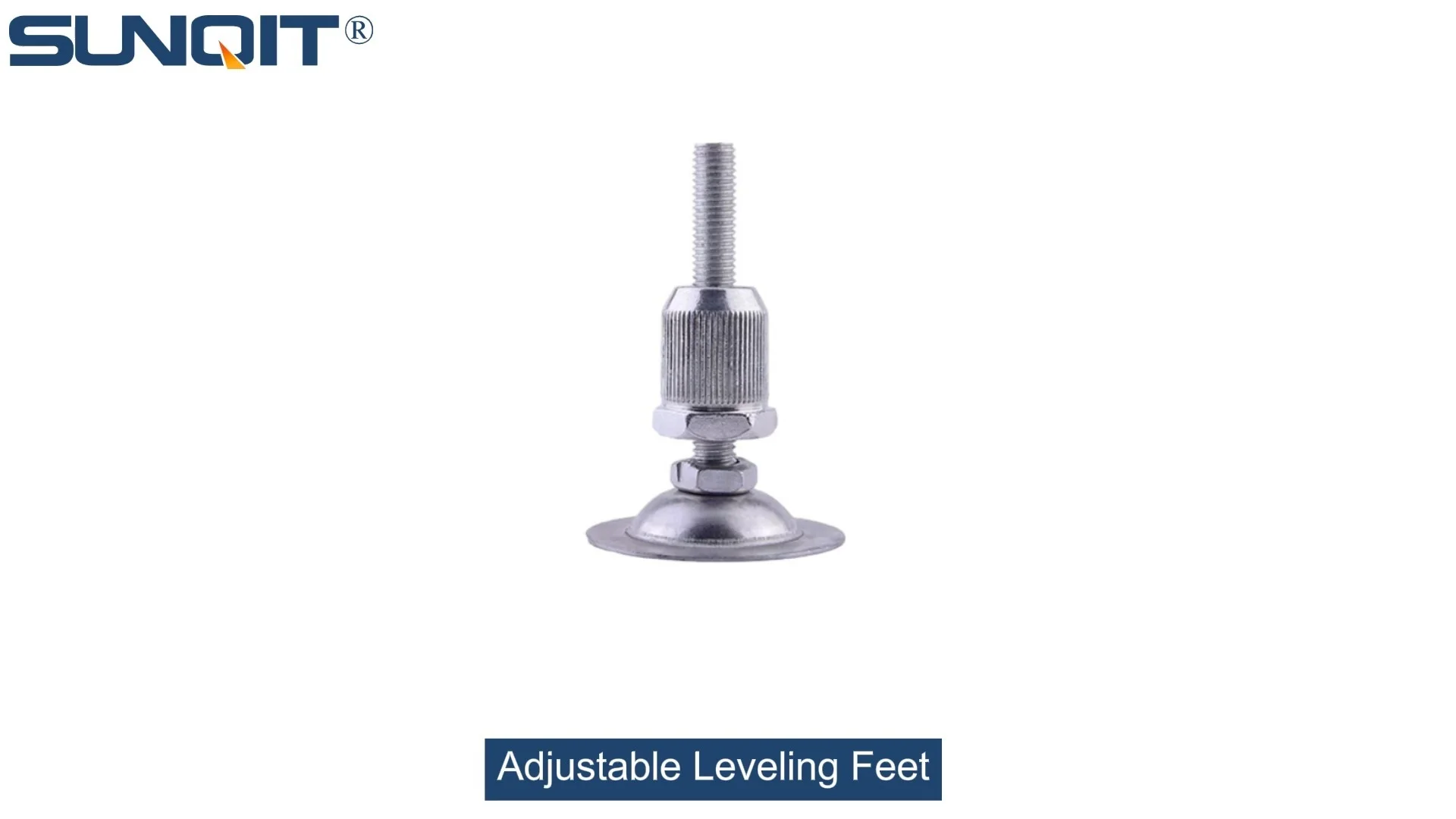
Adjustable leveling feet are designed to keep machines level when placed on uneven or sloped ground. Otherwise known as adjustable equipment feet, they are available to order in a wide variety of size and load capacity combinations.
Walk into any cold storage warehouse, and you'll immediately notice the chill—air so cold it nips at your nose, condensation clinging to metal surfaces, and rows of racks loaded with perishables, from frozen vegetables to pharmaceuticals. But beyond the obvious cold, there's a hidden challenge that keeps operations managers up at night: keeping everything stable. Uneven floors, shifting concrete, and the constant battle against moisture and corrosion can turn even the most well-organized facility into a minefield of wobbling workbenches, tilting racks, and equipment that just won't stay put. That's where adjustable leveling feet come in. These small but mighty components are the unsung heroes of cold storage stability, and when it comes to choosing the right ones, there's one factor that rises above the rest: rust resistance.
In this guide, we'll dive into why adjustable leveling feet are critical for cold storage environments, break down the unique challenges these spaces pose, and explain how prioritizing rust resistance (and a few other key features) can transform your facility's efficiency, safety, and bottom line. We'll also explore specific types of leveling feet—like anti-slip adjustable leveling feet and M10*56 rubber leveling feet—and help you figure out which ones are best suited for your needs. Let's get started.
The Unique Challenges of Cold Storage: Why Stability Isn't Optional
Cold storage warehouses aren't just "cold rooms"—they're extreme environments. Temperatures can plummet to -30°C (-22°F) or lower, and humidity levels swing wildly as warm air from outside mixes with frigid indoor air, creating condensation that clings to every surface. Add in heavy equipment traffic, frequent floor cleaning with harsh chemicals, and the natural shifting of concrete slabs in temperature extremes, and you've got a perfect storm for unstable equipment. Here's why this matters:
1. Safety First: Wobbling Equipment = Accidents Waiting to Happen A tilted workbench might seem like a minor annoyance, but in a cold storage setting, it's a hazard. Employees wearing thick gloves and boots have limited dexterity and traction; a sudden shift in a rack could send boxes crashing, or a wobbly trolley might tip, spilling products (or worse, injuring someone). Even small instability can lead to big problems when multiplied across hundreds of workstations and racks.
2. Product Integrity: Shifting Racks Risk Spoilage Many cold storage facilities store fragile items—think vials of vaccines or delicate produce. A rack that leans even slightly can cause products to slide, bump into each other, or fall. In the worst cases, this leads to breakage and spoilage, costing thousands in lost inventory. Stable equipment isn't just about safety; it's about protecting your bottom line.
3. Equipment Longevity: Vibration Wears Down Machinery When equipment isn't level, it vibrates more during use. Over time, that vibration loosens bolts, strains motors, and shortens the lifespan of everything from conveyor belts to refrigeration units. Replacing or repairing equipment in a cold storage environment is expensive and disruptive—so preventing unnecessary wear and tear is key.
The solution? Adjustable leveling feet. These small, threaded components attach to the bottom of workbenches, racks, trolleys, and machinery, allowing you to tweak their height individually to compensate for uneven floors. But not all leveling feet are created equal—especially in cold storage. The real test comes down to how well they stand up to the environment, starting with rust resistance.
Rust Resistance: The Make-or-Break Feature
Rust is the silent enemy of metal components in cold storage. It starts small—maybe a tiny spot of orange on a bolt—and before you know it, it's eating through the material, weakening the structure, and seizing up moving parts. In a setting where moisture is constant (from condensation, floor cleaning, or even frost melt), and temperatures swing between freezing and slightly warmer (when doors open), metal components are under constant attack. So why is rust such a big deal for leveling feet?
Functionality: Rust Seizes Up Adjustments The whole point of adjustable leveling feet is that you can twist them to raise or lower equipment. But when rust forms on the threads, turning them becomes difficult—or impossible. A seized leveling foot can't be adjusted, which means if the floor shifts (and it will), your equipment becomes unstable again. In extreme cases, rust can even cause the foot to snap, leaving your equipment teetering with no support.
Safety: Weakened Components Fail Unexpectedly Rust doesn't just look bad—it weakens metal. A leveling foot with rust damage might hold up under normal conditions, but add a heavy load or a sudden jolt (like a forklift passing nearby), and it could collapse. This isn't just about equipment damage; it's about employee safety. A falling rack or a collapsing workbench could lead to serious injuries.
Cost: Frequent Replacements Add Up If you skimp on rust-resistant leveling feet, you'll end up replacing them far more often. In cold storage, where labor costs are higher (employees need specialized gear to work in freezing temps) and downtime disrupts the cold chain, replacing faulty leveling feet isn't just a hassle—it's expensive. Investing in rust-resistant options upfront saves you time, money, and stress in the long run.
So, what makes a leveling foot rust-resistant? It starts with the material. Stainless steel is a top choice—its chromium content forms a protective oxide layer that resists corrosion. Galvanized steel, which is coated in zinc, is another option, though the coating can wear off over time. For feet with rubber pads (like the M10*56 rubber leveling feet), the metal core should still be rust-resistant, as the rubber alone won't protect the threads and internal components.
Beyond Rust: Key Features to Prioritize
Rust resistance is critical, but it's not the only feature that matters. Cold storage environments demand leveling feet that can handle heavy loads, resist slipping, and stand up to chemicals. Let's break down the must-haves:
1. Load Capacity: Know Your Weight Limits Cold storage racks and workbenches don't just hold "a few boxes"—they can carry thousands of pounds of frozen goods. A leveling foot that's rated for 500 lbs won't cut it if your rack weighs 2,000 lbs when fully loaded. Always check the load capacity rating, and err on the side of overestimating. Look for feet with reinforced bases or thick metal shafts—these are better equipped to handle heavy loads without bending or breaking.
2. Anti-Slip Design: Traction in Slippery Conditions Cold storage floors are often wet—from condensation, melted frost, or cleaning solutions. Even a stable piece of equipment can slide if its leveling feet don't grip the floor. That's where anti-slip adjustable leveling feet shine. These feet typically have rubber or polyurethane pads with textured surfaces that "grab" the floor, preventing movement. For extra safety, some pads even have suction-cup-like features that create a tighter seal on smooth concrete. If your facility deals with frequent spills or icy patches, anti-slip feet aren't optional—they're essential.
3. Chemical Resistance: Standing Up to Cleaners Cold storage facilities are cleaned regularly to prevent bacterial growth, and the cleaners used are often harsh (think bleach, ammonia, or industrial disinfectants). These chemicals can eat away at rubber pads or corrode metal if the leveling feet aren't resistant. Look for feet with chemical-resistant rubber (like EPDM or neoprene) and metal components that can withstand exposure to common cleaning agents. Stainless steel, again, is a strong choice here, as it resists most chemicals better than galvanized steel.
4. Temperature Tolerance: No Cracking in the Cold Rubber and plastic components can become brittle in extreme cold, leading to cracking or crumbling. If your cold storage dips below -20°C (-4°F), check that the leveling foot's pads are rated for low temperatures. Some rubber compounds (like silicone) perform better in the cold than others, so don't assume all rubber is the same. Metal components should also be tested for cold brittleness—low-quality steel can crack when stressed at freezing temperatures.
Comparing Cold Storage-Ready Adjustable Leveling Feet
With so many options on the market, choosing the right leveling feet can feel overwhelming. To simplify, let's compare four popular types used in cold storage, focusing on the features that matter most: rust resistance, load capacity, anti-slip properties, and temperature tolerance. We'll highlight two key options: the M10*56 rubber leveling feet and anti-slip adjustable leveling feet, both of which are designed to thrive in cold, wet environments.
| Type of Leveling Foot | Material (Metal/Rubber) | Rust Resistance | Load Capacity (Per Foot) | Anti-Slip Features | Temp Range | Best For |
|---|---|---|---|---|---|---|
| M10*56 Rubber Leveling Feet | Stainless Steel Core / Nitrile Rubber Pad | High (Stainless steel core resists corrosion) | Up to 1,500 lbs | Textured rubber pad; moderate grip | -30°C to 80°C (-22°F to 176°F) | Light to medium-duty racks, workbenches, and trolleys |
| Anti-Slip Adjustable Leveling Feet | Stainless Steel / EPDM Rubber with Suction Pads | High (Stainless steel body and threads) | Up to 2,500 lbs | Suction-cup design + textured surface; excellent grip on wet floors | -40°C to 100°C (-40°F to 212°F) | Heavy-duty racks, conveyor systems, and high-traffic areas |
| Galvanized Steel Leveling Feet | Galvanized Steel / SBR Rubber | Moderate (Zinc coating can wear off over time) | Up to 2,000 lbs | Smooth rubber pad; minimal grip on wet floors | -20°C to 60°C (-4°F to 140°F) | Dry or moderately humid cold storage areas |
| Stainless Steel Heavy-Duty Leveling Feet | 304 Stainless Steel / No Rubber Pad (Metal Base) | Very High (304 stainless steel is corrosion-resistant) | Up to 5,000 lbs | None (metal-on-concrete; high risk of slipping) | -50°C to 200°C (-58°F to 392°F) | Extreme-temperature environments where rubber would fail (e.g., ultra-cold freezers) |
As you can see, the M10*56 rubber leveling feet are a solid all-around choice for everyday use in cold storage. Their stainless steel core ensures rust resistance, while the nitrile rubber pad offers decent grip and temperature tolerance. For areas with frequent spills or heavy loads, though, anti-slip adjustable leveling feet are worth the investment—their suction-cup design and higher load capacity make them ideal for keeping equipment stable in even the trickiest conditions.
How to Choose the Right Leveling Feet for Your Facility
Now that you know what to look for, let's walk through the steps to choose leveling feet that fit your specific needs. Every cold storage facility is different—some store pharmaceuticals at -25°C, others handle frozen meats with frequent forklift traffic—so take the time to assess your environment before buying.
Step 1: Audit Your Floors Start by checking your floors for unevenness, cracks, or damage. Use a level tool to measure how much the floor slopes in different areas—even a 1/4-inch difference across a 10-foot span can cause equipment to wobble. Note high-traffic zones (where floors might be more worn) and areas prone to moisture (like near loading docks or freezers with frequent door openings). This will help you prioritize anti-slip features in wet areas and higher adjustability in uneven spots.
Step 2: Calculate Load Requirements For each piece of equipment (racks, workbenches, trolleys), calculate the total weight it will carry, then divide by the number of leveling feet. For example, a rack that holds 4,000 lbs and has 4 feet needs feet rated for at least 1,000 lbs each. Add a 20% buffer to account for sudden impacts (like a box being dropped) or uneven weight distribution. If you're unsure, ask the manufacturer for load ratings—don't guess!
Step 3: Evaluate Environmental Conditions How cold does your facility get? If temperatures regularly drop below -20°C, avoid rubber pads that aren't rated for extreme cold—they'll become brittle and crack. Do you use harsh cleaners? Opt for stainless steel over galvanized steel, as it's more chemical-resistant. Are floors often wet? Anti-slip adjustable leveling feet are a must here.
Step 4: Check Compatibility with Existing Equipment Not all leveling feet fit all equipment. Check the thread size (common sizes include M8, M10, and M12) and the mounting plate dimensions to ensure they'll attach to your racks or workbenches. If you're upgrading old feet, remove one first and measure the thread diameter and length—this will save you from ordering the wrong size.
Step 5: Prioritize Quality Over Cost It's tempting to go for the cheapest leveling feet, but in cold storage, this is a false economy. A $5 foot that rusts and fails in 6 months will cost more in replacements and downtime than a $15 rust-resistant, anti-slip foot that lasts 5 years. Look for reputable suppliers who specialize in industrial or cold storage equipment—they'll have the expertise to help you choose the right product.
Installation and Maintenance: Keeping Your Leveling Feet Working Like New
Even the best leveling feet won't perform well if they're installed incorrectly or neglected. Here's how to ensure your investment lasts:
Installation Tips:
- Clean the threads first: Before installing, wipe down the threads on both the leveling foot and the equipment with a dry cloth. Dust, dirt, or old lubricant can cause the foot to bind during adjustment.
- Hand-tighten first, then secure: Screw the foot into place by hand until it's snug, then use a wrench to tighten it 1/4 turn more. Over-tightening can strip the threads or warp the mounting plate.
- Check level after installation: Use a bubble level on the equipment's surface to ensure it's even. Adjust individual feet as needed—don't assume all feet need to be the same height.
- Lock in place (if needed): For equipment that vibrates (like conveyors), use a lock nut to secure the leveling foot once it's adjusted. This prevents it from loosening over time.
Maintenance Checklist:
- Inspect monthly for rust: Check the metal components for signs of rust, especially in high-moisture areas. If you spot rust, clean it off with a wire brush and apply a rust-inhibiting spray (though stainless steel should resist this with proper care).
- Clean rubber pads: Wipe down rubber pads with a mild detergent to remove dirt, ice, or cleaning residue that can reduce grip. replace pads if they're cracked, worn, or losing texture.
- Lubricate threads quarterly: Apply a small amount of silicone-based lubricant to the threads to keep adjustments smooth. Avoid oil-based lubricants, which can attract dirt.
- Recheck level annually: Floors shift over time, so what was level last year might not be level now. Recheck equipment with a level and adjust feet as needed.
By following these steps, you'll extend the life of your leveling feet and ensure your equipment stays stable year after year.
Real-World Results: How the Right Leveling Feet Transform Operations
Let's look at a real example of how upgrading to rust-resistant, anti-slip adjustable leveling feet made a difference for a cold storage facility. A regional food distributor in the Midwest was struggling with frequent product damage and near-misses with falling racks. Their old galvanized steel leveling feet had rusted to the point where adjustments were impossible, and the smooth rubber pads offered little traction on wet floors. After a particularly costly incident—where a rack of frozen pizzas toppled, destroying $5,000 worth of inventory—they decided to invest in anti-slip adjustable leveling feet.
The results were immediate. The new feet's stainless steel cores resisted rust, even in the damp produce section, and the suction-cup pads kept racks stable during forklift traffic. After six months, the facility reported zero product damage from unstable equipment and a 30% reduction in employee complaints about wobbly workbenches. Maintenance costs dropped, too—instead of replacing rusted feet every quarter, they now inspect them monthly and expect a 5-year lifespan. "It was a small investment that paid off in big ways," said the operations manager. "We should have done this years ago."
Final Thoughts: Your Cold Storage Deserves Stable, Rust-Resistant Support
Adjustable leveling feet might not be the most glamorous part of your cold storage operation, but they're one of the most critical. In an environment where temperature, moisture, and uneven floors conspire to disrupt stability, choosing feet with rust resistance, anti-slip features, and the right load capacity can mean the difference between smooth operations and costly headaches.
Whether you opt for the reliable M10*56 rubber leveling feet for everyday use or upgrade to anti-slip adjustable leveling feet for high-traffic, wet areas, remember: this isn't just about equipment—it's about protecting your products, your employees, and your bottom line. Take the time to assess your needs, prioritize quality, and invest in feet that can stand up to the unique challenges of cold storage. Your future self (and your budget) will thank you.