- Company Articles
- Products and Technology
- Product knowledge
- Choosing Between External Straight Aluminum Joints: Fixed vs. Adjustable

Choosing Between External Straight Aluminum Joints: Fixed vs. Adjustable
Related Product
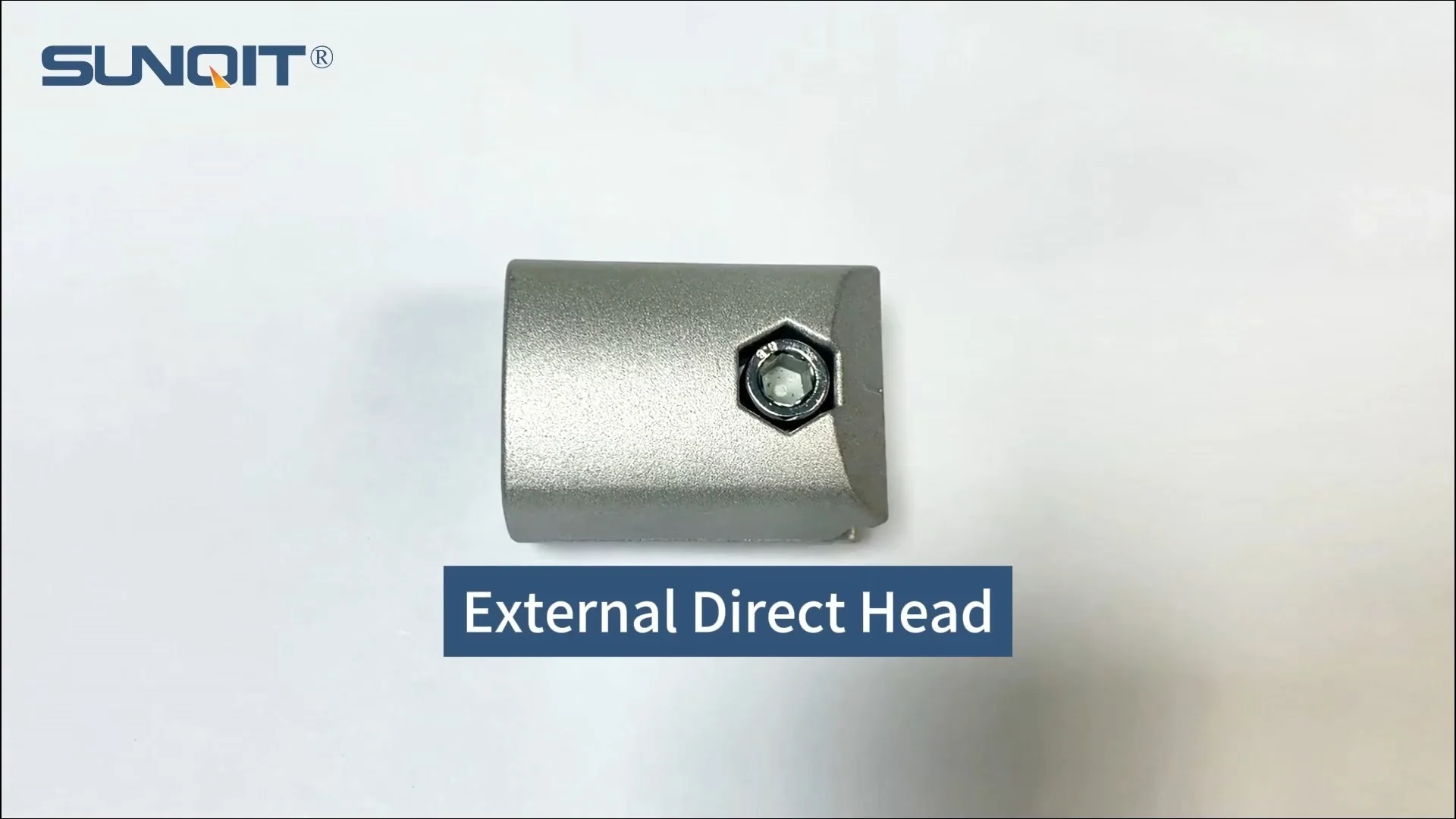
External Straight Aluminum Joint
Aluminum pipe joint outside connection used for two pcs 28pcs aluminum pipe connection in straight angle,it connects two pcs pipe from outside.
In the fast-paced world of modern manufacturing and production assemble, the backbone of any efficient workspace lies in its ability to adapt, endure, and streamline operations. Enter aluminum lean pipe systems—versatile, lightweight, and incredibly robust, these systems have revolutionized how factories, workshops, and assembly lines are designed. But behind every sturdy aluminum lean pipe structure, there's an unsung hero: the joints. Specifically, external straight aluminum joints, which serve as the critical link connecting aluminum pipes into functional frameworks. Whether you're building a workbench, a material rack, or a dynamic production line, the choice between fixed and adjustable external straight aluminum joints can make or break your workflow. Let's dive into what these joints are, how they differ, and which one deserves a spot in your next project.
What Are External Straight Aluminum Joints?
Before we compare fixed and adjustable options, let's clarify what external straight aluminum joints actually do. As part of the broader family of aluminum profile accessories and lean pipe and accessories , these joints are designed to connect two or more aluminum pipes in a straight line from the outside. Unlike internal rotary joints (which allow for rotation) or 90-degree elbow joints (which create corners), external straight joints focus on creating linear, end-to-end connections. Think of them as the glue that holds the "bones" of your aluminum structure together—without reliable joints, even the strongest aluminum pipe would fail to form a stable framework.
Made primarily from high-grade aluminum alloy, these joints are engineered to balance strength and weight. They're corrosion-resistant, easy to clean, and compatible with standard aluminum pipes, making them a staple in industries ranging from automotive manufacturing to electronics assembly. But not all straight joints are created equal. The key distinction lies in their adjustability—and that's where the fixed vs. adjustable debate begins.
Fixed External Straight Aluminum Joints: The Reliable Workhorses
Fixed external straight aluminum joints are the no-nonsense, "set it and forget it" option. As the name suggests, once installed, they create a rigid, non-movable connection between aluminum pipes. Their design is straightforward: a cylindrical or rectangular clamp that wraps around the exterior of the pipes, secured in place with bolts, screws, or rivets. Some models feature a one-piece construction, while others use two halves that bolt together—either way, the end result is a connection that prioritizes stability over flexibility.
Key Benefits of Fixed Joints
1. Unmatched Stability: When you need a connection that won't budge, fixed joints deliver. Their rigid design eliminates wobble, making them ideal for structures that bear heavy loads, like a material rack b (3 row and 3 floor) stacked with bulk components or a workbench supporting heavy machinery.
2. Higher Load Capacity: Because there are no moving parts or adjustable gaps, fixed joints distribute weight evenly across the connection point. This allows them to handle higher static and dynamic loads compared to their adjustable counterparts. If your production line involves moving heavy items (think automotive parts or industrial tools), fixed joints reduce the risk of structural failure.
3. Durability in Harsh Environments: Fixed joints have fewer crevices and moving parts, which means less opportunity for dust, debris, or moisture to seep in and cause corrosion. This makes them a top choice for factories with high humidity, frequent cleaning, or exposure to chemicals.
4. Cost-Effective for Static Layouts: Since they're simpler in design, fixed joints are often more affordable upfront. If your workspace layout rarely changes—say, a long-term production line dedicated to assembling the same product—fixed joints offer excellent value without the extra cost of adjustability features.
Drawbacks to Consider
1. Zero Flexibility: The biggest downside of fixed joints is their rigidity. Once installed, modifying the length of a pipe or reconfiguring the structure requires removing the joint entirely—often by drilling out rivets or unscrewing bolts, which can damage the aluminum pipe or the joint itself. This makes them a poor fit for environments where layouts evolve frequently.
2. Installation Precision Matters: Fixed joints demand accurate measurements during setup. If pipes are cut even slightly off-length, the joint may not align properly, leading to stress on the connection or an uneven structure. This can slow down initial assembly, especially for teams new to working with aluminum lean pipe systems.

Adjustable External Straight Aluminum Joints: The Flexible Innovators
Adjustable external straight aluminum joints are the chameleons of the joint world. Designed with built-in mechanisms—like sliding clamps, threaded bolts, or locking levers—they allow for minor adjustments to pipe length or alignment after installation. This flexibility makes them a favorite in dynamic workspaces where adaptability is key to staying productive.
Key Benefits of Adjustable Joints
1. On-the-Fly Reconfiguration: Need to shorten a pipe by an inch to fit a new tool? Or adjust the alignment of a conveyor to match a shifted production line? Adjustable joints let you do this without disassembling the entire structure. Simply loosen the locking mechanism, slide the pipe into place, and retighten—a process that takes minutes instead of hours.
2. Ideal for Prototyping and Small-Batch Production: In environments where production assemble lines change weekly (or even daily), like custom manufacturing shops or R&D labs, adjustable joints shine. They allow teams to experiment with layouts, test new workflows, and adapt to client-specific requirements without investing in new parts each time.
3. Tolerance for Imperfect Measurements: Let's face it—no one's perfect. If a pipe is cut a little too long or short, adjustable joints can compensate for small errors, ensuring the structure still aligns correctly. This reduces waste (no more scrapping mis-cut pipes!) and speeds up assembly, especially for less experienced teams.
4. Future-Proofing Your Investment: As your business grows, your workspace needs will too. Adjustable joints make it easy to expand existing structures—like adding extra shelves to a workbench or extending a material rack—without starting from scratch. This scalability can save significant time and money in the long run.
Drawbacks to Consider
1. Slightly Lower Load Capacity: The tradeoff for flexibility is a marginally lower maximum load. The adjustable mechanisms create small gaps or moving parts that can weaken the connection under extreme weight. While most adjustable joints still handle typical workshop loads (think tools, components, or light machinery), they're not the best choice for heavy-duty applications like supporting industrial presses.
2. More Maintenance: Moving parts mean more points of wear. Over time, bolts may loosen, or sliding surfaces may develop friction. Regular checks—tightening screws, lubricating levers—are necessary to keep adjustable joints functioning smoothly. In high-vibration environments (like near heavy machinery), this maintenance becomes even more critical.
3. Higher Upfront Cost: The added engineering of adjustable mechanisms makes these joints pricier than fixed options. For large-scale projects with hundreds of joints, this cost difference can add up. However, many businesses find the long-term savings from reconfiguration outweigh the initial expense.

Fixed vs. Adjustable: A Side-by-Side Comparison
Still on the fence? Let's break down the key differences with a head-to-head comparison:
| Feature | Fixed External Straight Aluminum Joints | Adjustable External Straight Aluminum Joints |
|---|---|---|
| Load Capacity | Higher (ideal for heavy, static loads) | Moderate (best for light-to-medium, dynamic loads) |
| Flexibility | None—permanent connection once installed | High—adjust pipe length/alignment post-installation |
| Installation Time | Longer (requires precise measurements) | Shorter (forgives minor measurement errors) |
| Reconfiguration Ease | Difficult (requires disassembly, may damage parts) | Easy (adjust via built-in mechanisms in minutes) |
| Maintenance Needs | Low (no moving parts to service) | Moderate (regular tightening/lubrication required) |
| Upfront Cost | Lower (simpler design) | Higher (extra adjustability features) |
| Ideal Use Case | Static layouts (e.g., permanent production lines, heavy-duty workbenches, fixed material racks) | Dynamic layouts (e.g., prototyping labs, small-batch production, frequently changing assembly lines) |

Real-World Scenarios: Which Joint Wins?
To put this into perspective, let's look at two common workplace scenarios where the choice between fixed and adjustable joints directly impacts productivity.
Scenario 1: Automotive Parts Manufacturing Plant (Static Layout)
A large automotive plant runs a dedicated production line for engine components, with the same layout unchanged for 18 months. The line includes heavy-duty workbenches (each supporting 500+ lbs of tools) and a material rack b (3 row and 3 floor) storing metal castings. For this setting, fixed external straight aluminum joints are the clear winner. Their high load capacity ensures the workbenches and racks stay stable under constant use, and since the layout rarely changes, the lack of adjustability is a non-issue. The plant saves on upfront costs and avoids the hassle of maintaining adjustable mechanisms in a high-vibration environment.
Scenario 2: Electronics Prototyping Lab (Dynamic Layout)
A small electronics lab designs custom circuit boards for clients, with production assemble lines that change weekly based on client specs. One week, they're building a bench for soldering small components; the next, they're reconfiguring to test a new conveyor system for larger circuit assemblies. Here, adjustable external straight aluminum joints are indispensable. The team can quickly adjust pipe lengths to fit new workbenches or shift conveyor alignment without disassembling the entire structure, cutting setup time from days to hours. The slightly higher upfront cost is offset by the lab's ability to take on more projects and adapt to client needs faster.
How to Choose: Key Factors to Guide Your Decision
When deciding between fixed and adjustable external straight aluminum joints, ask yourself these questions:
1. How Often Will My Layout Change? If your answer is "rarely" (less than once a year), fixed joints are likely sufficient. If it's "monthly" or "weekly," adjustable joints will save you time and frustration.
2. What's the Maximum Load My Structure Will Bear? For loads over 300 lbs per linear foot, lean toward fixed joints. For lighter loads, adjustable joints offer more flexibility without sacrificing safety.
3. What's My Budget for Both Parts and Labor? Fixed joints are cheaper upfront, but adjustable joints can reduce labor costs for reconfigurations. Calculate the total cost of ownership over 2–3 years (including setup, modifications, and maintenance) to get the full picture.
4. Who Will Be Assembling and Maintaining the Structure? If you have a skilled team with precise measurement tools, fixed joints are manageable. If your team is smaller or less experienced, adjustable joints' forgiveness for minor errors can speed up assembly and reduce mistakes.
Final Thoughts: It's All About Balance
At the end of the day, there's no "better" joint—only the right joint for your needs. Fixed external straight aluminum joints excel in stability and cost-effectiveness for static, heavy-duty applications, while adjustable joints thrive in dynamic, ever-changing workspaces. Many teams even mix and match: using fixed joints for the core, load-bearing parts of a structure and adjustable joints for sections that need frequent tweaking.
Remember, the goal of any aluminum lean pipe system is to make your workflow smoother, safer, and more efficient. By choosing joints that align with your layout's needs, load requirements, and budget, you're not just building a structure—you're building a foundation for productivity. So whether you opt for the reliability of fixed joints or the flexibility of adjustable ones, you'll be one step closer to a workspace that works as hard as your team does.