- Company Articles
- Products and Technology
- Product knowledge
- Choosing Between Standard and Custom Parallel Lean Pipe Joints: One Side Rotatory Considerations

Choosing Between Standard and Custom Parallel Lean Pipe Joints: One Side Rotatory Considerations
Related Product
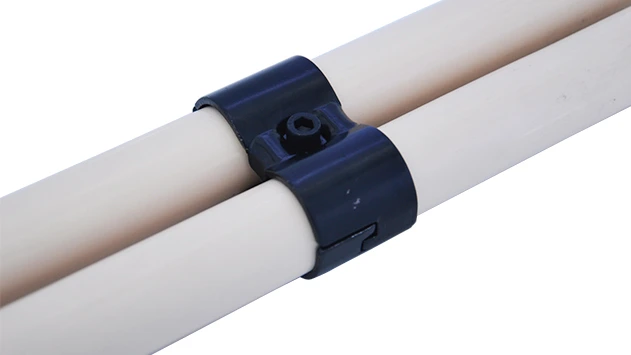
Parallel Lean Pipe Joint
Parallel lean pipe joint used for 2 pcs 28MM lean pipe connection in parallel direction to enhance frame structure, usually for heavy payload requirement for workbench. flow rack, hand trolley.
The Backbone of Lean Systems: Why Joints Matter
In the world of manufacturing and warehouse operations, lean systems are the unsung heroes of efficiency. They streamline workflows, reduce waste, and keep teams moving—all while adapting to the ever-changing demands of production. At the heart of these systems lies a component so small yet critical that its impact is often overlooked: the lean pipe joint. Specifically, parallel lean pipe joints, and more notably, one side rotatory variants, are the quiet workhorses that determine how flexible, durable, and user-friendly a lean setup can be.
Whether you're assembling a workbench, a material rack, or an entire production line, the joints you choose dictate how easily you can reconfigure, adjust, and scale your system. But here's the catch: not all joints are created equal. Walk into any lean pipe supplier's catalog, and you'll be faced with a choice that could make or break your operation's efficiency: standard or custom parallel lean pipe joints. Which one is right for you? Let's dive in.
First Things First: What Are Parallel Lean Pipe Joints?
Before we compare standard and custom options, let's get clear on what we're talking about. Parallel lean pipe joints are designed to connect two or more lean pipes (often aluminum lean pipe or steel) in a parallel configuration, creating stable structures like workbenches, racks, or trolleys. Unlike fixed joints that lock pipes into rigid angles, parallel joints allow for alignment along the same plane—think of them as the "hinges" that keep parallel pipes working in harmony.
One side rotatory straight lean pipe joints take this a step further. As the name suggests, these joints permit rotation in one direction (typically 180 degrees or less) on a single axis, adding a layer of adjustability. Picture a workbench where a tool holder can swing out when needed and tuck back in when not—all thanks to the controlled movement of a one side rotatory joint. This small feature can turn a static setup into a dynamic, worker-centric space.

Standard Parallel Lean Pipe Joints: The Go-To for Simplicity
Standard parallel lean pipe joints are the industry's default. They're mass-produced, readily available, and designed to meet the most common needs of manufacturers and warehouses. If you've ever purchased a pre-built workbench or a basic material rack, chances are it's held together with standard joints. Let's break down their pros, cons, and ideal use cases.
Pros of Standard Joints
Cost-Effective: Mass production drives down costs. Lean pipe suppliers can offer standard joints at a fraction of the price of custom options because they're made in bulk, with minimal variation. For small businesses or teams working with tight budgets, this is a game-changer.
Readily Available: Need joints tomorrow? A quick call to your local lean pipe supplier, and you can have standard parallel lean pipe joints delivered by the end of the week. No waiting for design tweaks or manufacturing lead times—they're sitting on shelves, ready to ship.
Tested and Trusted: Standard joints have been tried and tested across countless industries. Their specs (load capacity, rotation range, material durability) are well-documented, so you know exactly what you're getting. No surprises, no guesswork.
Cons of Standard Joints
One-Size-Fits-Most (But Not All): "Standard" means designed for common scenarios—like a 90-degree angle or a 180-degree rotation. If your workflow requires something unique (say, a 135-degree tilt or a higher weight capacity), a standard joint might not cut it. You'll either have to compromise or cobble together multiple joints, adding complexity and weakening the structure.
Limited Flexibility: Standard one side rotatory straight lean pipe joints often have fixed rotation stops. If your team needs to adjust the angle slightly to accommodate a new tool or a taller worker, you're out of luck. The joint's rigid design leaves little room for on-the-fly tweaks.

Custom Parallel Lean Pipe Joints: Tailored to Your Workflow
Custom parallel lean pipe joints are the rebels of the lean world. They're not bound by "one-size-fits-most"—instead, they're engineered to fit your exact needs, no matter how specific. Think of them as a tailor-made suit versus off-the-rack: they take longer and cost more, but the fit is unmatched.
Pros of Custom Joints
Built for Your Unique Pain Points: Let's say your team assembles medical devices that require ultra-precise tool positioning. A standard joint might wobble at the critical 45-degree angle you need. A custom one side rotatory straight lean pipe joint, however, can be designed with a locking mechanism at that exact angle, ensuring stability and reducing human error.
Future-Proofing Your Setup: Industries evolve, and so do workflows. A custom joint can be engineered to adapt to future changes—like higher weight capacities if you upgrade to heavier materials or adjustable rotation ranges if you expand your product line. It's an investment in long-term flexibility.
Integration with Existing Systems: Maybe you're not starting from scratch. If you have legacy equipment or non-standard lean pipe and accessories, a custom joint can bridge the gap. For example, if your current racks use aluminum profile accessories that don't align with standard steel joints, a custom aluminum-to-steel adapter joint can make them work together seamlessly.
Cons of Custom Joints
Higher Upfront Costs: Custom design, prototyping, and manufacturing aren't cheap. You're paying for engineering time, specialized tooling, and small-batch production. For startups or teams with tight budgets, this can be a barrier.
Longer Lead Times: A standard joint ships in days; a custom one? Weeks, sometimes months. If you're in a rush to launch a new line or fix a broken setup, the wait can be frustrating.
Dependency on Supplier Expertise: Not all lean pipe suppliers have the in-house engineering chops to design custom joints. You'll need to partner with a supplier who specializes in custom solutions—and even then, miscommunication can lead to joints that miss the mark.
The Decision Matrix: When to Choose Standard vs. Custom
To help you decide, let's break down the key factors that should guide your choice. We've compiled a comparison table to simplify the process, but first, let's walk through real-world scenarios where one option clearly outshines the other.
Scenario 1: Small Bakery Expanding Its Packaging Line
A local bakery recently added a new pastry line and needed a simple material rack to hold boxes and wrapping supplies. Their workflow is straightforward: boxes come in, get loaded onto the rack, and are picked as needed. They don't require complex rotations or high weight capacities—just a sturdy, affordable setup.
In this case, standard parallel lean pipe joints are the way to go. They're cheap, available immediately, and more than capable of handling the bakery's light loads. A custom joint would be overkill, adding unnecessary cost and delay.
Scenario 2: Automotive Plant Redesigning Its Assembly Workstations
An automotive manufacturer was redesigning its engine assembly line to accommodate a new hybrid model. Workers needed to access tools from multiple angles—sometimes tilting a torque wrench 30 degrees downward, other times swinging it 120 degrees to the side—without wasting time readjusting the workstation. Standard joints couldn't handle the variable angles, leading to worker fatigue and slower production.
Here, custom one side rotatory straight lean pipe joints were non-negotiable. The manufacturer partnered with a lean pipe supplier to design joints with programmable rotation stops and ergonomic grips, cutting tool adjustment time by 40% and reducing worker strain. The upfront cost was higher, but the long-term gains in productivity and safety made it worthwhile.
The Comparison Table
| Factor | Standard Parallel Lean Pipe Joints | Custom Parallel Lean Pipe Joints |
|---|---|---|
| Cost | Low ($5–$20 per joint) | High ($50–$200+ per joint, depending on complexity) |
| Lead Time | 1–3 days (in-stock) | 2–8 weeks (design, prototyping, production) |
| Flexibility | Limited (fixed angles/rotation ranges) | High (tailored to specific angles, loads, or workflows) |
| Ideal For | Simple setups, low budgets, common workflows | Complex workflows, ergonomic needs, unique load/angle requirements |
| Risk | Low (tested and proven) | Moderate (depends on supplier expertise and design accuracy) |
Beyond the Joint: The Role of Lean Pipe and Accessories
No joint exists in a vacuum. Its performance depends heavily on the lean pipe and accessories it's paired with. For example, aluminum lean pipe is lighter and more corrosion-resistant than steel, making it ideal for cleanrooms or food processing facilities. But it's also less rigid, so a standard joint might flex under heavy loads—whereas a custom joint with reinforced brackets could compensate for aluminum's flexibility.
Similarly, accessories like roller track connectors or caster wheels can amplify (or undermine) a joint's effectiveness. A standard joint might work perfectly with a basic aluminum guide rail, but if you're using a specialized plastic roller track guide rail, you might need a custom joint with a unique mounting plate to ensure a snug fit. Always consider the entire ecosystem when choosing joints—they're part of a team, not solo players.
Tips for Choosing the Right Lean Pipe Supplier
Whether you opt for standard or custom, your lean pipe supplier will play a pivotal role in your success. Here's what to look for:
Standard Joints: Prioritize suppliers with a wide in-stock selection and transparent specs. Ask for load-testing data and customer reviews—you want to ensure their "standard" is actually reliable. A good supplier will also offer samples, so you can test joints with your lean pipe and accessories before buying in bulk.
Custom Joints: Seek out suppliers with in-house engineering teams and a portfolio of custom projects. Ask about their design process—do they visit your facility to understand your workflow? Do they provide prototypes for testing? Avoid suppliers who treat custom orders as an afterthought; this is a collaboration, not a transaction.
Final Thoughts: It's About Balance
Choosing between standard and custom parallel lean pipe joints isn't a binary decision—it's about balance. Start by auditing your workflow: What are your non-negotiables? Where do your current joints fail? If standard joints check 90% of your boxes, don't overcomplicate things with custom. But if that 10% gap is costing you time, money, or worker satisfaction, it's worth investing in a tailored solution.
Remember, lean systems are all about eliminating waste—including the waste of using the wrong tools for the job. A one side rotatory straight lean pipe joint might seem like a small detail, but in the hands of a team that needs it, it can be the difference between a frustrating, stagnant setup and a dynamic, efficient operation that grows with your business.
So, talk to your team, consult your lean pipe supplier, and choose the joint that fits your workflow—not the other way around. After all, lean systems are about people first. And people deserve joints that work as hard as they do.