- Company Articles
- Products and Technology
- Product knowledge
- Choosing Flat Rigid Castor Wheels for 3C Electronics Assembly Workstations

Choosing Flat Rigid Castor Wheels for 3C Electronics Assembly Workstations
Related Product
Flat Rigid Castor Wheel
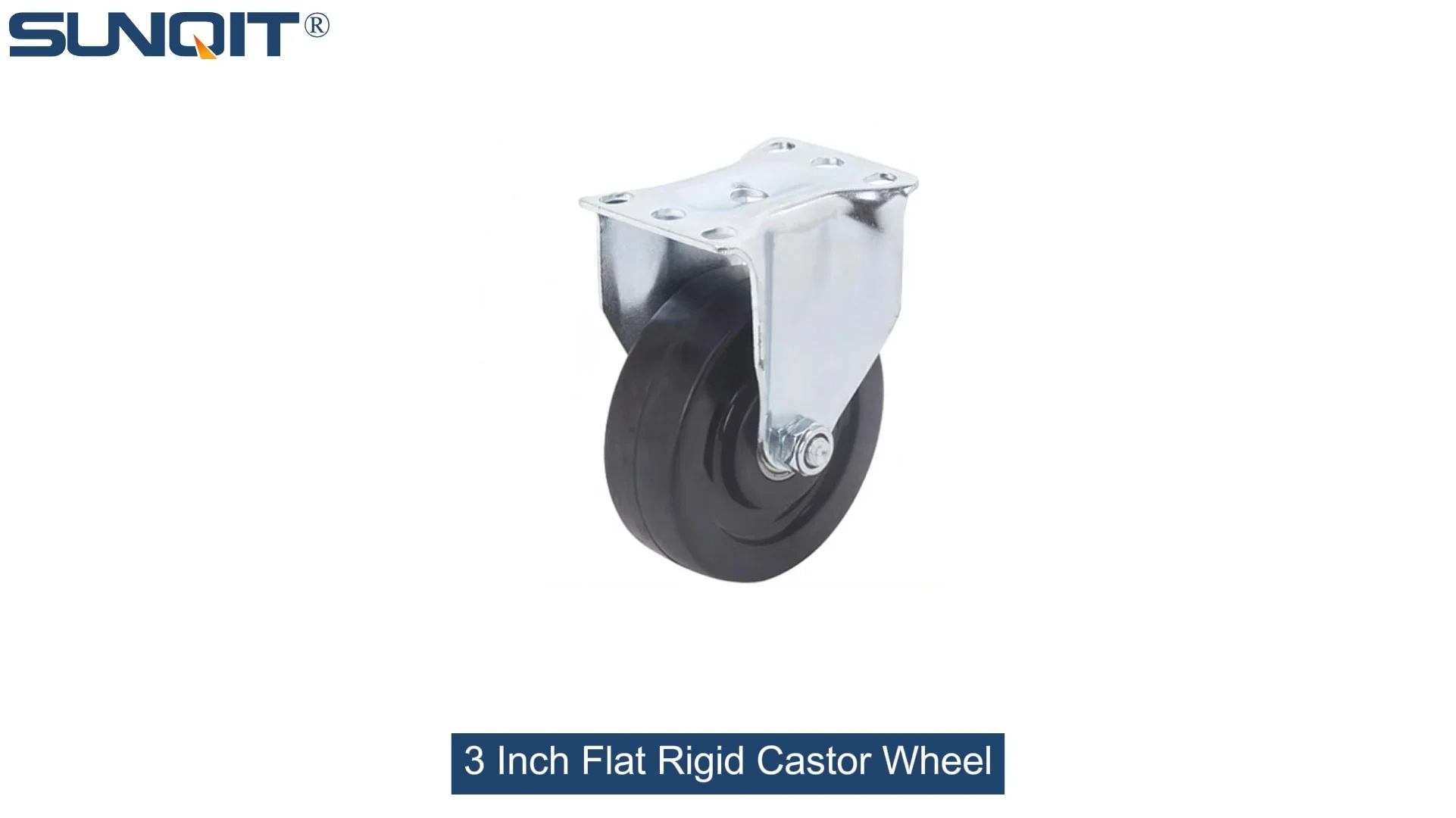
Chair Casters Ball Bearing Wheels Rubber Base. Resistant to abrasion, impact and corrosion. Heavy payload can hold 70Kgs per pcs,which can make it works at a stable and smooth status.
A guide to enhancing stability, efficiency, and ESD safety in precision manufacturing environments
Introduction: The Unsung Heroes of 3C Assembly Lines
Walk into any 3C electronics manufacturing facility—whether it's producing smartphones, laptops, or smartwatches—and you'll notice a symphony of precision. Tiny components the size of a grain of rice move seamlessly from one station to the next; workers in anti-static gear huddle over workbenches, their hands steady as they solder, assemble, and test. In this world of micrometers and microseconds, every detail matters. But if there's one element that often flies under the radar, yet keeps the entire operation grounded (literally and figuratively), it's the castor wheels beneath the workstations.
For 3C assembly, where workbenches are the command centers, the choice of castor wheels isn't just about mobility—it's about stability, safety, and efficiency. And among the many castor types available, flat rigid castor wheels stand out as a critical tool for environments where precision can't afford even the slightest wobble. In this article, we'll dive deep into what makes flat rigid castor wheels indispensable for 3C assembly, how to choose the right ones for your workbench or esd workstation , and why cutting corners here could cost you far more than a few dollars in replacement parts.
Whether you're setting up a new lean manufacturing line with lean pipe workbenches or upgrading existing stations, understanding the nuances of flat rigid castor wheels will help you build a foundation that supports faster production, fewer errors, and a safer workspace for your team.
Why 3C Assembly Workstations Demand Specialized Castors
3C electronics—computers, communications, and consumer electronics—are defined by their miniaturization and sensitivity. A single static discharge can fry a $500 microchip; a workstation that shifts by 2mm mid-assembly can ruin a batch of circuit boards. This means the workstations themselves need to balance two conflicting needs: stability during operation and (occasional) mobility for reconfiguration.
Traditional swivel castors, with their ability to rotate 360 degrees, are great for moving heavy equipment around tight corners. But in 3C assembly, where a worker might lean on the bench or apply downward pressure during soldering, swivel castors can introduce unwanted movement. That's where flat rigid castor wheels come in. Unlike swivel castors, which pivot from a central point, rigid castors are fixed in direction—they roll straight, no surprises. This rigidity translates to a workstation that stays put when it needs to, reducing the risk of accidental shifts that could compromise precision.
But it's not just about stability. 3C facilities often adopt lean manufacturing principles, using lean pipe workbenches that can be reconfigured quickly to adapt to new product lines. Even with rigid castors, these workstations need to be movable when the layout changes—just not while someone's working on them. Flat rigid castors strike this balance: they glide smoothly when pushed in a straight line (ideal for repositioning) but lock into place (metaphorically, if not literally) during use.
Add to this the need for ESD protection. ESD workstations are non-negotiable in 3C manufacturing, as static electricity can damage sensitive electronic components. Castor wheels, which are in constant contact with the floor, play a role here too: conductive or dissipative materials in the wheel can help channel static away from the workstation and into the ground. So, choosing a flat rigid castor isn't just about mechanics—it's about integrating with the broader safety ecosystem of the assembly line.

What Are Flat Rigid Castor Wheels, Anyway?
Let's start with the basics. A flat rigid castor wheel is a type of caster where the wheel is mounted to a fixed, non-swiveling fork, and the mounting plate (the part that attaches to the workstation) is flat. The "flat" in the name refers to the mounting surface—no offset, no angled brackets—just a straight, flat plate that bolts directly to the bottom of the workstation frame. The "rigid" part means the wheel doesn't pivot; it only rolls forward or backward along a fixed axis.
Compare this to a swivel castor, which has a swivel head that allows the wheel to rotate independently of the mounting plate. Or a brake-equipped castor, which adds a locking mechanism to prevent movement. Flat rigid castors are simpler by design, but that simplicity is their strength. Without the moving parts of a swivel head, they're often more durable and require less maintenance. They also tend to have higher weight capacities, since the load is distributed directly through the rigid fork rather than a swivel bearing.
Flat rigid castors come in a range of sizes, from small 2-inch wheels for lightweight benches to 8-inch or larger wheels for heavy-duty workstations loaded with testing equipment. The wheel itself can be made from materials like rubber, polyurethane, nylon, or steel, each with its own pros and cons for 3C environments. The mounting plate, usually steel or aluminum, is drilled with holes to match the workstation's frame—another reason why compatibility with your specific workbench (whether it's a lean pipe model, an ESD workstation, or a custom aluminum frame) is key.
One common misconception is that rigid castors mean the workstation can't be turned or repositioned. That's not true—you just need at least two rigid castors and two swivel castors (often with brakes) on the same workstation. This "two rigid, two swivel" setup is standard in many 3C facilities: the swivel castors allow for directional control when moving the bench, while the rigid castors keep it stable when rolling straight. But for workstations that rarely need to turn (e.g., those in a linear assembly line), all four castors might be rigid, with workers pushing them along fixed paths between stations.

Key Factors to Consider When Choosing Flat Rigid Castor Wheels for 3C Workstations
Choosing the right flat rigid castor wheel isn't a one-size-fits-all process. It requires balancing load capacity, wheel material, floor compatibility, ESD needs, and compatibility with your workstation. Let's break down each factor in detail.
1. Load Capacity: Don't Underestimate the Weight
The first question to ask is: How much weight will the castor need to support? This isn't just the weight of the workstation itself (the frame, shelves, tools) but also the dynamic loads—like a worker leaning on the bench, or a batch of components placed on the surface. A good rule of thumb is to calculate the total weight (workstation + tools + maximum component load + worker lean) and then add a 30% safety margin. If the total is 500 lbs, for example, choose castors rated for at least 650 lbs (and distribute that across all four castors—so 162.5 lbs per castor in this case).
Load capacity is determined by both the wheel size and the material. Larger wheels distribute weight over a larger surface area, reducing stress on the floor and the wheel itself. Steel wheels, for example, can handle more weight than rubber wheels of the same size, but they're noisier and harder on floors. The bearing type also matters: ball bearings are fine for light loads, but tapered roller bearings or precision ball bearings are better for heavy, continuous use.
| Wheel Diameter (inches) | Wheel Material | Typical Load Capacity (per castor) | Best For |
|---|---|---|---|
| 2-3 | Rubber | 100-250 lbs | Lightweight ESD workstations with hand tools |
| 4-5 | Polyurethane | 250-500 lbs | Lean pipe workbenches with small testing equipment |
| 5-6 | Nylon | 500-800 lbs | Heavy-duty workstations with soldering stations |
| 6-8+ | Steel | 800-2000 lbs | Workstations with large inspection machines or batch storage |
2. Wheel Material: Balancing Durability, Grip, and ESD Safety
The material of the wheel affects everything from noise levels to static dissipation to how well it handles rough floors. Let's break down the most common options for 3C environments:
- Rubber: Quiet and grippy, rubber wheels are ideal for smooth floors (like epoxy or vinyl) where noise reduction is a priority. They're also gentle on floors, reducing the risk of scratches. However, rubber can wear down faster under heavy loads and may not hold up well to oils or chemicals (common in some cleaning agents). For ESD workstations, look for conductive rubber, which has carbon additives to dissipate static.
- Polyurethane (PU): A blend of rubber and plastic, polyurethane wheels offer the best of both worlds: the grip and quietness of rubber with the durability of plastic. They're resistant to oils, chemicals, and abrasion, making them a top choice for 3C facilities. PU wheels also come in ESD-safe versions, with surface resistances in the 10^6-10^9 ohm range (ideal for dissipating static without conducting electricity too quickly).
- Nylon: Harder than rubber or PU, nylon wheels have excellent load capacity and are great for uneven floors (like concrete with minor cracks). They're also highly chemical-resistant and won't flatten under heavy, constant loads. The downside? They're noisier on hard floors and can mark soft surfaces (like vinyl). Nylon is naturally insulating, so ESD versions require additives or coatings to make them conductive.
- Steel: The heavyweights of the castor world, steel wheels handle the highest loads (up to 2000 lbs per wheel) but are noisy and can damage soft floors. They're best for outdoor use or very heavy-duty indoor applications (e.g., workstations with metal-cutting equipment). Steel is conductive, so it can be used in ESD environments, but it may require a rubber or PU tread to reduce noise and floor damage.
For most 3C assembly lines, polyurethane is the sweet spot—durable, ESD-compatible, and easy on floors. But if your facility uses aggressive cleaning chemicals, nylon might be a better bet. And if noise is a top concern (e.g., in a facility with workers in close proximity), rubber could be worth the trade-off in longevity.
3. Floor Compatibility: Matching the Wheel to the Surface
Your factory floor isn't just a surface—it's a partner in how well your castors perform. A wheel that works great on smooth epoxy might fail miserably on rough concrete, and vice versa. Here's how to match them:
- Smooth, hard floors (epoxy, vinyl, polished concrete): Soft wheels (rubber, PU) are better here. They conform slightly to the floor, increasing contact area and reducing noise. Hard wheels (nylon, steel) can "chatter" on smooth surfaces, creating vibration that might disturb precision work.
- Rough or uneven floors (unfinished concrete, tile with grout lines): Hard wheels (nylon, steel) are more resistant to damage from debris or cracks. Soft wheels can get stuck on small bumps or wear down quickly from abrasion.
- ESD floors: These conductive floors are designed to work with ESD castors to channel static away. Make sure your castor wheels are compatible with the floor material—some ESD floors require softer wheels to maintain conductivity, while others work with harder materials.
Pro tip: If your facility has mixed floor types (e.g., epoxy in assembly areas, concrete in storage zones), consider hybrid workstations with two rigid castors of one material and two of another. Or, opt for polyurethane wheels, which perform reasonably well on most surfaces.
4. Compatibility with Workbench Design: It's All in the Mounting
Even the best castor wheel won't work if it doesn't fit your workstation. Lean pipe workbenches , for example, have modular frames made from aluminum or steel pipes connected by joints. The mounting points for castors are often standardized (e.g., 4-hole plates spaced 100mm apart), but it's always worth checking the hole pattern before buying.
ESD workstations may have additional requirements, like grounding wires that connect the castor to the workstation frame (to ensure static flows from the bench, through the castor, and into the floor). This means the castor's mounting plate might need a threaded hole or tab for attaching the ground wire—a detail that's easy to miss if you're focused solely on the wheel.
Don't forget about caster accessories , either. Washers, lock washers, and bolts that are too short or the wrong thread type can lead to loose castors over time. Many manufacturers sell castor kits that include all the necessary hardware for specific workbench models—investing in these kits can save you from compatibility headaches later.

Common Mistakes to Avoid When Selecting Flat Rigid Castors
Even experienced facility managers can make missteps when choosing castors. Here are the most common pitfalls—and how to steer clear of them:
Mistake #1: Underestimating the Total Load
It's easy to calculate the weight of the empty workstation and call it a day. But remember: workers lean on benches, tools get left on shelves, and batches of components pile up. A 300-lb bench might easily become a 600-lb load when fully stocked. Underloading leads to premature wear, wheel deformation, or even catastrophic failure (imagine a castor breaking mid-assembly, sending a shelf of circuit boards crashing to the floor). Always calculate the maximum possible load and add that 30% safety margin we mentioned earlier.
Mistake #2: Ignoring ESD Requirements
In non-ESD environments, any castor might work. But in 3C assembly, using a non-ESD castor on an ESD workstation is like leaving the door open during a storm—static will find a way in. Always check the ESD rating of the wheel (look for "ESD-compliant" or "conductive/dissipative") and verify that it matches your facility's standards (usually 10^6-10^9 ohms for dissipative, 10^3-10^5 ohms for conductive). And don't assume all "black wheels" are ESD-safe—some are just colored black for aesthetics.
Mistake #3: Choosing the Wrong Wheel Size
Bigger isn't always better. A small wheel (2-3 inches) is fine for a lightweight bench that's moved rarely. But a large wheel (6+ inches) on the same bench will raise the workstation higher, increasing the risk of tipping. Conversely, a small wheel on a heavy workstation will struggle to roll over even minor floor imperfections, leading to increased effort to move it and more wear on the wheel. As a general rule, wheel diameter should increase with load: 4-5 inches for 250-500 lbs, 5-6 inches for 500-800 lbs, and 6+ inches for 800+ lbs.
Mistake #4: Overlooking Caster Accessories
Mounting bolts that are too short, washers that don't distribute load, or missing lock nuts can all turn a good castor into a liability. Caster accessories like mounting plates (if your workstation doesn't have built-in ones), thread adapters, and anti-vibration pads are just as important as the wheel itself. When ordering castors, ask the supplier if they include the necessary hardware—or if you need to purchase it separately.
Mistake #5: Forgetting About Maintenance
Castors are low-maintenance, but they're not no-maintenance. Dirt and debris can get trapped in wheel bearings, causing them to seize. Oil or grease from the floor can degrade rubber wheels over time. ESD wheels can lose their conductivity if they're not cleaned regularly (dirt acts as an insulator). Make sure to include castor maintenance in your facility's cleaning schedule: wipe wheels down weekly, lubricate bearings monthly, and check for wear (e.g., flat spots, cracks) quarterly.
Case Study: How the Right Flat Rigid Castors Transformed a 3C Assembly Line
To put this all in context, let's look at a real-world example. A mid-sized 3C manufacturer in Guangdong, China, was struggling with two issues: frequent static-related component failures and workstations that shifted during assembly, leading to misaligned circuit boards. Their existing setup used generic swivel castors on lean pipe workbenches —castors that weren't ESD-rated and had a tendency to swivel even when locked.
The facility manager decided to upgrade to flat rigid castors with ESD polyurethane wheels. Here's what happened:
- Static failures dropped by 78%: The conductive PU wheels, paired with the facility's ESD floor, created a continuous grounding path from the workstation to the ground. Component rejection rates due to static damage fell from 5% to under 1%.
- Assembly errors decreased by 32%: The rigid castors eliminated unwanted movement during operation. Workers reported feeling more confident when soldering or aligning components, as the bench no longer "wobbled" under pressure.
- Reconfiguration time cut in half: Despite being rigid, the new castors rolled smoothly along the facility's epoxy floors. When the line needed to be reconfigured for a new smartphone model, workers could push the lean pipe workbenches into place in minutes, compared to the hour it took before (when swivel castors kept getting stuck).
- Noise levels reduced: The polyurethane wheels were quieter than the old rubber ones, making the assembly line a more pleasant place to work. Employee satisfaction scores rose by 15% in the following quarter.
The key takeaway? The right castors aren't just a hardware upgrade—they're a productivity and safety investment. By choosing flat rigid castors with ESD-safe polyurethane wheels, this manufacturer addressed multiple pain points at once.
Conclusion: Investing in the Foundation of Your Assembly Line
Flat rigid castor wheels might not be the most glamorous part of a 3C assembly line, but they're undeniably critical. They're the foundation that keeps workstations stable during precision tasks, the link that connects ESD workstations to grounding systems, and the enablers of lean manufacturing's flexibility. Choosing the right ones requires balancing load capacity, wheel material, floor compatibility, and workstation design—but the payoff is clear: fewer errors, safer components, and a more efficient line.
So, the next time you're setting up a new esd workstation or upgrading a lean pipe workbench , don't overlook the castors. Ask yourself: What's the total load? What's the floor like? Do I need ESD protection? And don't forget the caster accessories —the bolts, washers, and mounting plates that turn a good wheel into a great solution.
In 3C manufacturing, where every detail matters, the difference between a good castor and a great one could be the difference between a flawless product and a costly recall. Choose wisely.