- Company Articles
- Products and Technology
- Solution
- Choosing Flat Rigid Castor Wheels for Custom Lean Solutions: Industry-Specific Needs

Choosing Flat Rigid Castor Wheels for Custom Lean Solutions: Industry-Specific Needs
Related Product
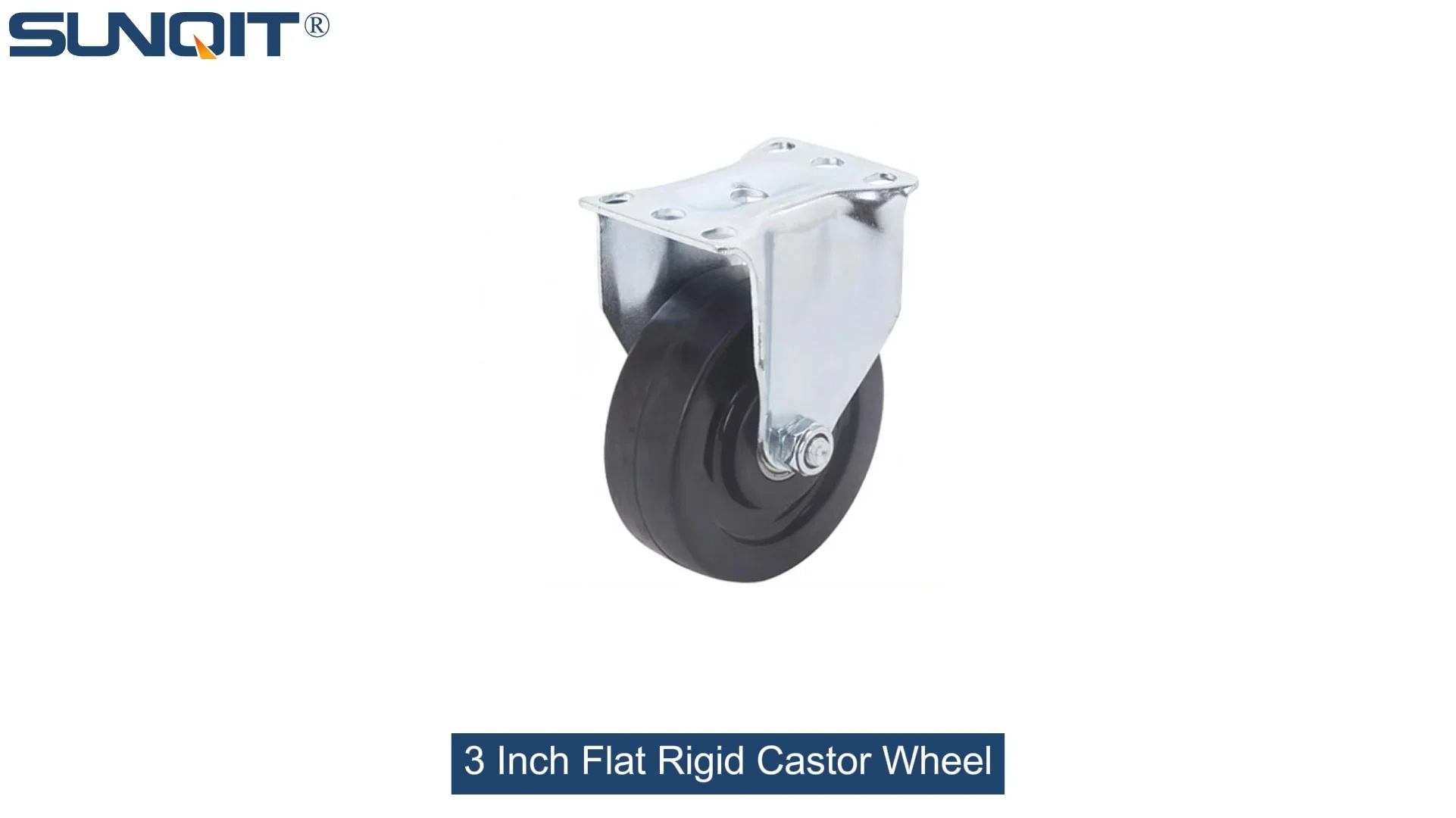
Flat Rigid Castor Wheel
Chair Casters Ball Bearing Wheels Rubber Base. Resistant to abrasion, impact and corrosion. Heavy payload can hold 70Kgs per pcs,which can make it works at a stable and smooth status.
In the world of lean manufacturing, every component counts. From the aluminum profiles that frame workbenches to the roller tracks that guide materials, each part plays a role in eliminating waste and boosting efficiency. But if there's one unsung hero in this ecosystem, it's the flat rigid castor wheel. These unassuming wheels—fixed in direction, steady as a rock—are the quiet workhorses underpinning everything from assembly line workbenches to heavy-duty material racks. Choosing the right ones isn't just about picking a wheel; it's about building a lean system that hums with precision, reliability, and worker-centric design. Let's dive into why flat rigid castor wheels matter, how to match them to your industry's unique needs, and why cutting corners here could cost you more than you think.
What Are Flat Rigid Castor Wheels, Anyway?
First, let's clear up the basics. Flat rigid castor wheels are exactly what they sound like: wheels mounted on a fixed, non-swiveling bracket (the "rigid" part) with a flat mounting plate that attaches to equipment like workbenches, trolleys, or turnover racks. Unlike their swivel counterparts—which pivot 360 degrees for maneuverability—these wheels only roll forward and backward. That might sound limiting, but in lean systems, that rigidity is a superpower. Imagine pushing a loaded trolley down a straight assembly line: swivel wheels might wobble, slow you down, or even veer off course. Flat rigid castors? They glide in a straight line, saving energy, reducing strain, and keeping materials moving exactly where they need to go, exactly when.
But not all flat rigid castors are created equal. They come in materials like rubber, polyurethane, and nylon; with treads designed for concrete, tile, or even sensitive floors; and with load capacities ranging from a few hundred pounds to several thousand. The key is to match the wheel to the job—and that starts with understanding your industry's unique demands.
Why Rigid Castors Are Non-Negotiable in Lean Systems
Lean systems thrive on eliminating waste—whether that's wasted time, wasted effort, or wasted space. Flat rigid castor wheels tackle all three. Let's break it down:
- Stability that cuts waste: In a busy plant, a wobbly trolley isn't just annoying—it's a bottleneck. Workers slow down to steady it; materials might shift or even fall off. Flat rigid castors keep equipment stable, even under heavy loads. That means fewer stops, fewer spills, and a smoother flow from station to station.
- Durability that reduces downtime: Swivel castors have more moving parts (bearings, swivel plates) that can wear out or jam. Rigid castors? Minimalist by design. Less maintenance means less time fixing wheels and more time making products.
- Precision that aligns with lean goals: Lean isn't just about speed—it's about consistency. Rigid castors roll in a straight line, so workbenches stay aligned with roller tracks, and trolleys hit the same exact spot every time. That predictability lets you design tighter, more efficient workflows.

Industry-Specific Needs: One Size Does Not Fit All
A pharmaceutical lab and an automotive plant might both use lean systems, but their castor needs are worlds apart. Let's walk through four industries and see how flat rigid castors tailor to their unique challenges.
1. Automotive Manufacturing: Heavy Loads, Rough Floors, Relentless Pace
Automotive plants are tough on equipment. Concrete floors are often cracked or uneven; loads can hit 2,000+ pounds (think engine parts or metal sheets); and lines run 24/7. Here, flat rigid castors need to be built like tanks. Look for wheels with thick, shock-absorbing polyurethane treads—they cushion bumps, reduce noise, and grip rough surfaces without slipping. Load capacity? Aim for at least 1,500 pounds per wheel (and always overestimate—better safe than sorry). Stainless steel brackets are a plus, too; they resist the oil, grease, and chemicals that are par for the course in auto shops.
Take, for example, a material rack B (3 row and 3 floor) loaded with car door panels. Mounted on cheap plastic wheels, it might creak, slow down, or even get stuck on a floor imperfection. Swap in heavy-duty flat rigid castors with polyurethane treads, and suddenly that rack glides. Workers push with half the effort, downtime drops, and the line keeps moving. That's lean in action.
2. Electronics Assembly: Clean Rooms, ESD Safety, and Precision
Electronics manufacturing is a world of microscopes, delicate components, and strict ESD (electrostatic discharge) rules. Here, flat rigid castors aren't just about movement—they're about protecting products and people. ESD workbenches, for example, need castors that don't generate static (which could fry a circuit board) and that keep the bench stable enough for precise soldering or assembly. Nylon wheels are a top pick here: they're non-conductive, resist chemicals, and roll smoothly on polished concrete or vinyl floors without leaving marks.
Another must? Flat mounting plates that bolt securely to aluminum profiles (the lightweight, modular frames common in electronics labs). Loose castors could vibrate, shaking delicate components mid-assembly. Tight, rigid mounting? It keeps the workbench steady, so workers can focus on precision, not wobbles. In this industry, a single misaligned component can cost thousands—so castor stability isn't just efficient; it's essential.
3. Healthcare and Pharmaceuticals: Sanitation, Quiet, and Smooth Surfaces
Hospitals and labs have zero tolerance for dirt, noise, or jostling. Imagine a trolley carrying vials of medication or lab samples: a squeaky wheel could disturb patients; a wheel that traps dust could contaminate supplies. Flat rigid castors here need to be easy to clean (stainless steel brackets are a must), quiet (rubber treads dampen noise), and gentle on floors (no scuffing polished tiles). Loads might be lighter than in automotive—500-1,000 pounds—but precision is critical. A trolley that drifts could mean delayed meds or spilled samples, which in healthcare, isn't just wasteful; it's risky.
4. Warehousing and Distribution: High Throughput, Roller Track Integration
Warehouses run on speed. Pallets, boxes, and turnover racks need to move from receiving to shipping in minutes, not hours. Here, flat rigid castors often team up with roller tracks to create seamless flow. For example, a hand trolley A loaded with packages might roll along a plastic roller track guide rail (yellow or grey, depending on the setup) before transitioning to a rigid castor-equipped shelf. The key? Castors that align perfectly with roller track heights and roll smoothly across transitions. Misaligned wheels? They'll catch on track edges, causing jams and slowing down the entire operation.
Nylon wheels are popular here—they're tough, low-maintenance, and roll easily over concrete and metal tracks. Load capacity matters too: a trolley carrying 50 boxes needs castors rated for 1,000+ pounds to handle the stress of constant starts and stops.

How to Choose the Right Flat Rigid Castor Wheel: 5 Key Factors
Now that we've covered industry needs, let's get practical. Here's how to narrow down your options:
| Factor | What to Ask | Example Solutions |
|---|---|---|
| Load Capacity | What's the heaviest load this equipment will carry? (Include the weight of the trolley/rack itself!) | Heavy loads (1,500+ lbs): Polyurethane wheels with steel hubs. Light loads (500 lbs): Rubber or nylon. |
| Floor Type | Is your floor concrete (rough), tile (smooth), or sensitive (vinyl, wood)? | Rough concrete: Polyurethane (grips, absorbs shock). Smooth tile: Rubber (prevents slipping). Sensitive floors: Nylon (no marks). |
| Environment | Chemicals? Moisture? ESD risks? Extreme temperatures? | Chemicals/oil: Stainless steel brackets, polyurethane treads. ESD-sensitive: Nylon wheels. Wet areas: Sealed bearings to prevent rust. |
| Integration with Lean Components | Will the castors work with roller tracks, aluminum profiles, or workbenches? | Roller track setups: Low-profile castors to align with track height. Aluminum workbenches: Flat mounting plates that bolt to profile T-slots. |
| Maintenance | How often can you stop to lubricate or replace wheels? | High-throughput areas: Sealed bearings (no lubrication needed). Low-maintenance zones: Nylon wheels (resist wear and tear). |

Real-World Wins: When the Right Castors Transform Lean Systems
Let's look at two examples where upgrading to the right flat rigid castors made a measurable difference.
Case Study 1: Automotive Plant Cuts Downtime by 30%
A mid-sized auto parts manufacturer was struggling with slow material flow. Their material rack B (3 row and 3 floor) units—loaded with metal brackets—were mounted on cheap swivel castors. Workers complained about "fighting" the racks to keep them straight; jams were common, and wheels needed replacing every 3 months. The plant manager switched to 4-inch flat rigid castors with polyurethane treads (rated for 2,000 lbs per wheel) and stainless steel brackets. Result? Racks rolled straight, no more jams, and wheel lifespan jumped to 18+ months. Downtime dropped by 30%, and workers reported less fatigue. "It's like night and day," one line supervisor said. "We used to spend 10 minutes just wrestling a rack into place; now it takes 2."
Case Study 2: Electronics Lab Boosts Precision with ESD-Safe Rigid Castors
A semiconductor lab was seeing a 5% defect rate on circuit boards assembled on mobile workbenches. The culprit? Swivel castors that vibrated during assembly, causing tiny misalignments. The lab switched to ESD-safe flat rigid castors with nylon wheels and aluminum mounting plates (to bolt directly to their aluminum profile workbenches). The rigid design eliminated vibration, and the non-conductive wheels prevented static discharge. Defect rates dropped to 0.5%, saving the lab $100,000+ annually in rework costs. "Our techs no longer have to 'hold their breath' while soldering," the lab manager noted. "The bench stays steady, and their focus stays on the work."
Common Mistakes to Avoid (Because Even Small Errors Cost Big)
Choosing castors might seem simple, but these missteps can derail your lean goals:
- Underestimating load capacity: "It's just a few boxes" can quickly turn into "the wheel collapsed under 1,200 lbs." Always add 20-30% to your maximum expected load—safety margins save money.
- Ignoring floor conditions: Rubber wheels grip concrete but might stick on smooth tile; nylon is great for tiles but can scratch wood. Test wheels on your actual floor before buying.
- Mismatching with roller tracks: If your castors sit higher than your roller track, your trolley will "bump" when transitioning—causing jams. Measure track height and choose castors with matching ground clearance.
- Sacrificing quality for cost: A $20 wheel might seem like a deal, but if it needs replacing every 3 months, it's more expensive than a $50 wheel that lasts 2 years. Invest in durability.
Final Thoughts: Rigid Castors—The Foundation of a Lean, Happy Workspace
At the end of the day, lean systems are about people. They're about making work easier, safer, and more satisfying for the teams on the floor. Flat rigid castor wheels might not get the glory, but they play a huge role in that. When wheels roll smoothly, workers don't strain; when equipment stays stable, they focus on quality, not frustration; when downtime drops, morale rises. It's a ripple effect—one that starts with choosing the right wheel for the job.
So, whether you're outfitting a new automotive line, upgrading an electronics lab, or revamping your warehouse, don't overlook the flat rigid castor wheel. It's not just a component; it's the quiet promise of a lean system that works with your team, not against them. And in lean, that's the ultimate win.