- Company Articles
- Products and Technology
- Solution
- Choosing Lean Pipe Clamps for Sustainable Warehousing Solutions

Choosing Lean Pipe Clamps for Sustainable Warehousing Solutions
Related Product
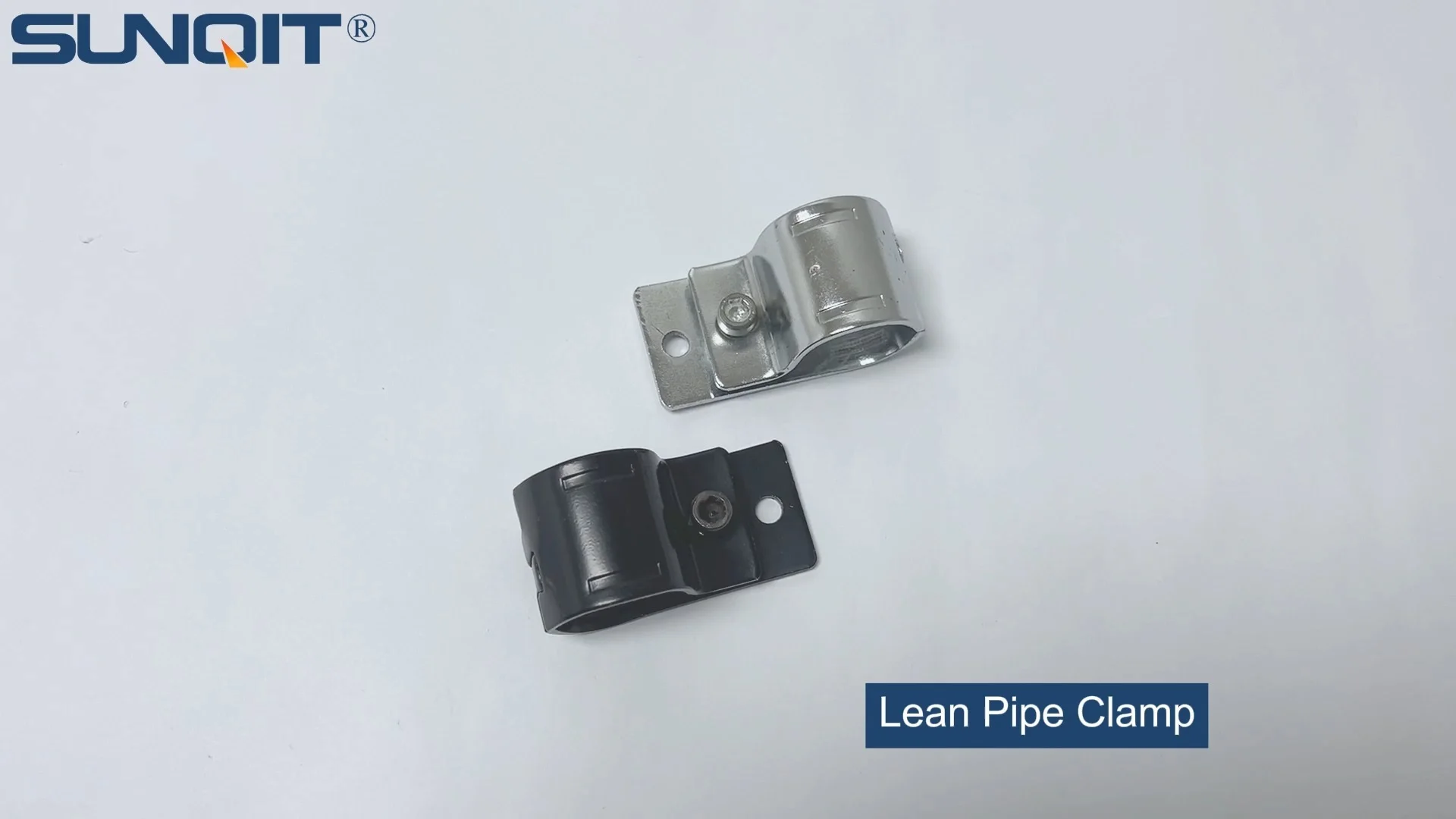
Lean Pipe Clamp
Lean pipe clamp is used for rack system hang monitor or other panel for workbenck, flowrack in production daily use.
In today's fast-paced logistics and manufacturing landscape, sustainability isn't just a trend—it's a business necessity. Warehouses and production facilities worldwide are rethinking their operations, seeking ways to reduce waste, cut energy costs, and minimize their environmental footprint. At the heart of this transformation lies modular material handling systems, and among their most critical components are lean pipe clamps. These unassuming connectors are the glue that holds together everything from workbenches to flow racks, enabling flexibility, durability, and eco-friendliness in equal measure. But with so many options on the market, how do you choose the right lean pipe clamps to build a sustainable, efficient warehouse? Let's dive in.
Why Lean Pipe Clamps Matter in Modern Warehouses
Gone are the days of rigid, one-size-fits-all warehouse setups. Today's operations demand agility—whether it's reconfiguring a production line to meet seasonal demand or repurposing a section of the warehouse for new inventory. Lean pipe clamps make this agility possible. Unlike welded or permanently fixed structures, systems built with lean pipe clamps can be disassembled, reconfigured, and reused with minimal effort. This not only saves time and money but also drastically reduces waste, as there's no need to replace entire setups when needs change.
But their value goes beyond flexibility. The right lean pipe clamps ensure that structures like workbenches and flow racks are stable, safe, and built to last. A poorly chosen clamp can lead to wobbly workstations, damaged goods, or even workplace accidents—all of which undermine sustainability efforts by wasting resources and increasing operational costs. In short, lean pipe clamps aren't just hardware; they're a foundation for building a warehouse that's both efficient and kind to the planet.
Key Factors to Consider When Choosing Lean Pipe Clamps
Material Selection: Balancing Durability and Eco-Friendliness
The first decision you'll face when choosing lean pipe clamps is material. The options most commonly available are aluminum, steel, and plastic, each with its own trade-offs in terms of strength, weight, cost, and sustainability. Let's break down how they stack up:
| Material | Key Features | Sustainability Score (1-5) | Best For |
|---|---|---|---|
| Aluminum | Lightweight, corrosion-resistant, high strength-to-weight ratio, 100% recyclable | 5 | Cleanrooms, food processing facilities, sustainable operations prioritizing recyclability |
| Steel | Exceptional load capacity, highly durable, recyclable but energy-intensive to produce | 3 | Heavy-duty manufacturing lines, warehouses handling bulky or heavy items |
| Plastic | Cost-effective, lightweight, resistant to chemicals, limited recyclability (varies by type) | 2 | Temporary setups, low-weight applications, or environments where non-conductivity is key |
For sustainability-focused warehouses, aluminum often rises to the top. Not only is it lightweight—reducing shipping emissions and making installations easier—but it's also infinitely recyclable without losing quality. When a clamp reaches the end of its life, it can be melted down and repurposed into new aluminum profile accessories or even entirely new clamps. Steel, while strong, requires more energy to produce and transport, and plastic clamps, though cheap, often end up in landfills due to limited recycling options.
Compatibility with Lean Pipe Joints and Aluminum Profiles
A clamp is only as good as its ability to work with other components. Most lean pipe systems rely on a combination of pipes, joints, and profiles—so your clamps must be compatible with the lean pipe joints and aluminum profiles already in your warehouse (or those you plan to invest in). For example, if you're using aluminum lean pipe, you'll need clamps designed to grip its smooth surface without damaging it. Mismatched components can lead to loose connections, which compromise safety and reduce the lifespan of the entire system.
Look for clamps that are designed to work with standard sizes, such as the 28mm diameter common in many lean pipe systems, or that come with adjustable features to fit multiple profile types. Many manufacturers also offer sample kits, allowing you to test clamps with your existing aluminum profile accessories (like end caps or connectors) before committing to a bulk order. This small step can save you from costly mistakes down the line.
Load Capacity and Durability: Investing in Longevity
Sustainability isn't just about materials—it's also about longevity. A clamp that needs frequent replacement is far less eco-friendly than one that lasts for years, even if it has a slightly higher upfront cost. When evaluating load capacity, consider not just the weight of the items your structure will hold but also factors like vibration (common in production environments) and repeated use (e.g., a flow rack that's loaded and unloaded hundreds of times daily).
Aluminum clamps, for instance, are surprisingly strong for their weight, making them suitable for most medium-duty applications, such as workbenches or light-duty flow racks. For heavier loads—like stacking pallets or supporting industrial machinery—steel clamps may be necessary, but opt for high-quality, corrosion-resistant steel to extend their lifespan. Avoid plastic clamps for heavy or high-use applications, as they can warp or crack over time, leading to frequent replacements and more waste.
Environmental Impact: Beyond the Clamp Itself
When assessing sustainability, look beyond the clamp's material to its entire lifecycle. How is it manufactured? Does the supplier use renewable energy in production? What's the carbon footprint of shipping it to your facility? For example, aluminum clamps may have a higher upfront carbon cost than plastic ones, but their reusability and recyclability often make them the greener choice in the long run.
Also, consider the end-of-life scenario. Can the clamp be recycled locally? Does the manufacturer offer a take-back program for old components? These factors might seem small, but they add up to a more sustainable operation overall. Even better, choose clamps that are part of a closed-loop system—where old clamps are collected, recycled, and turned into new ones—minimizing the need for virgin materials.

Types of Lean Pipe Clamps and Their Applications
Not all lean pipe clamps are created equal. Different designs serve different purposes, and choosing the right type for your application is key to maximizing efficiency and sustainability. Here are the most common types you'll encounter:
Fixed vs. Rotating Clamps
Fixed clamps lock pipes and profiles in place, creating rigid structures like workbenches or stationary material racks. They're ideal for applications where stability is paramount, such as a workbench E (single deck-without caster) used for assembly work. Rotating clamps, on the other hand, allow for adjustability—think of a flow rack where the angle of the roller track needs to be to control the speed of goods. These are perfect for dynamic environments where layouts change frequently, as they eliminate the need to disassemble and reassemble entire sections.
Heavy-Duty vs. Lightweight Clamps
Heavy-duty clamps are built with thicker materials and reinforced designs to handle high loads. They're typically made of steel or thick-walled aluminum and are used in applications like supporting conveyor systems or stacking heavy pallets. Lightweight clamps, often made of thin aluminum or high-grade plastic, are better suited for lighter tasks, such as organizing tools on a workbench or building temporary storage racks. Choosing the right weight class ensures you're not wasting material (or money) on a clamp that's stronger than needed.
ESD-Compliant Clamps for Sensitive Environments
In electronics manufacturing or warehouses handling sensitive components, electrostatic discharge (ESD) can damage goods and disrupt operations. ESD-compliant lean pipe clamps are designed to dissipate static electricity, protecting both products and workers. These are often made with conductive materials or coatings and are a must for sustainability in such environments—damaged goods mean wasted resources, so preventing ESD is as eco-friendly as it is cost-effective.

Integrating Clamps with Workbenches, Flow Racks, and More
Lean pipe clamps rarely work in isolation. They're part of a larger ecosystem that includes workbenches, flow racks, and other material handling equipment. To build a truly sustainable system, you need to ensure that all these components work together seamlessly.
Take workbenches, for example. A well-designed workbench should be ergonomic, durable, and easy to modify. Using fixed lean pipe clamps to secure the frame ensures stability, while rotating clamps on the shelves allow for height adjustments as tasks change. Pairing these with aluminum honeycomb panels (lightweight, strong, and recyclable) for the work surface further enhances sustainability by reducing the overall weight of the structure and minimizing material use.
Flow racks, which rely on gravity to move goods from one end to the other, depend on precise alignment. Here, lean pipe clamps must hold roller tracks securely at the correct angle to ensure smooth, consistent flow. Using clamps that are compatible with roller track connectors and aluminum guide rails ensures that the system remains stable even with constant use. Over time, this reduces the need for maintenance and replacements, keeping your operation running efficiently and sustainably.

Common Mistakes to Avoid
Even with the best intentions, it's easy to make missteps when choosing lean pipe clamps. Here are a few common pitfalls to steer clear of:
- Overlooking compatibility: Assuming all clamps fit all pipes or joints is a recipe for disaster. Always check that clamps are designed for your specific pipe diameter (e.g., 28mm aluminum lean pipe) and joint type.
- Prioritizing cost over quality: Cheap plastic clamps may save money upfront, but they'll need frequent replacement, increasing waste and long-term costs.
- Ignoring load capacity ratings: Underestimating the weight your structure will hold can lead to clamp failure, damaged goods, and safety risks.
- Forgetting about future needs: Choosing fixed clamps for a structure that may need reconfiguration limits your agility and increases waste when changes are necessary.
The Future of Lean Pipe Clamps: Innovations for Even Greater Sustainability
As sustainability becomes more central to warehouse operations, manufacturers are innovating to make lean pipe clamps even more eco-friendly. One emerging trend is the use of recycled materials—for example, clamps made from 100% post-consumer aluminum, which reduces the energy needed for production. Another is smart clamps embedded with RFID tags, allowing warehouses to track usage and maintenance needs, ensuring components are replaced only when necessary (rather than on a fixed schedule).
We're also seeing advances in design, such as self-locking clamps that require no tools to assemble, reducing setup time and human error. For even more specialized applications, some companies are experimenting with bio-based plastics—clamps made from plant-derived materials that are biodegradable at the end of their lifecycle. While these are still niche, they offer exciting possibilities for the future of sustainable warehousing.
Conclusion: Building a Sustainable Warehouse, One Clamp at a Time
Choosing the right lean pipe clamps is more than a purchasing decision—it's a commitment to building a warehouse that's efficient, adaptable, and sustainable. By prioritizing materials like aluminum, ensuring compatibility with other components, and focusing on longevity, you can create systems that reduce waste, save money, and stand the test of time. Remember, sustainability isn't about perfection; it's about making intentional choices that add up to a bigger impact. So the next time you're evaluating lean pipe clamps, think beyond the here and now—think about how that small connector will help your warehouse thrive, today and for years to come.