- Company Articles
- Products and Technology
- Product knowledge
- Choosing One Way Rotatory Straight Lean Pipe Joints for High-Volume Manufacturing

Choosing One Way Rotatory Straight Lean Pipe Joints for High-Volume Manufacturing
Related Product
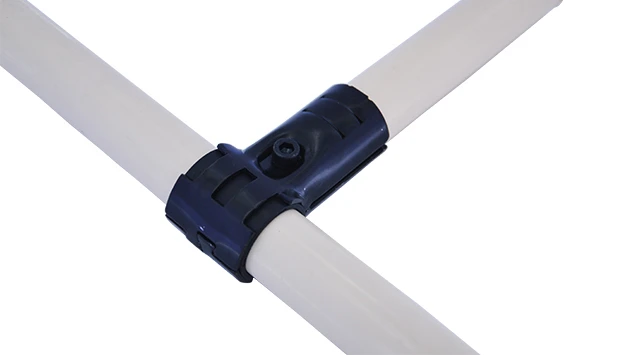
One Way Rotatory Straight Lean Pipe Joint
Two way lean pipe joint for 2 pcs 28MM lean pipe connection in straight angle with rotatory fucntion, which used widely in workbench, flow rack, hand trolley frame connection.
In the fast-paced world of high-volume manufacturing, every second counts. Whether you're assembling electronics, automotive parts, or consumer goods, the efficiency of your production line can make or break your bottom line. You've probably heard about lean system principles—eliminating waste, streamlining workflows, and maximizing value. But here's the thing: lean systems don't just happen on paper. They're built from the ground up, with every component playing a role in keeping your operations running like a well-oiled machine. Today, we're zeroing in on a small but mighty part of that ecosystem: the one way rotatory straight lean pipe joint . If you're looking to boost flexibility, reduce downtime, and adapt quickly to changing production needs, this is one component you can't afford to overlook.
The Backbone of Lean Manufacturing: Why Components Matter
Let's start with the basics. A lean system is all about creating a workflow that's responsive, efficient, and adaptable. Traditional manufacturing setups often rely on rigid, fixed structures—think heavy metal frames bolted to the floor or custom-built workstations that take weeks to reconfigure. But in today's market, where product cycles are shorter than ever, that rigidity is a liability. You need to switch between product models, scale production up or down, and even rearrange your line layout on the fly. That's where modular components come in, and at the heart of many modular setups are lean pipe joint systems.
Lean pipe joints are the connectors that hold together the aluminum or steel pipes, workbenches, and material handling equipment in your production line. They're the reason you can build a workbench one day and reconfigure it into a material rack the next. But not all joints are created equal. Fixed joints keep pipes locked in place, which is great for stability but terrible for flexibility. Swivel joints offer 360-degree movement, which is useful for certain applications but can introduce unnecessary wobble in high-stress environments. Then there's the one way rotatory straight lean pipe joint —a hybrid that combines controlled movement with unwavering stability. It rotates in one direction (hence "one way") while maintaining a straight alignment, making it perfect for scenarios where you need precision and adaptability in equal measure.
Imagine, for a moment, a busy automotive parts assembly line. Your workers are installing door handles onto car frames, and the parts need to move smoothly from the roller track to the workbench and back. If the joint connecting the roller track to the workbench is fixed, you can't adjust the angle to reduce worker strain or speed up part transfer. If it's a full swivel joint, the track might shift unexpectedly, causing parts to jam or fall. But with a one way rotatory joint, you can set the track at the optimal angle, lock it in place, and still make minor adjustments as needed—no tools, no downtime, no headaches. That's the power of choosing the right component.
What Makes One Way Rotatory Straight Lean Pipe Joints Stand Out?
Let's dive deeper into what makes these joints unique. First, their design: a one way rotatory straight lean pipe joint is engineered to allow rotation in a single plane (usually 0-180 degrees) while keeping the connected pipes aligned straight. Unlike multi-directional joints, which can pivot in multiple axes, this "one way" movement ensures that your structure remains stable even as you adjust it. The "straight" aspect is key, too—it prevents pipes from bending or misaligning, which is critical for maintaining the integrity of your lean system .
But why does this matter for high-volume manufacturing? Let's break down the benefits:
- Adaptability Without Compromise: High-volume production lines rarely stay the same for long. Maybe you're launching a new product variant, scaling up for peak season, or redesigning a workflow to reduce ergonomic strain. With one way rotatory joints, you can reposition workbench heights, adjust roller track angles, or even reconfigure entire sections of your line in minutes—not days. No need for welding, drilling, or custom fabrication. Just loosen the joint, rotate to the desired position, and lock it back in. It's like having a production line that can "learn" and evolve with your needs.
- Durability That Keeps Up With Your Pace: Let's talk materials. Many one way rotatory joints are made from aluminum lean pipe or steel, both known for their strength and resistance to wear. Aluminum, in particular, is a favorite in manufacturing environments because it's lightweight (easier to handle during reconfigurations) and corrosion-resistant (perfect for factories with humidity or chemical exposure). Even in high-traffic areas—where joints are adjusted daily or pipes are loaded with heavy materials—these joints hold up, reducing the need for frequent replacements.
- Seamless Integration With Existing Systems: Chances are, you already have some lean system components in place—pipes, roller track s, workbenches, or material racks. One way rotatory joints are designed to be compatible with standard lean pipe sizes (often 28mm or 30mm diameter), so you won't need to replace your entire setup to upgrade. This backward compatibility saves time and money, letting you incrementally improve your line without a complete overhaul.
- Reduced Downtime, Increased Output: In manufacturing, downtime is the enemy. Every minute your line is idle translates to lost revenue. Traditional fixed joints require tools (wrenches, drills) to adjust, which can take hours of production time. One way rotatory joints, by contrast, are often tool-free—just twist, rotate, and lock. That means your team can make adjustments between shifts, during breaks, or even mid-production if needed, keeping your line running at full capacity.
Take, for example, a electronics assembly plant that produces smartphones. Their production line includes a roller track system that feeds circuit boards to workbench s where workers install microchips. When a new chip size is introduced, the height of the roller track needs to align perfectly with the workbench to prevent jamming. With fixed joints, this adjustment would require shutting down the line, unbolting the track, and repositioning it—taking 2-3 hours. With one way rotatory joints, a single operator can adjust the track height in 15 minutes, minimizing downtime and keeping production on schedule.

Choosing the Right One Way Rotatory Joint: Key Factors to Consider
Now that you understand the benefits, how do you choose the right one way rotatory straight lean pipe joint for your needs? Not all joints are created equal, and the wrong choice can lead to instability, frequent breakdowns, or wasted money. Here are the critical factors to keep in mind:
1. Material: Aluminum Lean Pipe vs. Steel
The material of your joint matters more than you might think. The two most common options are steel and aluminum lean pipe joints. Let's compare them:
| Feature | Aluminum Lean Pipe Joints | Steel Lean Pipe Joints |
|---|---|---|
| Weight | Lightweight (easier to handle during reconfigurations) | Heavier (more stable for high-load applications) |
| Corrosion Resistance | High (ideal for humid or chemical-exposed environments) | Moderate (may require coating in harsh conditions) |
| Load Capacity | Good (suitable for medium-weight loads: 50-150kg) | Excellent (handles heavy loads: 150-500kg+) |
| Cost | Slightly higher upfront cost | Lower initial cost |
| Best For | Electronics, pharmaceuticals, or cleanrooms where weight and corrosion matter | Automotive, heavy machinery, or applications with extreme loads |
For most high-volume manufacturing lines—especially those with frequent reconfigurations— aluminum lean pipe joints are the way to go. Their lightweight design makes adjustments easier, and their corrosion resistance ensures longevity even in busy factories. Steel joints, on the other hand, are better suited for static setups with heavy, constant loads.
2. Load Capacity: Know Your Limits
Every joint has a maximum load it can safely support, measured in kilograms or pounds. This includes both the static load (weight when the joint is stationary) and dynamic load (weight when the joint is in motion, like during adjustment). Ignoring load capacity is a recipe for disaster—overloading a joint can lead to bending, breakage, or even collapse, putting workers at risk and halting production.
To determine the right load capacity, start by calculating the weight of the materials, equipment, and even workers that will be supported by the joint. For example, a workbench used for assembling small parts might only need a joint with a 50kg capacity, while a roller track carrying heavy automotive components could require 200kg+ capacity. Always choose a joint with a load rating that exceeds your expected maximum—this "safety margin" prevents wear and tear from daily use.
3. Rotation Range: How Much Movement Do You Need?
One way rotatory joints come with different rotation ranges, typically from 0-90 degrees or 0-180 degrees. The right range depends on your application. For example:
- A roller track that feeds parts to a workbench might only need 0-90 degrees of rotation to adjust the angle between the track and the bench.
- A height-adjustable workbench, however, could benefit from a 0-180 degree range, allowing it to tilt fully for easy access to tools or materials stored underneath.
Be wary of joints with overly wide rotation ranges—they can sacrifice stability for flexibility. A 180-degree joint that feels "loose" when locked might not hold position under heavy loads, leading to misalignments or accidents.
4. Environmental Compatibility: Think About Your Workplace
Manufacturing environments vary widely, and your joint needs to hold up to yours. Consider factors like:
- Moisture or Chemicals: If your factory deals with liquids (e.g., food processing, cleaning solutions) or chemicals (e.g., automotive painting), aluminum lean pipe joints are better than steel, as they resist rust and corrosion.
- Static Electricity: In electronics manufacturing, electrostatic discharge (ESD) can damage sensitive components. Look for joints with ESD-safe coatings or materials to prevent static buildup.
- Temperature Extremes: Factories with high heat (e.g., foundries) or cold (e.g., refrigerated warehouses) need joints with materials that can withstand thermal expansion and contraction without cracking or warping.

Real-World Applications: How One Way Rotatory Joints Transform Production Lines
Let's put this all into context with real-world examples. These joints aren't just theoretical—they're making a difference in factories around the world. Here are three scenarios where they shine:
1. Automotive Assembly: Streamlining Material Flow
A leading automotive parts manufacturer was struggling with bottlenecks in their door panel assembly line. Their roller track system, which transported panels from the stamping area to the workbench s, was fixed at a 45-degree angle. Workers had to reach across the track to grab panels, leading to fatigue and slowdowns. After switching to one way rotatory straight lean pipe joint s, they adjusted the track to a 30-degree angle, aligning it with the natural reach of workers. The result? A 15% increase in assembly speed and a 20% reduction in reported ergonomic injuries. Plus, when they introduced a larger door panel for SUV models, they reconfigured the track angle in under an hour, avoiding the 8-hour shutdown they'd previously needed.
2. Electronics Manufacturing: Adapting to Small Batch Sizes
An electronics contract manufacturer produces circuit boards for everything from smart home devices to medical equipment. With product lifecycles getting shorter, they needed a way to switch between production runs quickly. Their solution? A modular lean system built with aluminum lean pipe s and one way rotatory joints. Each workbench can be reconfigured for different board sizes—adjusting height, adding tool holders, or repositioning roller track s for component delivery—in under 30 minutes. What used to take a full day of retooling now happens between shifts, letting them take on smaller, more specialized orders without sacrificing efficiency.
3. Food Packaging: Hygiene and Flexibility in One
A food packaging plant needed to comply with strict sanitation standards while also adapting to seasonal demand spikes (think holiday gift sets vs. regular snack packs). Traditional steel joints were prone to rust in the humid, washdown environment, and reconfiguring lines meant shutting down for deep cleaning afterward. By switching to corrosion-resistant aluminum lean pipe joints with one way rotation, they solved both problems. The aluminum resists rust even after daily washdowns, and the tool-free adjustment means they can reconfigure roller track s and workbench s between runs without disassembling the entire line—cutting changeover time by 40% and reducing the risk of cross-contamination.
Avoiding Common Pitfalls: What to Watch For
Even with the right joint, there are mistakes that can derail your lean system success. Here are a few to avoid:
- Skipping Load Testing: Never assume a joint can handle your expected load based on the manufacturer's specs alone. Test it with actual materials in your environment—temperature, humidity, and vibration can all affect performance.
- Overlooking Compatibility: Make sure the joint's pipe diameter matches your existing lean system components. A 28mm joint won't fit a 30mm pipe, and forcing it can lead to cracks or instability.
- Ignoring Maintenance: Even durable joints need love. Check for loose bolts, worn locking mechanisms, or signs of corrosion regularly. A quick tightening or replacement today can prevent a catastrophic failure tomorrow.
- Choosing Price Over Quality: It's tempting to go with the cheapest joint, but low-quality materials or shoddy craftsmanship can lead to frequent breakdowns. Invest in joints from reputable suppliers—look for certifications like ISO 9001 or industry-specific standards (e.g., ESD compliance for electronics).
Wrapping Up: The Small Component That Drives Big Results
At the end of the day, one way rotatory straight lean pipe joint s are more than just connectors—they're enablers of lean system success. In high-volume manufacturing, where every second and every dollar counts, the ability to adapt quickly, reduce downtime, and maintain efficiency is non-negotiable. These joints give you that power, all while integrating seamlessly with your existing workbench es, roller track s, and other lean components.
So, whether you're building a new production line from scratch or upgrading an existing one, don't overlook the details. Choose joints that align with your load needs, environment, and workflow goals. Invest in quality materials like aluminum lean pipe for durability and flexibility. And remember: a lean system is only as strong as its weakest component. With the right one way rotatory joints, you're not just building a production line—you're building a foundation for long-term success.
Ready to take the next step? Start by auditing your current setup: Where are the bottlenecks? Which workstations or material flows could benefit from more flexibility? Then, partner with a supplier who understands your industry and can help you select the perfect joints for your needs. Your production line (and your bottom line) will thank you.