- Company Articles
- Products and Technology
- Product knowledge
- Choosing the Right Fittings for 4040B EU Standard Aluminum Profile Assemblies

Choosing the Right Fittings for 4040B EU Standard Aluminum Profile Assemblies
Related Product
4040B EU Standard Aluminum Profile
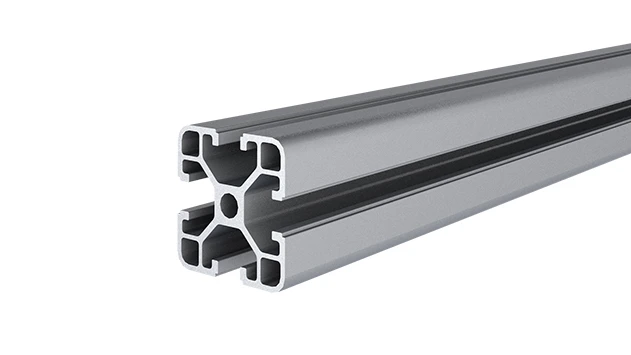
4040B is a 4.00x4.00 CM fractional 40 series square extrusion T-slot profile with four open T-slots, each side with 4.00cm face. The profile has align-a-grooves to assist in aligning connecting profiles.
Walk into any modern workshop, manufacturing plant, or even a DIY enthusiast's garage, and you're likely to spot structures built with aluminum profiles. Sleek, strong, and surprisingly versatile, these metal bars have revolutionized how we build everything from workbenches to machine guards. But if you've ever held a 4040B EU standard aluminum profile in one hand and stared at a bin of tiny, confusing parts in the other, you know the truth: the profiles are just the starting point. The real secret to a sturdy, functional build? Choosing the right fittings.
Whether you're a seasoned fabricator or a first-time builder, picking fittings can feel like solving a puzzle with missing pieces. Do you need a 90° connector or a three-way? Should you splurge on metal gussets or save with plastic end caps? And what even is a gusset, anyway? In this guide, we're breaking down everything you need to know about fittings for 4040B profiles—no jargon, no guesswork, just practical advice to help you build something that lasts.
First Things First: What is 4040B EU Standard Aluminum Profile?
Before we dive into fittings, let's make sure we're all on the same page about the star of the show: the 4040B EU standard aluminum profile. If you're new to this, "4040B" might sound like a code, but it's actually pretty straightforward. The numbers "4040" mean the profile is 40mm wide and 40mm tall—square in cross-section. The "B" refers to a specific groove (or "T-slot") design defined by EU standards, which ensures compatibility with a wide range of accessories. Think of it as the universal language of aluminum profiles: if a fitting is labeled "EU standard," it should slide right into those T-slots, no fuss.
Why is this profile so popular? For starters, it's the Goldilocks of aluminum profiles—not too big, not too small. At 40x40mm, it's strong enough to support heavy loads (we're talking hundreds of kilograms, depending on the setup) but lightweight enough to maneuver. It's made from aluminum alloy (usually 6063 T5, a material known for its strength and corrosion resistance), so it holds up in factories, garages, and even some outdoor settings. And those T-slots? They're the real game-changer. Running along all four sides, these grooves let you slide in fittings, brackets, and panels anywhere along the profile's length—no drilling, no welding, just easy, customizable assembly.
Common uses for 4040B profiles include workbenches, shelving units, conveyor frames, machine enclosures, and even custom furniture. Basically, if you need a structure that's sturdy, modular, and easy to modify, 4040B is probably your best bet. But again: none of that matters if your fittings are wrong.
Why Fittings Are the Unsung Heroes of Your Build
Let's say you buy a stack of 4040B profiles. You have a vision: a workbench with a shelf, a tool rack, maybe a small conveyor. You line up the profiles, but how do you connect them? Duct tape? Zip ties? (Please don't.) Fittings are the "glue" that turns individual profiles into a cohesive structure. They're the nuts and bolts (literally, sometimes) that hold everything together, ensure stability, and let you customize your design.
But here's the thing: not all fittings are created equal. Use a flimsy plastic connector on a heavy shelf, and you'll be picking up tools off the floor. Skip a gusset on a corner joint, and your frame might wobble like a table with a short leg. Even something as small as an end cap—those little covers for exposed profile ends—matters. Without them, you're left with sharp edges that can slice hands or collect dust and debris in the T-slots.
In short, fittings aren't just accessories—they're critical to safety, functionality, and longevity. A well-chosen set of fittings will make your build stronger, easier to assemble, and simpler to modify down the line. A poor set? Well, let's just say you'll be rebuilding sooner than you'd like.

The Big Players: Key Fitting Categories for 4040B Profiles
Fittings come in all shapes and sizes, but they generally fall into a few main categories. Let's break them down, with real-world examples of when (and why) you'd use each.
1. Connectors: The "Joiners" of the Profile World
Connectors do exactly what their name suggests: they join two or more profiles together. Think of them as the elbows, T-junctions, and crossroads of your build. For 4040B profiles, the most common type is the 90° aluminum profile connector —the workhorse of any right-angle joint. Whether you're building the legs of a workbench or the corners of a shelving unit, this is the connector you'll reach for first.
How do they work? Most 90° connectors slide into the T-slots of two perpendicular profiles, then lock in place with a bolt or set screw. Some are made of aluminum (stronger, better for heavy loads), others of reinforced plastic (lighter, cheaper, and fine for light-duty projects). Pro tip: If you're building something that will hold weight—like a shelf for power tools—spend the extra on metal connectors. Plastic might warp over time, especially under stress.
But 90° isn't the only angle. Need to build a sloped roof for a machine enclosure? Grab a 45° or 135° connector. Want to split a profile into three directions (like a T-junction)? A three-way connector has you covered. There are even crossing connectors for when you need profiles to overlap (think of a grid-like shelf). The key here is to map out your design first—draw a quick sketch of where profiles meet, and note the angles. It'll save you from buying a bag of 90° connectors only to realize you need a few 45s.
2. Gussets: The "Reinforcers" for Wobbly Joints
If connectors are the joiners, gussets are the bodyguards. These small, triangular (or sometimes square) plates bolt onto the corners of your frame, adding rigidity and preventing twisting. Imagine building a cube with 4040B profiles and 90° connectors—it might stand up, but push on one side, and it'll wobble like a Jenga tower. Add a gusset to each corner, and suddenly it's rock-solid.
For 4040B profiles, the most common gusset is the gusset alp 4040 (the "alp" likely stands for "aluminum profile"). These are specifically designed to fit 40x40mm profiles, with holes that align perfectly with the T-slots. They're usually made of steel or aluminum, so they're tough enough to handle heavy loads. When should you use them? Anytime your structure will bear weight (shelves, workbenches) or experience movement (like a conveyor frame). I once helped a friend build a garage shelf without gussets to "save time." A month later, he called me panicking because the whole thing tilted when he stacked his toolboxes on it. We had to take it apart, add the gussets, and rebuild—lesson learned.
3. End Caps: The "Finishing Touches" You Can't Ignore
End caps are the unsung heroes of safety and aesthetics. These small covers slide or snap onto the exposed ends of profiles, and while they might seem optional, they're anything but. Think about it: a raw aluminum profile end is sharp—sharp enough to cut a hand when you brush against it. End caps smooth those edges, turning a hazard into a harmless finish. They also keep dust, dirt, and debris out of the T-slots, which can gunk up fittings later.
The aluminum profile end cap for 4040B profiles comes in a few styles. Flat end caps are basic and budget-friendly—great for hidden ends (like the bottom of a workbench leg). Domed end caps are rounded and look nicer, making them ideal for visible parts of a build (like the top of a display shelf). Some even have holes for cables, letting you route wires through the profile without drilling. Pro tip: Buy a few extra. They're small and easy to lose, and there's nothing more frustrating than finishing a build only to realize you're short one cap.
4. Brackets and Fasteners: The "Mounting" MVPs
Brackets and fasteners are the Swiss Army knives of fittings—they let you mount just about anything to your profiles. Need to add a plywood top to your workbench? Use L-brackets bolted into the T-slots. Want to hang a tool board on the side? Panel brackets will hold it steady. Even something as simple as attaching casters (wheels) to a mobile cart requires bracket plates that bolt into the profile ends.
Fasteners are the tiny but critical parts that hold everything together: T-nuts (which slide into T-slots and let you bolt on brackets), hex bolts, washers, and set screws. For 4040B profiles, stick with M5 or M6 bolts—they're the standard size for EU T-slots. And don't skimp on quality here: cheap bolts can strip, and loose T-nuts will make your structure wobble. Spend a little more on zinc-plated or stainless steel fasteners, especially if your build will be in a damp environment (like a garage with condensation).
A Quick Reference: Common Fittings for 4040B Profiles
| Fitting Type | Function | Best For | Material Tip |
|---|---|---|---|
| 90° Aluminum Profile Connector | Joins two profiles at right angles | Workbench legs, shelving corners | Metal for heavy loads; plastic for light duty |
| Gusset Alp 4040 | Reinforces corners, prevents twisting | Weight-bearing structures (shelves, carts) | Steel or aluminum for maximum strength |
| Aluminum Profile End Cap | Covers sharp ends, keeps out debris | All exposed profile ends | Plastic is fine; metal for industrial settings |
| Three-Way Connector | Joins three profiles (T-junction) | Branch structures (shelf dividers, T-shaped frames) | Aluminum for stability; check load rating |
| L-Bracket | Mounts panels, shelves, or accessories | Attaching workbench tops, tool boards | Zinc-plated steel resists rust |
How to Choose Fittings: A Step-by-Step Guide
Now that you know the basics, let's walk through how to pick fittings for your specific project. It's easier than you think—just follow these steps.
Step 1: Define Your Build's Purpose
Start by asking: What will this structure do? Will it hold weight (and how much)? Will it move (like a cart with casters)? Will it be indoors or outdoors? A workbench for assembling electronics will have different needs than a heavy-duty storage rack for automotive parts. For example:
- Heavy load (200kg+): Use aluminum connectors, steel gussets, and thick brackets. Avoid plastic fittings.
- Light load (50kg or less): Plastic connectors and gussets are fine. You might even skip gussets if the structure is small.
- Mobile (casters): Reinforce the base with gussets—movement adds stress to joints.
- Outdoor/damp: Choose stainless steel or zinc-plated fittings to prevent rust.
Step 2: Draw Your Design (Yes, Even a Bad Sketch Works)
You don't need to be an artist, but grab a pen and paper (or open a notes app) and sketch your build. Mark where profiles meet (these are your connector points) and note the angles (90°, 45°, etc.). For example, a simple workbench might have:
- 4 vertical leg profiles (4040B, of course).
- 4 horizontal profiles (top frame).
- 4 horizontal profiles (bottom frame, for stability).
- Optional shelf halfway up.
In this case, you'd need 8 x 90° connectors (4 for the top frame, 4 for the bottom), plus 4 more if you add a shelf. You'd also want 8 gussets (one at each corner of the top and bottom frames) to prevent wobbling.
Step 3: Count the Connections and Add Extras
Once you have your sketch, count how many of each fitting you need. Then add 10-20% extra. Fittings are small and easy to lose, and it's better to have a few spares than to halt your build because you're missing one connector. I once ordered exactly enough parts for a project, dropped a T-nut on the shop floor, and spent an hour searching for it instead of building. Learn from my mistake.
Step 4: Check for Compatibility
Remember that "EU standard" label we talked about earlier? Stick to it. If your profile is 4040B EU standard, buy fittings labeled "EU standard" or "compatible with 4040B." Off-brand or non-standard fittings might be cheaper, but they might not slide into the T-slots properly—too loose, too tight, or the holes won't align. Save yourself the headache and buy from a reputable supplier (we'll talk about that later).
Common Mistakes to Avoid (Because We've All Made Them)
Even pros make fitting mistakes. Here are the ones I see most often—and how to skip them.
Mistake 1: Underestimating Load (AKA "Will This Shelf Collapse?")
The biggest error? Assuming "strong enough" is good enough. A 4040B profile can hold a lot, but the fittings are the weak link. For example, a plastic 90° connector might hold 50kg, but an aluminum one can hold 150kg. If you're stacking 100kg of tools on a shelf held by plastic connectors, you're asking for trouble. Always check the load rating of your fittings (most suppliers list this) and err on the side of caution.
Mistake 2: Skipping End Caps (Ouch!)
I get it—end caps feel like a "nice-to-have." But I've seen too many people skip them, only to cut their hand on a sharp profile end later. They're cheap (usually less than $1 each), and they take 2 seconds to install. Just buy them. Your future self (and your fingers) will thank you.
Mistake 3: Forgetting Gussets (Wobbly = Dangerous)
Gussets add time and cost, but they're non-negotiable for anything that holds weight. A shelf without gussets might stand up initially, but over time, the connectors will loosen, and the whole thing will tilt. Do it right the first time: add gussets at every corner where weight is involved.
Where to Buy Fittings (And What to Look For)
Now that you know what you need, where do you buy it? There are plenty of suppliers online and in hardware stores, but not all are created equal. Look for sellers that specialize in aluminum profile accessories—they'll have a better selection and know their stuff if you have questions. Check reviews, too: if other builders complain about "loose connectors" or "misaligned holes," keep shopping.
When in doubt, ask for samples. Many suppliers will send a few connectors or gussets for free (or a small fee) so you can test fit them with your 4040B profiles. It's worth the wait to avoid ordering a bulk pack of incompatible parts.
Final Thoughts: Fittings Make the Build
At the end of the day, building with 4040B EU standard aluminum profile is all about customization. You're not stuck with a one-size-fits-all shelf or workbench—you're creating something that fits your needs. But that customization only works if your fittings are up to the task.
So take your time, sketch your design, and don't skimp on the important parts. A few extra dollars on aluminum connectors or steel gussets now will save you from rebuilding later. And when you're done, stand back and admire your handiwork: a sturdy, functional structure held together by the tiny, mighty fittings that made it all possible.
Happy building!