- Company Articles
- Products and Technology
- Product knowledge
- Chrome Coating Benefits for Four Way Straight Lean Pipe Joints: Corrosion Resistance & Aesthetics

Chrome Coating Benefits for Four Way Straight Lean Pipe Joints: Corrosion Resistance & Aesthetics
Related Product
Four Way Straight Lean Pipe Joint
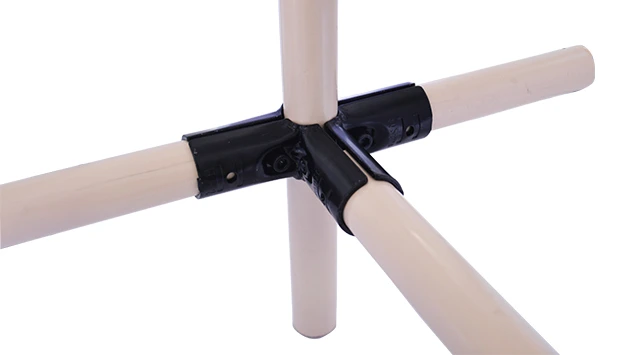
Four way lean pipe joint for 4 pcs 28MM lean pipe connection in straight angle, which used widely in workbench, flow rack, hand trolley frame connection.
In the world of manufacturing and production, where every second counts and efficiency is king, there are countless unsung heroes working behind the scenes. They're not the flashy machines or the high-tech software—they're the small, unassuming components that hold everything together. Today, we're shining a spotlight on one such hero: the four way straight lean pipe joint. These humble connectors are the backbone of modular workspaces, material racks, and production lines, especially in lean systems where flexibility and durability are non-negotiable. But what happens when you add a layer of chrome coating to these joints? The result is a game-changer that blends functionality with visual appeal, tackling two big challenges in industrial settings: corrosion and wear, and the often-overlooked impact of aesthetics on workflow. Let's dive into why chrome-coated four way straight lean pipe joints deserve a spot on your next production line upgrade list.
Lean Systems: Where Every Component Counts
Before we get into the nitty-gritty of chrome coating, let's take a step back and talk about lean systems. If you've spent any time in a modern factory or warehouse, you've likely heard the term "lean"—it's all about streamlining processes, cutting waste, and making sure every action adds value to the end product. Lean systems thrive on modularity: the ability to rearrange, expand, or repurpose workspaces and equipment as needs change. This is where lean pipe and accessories come into play. From workbenches to turnover trolleys, flow racks to conveyor systems, these modular setups are built using lightweight pipes and joints that snap together like building blocks.
But here's the thing: the strength of any modular system lies in its weakest link. And more often than not, that link is the joint connecting the pipes. Think about it: a wobbly joint can throw off an entire material rack, causing delays as workers adjust loads or fix collapses. A joint that rusts away can compromise the stability of a workbench, putting tools and even workers at risk. In a lean system, where downtime is the enemy, unreliable joints aren't just an inconvenience—they're a threat to productivity. That's why choosing the right joint, and the right coating, matters so much.
Meet the Four Way Straight Lean Pipe Joint: Your Modular Workhorse
Now, let's zoom in on the star of the show: the four way straight lean pipe joint. If you've ever assembled a modular shelf or a DIY project, you know that some connectors are one-trick ponies—they only join two pieces in a straight line or a right angle. Not this joint. As the name suggests, it's designed to connect four pipes in a straight, linear arrangement, allowing for multi-directional builds. Picture a central hub with four openings, each sized to fit standard lean pipes, whether they're steel, aluminum, or plastic-coated. This design makes it incredibly versatile: use it to build a multi-tiered material rack, a cross-shaped workbench frame, or even a branching conveyor system.
In busy production environments, this flexibility is gold. Let's say your team needs to expand a material rack from two rows to four—instead of buying a whole new rack, you can simply add a four way straight joint to extend the structure. Or maybe you're setting up a temporary assembly line for a seasonal product; these joints let you disassemble and reconfigure the setup in hours, not days. But versatility alone isn't enough. These joints also need to handle heavy loads: stacks of boxes, tools, raw materials. That's why most four way straight lean pipe joints are made from sturdy steel—strong enough to bear weight, but without the bulk that would slow down assembly.
But steel, as reliable as it is, has a Achilles' heel: corrosion. In factories where humidity is high, or where cleaning agents and oils are regularly used, uncoated steel joints start to rust. That rust doesn't just look bad—it weakens the metal, making the joint loose and unstable over time. And let's not forget about aesthetics: a rusty joint on an otherwise clean production line sticks out like a sore thumb, sending the message that details (and by extension, quality) might be overlooked. Enter chrome coating: a solution that addresses both issues head-on.

Chrome Coating: More Than Just a Shiny Finish
When you hear "chrome coating," you might think of classic car bumpers or kitchen faucets—polished, reflective, and undeniably sleek. But in the world of industrial components, chrome coating is about far more than good looks. It's a protective layer that transforms the performance of metal parts, and for four way straight lean pipe joints, it's a match made in efficiency heaven. Let's break down how it works and why it matters.
The Science of Chrome Coating (Simplified)
Chrome coating, or chromium plating, is a process where a thin layer of chromium is electroplated onto the surface of a metal part—in this case, our four way straight lean pipe joint. The process involves submerging the joint in a bath of chromium solution and passing an electric current through it, which causes chromium ions to bond to the steel surface. The result? A hard, smooth layer that's just a few micrometers thick but packs a punch in terms of protection.
Benefit #1: Corrosion Resistance—Fighting the Elements
Let's start with the big one: corrosion resistance. Industrial environments are tough on metal. Think about a typical factory floor: there's moisture from steam or cleaning routines, oils from machinery that drip onto work surfaces, and even chemicals like degreasers or coolants that can eat away at unprotected steel. Over time, this exposure leads to rust, which isn't just unsightly—it's destructive. Rust weakens the metal, creating cracks and pitting that loosen the joint's grip on the pipes. A loose joint means wobbly racks, unstable workbenches, and eventually, the need for costly replacements.
Chrome coating acts as a barrier between the steel joint and the elements. Chromium is naturally resistant to oxidation, meaning it doesn't rust when exposed to water or air. That thin layer of chrome seals the steel, preventing moisture, oils, and chemicals from seeping in. To put it in perspective: an uncoated steel joint might start showing signs of rust after 6 months in a humid factory. A chrome-coated joint? It can last 3–5 years or more without a hint of corrosion, even in the same conditions. That's a huge difference in lifespan, and it directly translates to lower maintenance costs and fewer production disruptions.
Take, for example, a food processing plant where daily washdowns with sanitizing solutions are required. The high moisture and harsh chemicals would quickly corrode uncoated joints. But with chrome coating, the joints stay intact, ensuring material racks holding ingredients or packaging don't collapse. Or consider a warehouse in a coastal area, where salt air can corrosion—chrome-coated joints stand up to that salty breeze, keeping inventory racks stable and safe.
Benefit #2: Aesthetics—When Looks Meet Function
Now, let's talk about the other side of the coin: aesthetics. You might be thinking, "Why does a pipe joint need to look good? It's just a tool!" But here's the thing: the appearance of a workspace has a bigger impact on morale and efficiency than you might realize. Walk into a factory where equipment is rusted, joints are chipped, and surfaces are grimy, and you'll likely find workers who feel undervalued or frustrated. On the flip side, a clean, organized, and visually consistent workspace sends a message: "We care about quality, and we care about you." Chrome-coated four way straight lean pipe joints play a small but significant role in creating that positive environment.
Chrome's bright, mirror-like finish is instantly noticeable. It reflects light, making work areas feel brighter and more open. Unlike matte or painted finishes, chrome is easy to clean—wiping away dust, oil, or fingerprints takes seconds with a damp cloth. This means fewer grimy buildup spots, which not only looks better but also reduces the risk of bacteria growth in sensitive environments like pharmaceutical or electronics manufacturing. Imagine a workbench where the joints gleam instead of rust—suddenly, that bench feels more like a professional workspace and less like a afterthought.
Aesthetics also matter for branding. If your facility hosts clients or auditors, a well-maintained production line with shiny chrome joints signals attention to detail. It says, "We invest in quality at every level, from our processes to our tools." For lean pipe suppliers, this is a selling point: offering chrome-coated joints isn't just about durability—it's about helping customers create workspaces they're proud to show off.
Bonus Benefit: Durability and Wear Resistance
While corrosion resistance and aesthetics are the headline benefits, chrome coating brings another advantage to the table: durability. Chromium is a hard metal—harder than steel, in fact. When electroplated onto the joint's surface, it creates a tough outer layer that resists scratches, dents, and wear from regular use. Think about how often workers adjust lean pipe setups: pipes are slid in and out of joints, tightened with wrenches, or bumped by trolleys. Over time, this friction can wear down uncoated steel, causing the joint to loosen. Chrome coating minimizes that wear, keeping the joint's grip tight and reliable for longer.
This durability also extends to temperature extremes. In factories with hot ovens or cold storage areas, metal expands and contracts. Chrome-coated joints handle these fluctuations better than uncoated ones, as the chromium layer is less prone to cracking or peeling under stress. Whether it's a sweltering summer day on the factory floor or a freezing winter in a warehouse, these joints stay strong.

Uncoated vs. Chrome-Coated: A Side-by-Side Comparison
To really drive home the benefits of chrome coating, let's put uncoated and chrome-coated four way straight lean pipe joints head-to-head. The table below breaks down key factors like lifespan, maintenance needs, and cost over time—so you can see exactly what you're gaining (or losing) with each option.
| Factor | Uncoated Steel Four Way Straight Lean Pipe Joint | Chrome-Coated Four Way Straight Lean Pipe Joint |
|---|---|---|
| Corrosion Resistance | Low—prone to rust in humid/chemical environments; starts showing wear in 6–12 months. | High—resistant to water, oils, and chemicals; lasts 3–5+ years without rust. |
| Aesthetic Appeal | Dull, matte finish; shows scratches and grime easily; can look unprofessional over time. | Bright, reflective finish; easy to clean; maintains a polished look for years. |
| Maintenance Needs | High—requires regular cleaning, painting, or rust treatment to extend lifespan. | Low—only occasional wiping to remove dust; no need for rust prevention treatments. |
| Durability/Wear Resistance | Moderate—prone to scratches and wear from friction; may loosen over time. | High—hard chrome layer resists scratches and wear; maintains tight grip longer. |
| Cost Over Time | Higher—frequent replacements and maintenance add up; downtime from failures increases costs. | Lower—longer lifespan and minimal maintenance offset initial coating cost; fewer disruptions. |
Choosing the Right Lean Pipe Supplier: Quality Matters
Now that you're sold on the benefits of chrome-coated four way straight lean pipe joints, the next step is finding a reliable lean pipe supplier who can deliver quality products. Not all chrome coatings are created equal—some suppliers cut corners by applying a thin, uneven layer of chrome that peels or chips after a few months. To avoid that, look for suppliers who prioritize plating thickness (at least 0.0005 inches is standard), use high-quality chromium solutions, and test their coatings for adhesion and corrosion resistance.
A good supplier will also offer guidance on which joints to coat. For example, if you're using joints in a dry, indoor office setting, chrome coating might be overkill. But if they're going into a factory with heavy moisture or chemicals, it's a must. They should also be transparent about their manufacturing process—ask questions like, "How do you ensure the chrome layer is evenly applied?" or "What corrosion tests do your coated joints pass?" A supplier who can answer these questions confidently is one you can trust.
Don't forget to consider the full package: does the supplier offer other lean pipe and accessories, like casters, roller tracks, or aluminum profiles? Buying from a single supplier for all your modular needs can simplify ordering and ensure compatibility between components. For example, a four way straight lean pipe joint from Supplier A might not fit perfectly with a roller track from Supplier B—sticking with one supplier avoids those headaches.
Final Thoughts: Small Upgrade, Big Impact
At the end of the day, chrome-coated four way straight lean pipe joints are a small upgrade with a big payoff. They tackle two major pain points in industrial settings—corrosion and wear—while adding a touch of professionalism to the workspace. In lean systems, where efficiency and reliability are everything, these joints aren't just components—they're investments in smoother workflows, lower costs, and happier teams.
So the next time you're setting up a new production line, upgrading a material rack, or simply replacing worn-out joints, think about the difference chrome coating can make. It's not just about making things look good (though that's a nice bonus); it's about building a workspace that works as hard as your team does—day in, day out.
After all, in the world of lean manufacturing, the best solutions are often the ones that blend function and form. And when it comes to four way straight lean pipe joints, chrome coating does exactly that—proving that even the smallest components can be the biggest game-changers.