- Company Articles
- Products and Technology
- Product knowledge
- Chrome Coating Benefits: Why Five Way Straight Lean Pipe Joints Are Rust-Resistant

Chrome Coating Benefits: Why Five Way Straight Lean Pipe Joints Are Rust-Resistant
Related Product
Five Way Straight Lean Pipe Joint
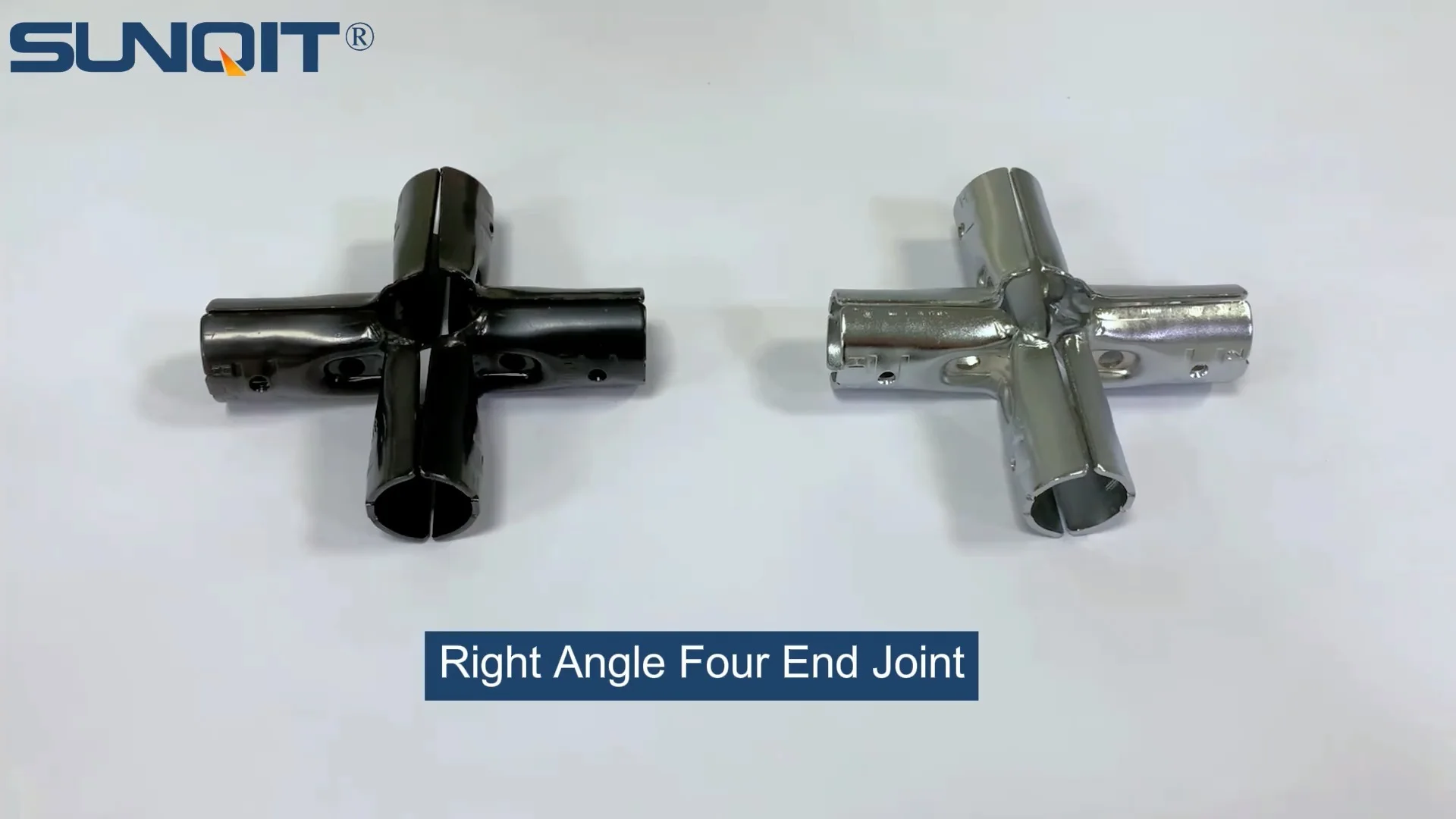
Five way straight lean pipe joint, for 5 pcs 28mm lean pipe connect in straight angle,which used widely in workbench, flow rack, hand trolley frame connection.
The Hidden Cost of Rust in Your Lean System
Let's start with a scenario many production managers know all too well: It's a busy Tuesday morning on the assembly line. Your team is racing to meet a deadline, and suddenly, a critical workbench wobbles. A quick inspection reveals the culprit: a rusted lean pipe joint. Within an hour, the line is halted. You're scrambling to find a replacement, your team is idling, and that deadline? Now it's in jeopardy. Sound familiar?
Rust isn't just a cosmetic issue—it's a productivity killer. In lean systems, where efficiency is everything, even a small corroded joint can throw off an entire workflow. Loose connections lead to misaligned roller tracks, stuck caster wheels, and unstable workbenches. Over time, replacing rusted parts eats into your budget, and downtime becomes the norm. But what if there was a simple solution to keep rust at bay? Enter chrome-coated lean pipe joints—specifically, the five way straight lean pipe joint. In this article, we'll break down why chrome coating is a game-changer for rust resistance, how it protects your lean system, and why it's a smart investment for any production environment.
What Are Five Way Straight Lean Pipe Joints, Anyway?
Before diving into chrome coating, let's make sure we're on the same page about the star of the show: the five way straight lean pipe joint. If you've ever walked through a well-organized factory, you've seen lean pipe systems in action—they're the backbone of workbenches, flow racks, turnover trolleys, and material racks. These systems are built by connecting lean pipes (hollow metal tubes) with joints, and the five way straight joint is one of the most versatile players in the lineup.
As the name suggests, a five way straight lean pipe joint has five connection points, allowing you to build multi-directional structures with minimal parts. Think of it as the Swiss Army knife of lean system components: it can anchor a vertical support, connect a horizontal shelf, and even attach a diagonal brace—all in one. But here's the thing: without proper protection, these joints are sitting ducks for rust. They're exposed to moisture from cleaning sprays, humidity in the air, and even the occasional spill from a worker's water bottle. Over time, unprotected metal starts to corrode, and that's where chrome coating steps in.

Chrome Coating 101: How It Shields Against Rust
Chrome coating isn't magic—it's science, and it's surprisingly clever. The process, called electroplating, involves depositing a thin layer of chromium onto the surface of the lean pipe joint. Here's why that matters for rust resistance:
First, chromium is naturally resistant to corrosion. When exposed to oxygen, it forms a thin, invisible layer of chromium oxide on its surface. This layer acts like a shield, blocking moisture, oxygen, and other corrosive elements from reaching the underlying metal (usually steel). Unlike paint, which can chip or peel, this oxide layer self-heals: if the chrome coating gets a tiny scratch, the chromium around the scratch reacts with oxygen to re-form the protective barrier. That means even minor damage won't lead to rust spreading.
Second, the chrome layer adds (hardness) to the joint. In busy production environments, joints get bumped, scraped, and knocked around. A harder surface is less likely to scratch, which means the protective oxide layer stays intact longer. Compare that to uncoated steel joints, which scratch easily—each scratch is an open door for rust.
Finally, chrome coating is smooth and non-porous. That makes it harder for dirt, grime, and moisture to cling to the surface. When you wipe down a chrome-coated joint, you're not just cleaning it—you're removing potential rust triggers. Uncoated joints, on the other hand, have tiny pores that trap moisture and debris, creating the perfect environment for rust to thrive.

Chrome-Coated vs. the Rest: A Head-to-Head Comparison
You might be thinking, "Why not just use stainless steel pipe series or aluminum profile instead?" It's a fair question—stainless steel and aluminum are both known for corrosion resistance. But when it comes to lean pipe joints, chrome coating offers a unique balance of protection, durability, and cost-effectiveness. Let's break it down with a comparison:
| Feature | Chrome-Coated Lean Pipe Joints | Uncoated Lean Pipe Joints | Stainless Steel Pipe Series |
|---|---|---|---|
| Corrosion Resistance | Excellent—protective oxide layer blocks moisture and oxygen | Poor—rusts quickly in humid or damp environments | Excellent—contains chromium (like chrome coating) for natural resistance |
| Durability | High—hard chrome layer resists scratches and impacts | Low—prone to dents and scratches that accelerate rust | High—stainless steel is strong but can be more brittle than coated steel |
| Maintenance Needs | Low—wipe clean with a damp cloth; no repainting or oiling | High—requires regular cleaning, oiling, and eventual replacement | Low—similar to chrome coating but may show fingerprints more easily |
| Cost (Initial vs. Long-Term) | Moderate initial cost; low long-term cost (no frequent replacements) | Low initial cost; high long-term cost (frequent replacements, downtime) | High initial cost; moderate long-term cost (durable but pricier upfront) |
| Aesthetic Appeal | High—shiny, uniform finish that looks professional | Low—dull, prone to discoloration and rust stains | Moderate—matte or brushed finish; less reflective than chrome |
The takeaway? Stainless steel pipe series is a strong contender, but it comes with a higher upfront cost. For many businesses, especially those operating on tight budgets, chrome-coated lean pipe joints offer the best of both worlds: rust resistance that rivals stainless steel, at a price point that won't break the bank. And when you factor in the long-term savings from reduced downtime and fewer replacements, chrome coating often ends up being the more affordable choice.

Real-World Impact: How Chrome-Coated Joints Boost Productivity
Let's get practical. How does a chrome-coated five way straight lean pipe joint actually improve day-to-day operations? Let's look at a case study: a mid-sized electronics manufacturer in Ohio that switched to chrome-coated joints two years ago.
Before the switch, the manufacturer was replacing lean pipe joints every 6–8 months. Their assembly line used roller track and accessories to move components between workstations, and rusted joints were causing the tracks to misalign. Workers had to stop production 2–3 times a month to adjust or replace joints, costing an estimated 120 hours of downtime annually. The maintenance team was spending 10+ hours a week cleaning and oiling uncoated joints to slow rust—time that could have been spent on more critical tasks.
After switching to chrome-coated five way straight lean pipe joints, the results were striking. Downtime due to joint issues dropped by 90%. The maintenance team now spends less than 2 hours a month on joint upkeep (mostly just wiping them down). Two years later, the original chrome-coated joints are still in use, with no signs of rust. The manufacturer estimates they've saved over $40,000 in replacement parts and downtime costs alone—far more than the initial investment in chrome coating.
Another example: a food packaging plant that uses caster and accessories on their turnover trolleys. Uncoated caster joints were rusting from frequent washdowns, leading to squeaky, stuck wheels. Chrome-coated joints solved the problem—they withstand the moisture from cleaning without corroding, keeping the trolleys rolling smoothly shift after shift.
Beyond Rust Resistance: Other Perks of Chrome-Coated Joints
While rust resistance is the star benefit, chrome-coated lean pipe joints have other advantages that make them a standout choice for lean systems:
Better Hygiene:
In industries like food processing, pharmaceuticals, or electronics manufacturing, cleanliness is non-negotiable. Chrome's smooth, non-porous surface is easy to sanitize, reducing the risk of bacterial growth. Unlike uncoated steel, which can trap dirt and germs in scratches, chrome stays clean with minimal effort.
Improved Aesthetics:
Let's not overlook the "feel-good" factor. A factory floor with shiny, rust-free chrome joints looks more professional and well-maintained. This can boost employee morale—working in a clean, organized space feels better than one cluttered with rusty, worn-out equipment. It also makes a positive impression on clients or auditors who visit the facility.
Compatibility with Lean Principles:
Lean manufacturing is all about eliminating waste—including waste from unnecessary maintenance, downtime, and replacements. Chrome-coated joints align perfectly with this (philosophy) by reducing waste in all three areas. They last longer, need less upkeep, and keep production flowing smoothly—exactly what lean systems are designed to do.
Choosing the Right Lean Pipe Supplier: Why Quality Matters
Not all chrome-coated lean pipe joints are created equal. The quality of the coating depends on the supplier's electroplating process—things like the thickness of the chrome layer, the preparation of the base metal (cleaning, polishing), and the use of undercoats (some suppliers add a layer of nickel before chrome for extra adhesion). A cheap, poorly applied chrome coating might look good initially, but it will chip, peel, or rust within months.
That's why choosing a reputable lean pipe supplier is critical. Look for suppliers who:
- Use high-quality chromium and follow strict electroplating standards (ask about their plating thickness—10–20 microns is ideal for durability).
- Offer testing reports, like salt spray tests, which simulate harsh environments to prove corrosion resistance.
- Have experience working with your industry—whether it's automotive, electronics, or food processing—so they understand your specific needs (e.g., extra-thick coating for high-moisture areas).
Final Thoughts: Chrome Coating as an Investment in Efficiency
Rust might seem like a small problem, but in the world of lean manufacturing, small problems add up. A single rusted five way straight lean pipe joint can disrupt production, waste labor hours, and eat into profits. Chrome coating isn't just a way to make joints look shiny—it's a proven method to protect your lean system from the ground up, ensuring smooth workflows, reduced downtime, and long-term savings.
When you choose chrome-coated joints, you're not just buying a part—you're investing in the reliability of your entire production line. You're telling your team that their time matters, that downtime is unacceptable, and that you're committed to efficiency. And in today's competitive manufacturing landscape, that's an investment that pays off.
So, the next time you're evaluating lean system components, ask yourself: Are my current joints holding me back? If the answer is yes, it might be time to make the switch to chrome-coated. Your assembly line (and your bottom line) will thank you.