- Company Articles
- Products and Technology
- Product knowledge
- Chrome Coating Environmental Impact: Eco-Friendly Five Way Straight Lean Pipe Joints

Chrome Coating Environmental Impact: Eco-Friendly Five Way Straight Lean Pipe Joints
Related Product
Five Way Straight Lean Pipe Joint
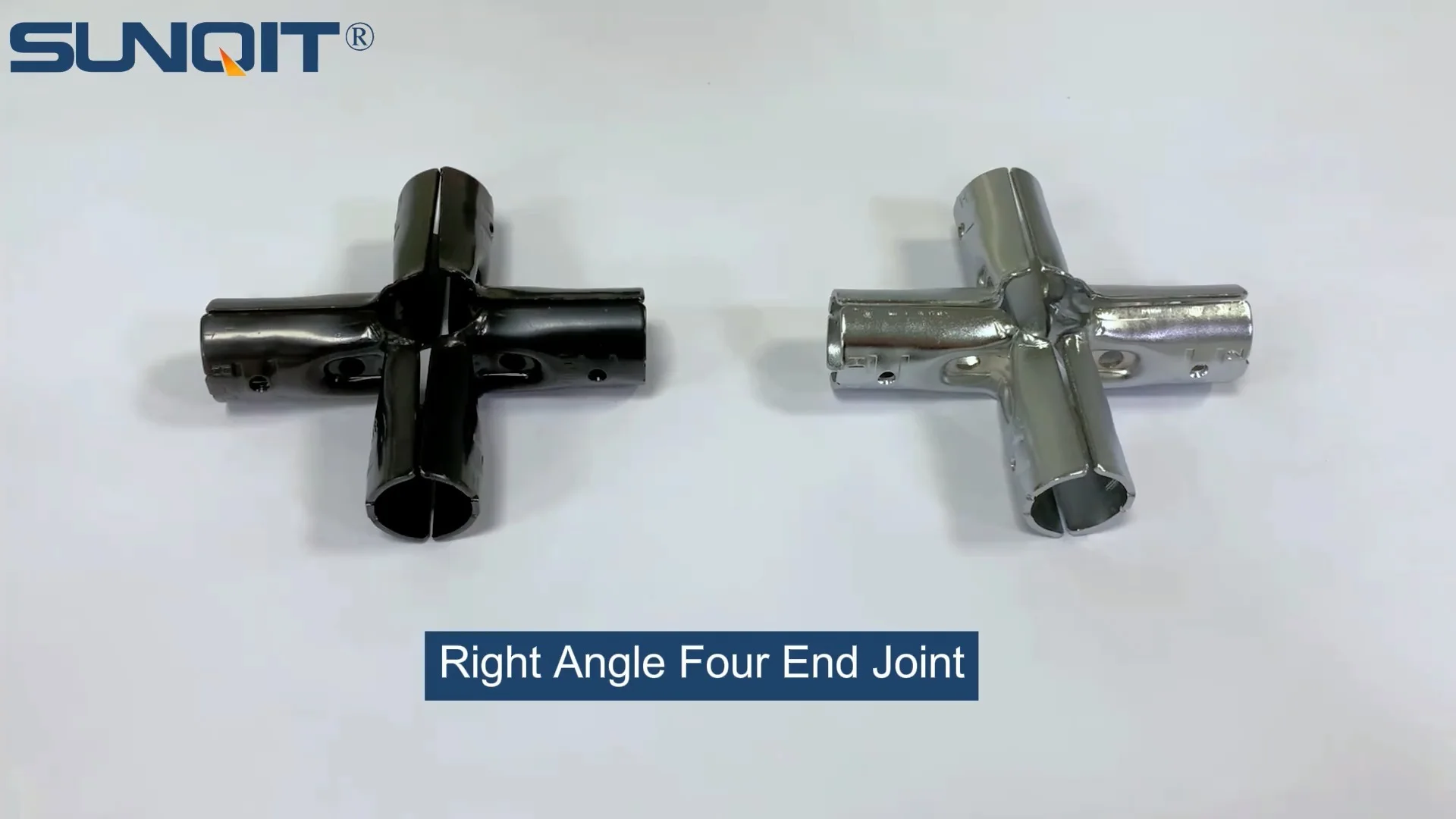
Five way straight lean pipe joint, for 5 pcs 28mm lean pipe connect in straight angle,which used widely in workbench, flow rack, hand trolley frame connection.
The Backbone of Modern Manufacturing: Lean Pipe Joints and the Hidden Cost of Chrome
Walk into any production facility today, and you'll likely see them: sleek workbenches, rolling conveyor lines, and material racks that seem to adapt and evolve with the needs of the assembly line. These unsung heroes of efficiency are often built from lean pipe systems—modular, flexible structures that keep manufacturing floors running smoothly. At the heart of these systems lie the joints: small, unassuming components that hold everything together. For decades, many of these joints have relied on chrome coating to boost durability and resistance to wear. But as the world wakes up to the environmental toll of industrial processes, the shine of chrome is starting to fade. Today, we're diving into the environmental impact of chrome coating and exploring how innovations like the five way straight lean pipe joint are leading a greener revolution in manufacturing.
Lean manufacturing isn't just about speed or cost-cutting—it's about intelligence in design. Every component, from the roller tracks on a conveyor to the casters on a turnover trolley, is chosen to reduce waste, improve flow, and stand the test of time. Joints, in particular, are critical. They're the connectors that turn basic aluminum tube or stainless steel pipe into something functional: a workstation for assembling electronics, a material rack for storing parts, or a trolley that glides across the factory floor. For years, chrome plating was the go-to solution to make these joints tough enough for daily use. It added a hard, shiny layer that resisted corrosion and scratches, ensuring joints could handle the bumps and friction of a busy production line. But what if that "toughness" came at a hidden cost to our planet?
The Dark Side of Chrome: Why Traditional Coating Practices Are Under Fire
Chrome coating, or chromium plating, has been a staple in manufacturing for over a century. Its appeal is undeniable: it creates a surface that's both decorative and durable, resistant to rust, and easy to clean. But the process behind that shine is far from pretty. Traditional hard chrome plating relies on hexavalent chromium—a toxic chemical compound classified as a carcinogen by the World Health Organization. To apply the coating, joints are submerged in vats of chromic acid solution, then subjected to an electrical current that bonds the chromium to the metal surface. The problem? This process generates a cascade of hazardous waste.
First, there's the wastewater. Each gallon of plating solution can contain high levels of hexavalent chromium, which, if not treated properly, leaches into soil and waterways. Even with filtration, trace amounts can persist, harming aquatic life and contaminating drinking water sources. Then there's the air pollution: fumes from the plating tanks release chromium particles, which workers can inhale, increasing risks of lung cancer and respiratory diseases. Disposing of spent plating solutions and sludge is another headache—landfills that accept these wastes are tightly regulated, and improper disposal can lead to long-term environmental damage. For a lean pipe supplier committed to sustainability, this presents a stark conflict: how to deliver durable products without compromising the planet?
The regulatory landscape is also shifting. Governments worldwide are cracking down on hexavalent chromium use. The EU's REACH regulations restrict its concentration in consumer and industrial products, while the EPA in the U.S. has set strict limits on emissions from plating facilities. For manufacturers, this means higher compliance costs—investing in advanced filtration systems, worker safety gear, and waste disposal protocols. For end-users, it means inheriting a product with a hidden carbon footprint and potential liability if regulations tighten further. It's no wonder that forward-thinking companies are asking: Is there a better way?

Beyond Chrome: The Rise of Eco-Friendly Materials in Lean Pipe Joints
Thankfully, innovation in materials science and manufacturing has opened the door to alternatives that don't rely on toxic coatings. Today, two materials stand out as game-changers: aluminum lean pipe and stainless steel pipe series. Both offer durability and resistance without the environmental baggage of chrome, and they're quickly becoming the foundation for next-generation lean pipe systems—including the versatile five way straight lean pipe joint.
Aluminum lean pipe is a revelation for sustainability. Lightweight yet surprisingly strong, aluminum naturally forms a protective oxide layer when exposed to air, eliminating the need for additional coatings. This oxide layer acts as a barrier against corrosion, making aluminum joints resistant to moisture, chemicals, and daily wear. What's more, aluminum is 100% recyclable, with no loss in quality during the recycling process. A lean pipe supplier that uses aluminum can source recycled material, reducing reliance on virgin ore and cutting down on the energy-intensive mining and smelting process. For manufacturers aiming for circular economy goals, this is a win-win: products that last, and materials that can be repurposed at the end of their lifecycle.
Then there's the stainless steel pipe series. Stainless steel contains chromium too, but in a different form: trivalent chromium, which is far less toxic than its hexavalent counterpart. When alloyed with iron and nickel, it creates a material that's inherently corrosion-resistant, even without plating. Stainless steel joints are tough enough to handle heavy loads—think material racks stacked with automotive parts or conveyor systems moving bulk goods—and they maintain their integrity in harsh environments, from humid warehouses to cleanrooms. Like aluminum, stainless steel is highly recyclable, with most products containing a significant percentage of recycled content. For applications where hygiene is critical, such as food processing or pharmaceutical manufacturing, stainless steel's non-porous surface also resists bacterial growth, adding another layer of practicality.

Five Way Straight Lean Pipe Joints: Engineering Sustainability Into Every Connection
Let's zoom in on the star of the show: the five way straight lean pipe joint. This unassuming component is a workhorse in modular lean systems, designed to connect up to five pipes in a straight line or at right angles. It's the kind of joint you'd find in a material rack with multiple shelves, a workstation with integrated tool holders, or a conveyor that splits into multiple paths. What makes the eco-friendly version of this joint so special? It's not just about what it's made of, but how it's designed to minimize waste and maximize longevity.
First, modularity. Traditional chrome-coated joints often require custom machining or welding, which locks them into a specific configuration. If a production line reconfigures, those joints become obsolete, ending up in landfills. The five way straight lean pipe joint, by contrast, uses a friction-fit or bolted design that allows for easy disassembly and reusability. Swap out a pipe here, add a roller track there—no cutting, no welding, no waste. This modularity aligns perfectly with lean principles, where adaptability is key to reducing downtime and staying agile in a fast-changing market.
Then there's the material choice. Today's eco-friendly five way joints are typically crafted from aluminum lean pipe or stainless steel pipe series, both of which skip the chrome plating step entirely. Instead of toxic chemicals, they might use a simple anodizing process (for aluminum) or passivation (for stainless steel) to enhance their natural corrosion resistance. Anodizing uses an electrolytic process to thicken the aluminum's oxide layer, creating a surface that's even more durable and scratch-resistant than untreated aluminum—all without harmful byproducts. Passivation, on the other hand, removes free iron from stainless steel surfaces, boosting its ability to resist rust. Both processes use water-based solutions and generate minimal waste, making them far kinder to the environment than chrome plating.
Durability is another cornerstone. A well-designed five way straight lean pipe joint shouldn't just be reusable—it should last for years, even in high-traffic areas. Manufacturers achieve this by reinforcing stress points, using precision-machined components, and testing joints to withstand thousands of cycles of assembly and disassembly. For example, the internal threads of an aluminum joint might be coated with a wear-resistant polymer to prevent stripping, while stainless steel joints use heavy-duty bolts made from the same alloy to avoid galvanic corrosion. The result? A joint that outlives its chrome-coated counterparts, reducing the need for frequent replacements and cutting down on material consumption over time.

Traditional vs. Eco-Friendly Joints: A Side-by-Side Comparison
| Feature | Traditional Chrome-Coated Joints | Aluminum Lean Pipe Joints | Stainless Steel Pipe Series Joints |
|---|---|---|---|
| Base Material | Mild steel (requires plating for corrosion resistance) | Recycled aluminum alloy (6063 or similar) | 304 or 316 stainless steel (contains recycled content) |
| Coating Process | Hexavalent chromium plating (toxic chemicals, hazardous waste) | Anodizing (water-based, no toxic byproducts) | Passivation (citric acid-based, environmentally safe) |
| Corrosion Resistance | High, but coating can chip or peel over time | High (natural oxide layer; anodizing enhances durability) | Excellent (chromium oxide layer self-heals minor scratches) |
| Recyclability | Low (chrome plating complicates recycling; steel is recyclable but with energy loss) | High (100% recyclable, retains properties after recycling) | High (recyclable with minimal energy input; retains corrosion resistance) |
| Weight | Heavy (increases energy use for transport/handling) | Lightweight (30-50% lighter than steel, reduces fatigue and energy use) | Moderate (heavier than aluminum but lighter than plated steel) |
| Long-Term Cost | Higher (replacement costs due to coating failure; disposal fees) | Lower (durable, recyclable, minimal maintenance) | Lower (virtually maintenance-free; lasts decades in most environments) |
The table tells a clear story: eco-friendly joints made from aluminum lean pipe or stainless steel pipe series outperform traditional chrome-coated options in nearly every category that matters—sustainability, durability, and long-term cost. For a lean pipe supplier, this isn't just about meeting environmental regulations; it's about delivering value that goes beyond the initial purchase price. When customers choose these joints, they're investing in a system that aligns with their green goals and stands the test of time.
From Supplier to Factory Floor: How Lean Pipe Suppliers Are Driving Change
Behind every eco-friendly five way straight lean pipe joint is a lean pipe supplier that's reimagining what it means to be a manufacturer. These suppliers aren't just selling parts—they're partnering with customers to build more sustainable production ecosystems. So what does this look like in practice? Let's walk through a typical example.
A mid-sized electronics manufacturer wants to upgrade its assembly line to reduce waste and meet its carbon neutrality targets. Its current setup uses old chrome-coated steel joints that are starting to rust, and the maintenance team is tired of replacing them every few years. The manufacturer reaches out to a lean pipe supplier known for sustainability. The supplier starts by auditing the existing system, identifying pain points: heavy racks that are hard to move, joints that seize up, and a lack of flexibility to adapt to new product lines. Instead of pushing for a full replacement, the supplier recommends a hybrid approach: replacing corroded steel joints with aluminum lean pipe joints, retrofitting existing aluminum profile frames with new five way straight joints, and adding roller tracks with plastic guide rails to improve material flow.
But the supplier's support doesn't stop at delivery. They provide training for the manufacturer's team on how to disassemble and reuse joints during reconfigurations, share data on the carbon footprint saved by switching to aluminum (e.g., 30% less energy used in production compared to steel), and even help apply for green manufacturing grants. Six months later, the manufacturer reports lower maintenance costs, faster line reconfigurations, and a 15% reduction in waste sent to landfills. The five way straight lean pipe joints, in particular, have been a hit—their modular design means the team can add or remove shelves on material racks in minutes, without special tools.
What sets progressive lean pipe suppliers apart is their commitment to transparency. They'll share certificates for recycled material content, details on their manufacturing processes (like water usage and emissions), and third-party audits from organizations like ISO 14001 (the international standard for environmental management). Some even offer take-back programs, where old joints are collected, recycled, and turned into new components. This closed-loop approach is a far cry from the "take-make-dispose" model of traditional manufacturing, and it's resonating with customers who want to be sure their supply chain aligns with their values.
Beyond the Joint: Eco-Friendly Lean Systems in Action
The five way straight lean pipe joint is just one piece of the puzzle. To truly build a sustainable production line, these joints need to work seamlessly with other eco-friendly components. Let's explore how they fit into larger systems, from ESD workstations to turnover trolleys.
Take ESD workstations, critical in electronics manufacturing to prevent static electricity from damaging sensitive components like circuit boards. Traditional ESD workstations often use chrome-plated steel frames that are heavy and prone to corrosion in humid environments. An eco-friendly alternative might feature an aluminum profile frame with aluminum lean pipe joints, a bamboo worktop (sustainable and renewable), and ESD-safe casters made from recycled plastic. The five way straight joints here allow for integrated tool holders, cable management trays, and even small material racks—all without drilling or welding. The result is a workstation that's lightweight, static-safe, and easy to reconfigure, with a carbon footprint a fraction of its steel predecessor.
Then there are turnover trolleys and racks, workhorses for moving materials between departments. A trolley with stainless steel pipe series joints and aluminum roller tracks can carry heavy loads without rusting, even in damp warehouses. The joints' modularity means the trolley can be adjusted to fit different-sized bins, and when it eventually wears out, the aluminum and stainless steel components can be recycled. Compare that to a traditional steel trolley with chrome-coated joints: when the coating chips, the steel rusts, and the whole trolley becomes unusable, often ending up in a landfill. It's a stark contrast in lifecycle impact.
Even small components play a role. Roller track guide rails, for example, are now available in recycled plastic (yellow or grey) that's just as durable as virgin plastic but uses 70% less energy to produce. Swivel roller balls, used in conveyor systems to allow omnidirectional movement, are being made from recycled nylon instead of chrome-plated steel. These seemingly minor changes add up, creating a lean system where sustainability is built into every connection.
Choosing Your Joints Wisely: Questions to Ask Your Lean Pipe Supplier
Ready to make the switch to eco-friendly lean pipe joints? Here are five key questions to ask your lean pipe supplier to ensure you're getting the real deal:
1. What materials do you use, and where do they come from? A reputable supplier should be able to share details about their aluminum or stainless steel sourcing—e.g., "Our aluminum lean pipe contains 80% recycled content from post-consumer scrap." Avoid suppliers who vague on material origins; transparency is a red flag for sustainability.
2. What processes do you use to treat or coat your joints? Look for answers like "anodizing with water-based electrolytes" or "passivation using citric acid." If a supplier still uses hexavalent chromium plating, ask about their phase-out plan—regulations are tightening, and you don't want to be stuck with obsolete parts.
3. Can you provide data on the environmental impact of your products? This might include carbon footprint per joint, water usage in manufacturing, or recyclability rates. Some suppliers even offer EPDs (Environmental Product Declarations), third-party-verified documents that detail a product's environmental performance.
4. How do your joints support modularity and reuse? The best joints are designed to be disassembled and reassembled multiple times without losing strength. Ask for test data: "Our five way straight joints can be torqued and retorqued 50+ times before showing wear."
5. What happens to your products at the end of their life? A supplier committed to circularity might offer take-back programs or partner with recyclers to ensure joints are properly processed. Avoid suppliers who say, "That's up to you"—sustainability is a shared responsibility.
"We don't just sell joints; we sell systems that grow with your sustainability goals." — A forward-thinking lean pipe supplier
The Future of Lean Manufacturing: Greener, Smarter, More Connected
As we look ahead, the role of components like the five way straight lean pipe joint will only grow in importance. Manufacturing is becoming more decentralized, with smaller, more agile facilities popping up to meet local demand. These facilities need lean systems that are lightweight, adaptable, and kind to the planet—exactly what aluminum lean pipe and stainless steel pipe series joints deliver. Innovations like internal rotary aluminum joints (which allow pipes to rotate without disconnecting) and smart joints with embedded sensors (to monitor wear and predict maintenance) are on the horizon, blending sustainability with Industry 4.0 technology.
But perhaps the most exciting trend is the shift from "sustainability as a bonus" to "sustainability as a requirement." Customers, investors, and regulators are no longer satisfied with vague claims of being "green"—they want measurable results. A five way straight lean pipe joint made from recycled aluminum and coated with anodized finish isn't just a better choice for the environment; it's a competitive advantage. It tells the world that your company cares about more than profits—that you're building a future where efficiency and sustainability go hand in hand.
So the next time you walk through your production facility, take a closer look at the joints holding everything together. Are they part of the problem, or part of the solution? With eco-friendly options like aluminum lean pipe and stainless steel pipe series joints, the answer can be the latter. After all, lean manufacturing was never just about making things faster—it was about making things better . And better, today, means greener.