- Company Articles
- Products and Technology
- Product knowledge
- Chrome Coating Thickness: Impact on Five Way Straight Lean Pipe Joint Longevity

Chrome Coating Thickness: Impact on Five Way Straight Lean Pipe Joint Longevity
Related Product
Five Way Straight Lean Pipe Joint
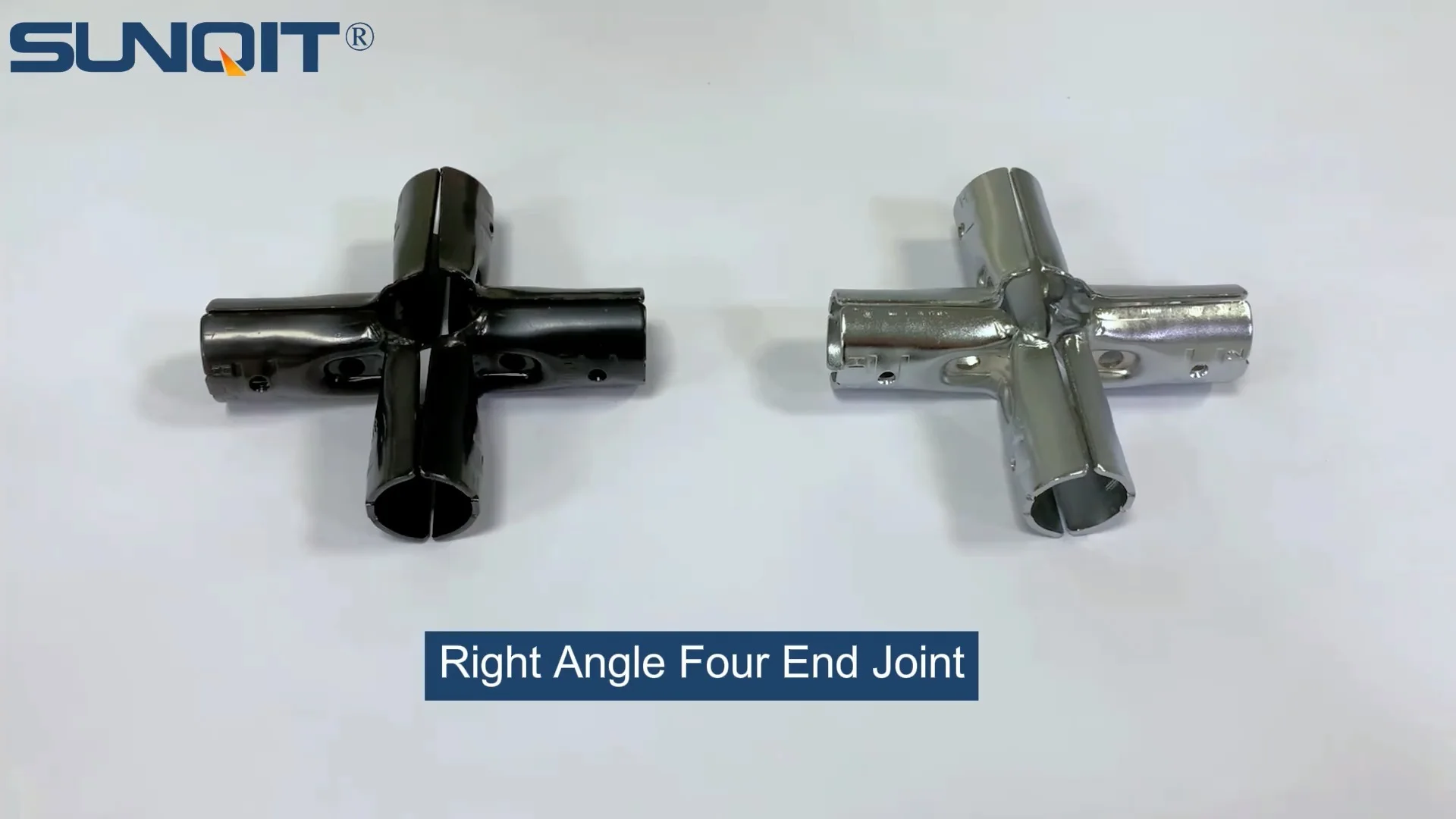
Five way straight lean pipe joint, for 5 pcs 28mm lean pipe connect in straight angle,which used widely in workbench, flow rack, hand trolley frame connection.
The Backbone of Lean Manufacturing – Lean Pipe Joints
In the fast-paced world of manufacturing, where efficiency and reliability are the cornerstones of success, every component in a production line plays a silent but critical role. Lean systems, designed to minimize waste and maximize productivity, rely heavily on their physical infrastructure—from workbenches and flow racks to conveyors and material handling equipment. At the heart of this infrastructure lies a seemingly small but indispensable part: the lean pipe joint. These unassuming connectors are the glue that holds lean systems together, ensuring stability, flexibility, and durability in dynamic industrial environments.
Among the many types of lean pipe joints, the five way straight lean pipe joint stands out for its versatility. As the name suggests, it connects five pipes in a straight configuration, making it ideal for building complex structures like multi-tiered material racks, workstations with multiple attachments, or intricate flow systems. Whether in automotive assembly plants, electronics manufacturing facilities, or distribution centers, these joints bear the weight of materials, withstand constant movement, and endure exposure to oils, moisture, and varying temperatures. Their longevity directly impacts the overall efficiency of the lean system—failures here can lead to production delays, safety hazards, and unnecessary replacement costs.
But what makes a five way straight lean pipe joint last? While factors like material quality and design play roles, one feature often overlooked is the chrome coating. This thin layer of chromium applied to the joint's surface is more than just a cosmetic upgrade; it's a protective barrier that can make or break the joint's lifespan. In this article, we'll dive deep into how chrome coating thickness influences the longevity of five way straight lean pipe joints, why it matters, and how manufacturers and buyers can ensure they're getting the right balance of protection and performance.
Understanding the Five Way Straight Lean Pipe Joint: More Than Just a Connector
Before we explore chrome coating, let's first understand what a five way straight lean pipe joint is and why it's so vital. At its core, this joint is a precision-engineered component designed to connect five lean pipes (typically made of steel, aluminum, or stainless steel) in a straight, linear arrangement. Unlike simpler two-way or three-way joints, its five connection points allow for the creation of multi-directional structures—think of a material rack with horizontal and vertical supports, or a workstation with integrated tool holders and part bins.
The design of the five way straight lean pipe joint is deceptively simple: a central hub with five threaded or friction-fit ports, each sized to match standard lean pipe diameters (often 28mm or 30mm). The joint must distribute weight evenly across all connected pipes, resist torsion from uneven loads, and maintain stability even when subjected to vibrations from nearby machinery. To achieve this, manufacturers often use high-grade steel or stainless steel for the base material—strong, rigid, and capable of handling heavy loads. But steel, even stainless steel, is susceptible to corrosion and wear over time, which is where chrome coating comes into play.
Real-World Application: A leading electronics manufacturer in Southeast Asia uses five way straight lean pipe joints to build their material racks (similar to the "material rack b (3 row and 3 floor)" design). These racks hold sensitive circuit boards and components, requiring stable, rust-free support. In 2019, the company switched suppliers and noticed a sharp increase in joint failures within 12 months—rust spots appeared at the connection points, and some joints even cracked under load. An investigation revealed the new supplier's chrome coating was inconsistent, with some joints as thin as 3 microns (μm). This experience highlights just how critical coating thickness is in real-world use.
Beyond structural support, the five way joint also contributes to the flexibility of lean systems. Lean manufacturing thrives on adaptability—lines reconfigured for new products, workstations adjusted for ergonomics, and racks modified to accommodate larger batches. A durable joint can be disassembled and reassembled multiple times without losing integrity, reducing the need for new parts. Chrome coating plays a role here too: a smooth, wear-resistant surface makes disassembly easier (no rust-induced seizing) and protects the joint during repeated handling.

Chrome Coating: The Unsung Hero of Joint Longevity
Chrome coating, or chromium plating, is a electrochemical process that deposits a thin layer of chromium onto a metal surface. There are two primary types: decorative chrome (used for aesthetics and mild protection) and hard chrome (thicker, harder, and designed for wear resistance). For industrial components like five way straight lean pipe joints, hard chrome is the go-to choice—it's dense, abrasion-resistant, and highly corrosion-resistant.
The plating process begins with preparing the joint's surface: cleaning to remove oils, grease, and oxides; etching to create a rough texture for better coating adhesion; and activating the surface to ensure the chromium bonds properly. The joint is then submerged in a bath of chromic acid solution, with an electric current passing through the bath. This current causes chromium ions to migrate to the joint's surface, forming a solid layer. The thickness of this layer is controlled by adjusting the current density, plating time, and bath temperature—variables that require careful monitoring to achieve consistency.
So, what does chrome coating actually do for the joint? Let's break it down:
- Corrosion Resistance: Chromium is highly resistant to oxidation, meaning it doesn't rust when exposed to moisture or humidity. This is critical in environments like food processing plants (where water and cleaning chemicals are common) or outdoor warehouses (exposed to rain and dew).
- Wear Resistance: Hard chrome has a hardness of 65-70 HRC (Rockwell C), harder than most steels. This protects the joint's surface from scratches, dents, and abrasion caused by pipe insertion/removal, tool impacts, or material friction.
- Low Friction: Chrome's smooth surface reduces friction between the joint and pipes, making assembly/disassembly easier and minimizing wear on both the joint and pipes.
- Aesthetic Appeal: While less critical than functionality, a bright, uniform chrome finish gives joints a professional look, which matters for customer perception—especially for lean pipe suppliers selling to industries where cleanliness and presentation are priorities (e.g., pharmaceuticals, medical device manufacturing).

The Critical Question: Does Chrome Coating Thickness Really Matter?
At this point, you might be wondering: If chrome coating is protective, why not just apply as much as possible? The answer, as with many engineering challenges, is balance. Chrome coating thickness is measured in microns (μm), where 1 μm is one-millionth of a meter (about 0.00004 inches). For industrial five way straight lean pipe joints, the typical thickness range is 5-20 μm. But within this range, small differences can have big impacts on longevity.
Too Thin: The Dangers of Inadequate Protection
A chrome coating that's too thin—say, less than 5 μm—offers minimal protection. Think of it as a thin coat of paint on a metal fence: it might look good initially, but the first scratch or rainstorm will expose the underlying metal. For a five way joint, thin coating means:
- Early Corrosion: Even minor scratches can penetrate the coating, exposing the steel substrate to moisture. Rust starts to form, weakening the joint and spreading under the remaining coating (a phenomenon called "underfilm corrosion").
- Premature Wear: Without enough thickness to absorb abrasion, the coating wears through quickly at high-stress points (like the edges of the connection ports). This leaves the metal vulnerable to further damage.
- Inconsistent Protection: Thin coatings are more likely to have pinholes or thin spots—tiny gaps where the coating didn't fully cover the metal. These act as starting points for corrosion.
Case Study: Thin Coating in a Automotive Plant
A Tier 1 automotive supplier in Europe installed a new line of flow racks using five way straight lean pipe joints with an average chrome thickness of 4 μm. Within 8 months, maintenance teams noticed red rust spots around the joints' connection points. By month 12, 20% of the joints had visible corrosion, and 5% were so weakened they had to be replaced. The cost of replacement parts and downtime exceeded $15,000—a preventable expense if the coating thickness had met the 8 μm minimum specified in the purchase order.
Too Thick: When More Isn't Better
On the flip side, a coating that's too thick—exceeding 25 μm—can be just as problematic. Chromium is hard but brittle, and thick layers lack flexibility. This leads to:
- Cracking and Peeling: When the joint is tightened or subjected to load stress, the thick, rigid coating can crack. These cracks allow moisture to reach the substrate, causing corrosion under the coating. In severe cases, large flakes of chrome may peel off entirely.
- Adhesion Issues: Thick coatings are more likely to delaminate (separate from the substrate) if the surface wasn't properly prepared. This is common when plating time is extended to achieve thickness without adjusting other bath parameters.
- Uneven Deposition: Thick coatings often have uneven thickness across the joint's surface—thicker in recesses, thinner on edges. This creates weak spots where corrosion or wear starts first.
- Fit Problems: Excess thickness can alter the joint's dimensions, making it difficult to insert pipes or causing loose fits. In one case, a manufacturer applied 30 μm coating to their five way joints, only to find the pipes no longer screwed in flush—resulting in wobbly racks and rejected orders.
The Sweet Spot: Optimal Chrome Coating Thickness
So, what's the "goldilocks zone" for chrome coating thickness on five way straight lean pipe joints? Based on industry data and real-world performance, most experts agree it's between 8-15 μm. Here's why this range works:
- Adequate Corrosion Protection: 8 μm is enough to resist rust in most indoor industrial environments for 3-5 years (or longer with proper maintenance). For harsher environments (e.g., coastal areas with salt air), 12-15 μm provides extra security.
- Flexibility and Adhesion: Coatings in this range are thick enough to protect but thin enough to flex with the joint under load, reducing cracking. They also adhere better to the substrate, minimizing peeling.
- Cost-Effectiveness: Plating to 8-15 μm balances protection with production costs. Thicker coatings require more chromium, longer plating times, and higher energy use—costs that get passed to buyers without added benefit.
| Chrome Coating Thickness | Pros | Cons | Estimated Longevity (Indoor Use) |
|---|---|---|---|
| < 5 μm (Too Thin) | Low production cost | Early corrosion, rapid wear, pinholes | 6-18 months |
| 8-15 μm (Optimal) | Balanced corrosion/wear protection, good adhesion, cost-effective | None (when applied correctly) | 3-7 years |
| > 25 μm (Too Thick) | Extreme wear resistance (in theory) | Cracking, peeling, uneven coating, fit issues | 1-2 years (due to coating failure) |

Factors Influencing Chrome Coating Thickness in Manufacturing
Achieving consistent chrome coating thickness isn't just about setting a target—it requires tight control over the plating process. Let's look at the key factors that can make or break thickness consistency, and why reputable lean pipe suppliers invest in mastering them.
Substrate Preparation: The Foundation of Good Coating
Before plating, the five way joint must be spotlessly clean. Any oil, grease, rust, or oxide layer on the steel surface will prevent chromium from adhering, leading to thin spots or bare metal. Suppliers use a multi-step cleaning process: degreasing with solvents, (acid pickling) to remove oxides, and activation with a weak acid to ensure the surface is ready for plating. Even small contaminants—like fingerprints left by workers—can cause localized coating failure.
Surface roughness also matters. A slightly rough surface (created via sandblasting or etching) gives the chrome more "grip," improving adhesion. But if the surface is too rough, the coating will be thicker in the valleys and thinner on the peaks, leading to uneven protection. Skilled suppliers balance surface preparation to ensure both adhesion and uniformity.
Plating Process Parameters: The Art of Precision
The electroplating bath is where thickness is determined. Three variables are critical:
- Current Density: Measured in amps per square decimeter (ASD), this controls how fast chromium ions are deposited. Higher current = faster deposition = thicker coating. But too high, and the coating becomes porous and brittle.
- Plating Time: Longer immersion in the bath increases thickness—up to a point. After 30-40 minutes, the rate slows as the coating itself resists further deposition (a phenomenon called "polarization").
- Bath Chemistry: The concentration of chromic acid, sulfuric acid (a catalyst), and temperature affect ion mobility and reaction rates. Even small changes (e.g., a 2°C temperature spike) can alter thickness by 1-2 μm.
Modern lean pipe suppliers use automated plating lines with computerized controls to monitor these variables in real time, ensuring each batch of joints meets the target thickness. Older, manual lines often struggle with consistency—one joint might have 10 μm, the next 18 μm—leading to unpredictable performance.
Quality Control: Catching Issues Before They Reach Customers
Even with perfect preparation and plating, quality control is essential. Reputable suppliers test coating thickness on random samples from each batch using tools like X-ray fluorescence (XRF) analyzers, which measure thickness without damaging the joint. They also perform adhesion tests (e.g., bending the joint to see if the coating cracks) and corrosion tests (e.g., salt spray testing to simulate 500+ hours of exposure).
For buyers, asking a lean pipe supplier about their quality control processes is a quick way to gauge reliability. Do they test every batch? Can they provide certificates of compliance with thickness standards? A supplier that skips these steps is a red flag.
Extending Joint Longevity Beyond Coating: Maintenance Best Practices
While chrome coating thickness is critical, proper maintenance can further extend the life of five way straight lean pipe joints. Even the best coating won't last forever if neglected. Here are simple steps manufacturers can take:
Regular Inspection
Schedule monthly checks of joints, especially those in high-stress areas (e.g., load-bearing points of racks). Look for signs of coating damage: chips, scratches, rust spots, or peeling. Catching these early allows for touch-up painting or replacement before the joint fails.
Gentle Cleaning
Clean joints with a soft cloth and mild detergent (avoid abrasive cleaners or steel wool, which scratch the chrome). For greasy or oily environments, use a degreaser followed by a water rinse—oil and grease can trap moisture against the coating, accelerating corrosion.
Proper Assembly and Disassembly
Avoid over-tightening joints, which can crack the chrome coating. Use torque wrenches if specified by the supplier, and never hammer pipes into joints (this dents the coating). When disassembling, use a rubber mallet to gently tap pipes loose instead of prying, which scratches the surface.
Environmental Controls
Where possible, keep lean systems away from direct water exposure, chemical spills, or extreme temperatures. For outdoor use, consider additional protective measures like conformal coatings or stainless steel pipe series joints (which have inherent corrosion resistance) instead of chrome-plated steel.
Conclusion: Investing in the Right Thickness for Long-Term Efficiency
The five way straight lean pipe joint may be a small component, but its role in lean manufacturing is enormous. And while material quality and design are important, chrome coating thickness is the unsung hero that determines how long these joints will perform. Too thin, and they fail prematurely; too thick, and they crack or peel. The sweet spot—8-15 μm—balances protection, flexibility, and cost, ensuring joints last 3-7 years (or longer with proper maintenance) in most industrial environments.
For manufacturers, the message is clear: don't overlook coating thickness when sourcing joints. Work with a trusted lean pipe supplier who understands the science of plating, can demonstrate consistent quality control, and is transparent about their processes. Ask for thickness test reports, and don't be swayed by low prices—cheap joints with thin or uneven coating will cost far more in replacement and downtime.
For lean pipe suppliers, investing in modern plating equipment, skilled technicians, and rigorous testing isn't just good business—it's a commitment to helping customers build more efficient, reliable systems. After all, a joint that lasts is a joint that keeps production lines moving, workers safe, and businesses profitable.
In the end, chrome coating thickness is more than a technical specification; it's a measure of quality. And in lean manufacturing, quality isn't just a goal—it's the foundation of success.