- Company Articles
- Products and Technology
- Product knowledge
- Chrome Coating Thickness in Parallel Lean Pipe Joints: Impact on Durability

Chrome Coating Thickness in Parallel Lean Pipe Joints: Impact on Durability
Related Product
Parallel Lean Pipe Joint
Parallel lean pipe joint used for 2 pcs 28MM lean pipe connection in parallel direction to enhance frame structure, usually for heavy payload requirement for workbench. flow rack, hand trolley.
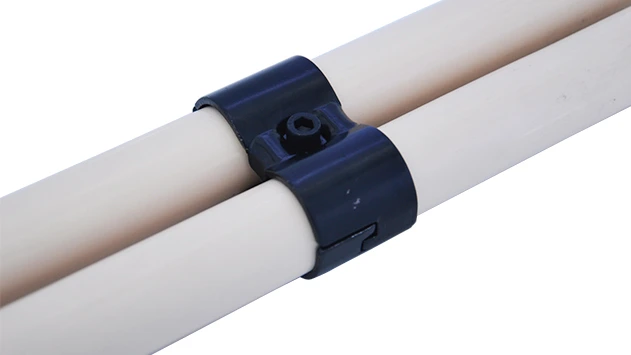
In the fast-paced world of manufacturing, where efficiency and reliability are the cornerstones of success, every component in a production line plays a silent yet critical role. Among these components, the
parallel lean pipe joint
stands out as a unsung hero. Found in everything from assembly workbenches to material handling racks, these joints are the connective tissue that holds lean systems together, enabling flexibility, adaptability, and seamless workflow. But what makes a parallel lean pipe joint truly reliable? Beyond its design and material, one factor often overlooked—yet paramount—is the thickness of its chrome coating.
In this article, we'll dive deep into the relationship between chrome coating thickness and the durability of parallel lean pipe joints. We'll explore why chrome coating matters, how thickness influences performance, and what this means for businesses relying on lean systems to keep operations running smoothly. Whether you're a production manager, a facility engineer, or a
lean pipe supplier
striving to deliver quality, understanding this connection could be the key to reducing downtime, cutting costs, and building systems that stand the test of time.
The Role of Parallel Lean Pipe Joints in Lean Manufacturing
Before we delve into chrome coating, let's first ground ourselves in why parallel lean pipe joints are so essential. Lean manufacturing, at its core, is about eliminating waste and optimizing processes. To achieve this, production lines need to be flexible—able to adapt to changing product designs, fluctuating demand, and evolving workflow needs. Enter lean pipe systems: modular structures built from pipes, joints, and accessories that can be assembled, disassembled, and reconfigured with minimal effort. Parallel lean pipe joints, in particular, are designed to connect two or more pipes in parallel alignment, creating stable frameworks for everything from workbenches and material racks to turnover trolleys. Unlike fixed metal brackets, these joints allow for quick adjustments—tightening or loosening with a simple tool—to modify height, width, or layout. This flexibility is why they're a staple in industries ranging from automotive and electronics to pharmaceuticals and logistics. But flexibility means nothing if the joint itself fails. A loose or corroded joint can compromise the entire structure, leading to wobbly workbenches, misaligned material flow, or even safety hazards. This is where chrome coating comes into play: it's not just a cosmetic add-on but a protective barrier that directly impacts how well the joint holds up under daily wear and tear.
What Is Chrome Coating, and Why Use It on Lean Pipe Joints?
Chrome coating, or chromium plating, is a process where a thin layer of chromium is electroplated onto a metal surface. There are two main types: decorative chrome (used for aesthetics, with a thin layer) and hard chrome (used for durability, with a thicker layer). For parallel lean pipe joints, hard chrome is the standard. Its high hardness (often exceeding 800 HV on the Vickers scale) and low friction make it ideal for components that experience frequent contact, pressure, or movement. So why chrome, and not other coatings like zinc or nickel? Chrome offers three key advantages:- Corrosion resistance: Chromium forms a passive oxide layer when exposed to air, preventing rust and degradation—critical in factory environments where moisture, oils, or chemicals might be present.
- Wear resistance: Hard chrome's hardness means it can withstand abrasion from repeated tightening, loosening, or contact with other metal parts (like pipes or tools).
- Low friction: A smooth chrome surface reduces friction between the joint and pipes, making assembly and adjustments easier and preventing galling (metal transfer between surfaces under pressure).

How Chrome Coating Thickness Affects Durability: Key Factors
To understand why thickness matters, let's break down its impact on four critical durability factors: wear resistance, corrosion resistance, adhesion, and functional performance.1. Wear Resistance: Thicker Coatings = Longer Lifespan Under Stress
In a busy factory, parallel lean pipe joints are put through their paces. Every time a workbench is adjusted, a material rack is loaded, or a trolley is moved, the joint experiences friction and pressure. Over time, this wears down the joint's surface. A thicker chrome coating acts as a sacrificial layer, absorbing this wear so the underlying metal (often steel or aluminum) remains intact. For example, consider a joint with a 5μm chrome coating versus one with 25μm. The thinner coating might start showing signs of wear—scratches, pitting, or even exposure of the base metal—after 6 months of heavy use. The thicker coating, by contrast, could last 2–3 years under the same conditions. This isn't just about longevity; exposed base metal is more prone to corrosion, creating a domino effect of damage. But there's a limit. Coating thickness beyond 40μm can become brittle. Chromium is hard but not flexible, so a very thick layer may crack when the joint is tightened or subjected to impact, leading to flaking. This is why most manufacturers target a "sweet spot" for thickness, balancing protection with flexibility.2. Corrosion Resistance: Thickness as a Barrier Against the Elements
Factories are harsh environments. Humidity, coolant spills, cleaning chemicals, and even fingerprints (which contain salts) can all trigger corrosion. Chrome's oxide layer is a natural barrier, but its effectiveness depends on continuity—if the layer is too thin, tiny pinholes or gaps can form, allowing moisture to reach the base metal. Once corrosion starts, it spreads, weakening the joint from the inside out. Studies show that a minimum thickness of 10–15μm is needed to ensure a continuous, pinhole-free chrome layer on lean pipe joints. In high-moisture environments (like food processing or coastal facilities), this threshold increases to 20–25μm. A lean pipe supplier serving these industries must prioritize thicker coatings to meet durability demands.3. Adhesion: Too Thick = Risk of Peeling
Even the thickest coating is useless if it doesn't stick to the joint's surface. Adhesion—the bond between the chrome layer and the base metal—relies on proper surface preparation (cleaning, etching) and controlled plating conditions. However, thickness also plays a role: thicker coatings are heavier and create more internal stress, which can weaken adhesion over time. For instance, a joint plated with 30μm of chrome may initially adhere well, but after repeated temperature cycles (common in factories with heating/cooling systems), the coating could start to lift at the edges. This is because the base metal and chrome expand and contract at different rates; a thicker layer amplifies this mismatch. To avoid this, manufacturers often use a two-step plating process: a thin "strike" layer of nickel first, followed by chrome. The nickel improves adhesion, allowing for thicker chrome layers without peeling.4. Functional Performance: Thickness and Joint Fit
Parallel lean pipe joints are precision components. Their inner diameter must match the outer diameter of the lean pipe to ensure a tight, stable fit. If the chrome coating is too thick, it can increase the joint's inner diameter beyond tolerance, leading to a loose connection. Conversely, uneven thickness (e.g., thicker in some areas than others) can cause the joint to bind or not seat properly on the pipe. This is why quality control is critical. A reputable lean pipe supplier will measure coating thickness at multiple points on each joint, ensuring consistency. For example, a joint designed for a 28mm pipe might have a target inner diameter of 28.2mm (allowing for a 0.1mm chrome layer on each side). If the coating is 0.2mm thick, the inner diameter shrinks to 27.8mm, making it too tight to fit the pipe. Such inconsistencies can derail assembly, forcing workers to file down the joint or use excessive force—both of which reduce durability.
Chrome Coating Thickness: Industry Standards and Real-World Performance
So, what's the "ideal" thickness for a parallel lean pipe joint? The answer depends on the application, but industry standards offer a starting point. The International Organization for Standardization (ISO) and ASTM International provide guidelines for hard chrome plating, with most recommending a thickness range of 10–30μm for mechanical components like joints. To put this in context, let's compare three common thickness ranges and their real-world performance:| Chrome Coating Thickness | Wear Resistance (Expected Lifespan in Heavy Use) | Corrosion Resistance (Performance in Humid/Industrial Environments) | Adhesion Risk (Likelihood of Peeling/Cracking) | Best For |
|---|---|---|---|---|
| 5–10μm (Thin) | 6–12 months | Poor: Prone to pinholes; rusts within 3–6 months in humid areas | Low: Thin layers adhere well but offer minimal protection | Temporary or light-duty structures (e.g., event displays, short-term workstations) |
| 15–25μm (Medium) | 2–4 years | Good: Resists rust for 1–2 years in industrial environments; longer with proper maintenance | Low-Medium: Risk increases if thickness exceeds 25μm without adhesion promoters | General manufacturing: Workbenches, material racks, standard turnover trolleys |
| 30–40μm (Thick) | 4–7 years | Excellent: Withstands exposure to oils, coolants, and high humidity for 3+ years | Medium: Requires nickel strike layer to prevent peeling; may crack under extreme impact | Heavy-duty applications: Automotive assembly lines, outdoor storage racks, high-load material handling |
The Supplier's Role: How Lean Pipe Suppliers Ensure Quality Coating
While standards exist, the reality is that not all parallel lean pipe joints are plated to specification. Some suppliers cut corners to reduce costs, using thinner coatings or skipping quality checks. This is why choosing a reputable lean pipe supplier is as important as understanding thickness itself. A quality supplier will:- Test coating thickness: Using tools like X-ray fluorescence (XRF) meters to verify thickness at multiple points on each batch of joints.
- Control plating conditions: Maintaining consistent temperature, current density, and bath chemistry during electroplating to ensure uniform thickness.
- Offer material certifications: Providing test reports that confirm coating thickness, adhesion, and corrosion resistance.
- Collaborate on application needs: Recommending thickness based on how the joint will be used (e.g., "For your outdoor material racks, we suggest 30μm with a nickel strike").
- Use "flash plating" (5–10μm) to save on chromium and labor.
- Skip pre-plating cleaning, leading to poor adhesion.
- Refuse to share test data, hiding inconsistencies in thickness.