- Company Articles
- Products and Technology
- Product knowledge
- Chrome Four Way Straight Lean Pipe Joints: Eco-Friendly Manufacturing Choice

Chrome Four Way Straight Lean Pipe Joints: Eco-Friendly Manufacturing Choice
Related Product
Four Way Straight Lean Pipe Joint
Four way lean pipe joint for 4 pcs 28MM lean pipe connection in straight angle, which used widely in workbench, flow rack, hand trolley frame connection.
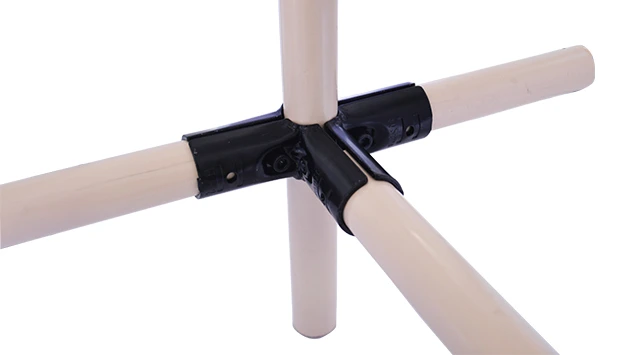
In today's manufacturing landscape, the conversation isn't just about speed or cost—it's about sustainability. As factories and warehouses strive to shrink their carbon footprints, every component, from the largest conveyor to the smallest joint, is under scrutiny. Enter lean systems: a methodology built on minimizing waste, maximizing efficiency, and now, embracing eco-friendly practices. At the heart of these systems lie lean pipes and their connectors, with one component standing out for its blend of durability, versatility, and green credentials: the chrome four way straight lean pipe joint. Let's dive into why this unassuming piece is becoming a cornerstone of eco-conscious manufacturing.
Understanding Lean Systems: Beyond Efficiency, Toward Sustainability
Before we zoom in on the chrome four way joint, let's ground ourselves in what lean systems truly mean today. Traditionally, lean manufacturing focused on eliminating seven types of waste—overproduction, waiting, transport, defects, inventory, motion, and overprocessing. But modern lean takes it a step further: it's about creating systems that are not only efficient but also regenerative . This means designing workflows and tools that use resources wisely, reduce environmental impact, and support long-term operational resilience.
At the core of these systems is the humble lean pipe. Often made of steel with a plastic coating (though aluminum lean pipe is gaining traction), lean pipes are lightweight, strong, and infinitely adaptable. They're the building blocks for everything from workbenches and flow racks to conveyors and turnover trolleys. But a lean pipe is only as good as the joints that hold it together. Joints determine how easily a system can be reconfigured, how much weight it can bear, and—crucially—how long it will last before needing replacement.
The Chrome Four Way Straight Lean Pipe Joint: A Closer Look
The chrome four way straight lean pipe joint is exactly what it sounds like: a connector with four ports, designed to join lean pipes in a straight, cross-like configuration. But don't let its simplicity fool you. This joint is a marvel of engineering, balancing strength, flexibility, and sustainability in a compact package.
Material Matters: Chrome-Plated Steel for Longevity
Most chrome four way joints are made from steel, then plated with chrome. Why steel? For starters, steel is one of the most recyclable materials on the planet—over 90% of steel used in manufacturing is recycled, and it can be melted down and reused indefinitely without losing quality. Chrome plating adds a protective layer, shielding the steel from corrosion, scratches, and wear. This means the joint can withstand the daily grind of a busy factory floor—think heavy loads, constant adjustments, and exposure to oils or coolants—without degrading quickly.
Contrast this with plastic joints, which might be cheaper upfront but often crack under stress or degrade when exposed to UV light or chemicals. Or even unplated steel joints, which rust over time, weakening the connection and forcing early replacement. The chrome finish isn't just for looks; it's a sustainability feature, extending the joint's lifespan and reducing the need for frequent replacements.
Design for Adaptability: Reduce, Reuse, Reconfigure
In lean manufacturing, "adaptability" is code for "reduced waste." A system that can be reconfigured instead of replaced cuts down on material waste, energy use, and costs. The chrome four way joint excels here. Its four-port design allows for multiple configurations: build a square frame, add cross-bracing for stability, or extend pipes in four directions to create a multi-level material rack. No need for specialized tools, either—most joints twist or clamp into place, making it easy for a single worker to disassemble and rebuild a structure in hours, not days.
Consider a scenario: a manufacturer needs to adjust their assembly line to accommodate a new product. With traditional fixed structures, they might have to buy new shelving or workbenches, sending the old ones to the landfill. With a lean system using chrome four way joints? They simply reconfigure the existing pipes and joints. The same components that held a workbench yesterday can hold a flow rack tomorrow. This "reuse first" approach is a cornerstone of eco-friendly manufacturing.

Eco-Friendly Benefits: Why This Joint Stands Out
Let's break down the sustainability credentials of the chrome four way straight lean pipe joint. It's not just about being "less bad"—it's about being actively good for the planet and your bottom line.
1. Long Lifespan = Less Waste
The average chrome four way joint lasts 5–10 years in a typical factory setting, even with regular use. Compare that to plastic joints, which might last 1–2 years before cracking, or unplated steel joints that rust out in 3–4 years. Fewer replacements mean less material ending up in landfills and fewer resources spent on manufacturing new parts. For a large facility with hundreds of joints, this adds up to significant waste reduction over time.
2. Recyclable Materials, Circular Economy
Steel is a champion of the circular economy. When a chrome four way joint finally reaches the end of its life (after a decade or more), it can be stripped of its chrome plating (a process that's becoming more eco-friendly with modern techniques) and melted down to make new steel products. There's no loss of quality in recycling steel, so the material retains its value indefinitely. This stands in stark contrast to plastic joints, which are often downcycled into lower-quality products or incinerated, releasing greenhouse gases.
3. Energy Efficiency in Production
Manufacturing chrome four way joints is surprisingly energy-efficient. Steel production has come a long way in reducing carbon emissions, with many lean pipe suppliers now using renewable energy in their factories. Chrome plating, once a highly toxic process, has also improved—modern methods use closed-loop systems that capture and reuse chemicals, minimizing waste and pollution. Compare this to producing aluminum lean pipe, which requires massive amounts of electricity (bauxite refining is energy-intensive), or plastic joints, which rely on fossil fuels.
4. Modularity Reduces Overproduction
One of the biggest environmental sins in manufacturing is overproduction—making more than you need, leading to excess inventory and waste. Chrome four way joints combat this by enabling "just-in-time" system building. Need a small workbench for a temporary project? Buy a few pipes and joints, build it, then disassemble and store the components when done. No need to order a custom-built bench that will gather dust later. This aligns perfectly with lean principles and reduces the carbon footprint of manufacturing operations.

How Does It Compare? A Look at Joint Materials
To truly appreciate the chrome four way joint's eco-friendly edge, let's compare it to other common joint materials. The table below breaks down key factors like durability, recyclability, and environmental impact.
| Joint Type | Average Lifespan | Recyclability | Carbon Footprint (per unit) | Best For |
|---|---|---|---|---|
| Chrome Four Way Steel | 5–10 years | High (100% recyclable steel) | Low (improved steel production) | Heavy loads, long-term use, eco-focused facilities |
| Aluminum Lean Pipe Joints | 3–7 years | High (recyclable, but energy-heavy production) | Medium (bauxite refining is energy-intensive) | Lightweight systems, cleanrooms |
| Plastic Joints | 1–3 years | Low (often downcycled or landfilled) | High (fossil fuel-based, short lifespan) | Temporary setups, low budgets, light loads |
The table tells a clear story: chrome four way steel joints outperform alternatives in lifespan, recyclability, and carbon footprint—key metrics for eco-friendly manufacturing. While aluminum lean pipe joints have their place (they're lightweight and corrosion-resistant, ideal for cleanrooms), their production requires more energy, and they often don't last as long as chrome steel. Plastic joints, meanwhile, are a false economy—cheap upfront, but costly in terms of frequent replacements and environmental harm.
Real-World Impact: Flow Racks and the Chrome Four Way Joint
Let's put this into context with a common lean system: the flow rack. Flow racks use gravity to move materials from the back to the front, reducing the need for manual lifting and speeding up access. They're workhorses in warehouses, distribution centers, and assembly lines. Building a flow rack with chrome four way joints isn't just efficient—it's sustainable.
Imagine a manufacturer of automotive parts. They need a flow rack to hold heavy engine components. Using chrome four way joints, they can build a sturdy rack with adjustable shelves (thanks to the joint's flexibility) that can bear 500+ pounds per shelf. The chrome plating resists oil and grease from the parts, ensuring the joints don't corrode. Five years later, when they switch to smaller components, they don't need a new rack—they reconfigure the existing pipes and joints to create narrower shelves. The old configuration's parts are stored, not scrapped. Over a decade, this single rack setup could save hundreds of pounds of steel from landfills and reduce the company's carbon footprint by avoiding the production of new racks.
A lean pipe supplier specializing in eco-friendly components would even help design the rack for maximum reusability, suggesting joint placements that make future reconfigurations easier. This level of collaboration between supplier and manufacturer is key to unlocking the full sustainability potential of lean systems.
Choosing the Right Lean Pipe Supplier: Sustainability as a Priority
Not all chrome four way joints are created equal. To truly reap the eco-friendly benefits, you need to partner with a lean pipe supplier that prioritizes sustainability. Here's what to look for:
- Recycled Content: Does the supplier use recycled steel in their joints? Look for certifications like ISO 14001, which indicates a commitment to environmental management.
- Eco-Friendly Production: Ask about their manufacturing processes. Do they use renewable energy? Closed-loop chrome plating systems? A transparent supplier will share this information.
- Product Lifespan Guarantees: A supplier confident in their joint's durability will offer warranties. This not only protects your investment but also signals a focus on long-term use over quick turnover.
- Reconfiguration Support: Do they provide guidance on how to reuse joints in new systems? The best suppliers act as partners, helping you maximize the life of every component.
By choosing a supplier with these credentials, you ensure that your chrome four way joints aren't just green in theory—they're green in practice.
The Future: Lean Systems and a Greener Manufacturing Landscape
As regulations tighten and consumers demand more sustainable products, the role of components like the chrome four way straight lean pipe joint will only grow. We're already seeing innovations: suppliers experimenting with even more recyclable coatings, joints designed for easier disassembly, and hybrid materials that combine the best of steel and aluminum. But at the core, the principle remains the same: build systems that last, adapt, and recycle.
Imagine a factory in 2030 where every workbench, rack, and conveyor is built with modular lean components. When the factory retools, nothing is discarded—everything is reconfigured. At the end of the facility's life, 95% of its materials are recycled into new lean systems. This isn't a pipe dream (pun intended); it's a vision within reach, thanks in part to simple, durable components like the chrome four way joint.
Conclusion: Small Joints, Big Impact
The chrome four way straight lean pipe joint may seem like a small part of the manufacturing puzzle, but its impact is anything but minor. By combining durability, adaptability, and recyclability, it embodies the future of eco-friendly manufacturing—one where efficiency and sustainability go hand in hand. Whether you're building a flow rack, a workbench, or an entire assembly line, choosing the right joint isn't just about holding pipes together; it's about building a system that respects the planet and your bottom line.
So the next time you walk through a factory or warehouse, take a closer look at the structures around you. Chances are, there's a chrome four way joint hard at work, quietly supporting a greener, leaner future.