- Company Articles
- Products and Technology
- Product knowledge
- Chrome Four Way Straight Lean Pipe Joints: Electrical Conductivity Considerations

Chrome Four Way Straight Lean Pipe Joints: Electrical Conductivity Considerations
Related Product
Four Way Straight Lean Pipe Joint
Four way lean pipe joint for 4 pcs 28MM lean pipe connection in straight angle, which used widely in workbench, flow rack, hand trolley frame connection.
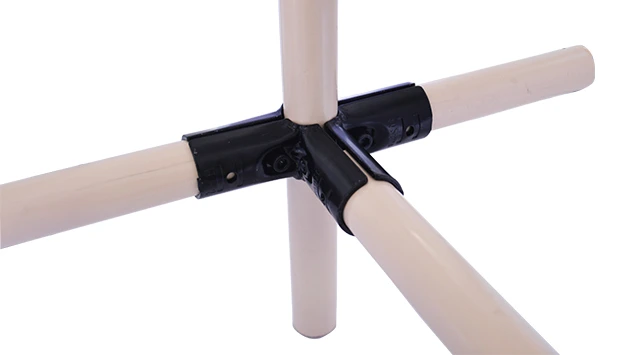
In the fast-paced world of manufacturing, where efficiency and precision are the cornerstones of success, the unsung heroes of the production floor often lie in the details—specifically, the components that hold everything together. Lean pipe systems, the backbone of modern lean manufacturing, are celebrated for their flexibility, modularity, and ability to adapt to evolving production needs. But within these systems, one component stands out for its quiet criticality: the lean pipe joint. Among the many types of joints available, the chrome four way straight lean pipe joint has emerged as a linchpin in environments where electrical conductivity isn't just a preference, but a necessity. From electronics assembly lines to ESD workstations, understanding how these joints manage electrical flow can mean the difference between seamless operations and costly disruptions.
Understanding Lean Pipe Systems: The Backbone of Modern Manufacturing
Before diving into the specifics of chrome four way straight lean pipe joints, it's essential to ground ourselves in what lean pipe systems are and why they matter. At their core, lean pipe systems—often referred to as "flexible pipe systems"—are modular frameworks built from pipes, joints, and accessories that can be configured into workbenches, flow racks, conveyor systems, and material handling trolleys. Born from the principles of lean manufacturing, these systems prioritize waste reduction, adaptability, and worker ergonomics. Unlike rigid, fixed structures, lean pipe systems can be disassembled, reconfigured, or expanded in hours, not days, making them ideal for dynamic production environments where change is constant.
The magic of these systems lies in their simplicity. A typical lean pipe system starts with a base material—often steel, aluminum, or stainless steel pipe—and a range of joints that connect these pipes at various angles. Whether you're building a workbench for assembling circuit boards or a flow rack for transporting components, the joints determine the system's stability, load capacity, and, importantly, its ability to conduct electricity. Among the most versatile joints in this ecosystem is the four way straight joint, designed to connect four pipes in a linear or perpendicular arrangement, creating sturdy intersections that form the skeleton of everything from ESD workstations to heavy-duty material racks.
Why Electrical Conductivity Matters in Lean Pipe Systems
In many manufacturing settings—particularly those handling sensitive electronics, semiconductors, or precision instruments—static electricity is an invisible enemy. A single electrostatic discharge (ESD) can damage microchips, corrupt data, or even compromise the structural integrity of delicate components. According to the ESD Association, ESD-related losses in the electronics industry alone exceed $50 billion annually, a staggering figure that underscores the need for proactive static control.
This is where electrical conductivity comes into play. A conductive lean pipe system acts as a "pathway" for static charge, directing it safely to the ground rather than allowing it to accumulate on surfaces or components. For this to work, every element of the system—from the pipes to the joints to the accessories—must facilitate the flow of electricity. If even one component in the chain is non-conductive, the entire system's ability to dissipate static is compromised. Imagine a flow rack where a non-conductive joint interrupts the grounding path: as components slide down the rack, friction builds up static, which then jumps to the nearest conductive surface—like a worker's hand or a nearby circuit board. The result? Damaged parts, rework, and delays.
In ESD workstations, this risk is amplified. These specialized work areas are designed to protect electrostatic discharge-sensitive devices (ESDS) by maintaining a controlled environment where static charge is minimized. Everything from the workbench surface to the tools to the operator's wristbands is engineered to either conduct or dissipate static. Here, lean pipe systems are often used to build the workstation's frame, and the joints that hold this frame together must be conductive to ensure the entire structure remains grounded. A chrome four way straight lean pipe joint, in this context, isn't just a connector—it's a critical link in the static control chain.

Chrome Four Way Straight Lean Pipe Joints: Design and Functionality
Now, let's zoom in on the star of the show: the chrome four way straight lean pipe joint. As the name suggests, this joint is designed to connect four pipes in a straight or perpendicular orientation, making it ideal for building T-shaped intersections, crossbars, or multi-level structures. Unlike simpler two-way or three-way joints, the four way design offers unparalleled versatility, allowing for the creation of complex, multi-dimensional frameworks without sacrificing stability.
But what sets the "chrome" variant apart? Most lean pipe joints start as steel castings, which are then coated or plated to enhance durability, corrosion resistance, or conductivity. Chrome plating involves electroplating a thin layer of chromium onto the steel surface, a process that not only improves the joint's aesthetic appeal (think that signature shiny, silver finish) but also adds a hard, wear-resistant barrier. For conductivity, chrome is a mixed bag: while pure chromium is a relatively poor conductor compared to copper or aluminum, the thinness of the plating and the underlying steel core mean that chrome-plated joints still conduct electricity effectively—especially when compared to joints coated in plastic or other non-conductive materials.
The design of the four way straight joint itself also impacts conductivity. High-quality joints feature tight, secure connections that minimize air gaps between the joint and the pipe. When pipes are inserted into the joint, the friction fit (often enhanced by set screws or locking mechanisms) ensures maximum contact between the pipe's surface and the joint's interior. This physical contact is crucial for electrical flow: any looseness or separation can create resistance, weakening the system's ability to ground static charge. Reputable manufacturers often engineer their chrome four way joints with precision-machined sockets, ensuring a snug fit that maintains both mechanical stability and electrical continuity.

Conductivity Showdown: Chrome vs. Other Joint Materials
To truly appreciate the role of chrome four way straight lean pipe joints in conductivity, it's helpful to compare them to other common joint materials. Let's break down how they stack up against aluminum, stainless steel, and plastic-coated joints in terms of electrical performance, durability, and suitability for ESD-sensitive environments.
| Material Type | Conductivity Level | ESD Suitability | Durability | Best For |
|---|---|---|---|---|
| Chrome-Plated Steel (Four Way Straight Joint) | High (due to steel core) | Excellent | High (chrome resists corrosion/wear) | ESD workstations, electronics assembly, cleanrooms |
| Aluminum Lean Pipe Joint | Very High (aluminum is highly conductive) | Excellent | Medium (prone to dents/scratches) | Light-duty systems, general manufacturing |
| Stainless Steel Pipe Series Joint | Low (stainless steel has low conductivity) | Poor | Very High (resists corrosion, heat, chemicals) | Food processing, marine, corrosive environments |
| Plastic-Coated Steel Joint | None (plastic insulates) | Not Suitable | Medium (plastic prone to cracking over time) | Non-ESD areas, dry environments with no static risk |
Aluminum lean pipe joints, for example, are often lauded for their conductivity—aluminum is an excellent conductor, even better than steel. However, aluminum joints are softer and more prone to bending or denting under heavy loads, making them less ideal for high-capacity systems. Stainless steel pipe series joints, while incredibly durable and corrosion-resistant, have low electrical conductivity due to their alloy composition, making them a poor choice for ESD workstations. Plastic-coated joints, meanwhile, are entirely non-conductive, acting as insulators that trap static charge rather than dissipating it—an absolute dealbreaker in environments where ESDS components are handled.
Chrome-plated steel joints strike a balance: they offer the conductivity of steel (enhanced by the thin, conductive chrome layer), the durability to withstand heavy use, and the corrosion resistance needed for long-term reliability. In ESD workstations, where every component must contribute to a continuous grounding path, this balance is invaluable. A chrome four way straight joint doesn't just connect pipes—it ensures that static charge can flow from the workbench surface, through the pipes, through the joints, and into the ground, protecting sensitive components at every step.
Real-World Applications: Where Chrome Four Way Joints Shine
To put this into context, let's consider a typical ESD workstation in a smartphone manufacturing plant. The workstation is built from lean pipes, with a chrome four way straight joint forming the corner where the workbench surface meets the vertical support pipes. On the surface, operators assemble circuit boards containing microchips sensitive to voltages as low as 250 volts—far below the static charge a human body can accumulate (which can exceed 10,000 volts). Without a conductive path, static from the operator's body or the environment could discharge into the microchip, causing microscopic damage that leads to device failure later.
In this scenario, the chrome four way joint plays a silent but critical role. The joint connects the conductive workbench surface (often made of static-dissipative material) to the vertical pipes, which are grounded via a conductive caster or a direct earth connection. As static charge builds up on the surface, it flows through the workbench, into the pipes, through the chrome joint (which offers minimal resistance), and down to the ground. Without this joint's conductivity, the path would be broken: charge would accumulate, increasing the risk of ESD events. It's a component, but its presence ensures that the workstation meets strict ESD standards like ANSI/ESD S20.20, which mandates that all conductive elements in the workspace be grounded.
Another application where chrome four way straight joints excel is in flow rack systems used to transport ESDS components. Flow racks rely on gravity to move parts from the loading end to the picking end, using roller tracks and guides. The joints that support these roller tracks must not only bear the weight of the components but also ensure that any static generated by friction between the parts and the rollers is dissipated. A chrome four way joint here connects the roller track to the rack's vertical supports, creating a conductive path that grounds the entire system. This prevents static from building up on the rollers and transferring to the components as they slide down the track.
Key Considerations When Selecting Chrome Four Way Straight Lean Pipe Joints
Choosing the right chrome four way straight lean pipe joint for your application isn't as simple as picking the first option on a supplier's website. To ensure optimal conductivity and performance, there are several factors to keep in mind:
1. Plating Quality and Thickness
Not all chrome plating is created equal. The thickness of the chrome layer, the quality of the underlying steel, and the plating process itself can all impact conductivity. Look for joints with a chrome plating thickness of at least 0.0005 inches (5 microns)—thick enough to resist wear but thin enough to avoid impeding electrical flow. Avoid joints with uneven plating or visible defects like blisters or cracks, which can create resistance points.
2. Fit and Tightness
A loose joint is a conductive liability. When pipes are inserted into the joint, there should be no gaps or play. Many manufacturers offer joints with set screws or locking collars to ensure a tight fit. During installation, take the time to tighten these screws securely—over-tightening can damage the pipe or joint, but under-tightening can create air gaps that disrupt conductivity.
3. Compatibility with Pipes
Chrome four way joints are designed to work with specific pipe diameters (common sizes include 28mm, 30mm, and 40mm). Using a joint with a pipe that's too small or too large will result in a poor fit, compromising both mechanical stability and electrical contact. Always check the manufacturer's specifications to ensure the joint and pipe are compatible.
4. Environmental Factors
Humidity, temperature, and exposure to chemicals can all affect a joint's conductivity over time. In high-humidity environments, chrome plating resists rust, but regular cleaning with a conductive cleaner (avoiding abrasive chemicals) is still necessary to remove dust or debris that can insulate the joint. In dry environments, consider using anti-static additives or humidity control systems to maintain optimal conductivity, as dry air increases static buildup.
Maintenance: Preserving Conductivity Over Time
Even the highest-quality chrome four way straight lean pipe joint will degrade over time if not properly maintained. To ensure long-term conductivity, implement a regular inspection and maintenance routine:
- Clean Regularly: Wipe joints with a soft, lint-free cloth dampened with isopropyl alcohol or a conductive cleaning solution. Avoid harsh detergents or abrasive pads, which can scratch the chrome plating and expose the underlying steel to corrosion.
- Check for Loose Connections: Periodically inspect set screws or locking mechanisms to ensure they're tight. A loose joint not only reduces conductivity but also weakens the entire system's stability.
- Inspect for Corrosion: Look for signs of rust or pitting on the chrome surface. If corrosion is localized, gently sand the area with fine-grit sandpaper and apply a conductive anti-corrosion coating. For widespread corrosion, replace the joint to avoid conductivity issues.
- Test Conductivity: Use a multimeter to measure resistance between the joint and the grounded pipe. A reading below 1 ohm indicates good conductivity; readings above 10 ohms may signal a problem that needs addressing.
Future Trends: Innovations in Conductive Lean Pipe Joints
As manufacturing becomes increasingly automated and reliant on sensitive electronics, the demand for smarter, more reliable conductive components is growing. Innovations in chrome four way straight lean pipe joint design are already emerging, including joints with integrated conductivity sensors that alert operators to drops in performance, and advanced plating techniques that enhance chrome's conductivity while maintaining durability. Some manufacturers are also experimenting with hybrid materials—combining chrome-plated steel with conductive polymers—to create joints that offer both flexibility and superior static dissipation.
Conclusion: The Unsung Hero of ESD Control
In the grand scheme of manufacturing, chrome four way straight lean pipe joints may seem like small fry. But as we've explored, their role in maintaining electrical conductivity—especially in ESD workstations and electronics manufacturing—makes them indispensable. They are the quiet guardians of static control, ensuring that sensitive components remain unharmed, production lines stay running, and workers can focus on what they do best: building quality products.
Whether you're designing a new ESD workstation, upgrading an existing lean pipe system, or troubleshooting static issues on the production floor, take a moment to consider the joints. A high-quality chrome four way straight lean pipe joint isn't just a connector—it's an investment in reliability, compliance, and peace of mind. In a world where even the smallest static spark can have big consequences, that's a detail worth caring about.