- Company Articles
- Products and Technology
- Product knowledge
- Chrome Four Way Straight Lean Pipe Joints for Turnover Carts: Material Handling Efficiency

Chrome Four Way Straight Lean Pipe Joints for Turnover Carts: Material Handling Efficiency
Related Product
Four Way Straight Lean Pipe Joint
Four way lean pipe joint for 4 pcs 28MM lean pipe connection in straight angle, which used widely in workbench, flow rack, hand trolley frame connection.
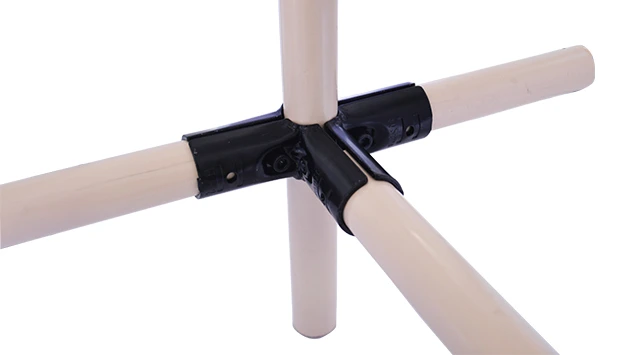
The unsung heroes of flexible, efficient, and adaptable manufacturing workflows
The Backbone of Modern Material Handling
Walk into any thriving manufacturing facility, and you'll notice a quiet rhythm: parts moving from storage to assembly lines, finished products being transported to packaging, tools being delivered to workstations. This rhythm—material handling—is the heartbeat of production. When it falters, everything slows down: deadlines get missed, worker fatigue rises, and costs creep up. Yet, for all its importance, material handling often relies on tools that are overlooked: turnover carts. These simple, wheeled platforms carry the weight of daily operations, but their true potential lies in the components that hold them together—like the chrome four way straight lean pipe joint.
Think about the last time you tried to assemble something with mismatched parts. A bookshelf with wobbly screws, a desk that won't align—frustrating, right? Now imagine that on an industrial scale. A turnover cart that can't handle heavy loads, or a structure that can't be adjusted when your production line shifts. That's where the right lean pipe joints make all the difference. Chrome four way straight lean pipe joints aren't just metal pieces; they're the connectors that turn generic pipes into customized, efficient tools. They're the reason a single cart can evolve from carrying small electronics components one month to bulky automotive parts the next. In a world where manufacturing demands flexibility, these joints are the key to staying agile.
What Are Chrome Four Way Straight Lean Pipe Joints, Anyway?
Let's start with the basics. Lean pipe—also called "flexible pipe" or "kitchen pipe" in some circles—is a lightweight, durable tubing used to build everything from workbenches to material racks. It's the backbone of lean manufacturing systems, designed to reduce waste by making structures easy to assemble, disassemble, and reconfigure. But lean pipe alone is just a tube. To turn it into something useful, you need joints.
Enter the chrome four way straight lean pipe joint. As the name suggests, it's a connector plated with chrome (for strength and corrosion resistance) that allows four lean pipes to meet at a straight, central point. Picture a cross shape: one pipe runs left, one right, one forward, one backward—all intersecting at the joint. This design isn't just about geometry; it's about possibility. With a four way joint, you're not limited to simple rectangles or squares. You can build multi-tiered turnover carts with shelves on both sides, or add cross-braces for extra stability. It's like having a Swiss Army knife in your material handling toolkit—one component, endless configurations.
But why chrome? Chrome plating isn't just for shine (though it does give the joints a clean, professional look). It adds a layer of protection against rust and wear, crucial in environments where carts might be exposed to oils, coolants, or moisture. Unlike unplated steel joints that can corrode over time, chrome-plated ones stand up to daily use, ensuring your turnover carts stay sturdy for years. And let's not forget installation: these joints are designed to be assembled by hand, no welding or special tools required. Slide the pipe into the joint, tighten the setscrew, and you're done. It's that simple—even for teams without specialized training.

Why Lean Pipe Matters in Turnover Cart Design
Before diving deeper into the joints, let's talk about lean pipe itself. Lean manufacturing isn't just a buzzword; it's a philosophy centered on eliminating waste—whether that's wasted time, space, or effort. Traditional material handling equipment often falls short here. Welded steel carts, for example, are strong but rigid. If your product line changes, you're stuck with a cart that's too big, too small, or shaped all wrong. That's waste: money spent on a tool that no longer serves its purpose.
Lean pipe solves this by being inherently flexible. It's lightweight enough to move but strong enough to handle heavy loads (we're talking up to 500 lbs or more, depending on the setup). And because it's modular, you can take apart a cart at the end of a project and rebuild it into something new. But lean pipe's flexibility only matters if the joints holding it together are equally adaptable. A flimsy joint that slips or breaks under pressure turns a flexible system into a liability. That's why chrome four way straight lean pipe joints are non-negotiable for turnover carts: they combine the strength of metal with the adaptability of lean principles.
Consider this: a typical manufacturing facility might use 50 different turnover cart designs over a year. Some need to be low to the ground for ergonomic loading, others tall to maximize vertical space. Some carry delicate circuit boards, others heavy machinery parts. With lean pipe and chrome four way joints, you don't need to buy 50 new carts. You can reconfigure existing ones. A cart used for small parts in January can be disassembled, and with a few new pipes and joints, become a tall rack for bulky items in February. That's the power of lean—waste reduction through reuse—and it all starts with the right components.

Features That Make Chrome Four Way Straight Joints Stand Out
Not all lean pipe joints are created equal. So what sets chrome four way straight lean pipe joints apart? Let's break down their key features, and why each matters for turnover cart efficiency.
1. Four-Way Connectivity: More Than Just a Cross
At first glance, "four way" might seem like a small detail, but it's a game-changer for cart design. Most lean pipe joints offer two or three connection points—great for simple structures, but limiting for complex ones. A two-way joint can make a straight line; a three-way can make a corner. But a four-way joint? It lets you build in three dimensions. Want a turnover cart with a shelf that extends both left and right of the main frame? Use a four-way joint to connect the vertical supports, horizontal rails, and shelf brackets all at once. No need for extra joints or awkward angles—just a clean, strong connection.
This flexibility is especially valuable for odd-shaped loads. Imagine transporting a large, irregularly sized component: a traditional cart with fixed shelves might not fit it, but a cart built with four-way joints can have adjustable dividers or extended arms to cradle the item securely. It's like having a custom-fit suitcase for every load, without the custom price tag.
2. Chrome Plating: Durability That Lasts
Manufacturing floors are tough environments. Oils, grease, water, and even chemicals can take a toll on metal components. Unplated steel joints might start to rust after a few months of exposure, weakening the connection and making carts wobbly. Chrome plating acts as a barrier, preventing corrosion and extending the joint's lifespan. I've visited facilities where 10-year-old turnover carts, built with chrome four way joints, still look and function like new—no rust, no bent parts, just reliable performance.
Chrome also makes cleaning easier. Wipe down a cart with a damp cloth, and the chrome surface resists stains and buildup, keeping your workspace looking professional. For food processing or pharmaceutical facilities, where cleanliness is critical, this is more than a convenience—it's a requirement.
3. Tool-Free Assembly: Speed Without Sacrifice
Time is money in manufacturing, and no one has time to wait for a welder to build a new cart. Chrome four way straight lean pipe joints are designed for quick assembly: each joint has a setscrew (usually hex-head) that tightens onto the lean pipe, gripping it securely. No welding, no drilling, no special training. A team can assemble a basic turnover cart in under 30 minutes, even if they've never done it before.
But don't mistake "quick" for "flimsy." When tightened properly, these joints create a rigid connection that can handle heavy loads. I once saw a cart built with chrome four way joints carry 800 lbs of steel parts across a factory floor—no sagging, no creaking, just smooth movement. And if you need to reconfigure the cart later? Loosen the setscrews, adjust the pipes, retighten. Done. It's like Legos for adults, but with industrial strength.
4. Compatibility: Works With Standard Lean Pipe and Accessories
One of the biggest frustrations in manufacturing is buying components that don't play well together. A joint from one supplier that doesn't fit a pipe from another, or accessories that require custom adapters. Chrome four way straight lean pipe joints are designed to work with standard 28mm (1.1-inch) lean pipe—the most common size used in the industry. This means you can mix and match parts from different suppliers (though sticking with a reputable lean pipe supplier is always best for consistency) without worrying about compatibility issues.
Need to add casters to your cart? Screw them into a base joint. Want to attach a tool holder? Slide a short pipe into the four-way joint and add a bracket. The possibilities are endless, and it all starts with a joint that plays well with others.
The Benefits: How These Joints Boost Material Handling Efficiency
Features are great, but what do they mean for your bottom line? Let's break down the real-world benefits of using chrome four way straight lean pipe joints in turnover carts.
1. Customization: Build Carts That Fit Your Needs (Not the Other Way Around)
Every facility has unique needs. A electronics plant might need small, nimble carts to carry circuit boards; an automotive shop might need large, heavy-duty carts for engine parts. With four-way joints, you're not limited to off-the-shelf cart designs. You can build a cart with three shelves on one side and a single shelf on the other, or add a fold-down tray for tools. I worked with a client once who needed a cart to transport 12-foot-long metal rods—we used four-way joints to create a "cradle" design with vertical supports and cross-braces, ensuring the rods didn't roll off during transport. The result? Zero dropped parts, and a 40% faster transport time.
Customization also reduces waste. Why buy a cart with six shelves when you only need three? With four-way joints, you build only what you need, saving space and money.
2. Quick Reconfiguration: Adapt to Change in Minutes
Manufacturing isn't static. Product lines change, order volumes fluctuate, and new processes are introduced. A rigid cart that worked last month might be obsolete today. Chrome four way joints let you adapt on the fly. Suppose your assembly line switches from small to large products—simply loosen the joints, adjust the shelf heights, and retighten. No need to buy a new cart; just reconfigure the old one. A furniture manufacturer I know does this quarterly: they disassemble their turnover carts, rebuild them to fit new product dimensions, and save thousands of dollars in equipment costs annually.
This agility is a cornerstone of lean manufacturing. By reducing the time and cost of retooling, you can respond faster to customer demands and stay ahead of competitors stuck with rigid systems.
3. Improved Ergonomics: Happier, Healthier Workers
Worker safety and comfort aren't just moral imperatives—they're good for business. Fatigued or injured employees are less productive, and workplace injuries cost companies billions each year. Turnover carts built with chrome four way joints can be adjusted to fit the task, reducing strain. For example, a cart used for picking small parts can be built lower to the ground, so workers don't have to bend over. A cart for heavy loads can have higher handles, reducing back strain when pushing. One study found that ergonomically adjusted lean pipe carts reduced worker fatigue by 25% and lowered injury rates by 30%—results that speak for themselves.
Four-way joints also make it easy to add features like non-slip mats or tool hooks, further improving usability. When workers have tools that fit their needs, they're more engaged, more efficient, and less likely to make mistakes.
4. Cost-Effectiveness: Save Now and Later
At first glance, lean pipe systems might seem more expensive than welded steel carts. But the long-term savings tell a different story. Chrome four way joints are reusable—you can take apart a cart and use the joints in a new structure. Welded carts, once obsolete, end up in the scrap heap. Over time, this reusability adds up. A facility with 50 turnover carts might save $20,000 or more over five years by reusing joints instead of buying new carts.
Maintenance costs are lower too. If a welded cart breaks, you need to cut it apart and reweld—a time-consuming, expensive fix. With lean pipe joints, you just replace the damaged joint or pipe, often in minutes. And because chrome resists corrosion, you won't be replacing joints due to rust anytime soon.
How Do They Compare to Other Lean Pipe Joints?
Chrome four way straight lean pipe joints are versatile, but they're not the only option. Let's compare them to other common lean pipe joints to see when they're the best choice for turnover carts.
| Joint Type | Connectivity | Flexibility (Reconfiguration Ease) | Max Load Capacity (lbs per joint) | Best Use Case |
|---|---|---|---|---|
| Chrome Four Way Straight | 4 directions (straight cross) | High (tool-free, quick adjustments) | 600-800 | Multi-tiered carts, custom shelves, heavy loads |
| Two-Way Fixed | 2 directions (straight line) | Low (only extends length) | 500-700 | Simple, straight rails or frames |
| Three-Way 90° | 3 directions (corner, e.g., up/right/forward) | Medium (good for corners, limited 3D design) | 550-750 | Basic carts with square frames |
| Swivel Joint | 2 directions (adjustable angle) | High (angles can change) | 300-500 | Sloped shelves, angled racks |
As the table shows, chrome four way straight joints excel in flexibility and load capacity, making them ideal for turnover carts that need to handle varied loads or complex designs. Two-way joints are great for simple rails but can't create shelves or cross-braces. Three-way 90° joints work for square frames but lack the four-way's ability to build out in multiple directions. Swivel joints offer angle adjustability but can't match the four-way's load capacity. For most turnover cart applications—especially those requiring customization or heavy loads—chrome four way straight joints are the clear winner.
Installing Chrome Four Way Straight Lean Pipe Joints: Tips for Success
Assembling a turnover cart with chrome four way joints is straightforward, but a few tips can ensure your cart is strong, stable, and safe.
1. Start with a Plan (But Stay Flexible)
Sketch your cart design before you start assembling. Measure the items you'll be transporting to determine shelf heights and cart dimensions. Will you need casters? How many shelves? Where will the handles go? A quick sketch (even on a napkin) can save time later. That said, don't be afraid to adjust as you go. Sometimes, a shelf that looked good on paper feels too low in real life—lean pipe's flexibility lets you tweak the design mid-assembly.
2. Use the Right Lean Pipe Size
Most chrome four way joints are designed for standard 28mm lean pipe (about 1.1 inches in diameter). Using a smaller or larger pipe will result in a loose connection, making the cart unstable. If you're unsure, check with your lean pipe supplier—they'll help you match joints to pipe size.
3. Tighten Setscrews Securely (But Don't Overdo It)
The setscrew is what holds the pipe in the joint. Use a hex key to tighten it until it's snug—you should feel resistance, but don't crank it so hard that you strip the screw or damage the pipe. A good rule of thumb: tighten until the screw bites into the pipe, then give it a quarter-turn more. This ensures a secure grip without over-tightening.
4. Add Cross-Braces for Stability
For tall carts or those carrying heavy loads, cross-braces are a must. Use four way joints to connect diagonal pipes between vertical supports—this prevents the cart from swaying when moving. I once saw a facility skip cross-braces on a 6-foot-tall cart; it tipped over on the first use, damaging parts and injuring a worker. Don't skip this step.
5. Test the Cart Before Full Deployment
Once assembled, load the cart with its maximum intended weight and push it around the facility. Does it roll smoothly? Are the shelves stable? Do the joints feel tight? If something wobbles, check the setscrews—they might need a little extra tightening. Better to catch issues in testing than during a busy shift.
Case Study: How One Manufacturer Cut Transport Time by 35% with Chrome Four Way Joints
Company: Precision Electronics, a mid-sized manufacturer of circuit boards and electronic components.
Challenge: Precision Electronics was struggling with material handling in their assembly area. Their old turnover carts were welded steel, with fixed shelves that couldn't be adjusted. As they added new product lines, the carts became obsolete—some were too small for large circuit boards, others too tall for workers to reach comfortably. Transporting parts from storage to assembly lines took 20 minutes per cart, and workers complained of back pain from bending to load/unload items.
Solution: The facility manager reached out to a lean pipe supplier for help. Together, they designed custom turnover carts using chrome four way straight lean pipe joints. The new carts featured:
- Adjustable shelves (using four way joints to connect vertical supports and shelf rails), allowing heights to be changed in minutes.
- Ergonomic handles at waist height, reducing bending.
- Cross-braces for stability, built with four way joints to support heavy loads.
- Non-slip mats on shelves to prevent parts from sliding during transport.
Results: Within two weeks of deploying the new carts, Precision Electronics saw:
- 35% faster transport time (from 20 minutes to 13 minutes per cart).
- Zero workplace injuries related to material handling.
- 80% reduction in cart "downtime" (no more waiting for custom carts—old carts were reconfigured instead of replaced).
- Positive feedback from workers, who reported less fatigue and easier access to parts.
"The chrome four way joints were the star of the show," the facility manager noted. "We can build any cart we need in under an hour, and reconfigure it just as fast. It's like having a material handling system that grows with us."
Beyond Turnover Carts: Other Uses for Chrome Four Way Straight Lean Pipe Joints
While turnover carts are a common application, chrome four way straight lean pipe joints are versatile enough to enhance other parts of your lean system. Here are a few examples:
Workbenches
Build custom workbenches with adjustable heights, tool racks, and storage shelves. Use four way joints to add side extensions for extra workspace, or attach overhead light mounts. A workstation that fits the task reduces worker strain and boosts productivity.
Flow Racks
Flow racks use gravity to feed parts to assembly lines, keeping items organized and accessible. Chrome four way joints make it easy to build multi-lane flow racks, with adjustable dividers to separate different part sizes.
Material Racks
Store raw materials or finished products with multi-tiered racks. Four way joints let you build racks that fit into tight spaces, with shelves at varying heights to maximize vertical storage.
Assembly Line Structures
From tool holders to part feeders, lean pipe structures keep assembly lines organized. Four way joints allow you to build overhead racks for cables or air hoses, keeping floors clear and reducing trip hazards.
Choosing the Right Lean Pipe Supplier
Not all chrome four way straight lean pipe joints are created equal. To ensure you're getting quality components, choose a reputable lean pipe supplier with a track record of reliability. Here's what to look for:
- Material Quality: The joint should be made of high-grade steel with a thick chrome plating (at least 0.0005 inches). Ask for material certifications if needed.
- Consistency: Pipes and joints should have uniform dimensions. A joint that's slightly too loose or tight will make assembly frustrating.
- Customer Support: Look for suppliers who offer design help, technical support, and fast shipping. A good supplier will walk you through cart designs and answer questions about load capacity or compatibility.
- Warranty: A warranty (even a simple one-year guarantee) shows the supplier stands behind their products.
Don't skimp on cost here. Cheap, low-quality joints might save you a few dollars upfront, but they'll bend, rust, or fail under load—costing you more in replacements and downtime later.
Conclusion: Small Components, Big Impact
Material handling might not be the most glamorous part of manufacturing, but it's the foundation of efficient production. Turnover carts, often overlooked, are critical to keeping parts moving and workers productive. And at the heart of these carts—making them flexible, durable, and adaptable—are chrome four way straight lean pipe joints.
These unassuming connectors embody the spirit of lean manufacturing: they reduce waste by enabling reuse and reconfiguration, they improve efficiency by adapting to your needs, and they prioritize worker safety by creating ergonomic, stable structures. Whether you're building a simple cart for small parts or a complex system for heavy loads, chrome four way straight lean pipe joints are the key to unlocking material handling efficiency.
So the next time you see a turnover cart gliding across the factory floor, take a closer look at the joints holding it together. Chances are, it's the work of chrome four way straight lean pipe joints—quietly, reliably, keeping your operation's heartbeat strong.