- Company Articles
- Products and Technology
- Product knowledge
- Chrome Four Way Straight Lean Pipe Joints: Lead Time and Availability Guide

Chrome Four Way Straight Lean Pipe Joints: Lead Time and Availability Guide
Related Product
Four Way Straight Lean Pipe Joint
Four way lean pipe joint for 4 pcs 28MM lean pipe connection in straight angle, which used widely in workbench, flow rack, hand trolley frame connection.
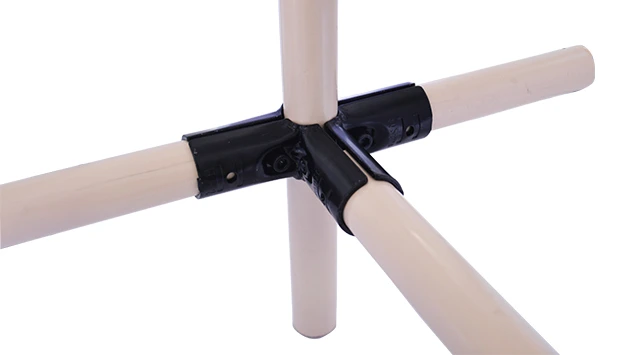
In the world of manufacturing and production, where every second counts and efficiency is the name of the game, lean systems have become the backbone of successful operations. These systems thrive on simplicity, flexibility, and the ability to adapt to changing needs—but none of that works without the right components. At the heart of any lean setup are the connections that hold everything together: lean pipe joints. Today, we're zeroing in on a critical player in this space: the Chrome Four Way Straight Lean Pipe Joint. Whether you're building a workbench for your assembly line, a flow rack for material handling, or revamping your entire lean system, understanding the lead time and availability of this joint can make or break your project timeline. Let's dive in.
Lean Systems 101: Why Joints Matter
Before we get into the specifics of the Chrome Four Way Straight Lean Pipe Joint, let's take a step back. What exactly is a lean system? At its core, a lean system is all about eliminating waste—whether that's wasted time, materials, or space. It's the reason factories can produce more with less, and why assembly lines run like well-oiled machines. But here's the thing: a lean system is only as strong as its weakest link. And more often than not, those links are the joints that connect the pipes, rails, and frames that form the system's structure.
Lean pipe joints come in all shapes and sizes, each designed for a specific purpose. Some connect two pipes at a 90-degree angle, others allow for rotation, and then there are the multi-way joints that serve as central hubs. The Chrome Four Way Straight Lean Pipe Joint falls into this last category. As the name suggests, it's a straight joint with four connection points, allowing you to link pipes in four directions—up, down, left, right—with precision. Its chrome plating isn't just for show, either; it adds durability, corrosion resistance, and a smooth finish that reduces friction, making it ideal for high-traffic areas like production floors.
But why does this particular joint matter so much? Think about it: when you're building a workbench, you might need to add shelves above and below the main surface, or attach side rails for tool storage. A four-way joint lets you do that without extra adapters or complicated setups. Similarly, in a flow rack, where materials need to move seamlessly from one station to another, intersecting paths often require connections in multiple directions. The Chrome Four Way Straight Lean Pipe Joint simplifies these designs, cutting down on assembly time and ensuring stability—two key pillars of lean manufacturing.
The Chrome Four Way Straight Lean Pipe Joint: Design and Applications
Let's get up close and personal with the star of the show. The Chrome Four Way Straight Lean Pipe Joint is engineered for versatility and strength. Typically made from high-grade steel, it starts as a solid block or forged piece, which is then machined to create four threaded or slip-fit ports. The chrome plating process involves dipping the joint in a chromic acid solution and applying an electric current, which bonds a thin layer of chromium to the surface. This layer isn't just decorative; it's hard enough to resist scratches from daily use and prevents rust, even in humid or oily factory environments.
One of the standout features of this joint is its compatibility. It's designed to work with standard lean pipes—usually 28mm or 30mm in diameter, though some manufacturers offer variations for smaller or larger pipes. This means you don't have to invest in specialized pipes to use it; if you're already using lean pipes in your facility, chances are this joint will fit right in. And because it's a straight joint, it keeps the pipes aligned, reducing wobble and ensuring that structures like workbenches or material racks stay level over time.
So, where do you actually use this joint? Let's look at a few real-world scenarios:
- Workbench Assembly: Suppose you're setting up a new assembly workbench for electronics manufacturing. The main surface needs to be sturdy, but you also want a shelf above for tools and a bin rack below for parts. Using a Chrome Four Way Straight Lean Pipe Joint at each corner lets you connect the vertical legs to the horizontal beams of the main surface, the upper shelf, and the lower bin rack—all in one go. No extra brackets, no misalignment issues, just a clean, strong frame.
- Flow Rack Construction: Flow racks are essential for kanban systems, where materials "flow" from storage to the production line. A typical flow rack has multiple levels, with roller tracks that let bins glide forward as items are used. To create a rack with three vertical columns and three horizontal levels (like Material Rack B, a common setup), you'd use four-way joints at the intersections of the vertical and horizontal pipes. This ensures each level is evenly spaced and securely attached, so the rack can handle the weight of full bins without sagging.
- Custom Material Trolleys: Turnover trolleys and racks often need to be compact but functional. A trolley with a main platform, side rails, and a handle might use four-way joints to connect the vertical posts to the platform frame and the handle bars. This design keeps the trolley lightweight but strong enough to transport heavy parts across the factory floor.
In each of these cases, the Chrome Four Way Straight Lean Pipe Joint acts as a silent workhorse, holding everything together while keeping the design flexible. And because it's compatible with other lean pipe accessories—like caster wheels for mobility or roller tracks for material flow—it integrates seamlessly into larger lean systems. But here's the catch: none of this matters if you can't get your hands on the joint when you need it. Which brings us to the big questions: How long does it take to get these joints, and where can you find them?

Lead Time Demystified: What Affects How Long You Wait?
Lead time—the time between placing an order and receiving the product—is a make-or-break factor in manufacturing. Miss a deadline for a key component, and your entire project could grind to a halt. When it comes to Chrome Four Way Straight Lean Pipe Joints, lead times can vary widely, from a few days to several weeks. Let's break down the factors that influence this timeline, so you can plan accordingly.
1. Raw Materials: The Foundation of Production
Every lean pipe joint starts with raw materials, and for chrome-plated joints, that means high-quality steel and chrome plating chemicals. Steel prices are notoriously volatile, influenced by global supply chains, trade policies, and even geopolitical events. If a lean pipe supplier is struggling to source steel at a reasonable cost, they might delay production until prices stabilize, or pass the cost on to buyers—either way, it can stretch lead times. Then there's the chrome plating process itself. Chrome plating requires specific chemicals (like chromic acid) and specialized equipment, and if a supplier's plating facility is backlogged or facing regulatory delays (due to environmental restrictions, for example), that adds time to the production cycle.
Here's a real-world example: Suppose a lean pipe supplier typically gets steel pipes from a local mill, but that mill has a fire and shuts down for repairs. The supplier might have to source steel from a different region, which could take 2-3 weeks longer than usual. Add in the time to cut, weld, and plate the joints, and a standard 5-day lead time could balloon to 3 weeks. It's not ideal, but it's a reminder that raw material availability is often out of the supplier's control.
2. Production Capacity: How Busy Is the Supplier?
Not all lean pipe suppliers are created equal. Some are small operations with limited production lines, while others are large-scale manufacturers with the ability to churn out thousands of joints per day. If you're ordering from a small supplier during peak season (like the end of the fiscal year, when many companies ramp up production), they might not have the capacity to fulfill your order quickly. On the flip side, a larger supplier with automated production lines might offer shorter lead times, even for big orders. It's all about balancing demand and supply.
Custom orders can also throw a wrench into lead times. If you need a Chrome Four Way Straight Lean Pipe Joint with a special thread size or a thicker chrome coating, the supplier might have to adjust their production process, which takes extra time. Standard, off-the-shelf joints are almost always faster to produce because they're part of the supplier's regular lineup.
3. Order Volume: Bulk vs. Small Batches
How many joints are you ordering? If you're buying 10 joints for a small project, a supplier might have them in stock and ship them within 24-48 hours. But if you're placing a bulk order for 500 joints to outfit an entire factory, that's a different story. Even large suppliers need time to schedule production, allocate materials, and ensure quality control for big orders. Some suppliers offer "express" production for rush orders, but that usually comes with a premium price tag—sometimes 20-30% higher than standard rates.
Minimum Order Quantities (MOQs) can also play a role here. Some suppliers require you to order at least 50 or 100 joints at a time, which might be more than you need for a small project. If you can't meet the MOQ, you might have to wait longer (or pay more) for a smaller batch, as the supplier fits your order into their production schedule around larger clients.
4. Location: Local vs. Global Suppliers
Where is your lean pipe supplier located? A local supplier (within your country or region) can often deliver in 1-5 days, since shipping is faster and there are no customs delays. But local suppliers might have higher prices, as they face higher labor and operational costs. Global suppliers, especially those in regions with lower production costs (like Asia), might offer lower prices, but shipping can take 2-4 weeks by sea or 3-5 days by air (at a steep cost). Customs clearance is another wildcard—if your shipment gets held up at the border due to paperwork issues, that adds even more time to the lead time.
For example, a U.S.-based manufacturer ordering from a lean pipe supplier in China might face a 3-week lead time for sea shipping, plus 3-5 days for customs and domestic delivery. Compare that to a U.S.-based supplier, which could ship the same order in 3 days. The trade-off is cost: the Chinese supplier might charge $5 per joint, while the U.S. supplier charges $8. It's a classic balancing act between time and budget.

Availability: When Can You Actually Get Your Hands on Them?
Lead time is about how long you wait after ordering, but availability is about whether the joint is in stock to begin with. There's a big difference between a supplier saying, "We can make that for you in 2 weeks" and "We have 100 in stock and can ship today." Let's explore the factors that affect availability, and how to navigate them.
1. Stock vs. Made-to-Order
Most lean pipe suppliers keep a certain number of standard joints in stock. These are the "bread and butter" items—like the Chrome Four Way Straight Lean Pipe Joint in standard sizes (28mm or 30mm) with no customizations. If you're ordering a standard joint, there's a good chance the supplier has it on the shelf, especially if it's a popular item. But if you need a non-standard size, a different finish (like black ESD coating instead of chrome), or a modified thread, it's likely made-to-order, which means longer lead times and lower availability.
Seasonal demand also plays a role in stock levels. The end of the year is a busy time for manufacturers, as many companies rush to complete projects before the fiscal year ends. This can deplete supplier stock, making even standard joints hard to find in November and December. Conversely, slow seasons (like summer, when some factories shut down for maintenance) might mean more stock and shorter lead times.
2. Regional Variations
Availability can vary by region, too. In areas with a high concentration of manufacturing (like the Midwest U.S., parts of Europe, or coastal China), lean pipe suppliers are more likely to keep large inventories, since demand is steady. In less industrial regions, suppliers might stock only the most basic components, requiring you to order specialty items (like the Chrome Four Way Straight Lean Pipe Joint) from a central warehouse, which adds shipping time.
It's also worth checking with local distributors. Many large lean pipe suppliers work with regional distributors who stock popular items, acting as middlemen to reduce delivery times. For example, a global supplier might have a main factory in Germany but a distributor in France that stocks Chrome Four Way Straight Lean Pipe Joints, allowing French manufacturers to get their orders in 1-2 days instead of waiting for shipment from Germany.
3. Checking Availability: Tips for Buyers
So, how do you find out if a Chrome Four Way Straight Lean Pipe Joint is available? Here are a few practical steps:
- Check the Supplier's Website: Many lean pipe suppliers have online catalogs with real-time inventory levels. Look for phrases like "In Stock" or "Ships Today" next to the product. If the website doesn't show stock levels, there might be a "Check Availability" button or a contact form to request info.
- Call or Email Sales Reps: Sometimes, the website isn't updated, or stock levels change hourly. A quick call to a sales rep can give you the most accurate info. Be specific: "Do you have Chrome Four Way Straight Lean Pipe Joints (28mm) in stock, and how many?"
- Ask About Backorders: If a joint is out of stock, ask if it's on backorder and when the next production run will be. Some suppliers let you pre-order, so you're first in line when stock arrives.
- Compare Multiple Suppliers: Don't rely on just one supplier. If your go-to supplier is out of stock, check 2-3 others. You might find one with stock, even if it costs a bit more—sometimes, the peace of mind is worth the extra expense.
Supplier Comparison: Lead Times and Availability in Action
To put all this into perspective, let's take a look at a hypothetical comparison of three lean pipe suppliers. This table outlines their lead times, availability, and minimum order quantities for the Chrome Four Way Straight Lean Pipe Joint. Remember, these are examples—actual numbers will vary by supplier, but they'll give you a sense of what to expect.
| Supplier Type | Lead Time (Standard Order) | Lead Time (Custom Order) | In-Stock Availability | Minimum Order Quantity (MOQ) |
|---|---|---|---|---|
| Local Lean Pipe Supplier (Regional) | 3-5 business days | 10-14 business days | High (80-90% of standard joints in stock) | 25 units |
| 14-21 business days (sea shipping) | 21-28 business days | Medium (50-60% of standard joints in stock) | 100 units | |
| 5-7 business days | 7-10 business days | Very High (95% of chrome joints in stock) | 50 units |
As you can see, local suppliers offer the shortest lead times but require smaller MOQs, making them ideal for small to medium orders. Global suppliers are better for bulk orders where cost is a priority, but you'll need to plan far in advance. Specialized suppliers, who focus solely on high-quality joints (like chrome-plated ones), often have the best availability for niche products but charge a premium. The key is to match your needs—order size, timeline, budget—to the right supplier.
Procurement Best Practices: Getting the Joints You Need, When You Need Them
Now that you understand lead times and availability, let's talk about how to ensure you never get stuck waiting for Chrome Four Way Straight Lean Pipe Joints. These procurement tips can help you stay ahead of the game:
1. Plan Ahead and Forecast Demand
The single best way to avoid delays is to plan your projects well in advance. If you know you'll need 200 Chrome Four Way Straight Lean Pipe Joints for a new workbench setup in three months, start researching suppliers now. Check their current stock levels, ask about seasonal lead time trends, and lock in a delivery date. Even better, create a quarterly forecast for lean pipe components—if you use 50 joints per month on average, order 150-200 at a time to build a buffer stock. This way, you won't have to rush order if a project comes up unexpectedly.
2. Build Relationships with Suppliers
Suppliers are more likely to prioritize your order if you're a regular customer. Take the time to build relationships with your lean pipe supplier's sales team and customer service reps. Let them know your typical order volume, timelines, and pain points (like needing rush orders occasionally). Some suppliers offer loyalty discounts or priority production for repeat buyers, which can save you time and money in the long run. It's also helpful to have a backup supplier—if your main supplier is out of stock, you can turn to your backup without scrambling.
3. Consider Buffer Stock for Critical Components
For components you use regularly (like the Chrome Four Way Straight Lean Pipe Joint), keeping a small buffer stock makes sense. Aim for 2-4 weeks' worth of supply. For example, if you use 10 joints per week, stock 20-40. This buffer acts as insurance against unexpected delays—like a supplier's production line breaking down or a raw material shortage. It might take up a little storage space, but it's a small price to pay for avoiding costly production halts.
4. Be Clear About Customization Needs
If you need custom joints (like a specific thread size or a thicker chrome coating), communicate those requirements upfront. The more details you provide, the faster the supplier can quote you a lead time and confirm availability. For example, instead of saying, "I need a four-way joint," say, "I need Chrome Four Way Straight Lean Pipe Joints, 28mm diameter, with M10 threads, and a 0.5mm chrome plating thickness." This reduces the chance of misunderstandings and ensures the supplier can source the right materials from the start.
5. Use Technology to Track Orders
Many suppliers offer order tracking tools on their websites or via email. Take advantage of these! Track your shipment from production to delivery, and set up alerts for key milestones (like "Order Shipped" or "Out for Delivery"). If a shipment is delayed, follow up immediately—don't wait until the expected delivery date has passed. The sooner you address an issue, the more time you have to find a workaround.
Wrapping Up: The Joint That Keeps Lean Systems Moving
The Chrome Four Way Straight Lean Pipe Joint might not be the most glamorous component in your lean system, but it's undeniably essential. It's the quiet connector that turns simple pipes into sturdy workbenches, efficient flow racks, and flexible material trolleys—all while keeping your operations aligned with lean principles. But to leverage its benefits, you need to understand the ins and outs of lead times and availability.
From raw material shortages to supplier capacity, from local vs. global sourcing to seasonal demand, there are countless factors that influence how long you'll wait for these joints. By planning ahead, building supplier relationships, and staying informed about stock levels, you can ensure that you always have the joints you need, when you need them. Remember, in lean manufacturing, every detail counts—and that includes the humble joint that holds it all together.
So, the next time you're designing a new workbench or revamping your flow rack, take a moment to appreciate the Chrome Four Way Straight Lean Pipe Joint. It's more than just a piece of metal; it's a key player in your quest for efficiency, flexibility, and success. And with the right approach to lead time and availability, you'll never let a missing joint slow you down again.