- Company Articles
- Products and Technology
- Product knowledge
- Chrome Four Way Straight Lean Pipe Joints: Load Capacity and Weight Limits Guide

Chrome Four Way Straight Lean Pipe Joints: Load Capacity and Weight Limits Guide
Related Product
Four Way Straight Lean Pipe Joint
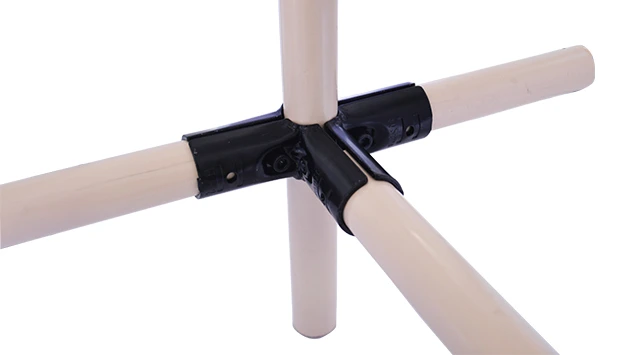
Four way lean pipe joint for 4 pcs 28MM lean pipe connection in straight angle, which used widely in workbench, flow rack, hand trolley frame connection.
In the fast-paced world of manufacturing, where every second counts and efficiency is the backbone of success, the tools and components that keep operations running smoothly often go unnoticed—until they're missing. Imagine a production floor where assembly lines hum with precision, workbenches hold heavy equipment steady, and material racks glide materials from one station to the next without a hitch. Behind this seamless dance of productivity lies a quiet hero: the lean pipe joint . Specifically, the chrome four way straight lean pipe joint, a unassuming yet critical piece that turns simple pipes into robust, flexible structures that power lean manufacturing systems worldwide.
Whether you're a facility manager looking to optimize your workspace, a production engineer designing a new assembly line, or a small business owner building a custom workbench, understanding the load capacity and weight limits of these joints isn't just a technical detail—it's the difference between a structure that lasts for years and one that falters under pressure. In this guide, we'll dive deep into what makes chrome four way straight lean pipe joints tick, how they contribute to lean system efficiency, and most importantly, how to ensure they can handle the weight of your operations.
What Are Chrome Four Way Straight Lean Pipe Joints?
Let's start with the basics. A chrome four way straight lean pipe joint is a specialized connector designed to join lean pipe (also known as "lean tube") in four directions—up, down, left, and right—creating a sturdy, cross-shaped connection. Unlike fixed or two-way joints, this four-way design is a workhorse for building modular structures, allowing for the creation of everything from simple shelves to complex workstations and material flow systems.
The "chrome" in the name isn't just for show. These joints are typically made from high-grade steel and coated with a layer of chromium, a process that gives them two key advantages: corrosion resistance and durability. In manufacturing environments where spills, humidity, or chemicals are common, that chrome coating acts as a shield, preventing rust and extending the joint's lifespan. It also adds a smooth, professional finish that's easy to clean—no small detail in spaces where hygiene and organization are priorities.
But what really sets these joints apart is their simplicity. They don't require welding, drilling, or specialized tools to install. Instead, they use a friction-based clamping mechanism: slide the lean pipe into the joint's openings, tighten the bolts, and you've got a secure connection that can be disassembled and reconfigured just as easily. This flexibility is the cornerstone of lean manufacturing, where adaptability to changing production needs is non-negotiable.
The Role of Chrome Four Way Joints in Lean Systems
Lean manufacturing is all about eliminating waste—whether it's time, space, or materials—and creating systems that can evolve with demand. Chrome four way straight lean pipe joints are the unsung enablers of this philosophy. Here's why:
Modularity at Its Core: Lean systems thrive on being able to adjust on the fly. Need to add a shelf to a workbench? Extend a flow rack to accommodate larger materials? With four-way joints, you're not stuck with a fixed structure. You can add, remove, or reposition pipes in minutes, turning a single workbench into a multi-functional station or a basic rack into a complex material handling system.
Cost-Effective Durability: Unlike rigid metal frames or custom-built structures, lean pipe systems using chrome joints are affordable to build and even more affordable to modify. If a project changes or a new product line is introduced, you don't have to scrap the entire setup—just reconfigure the joints and pipes. And because the chrome coating resists wear and tear, these systems often outlast their non-coated counterparts, saving you money on replacements in the long run.
Safety First: In manufacturing, a wobbly shelf or a collapsing workbench isn't just an inconvenience—it's a safety hazard. Chrome four way joints, when properly installed, distribute weight evenly across connected pipes, reducing stress points and minimizing the risk of structural failure. This peace of mind allows workers to focus on their tasks without worrying about the stability of their tools.

Load Capacity Fundamentals: What You Need to Know
Load capacity—the maximum weight a joint can safely support—is the single most important specification to consider when working with chrome four way straight lean pipe joints. But it's not a one-size-fits-all number. Several factors influence how much weight a joint can handle, and ignoring them can lead to bent pipes, cracked joints, or even dangerous collapses.
Material Thickness Matters: Not all lean pipe joints are created equal. The thickness of the steel used in the joint's body directly impacts its strength. Most standard chrome four way joints are made from 1.5mm to 2.0mm thick steel, but heavy-duty versions can go up to 3.0mm. Thicker steel means more resistance to bending under pressure—critical for structures like workbench frames or multi-tiered flow rack systems that carry heavy loads.
Design and Engineering: The way a joint is designed—from the shape of its openings to the placement of bolts—plays a huge role in load capacity. A well-engineered four-way joint will have reinforced corners and evenly spaced bolt holes to distribute weight across the entire connection, rather than concentrating it in one spot. Cheap, poorly designed joints often skip these details, leading to weak points that fail under stress.
Installation Quality: Even the strongest joint won't perform if it's installed incorrectly. Overtightening bolts can strip threads or warp the joint, while undertightening leaves connections loose and unstable. Using the right size wrench, following the manufacturer's torque guidelines, and double-checking connections are simple steps that make a world of difference in load capacity.

Weight Limits: How Much Can They Really Hold?
Now, the question you've been waiting for: How much weight can a chrome four way straight lean pipe joint actually support? The answer depends on several variables, but let's break down the typical ranges based on industry standards and real-world testing.
First, it's important to distinguish between "static load" and "dynamic load." Static load is the weight of an object that's stationary—think of a toolbox sitting on a workbench. Dynamic load, on the other hand, is weight in motion, like a box sliding down a flow rack or a cart being pushed into a shelf. Chrome four way joints are tested for both, but dynamic loads usually have lower limits to account for the added stress of movement.
For standard chrome four way straight lean pipe joints (1.5mm steel thickness, paired with 28mm diameter lean pipe), the static load capacity per joint typically ranges from 200kg to 300kg. That means if you have a workbench with four legs, each using a four-way joint at the base, the total static load capacity of the structure could be up to 1200kg (though you'd also need to factor in the strength of the pipes and other joints in the system).
Dynamic load capacity is lower, usually around 100kg to 150kg per joint. This is why flow racks, which rely on dynamic loads as materials slide along roller tracks, often use additional bracing or heavier-duty joints to ensure safety. For example, a three-tier flow rack with six four-way joints per tier would need to distribute the dynamic load of sliding boxes across all joints to stay within limits.
To put this in perspective, let's consider a common scenario: a workbench built with chrome four way joints. If the workbench is 1.2 meters long and 0.6 meters deep, with four vertical support pipes (each connected to the frame with four-way joints), the total static load capacity would be roughly 800kg (assuming 200kg per joint). That's more than enough to hold heavy machinery, tool chests, and assembly materials without breaking a sweat.
Comparing Load Capacities: Chrome vs. Other Joint Materials
Chrome four way joints aren't the only game in town. You might also come across galvanized steel joints, plastic-coated joints, or even aluminum joints. How do they stack up in terms of load capacity? Let's take a look:
| Joint Type | Material Thickness | Static Load Capacity (per joint) | Best For |
|---|---|---|---|
| Chrome Four Way Straight | 1.5mm–2.0mm steel | 200kg–300kg | Heavy workbenches, flow racks, industrial shelving |
| Galvanized Steel Four Way | 1.2mm–1.5mm steel | 150kg–250kg | Outdoor or humid environments (good rust resistance) |
| Plastic-Coated Steel Four Way | 1.0mm–1.2mm steel | 100kg–180kg | Light-duty workstations, cleanrooms (non-conductive) |
| Aluminum Four Way | 2.0mm–3.0mm aluminum | 120kg–200kg | Lightweight, portable structures (lower weight, lower load) |
As you can see, chrome four way joints sit at the higher end of the load capacity spectrum, making them ideal for heavy-duty applications where strength and durability are non-negotiable. Their chrome coating also gives them an edge in environments where corrosion is a concern, such as factories with high humidity or frequent cleaning.
Real-World Applications: Workbenches, Flow Racks, and Beyond
Theory is one thing, but how do chrome four way straight lean pipe joints perform in actual manufacturing settings? Let's look at two common applications where their load capacity and flexibility shine: workbenches and flow racks.
Workbenches: The Heart of the Production Line A workbench is more than just a table—it's where assembly happens, tools are stored, and workers spend hours each day. For a workbench to be effective, it needs to be stable, sturdy, and able to handle the weight of everything from power tools to (semi-finished products). Chrome four way joints are the backbone of these structures.
Take, for example, a electronics assembly workbench. It might need to support a soldering station (15kg), a parts bin rack (30kg), and a monitor arm with a screen (5kg), plus the weight of the worker leaning on it (80kg). With four vertical support pipes connected by four-way joints at the base and frame, the total load is distributed evenly across the joints, ensuring the bench doesn't wobble or sag over time. And if the assembly line switches to larger components, the joints make it easy to add a second shelf or reinforce the frame—no need to buy a whole new bench.
Flow Racks: Keeping Materials Moving In lean systems, stagnant materials are a form of waste. Flow racks solve this by using gravity to slide materials from the back to the front, ensuring workers always have what they need at their fingertips. Chrome four way joints are critical here, as they support the inclined roller tracks that make this flow possible.
Imagine a three-tier flow rack in a warehouse, used to store boxes of automotive parts. Each tier has a roller track angled slightly downward, and the entire structure is held together by four-way joints connecting the vertical supports and horizontal beams. Each box weighs 15kg, and there are 10 boxes per tier—150kg per tier. With four joints supporting each tier, that's 37.5kg per joint, well below the 200kg static load limit. Even when workers add or remove boxes (dynamic load), the joints hold steady, keeping the rack stable and the materials flowing smoothly.
Installation Tips to Maximize Load Capacity
You've chosen chrome four way straight lean pipe joints for their strength—now how do you ensure you're getting the most out of their load capacity? Here are some pro tips for installation:
Use the Right Pipes: Joints are only as strong as the pipes they connect. Pair chrome four way joints with high-quality lean pipe (typically 28mm diameter, 1.2mm–2.0mm wall thickness). Thinner pipes or low-grade steel will bend under stress, even if the joints are strong.
Tighten Bolts Properly: Most joints come with hex bolts that need to be tightened to a specific torque (usually 25–30 Nm). Use a torque wrench to avoid overtightening (which can damage the joint) or undertightening (which leads to loose connections). A good rule of thumb: tighten until the bolt is snug, then give it a quarter-turn more.
Reinforce Stress Points: In structures with uneven weight distribution (like a workbench with a heavy tool on one end), add diagonal braces or extra joints to spread the load. For example, a diagonal pipe from the top corner of the bench to the base joint can reduce stress on the vertical supports.
Check Alignment: Misaligned pipes put extra strain on joints. Use a level to ensure vertical pipes are straight and horizontal pipes are level before tightening. Crooked connections cause some joints to bear more weight than others, leading to premature failure.
Maintenance: Keeping Your Joints Strong for Years
Chrome four way joints are built to last, but they still need a little care to maintain their load capacity over time. Here's how to keep them in top shape:
Clean Regularly: Wipe down joints with a damp cloth to remove dust, oil, or chemicals that can corrode the chrome coating. For stubborn grime, use a mild detergent—avoid abrasive cleaners that scratch the chrome.
Inspect for Wear: Every few months, check joints for signs of damage: cracked bodies, stripped threads, or loose bolts. replace any damaged joints immediately—even a small crack can reduce load capacity by 50% or more.
Retighten Bolts: Over time, vibrations from machinery or frequent use can loosen bolts. A quick check with a wrench every month will ensure connections stay tight and load is distributed evenly.
Protect from Impact: Avoid hitting joints with heavy equipment or dropping tools on them. Dents or bends in the joint body weaken the structure and reduce load capacity.
Conclusion: The Unsung Hero of Lean Manufacturing
Chrome four way straight lean pipe joints may not be the most glamorous part of your manufacturing setup, but they're undoubtedly one of the most important. By connecting lean pipes into strong, flexible structures, they enable the adaptability and efficiency that define lean systems. Understanding their load capacity—what they can hold, how to install them properly, and how to maintain them—ensures your workbenches, flow racks, and other structures are safe, durable, and ready to keep up with the demands of your business.
So the next time you walk through your facility and see a steady workbench or a smoothly flowing rack, take a moment to appreciate the small, chrome-plated joints holding it all together. They're not just connectors—they're the quiet foundation of your success.