- Company Articles
- Products and Technology
- Product knowledge
- Chrome Four Way Straight Lean Pipe Joints: Reducing Downtime in Production Lines

Chrome Four Way Straight Lean Pipe Joints: Reducing Downtime in Production Lines
Related Product
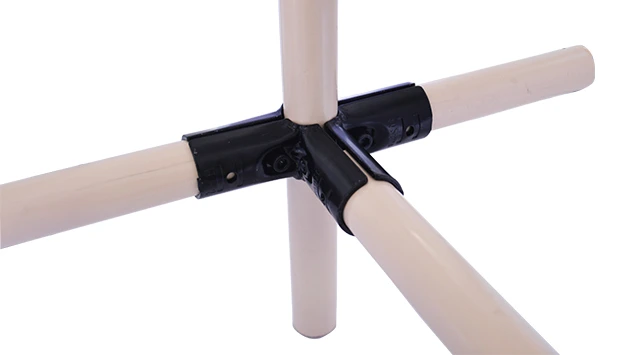
Four Way Straight Lean Pipe Joint
Four way lean pipe joint for 4 pcs 28MM lean pipe connection in straight angle, which used widely in workbench, flow rack, hand trolley frame connection.
In the fast-paced world of manufacturing, every second counts. A single minute of unplanned downtime on a production line can translate to lost revenue, missed deadlines, and frustrated teams. For plant managers, engineers, and frontline workers alike, the quest to minimize these disruptions is constant—and it often starts with the smallest components of the production ecosystem. Enter chrome four way straight lean pipe joints: unassuming in size, but transformative in their ability to keep assembly lines moving, adapt to changing needs, and reduce the friction that grinds productivity to a halt.
The Hidden Cost of Downtime in Production
Before diving into the specifics of chrome four way straight lean pipe joints, let's talk about why downtime matters. It's not just about the minutes the line stops; it's the ripple effect. Imagine a scenario where a critical joint on a flow rack fails during a peak production run. The line pauses. Workers scramble to find a replacement. Parts back up. The next shift's schedule gets delayed. By the time the joint is replaced, hours have passed—and so has the opportunity to meet that day's quota. Now multiply that by dozens of similar incidents across a month, and the impact becomes clear: strained budgets, demoralized teams, and a competitive edge slipping away.
Downtime isn't always caused by catastrophic failures, either. Sometimes it's the slow, silent drain of inefficiency: rigid workbenches that can't be reconfigured for new product dimensions, conveyor systems that jam because of misaligned roller tracks, or lean pipe structures that require specialized tools and hours of labor to adjust. These are the "little things" that add up, turning a smooth workflow into a frustrating battle against the clock.
The good news? Many of these issues stem from using outdated or ill-suited lean pipe components. And that's where chrome four way straight lean pipe joints step in—designed to address the root causes of downtime, from fragility to inflexibility, and everything in between.
What Are Chrome Four Way Straight Lean Pipe Joints?
At first glance, a chrome four way straight lean pipe joint might look like just another metal connector. But its design is a masterclass in lean thinking: simple, durable, and hyper-functional. These joints are engineered to connect lean pipes (typically 28mm in diameter) at 90-degree angles, creating stable, multi-directional structures like workbenches, flow racks, material carts, and conveyor supports. The "four way" designation means they can join four pipes at once—one along each axis (up, down, left, right)—making them incredibly versatile for building complex, yet modular, systems.
What sets the chrome variant apart? Chrome plating isn't just for aesthetics (though the sleek, corrosion-resistant finish is a bonus). It adds a layer of durability, protecting the joint from rust, scratches, and wear caused by constant use and exposure to factory environments—think oil, moisture, and the occasional bump from a turnover trolley. This plating ensures the joint maintains its integrity over time, reducing the need for frequent replacements.
But the real magic is in their simplicity. Unlike welded joints or glued connections, chrome four way straight lean pipe joints attach to lean pipes using friction and a set screw (or sometimes a cam lever, depending on the model). No welding torches, no adhesives, no specialized training required. A basic Allen wrench is often all you need to secure or loosen them, making adjustments and repairs quick enough to keep the line moving.

Key Features That Slash Downtime
1. Tool-Free Adjustments (or Minimal Tools, at Most)
Traditional lean pipe joints often require wrenches, pliers, or even power tools to tighten or reposition. In a production emergency, hunting down the right tool can turn a 5-minute fix into a 30-minute delay. Chrome four way straight lean pipe joints, by contrast, are designed for speed. Many models feature a hex socket set screw that can be tightened or loosened with a standard Allen key—usually a size that's already in every maintenance worker's toolkit. Some advanced versions even use quick-release levers, allowing for tool-free adjustments. This means when a workbench needs to be raised by 6 inches to accommodate a taller operator, or a flow rack needs an extra shelf added, the change takes minutes, not hours.
2. Unmatched Durability
Chrome plating isn't just about shine—it's a shield. In factories where moisture, chemicals, or heavy use are part of the daily grind, unplated or poorly finished joints corrode, weaken, and fail. A rusted joint on a material rack, for example, might bend under the weight of parts, causing the rack to collapse and halt production. Chrome four way straight lean pipe joints resist corrosion, even in humid or oily environments, ensuring they maintain their strength over years of use. This durability translates to fewer unexpected failures, fewer emergency repairs, and more consistent uptime.
3. Precision Engineering for Zero Slippage
There's nothing more frustrating than a joint that slips. A loose connection on a roller track can cause products to jam, leading to line stoppages and damaged goods. Chrome four way straight lean pipe joints are machined to tight tolerances, with internal grooves that grip the lean pipe securely when tightened. This precision ensures that once the joint is in place, it stays in place—even under the vibration of conveyor systems or the constant movement of turnover trolleys. No more "wobbling" workbenches or misaligned flow racks; just rock-solid stability that keeps materials moving smoothly.
4. Compatibility with Standard Lean Pipes and Accessories
A common source of downtime is component incompatibility. Imagine ordering a new batch of joints only to find they don't fit your existing lean pipes, or require proprietary accessories that aren't in stock. Chrome four way straight lean pipe joints are designed to work seamlessly with standard lean pipes (28mm diameter), as well as a wide range of lean pipe accessories: caster wheels, roller track connectors, workbench decks, and more. This universality means you can mix and match components without worrying about compatibility issues, reducing the time spent sourcing "special" parts and ensuring your team can make repairs or adjustments using whatever is on hand.

A Real-World Example: How One Manufacturer Cut Downtime by 35%
To put these benefits into perspective, let's look at a case study. A mid-sized electronics manufacturer in the Midwest was struggling with chronic downtime on its smartphone assembly line. Their existing lean pipe structures—built with cheap, zinc-plated joints—were prone to corrosion (due to the humid factory environment) and slippage. Every few weeks, a joint would fail, requiring the line to stop for repairs. Additionally, reconfiguring workstations for new phone models took 4-6 hours, as the old joints required welding or specialized tools to adjust.
The manufacturer switched to chrome four way straight lean pipe joints, paired with high-quality lean pipes and aluminum roller tracks. The results were striking:
- Fewer failures: Corrosion-related joint failures dropped by 90%. The chrome plating held up to moisture, and the precision grip eliminated slippage.
- Faster reconfigurations: Adjusting workbenches for new phone models went from 4-6 hours to 45 minutes. The tool-free design meant workers could disassemble and reassemble structures during breaks, without halting production.
- Smarter use of labor: Maintenance teams, once bogged down by joint repairs, were freed up to focus on preventive maintenance for larger equipment, further reducing downtime.
By the end of the first quarter, the manufacturer reported a 35% reduction in total downtime—and a 15% increase in on-time deliveries. The ROI on the new joints? Just 2.5 months.
Comparing Lean Pipe Joints: Why Chrome Four Way Straight Stands Out
Not all lean pipe joints are created equal. To understand why chrome four way straight joints are a downtime-fighting powerhouse, let's compare them to other common types:
| Joint Type | Material | Flexibility (Reconfigurability) | Installation/Adjustment Time | Durability (Resistance to Wear/Corrosion) | Best For |
|---|---|---|---|---|---|
| Chrome Four Way Straight | Chrome-plated steel | High (4-way connection, tool-free adjustment) | 5-10 minutes (standard adjustment) | Excellent (chrome resists corrosion; steel core resists bending) | Multi-directional structures (workbenches, flow racks, material carts) |
| 90° Fixed Lean Pipe Joint | Zinc-plated steel | Low (fixed angle, cannot pivot) | 20-30 minutes (requires tools; may need disassembly to reposition) | Fair (zinc plating prone to corrosion in humid environments) | Static structures (permanent shelving, non-adjustable frames) |
| 180° Swivel Lean Pipe Joint | Plastic or aluminum | High (swivels 180°, flexible positioning) | 10-15 minutes (adjustable, but plastic/aluminum less durable) | Poor (plastic cracks; aluminum bends under heavy loads) | Light-duty applications (small parts storage, temporary displays) |
| Vertical Lean Pipe Joint | Stainless steel | Medium (only vertical connections; limited directionality) | 15-20 minutes (specialized tools for vertical alignment) | Good (stainless steel resists corrosion, but limited functionality) | Single-axis structures (tall shelving, vertical conveyors) |
The table tells the story: chrome four way straight joints balance flexibility, speed, and durability better than most alternatives. They're not just a connector—they're a downtime solution.
Integrating Chrome Four Way Straight Joints into Your Lean System
Switching to chrome four way straight lean pipe joints isn't just about swapping out old connectors; it's about building a more resilient lean system. Here's how to make the most of them:
1. Start with a Lean Audit
Before upgrading, map out your current production line's pain points. Where does downtime occur most often? Is it at the workbench, the flow rack, or the conveyor? Identify which structures use outdated joints, then prioritize replacing those first. For example, if your roller track system jams frequently, focus on upgrading the joints that support the roller track placon mounts—often a hidden source of misalignment.
2. Pair with High-Quality Lean Pipes and Accessories
A great joint is only as good as the pipe it connects. Use high-quality lean pipes (preferably 28mm diameter, with a smooth, consistent finish) to ensure a tight grip. Pair them with compatible accessories: aluminum roller tracks for smooth material flow, heavy-duty caster wheels for mobile carts, and ESD workbench tops if you're in electronics manufacturing. Remember, the goal is a system where every component works in harmony to reduce friction.
3. Train Your Team on Quick Adjustments
Even the most user-friendly joint won't reduce downtime if your team doesn't know how to use it. Hold a short training session on adjusting chrome four way straight joints—demonstrate how to tighten/loosen the set screw, how to align pipes for maximum stability, and how to troubleshoot common issues (like a stuck joint). Empower frontline workers to make minor adjustments themselves; they're the ones closest to the action and can spot issues before they escalate.
Choosing the Right Lean Pipe Supplier
Not all chrome four way straight lean pipe joints are created equal, and neither are their suppliers. To ensure you're getting a product that delivers on its promise of reduced downtime, look for a lean pipe supplier who:
- Offers quality assurance: Ask about material testing (e.g., corrosion resistance, load capacity). Reputable suppliers will provide data on how their joints perform under stress.
- Has a wide range of accessories: You'll need more than just joints—roller tracks, caster wheels, workbench decks, etc. A supplier with a full catalog reduces the hassle of sourcing from multiple vendors.
- Provides technical support: Even the best products need troubleshooting. Choose a supplier with a responsive support team that can help with installation, reconfiguration, or replacement questions.
- Understands lean manufacturing: A supplier who speaks your language—who knows what "downtime reduction" means in practice—will be a better partner than one who just sells parts.
Conclusion: Small Joints, Big Impact
In the world of manufacturing, it's easy to focus on the big-ticket items: high-tech robots, automated conveyors, state-of-the-art software. But sometimes, the greatest gains come from upgrading the smallest components. Chrome four way straight lean pipe joints are a testament to that. They don't just connect pipes—they connect your team to a more efficient, less frustrating workflow. They turn downtime into uptime, rigidity into flexibility, and frustration into productivity.
So, the next time your production line hits a snag, ask yourself: Could better joints be the solution? For manufacturers who've made the switch, the answer is clear: yes. Chrome four way straight lean pipe joints aren't just a purchase—they're an investment in smoother operations, happier teams, and a stronger bottom line. And in today's competitive market, that's not just a win—that's a necessity.