- Company Articles
- Products and Technology
- Product knowledge
- Chrome Lean Pipe Clamp B: Working Principle in Flexible Production Lines

Chrome Lean Pipe Clamp B: Working Principle in Flexible Production Lines
Related Product
Lean Pipe Clamp
Lean pipe clamp is used for rack system hang monitor or other panel for workbenck, flowrack in production daily use.
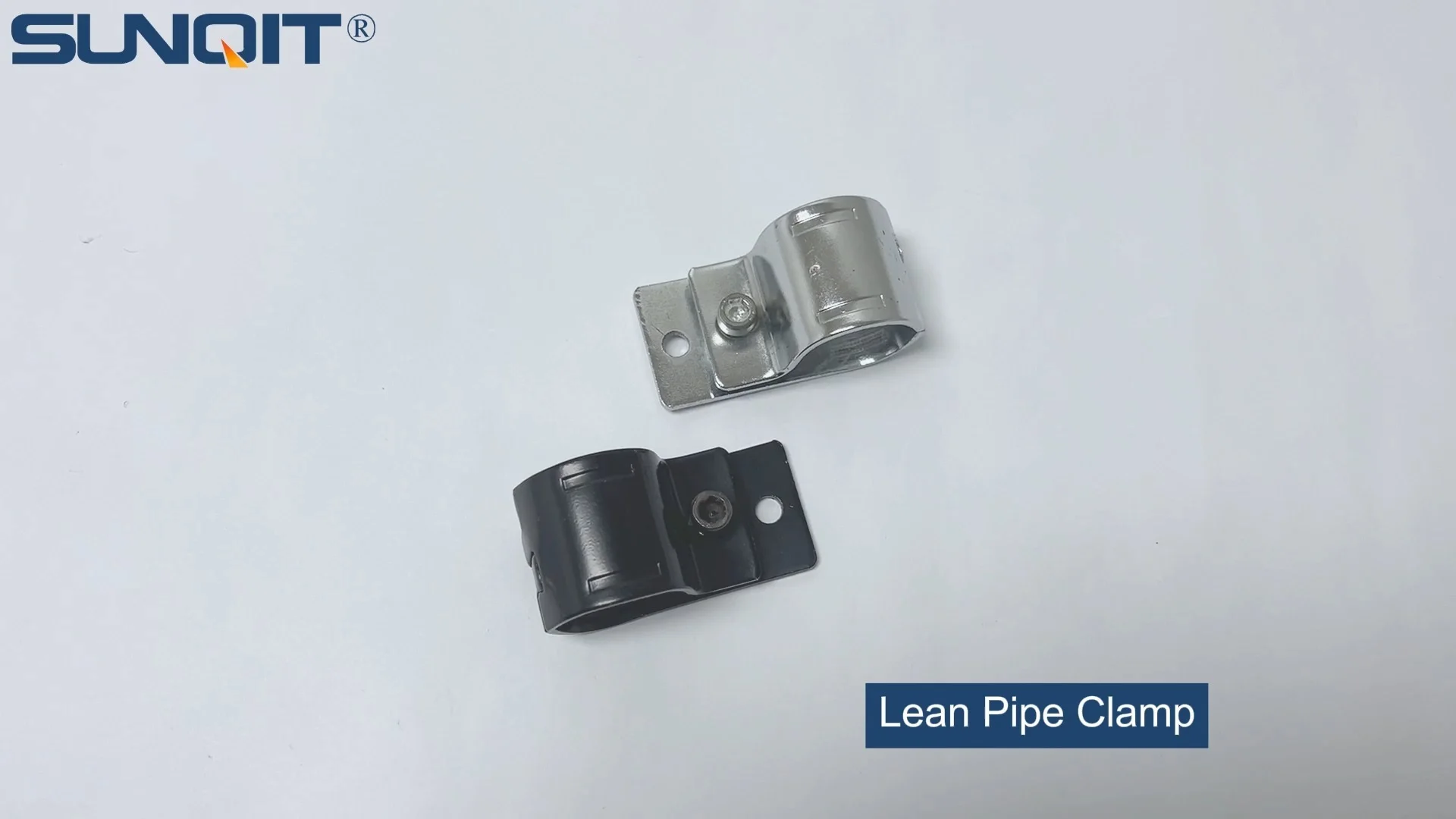
In the fast-paced world of manufacturing, where every second counts and adaptability is key, the smallest components often hold the biggest power to transform efficiency. Today, we're shining a light on one such unsung hero: the Chrome Lean Pipe Clamp B. Far more than just a metal fastener, this unassuming tool is the glue that holds flexible production lines together, empowering teams to build, adjust, and innovate on the fly. Let's dive into how it works, why it matters, and the role it plays in modern lean systems.
The Rise of Flexible Production: Why Rigidity No Longer Cuts It
Remember the days when a factory floor looked like a maze of fixed machinery? Heavy, bolted-down workbenches, immovable material racks, and production lines that took weeks to reconfigure if a product design changed. For decades, that was the norm. But as consumer demands shift faster than ever—with shorter product lifecycles and custom orders becoming standard—rigidity has become a liability. Enter flexible production lines: modular, adaptable setups that can pivot with minimal downtime, reduce waste, and keep workers moving efficiently.
At the heart of this revolution is the lean system —a philosophy built on eliminating waste, streamlining workflows, and prioritizing continuous improvement. And if lean systems are the brain of the operation, lean pipes are the skeleton. These lightweight, durable tubes (often aluminum, stainless steel, or plastic-coated steel) form the framework for everything from workbenches to flow racks, and they rely on components like the Chrome Lean Pipe Clamp B to stay strong yet flexible.
Real Talk from the Floor: "We used to spend an entire weekend reconfiguring our assembly line for a new product," says Maria, a production supervisor at a mid-sized electronics plant. "Now, with lean pipes and clamps, my team can adjust a workbench or reroute a flow rack in under an hour. It's not just about saving time—it's about letting us experiment and find better ways to work, every single day."
Lean Pipes 101: The Backbone of Modular Manufacturing
Before we zoom in on the Chrome Lean Pipe Clamp B, let's get clear on what lean pipes are and why they're so critical. Unlike traditional steel pipes, lean pipes are designed for modularity. They're lightweight (aluminum and plastic-coated options make them easy to handle), corrosion-resistant (thanks to stainless steel or chrome finishes), and compatible with a range of lean pipe joints and accessories. This means they can be assembled into almost any structure—workbenches, material racks, conveyor supports, or turnover trolleys—without welding, drilling, or heavy tools.
Think of lean pipes as the building blocks of a factory's "Lego set." You can snap them together, take them apart, and rebuild them in endless configurations. But none of that would work without reliable clamps and joints to hold them in place. That's where the Chrome Lean Pipe Clamp B comes in.

Meet the Chrome Lean Pipe Clamp B: Design That Balances Strength and Flexibility
So, what exactly is a Chrome Lean Pipe Clamp B? At first glance, it looks like a simple U-shaped metal piece with a screw mechanism. But its design is deceptively clever. Made from high-grade steel with a chrome plating, it's built to withstand the wear and tear of daily factory use—scratches, spills, and the constant stress of holding up heavy loads. The "B" in its name typically refers to its size or design variant (often compatible with standard 28mm lean pipes), making it a common choice for mid-weight applications like workbench frames or light-duty flow racks.
The key features that set it apart:
- Chrome Plating: More than just shiny—this coating resists rust and corrosion, even in humid or oily environments. It also adds a smooth finish that won't snag on gloves or materials.
- Adjustable Grip: The clamp's screw mechanism lets users tighten or loosen it by hand (or with a basic wrench), so there's no need for power tools. This makes on-the-spot adjustments a breeze.
- U-Shaped Design: The curved "jaw" of the clamp fits snugly around lean pipes, distributing pressure evenly to prevent bending or damage to the tube. This ensures a secure hold without crushing the pipe.
But the real magic isn't in the clamp alone—it's in how it works with other components. Pair it with a lean pipe joint , and you can connect two pipes at 90 degrees. Add a caster wheel, and suddenly your workbench becomes a mobile cart. Attach it to a roller track, and you've got a gravity-fed material flow rack. The possibilities are as endless as your team's creativity.

How It Works: The Step-by-Step of Securing Lean Pipes
Let's break down the working principle of the Chrome Lean Pipe Clamp B with a simple example: building a basic workbench frame. Here's how a worker might use it:
- Align the Pipes: First, they'll position two lean pipes at the desired angle (say, vertical legs and a horizontal crossbar for the workbench top).
- Place the Clamp: Slide the U-shaped jaw of the Chrome Lean Pipe Clamp B over the intersection of the two pipes. The clamp's design ensures it sits flush against both tubes, with no gaps.
- Tighten the Screw: Using a hex key or wrench, they'll turn the clamp's screw. As the screw tightens, the jaw closes, gripping the pipes firmly. The secret here is the clamp's ability to apply even pressure—enough to hold the pipes steady, but not so much that it deforms them.
- Test and Adjust: Give the joint a gentle shake to check stability. If it wobbles, a quick tweak of the screw is all it takes to tighten things up. Need to reposition the pipe later? Loosen the screw, slide the clamp, and retighten. No drilling, no welding, no mess.
This simplicity is game-changing. In traditional setups, changing a workbench height might require cutting new lumber or welding new brackets. With the Chrome Lean Pipe Clamp B, it's a 2-minute job. That's the difference between a production line that adapts to change and one that gets left behind.

Building Better Workbenches: A Case Study in Flexibility
Let's zoom in on one of the most common uses for the Chrome Lean Pipe Clamp B: assembling workbenches . A typical workbench in a lean system needs to be sturdy enough to support tools and materials, but also adjustable to fit workers of different heights or tasks (think assembly, packaging, or quality control).
Take the "Workbench E (Single Deck – Without Caster)" from many lean suppliers. This basic model relies on a frame of aluminum or steel lean pipes, held together by clamps like the Chrome Lean Pipe Clamp B. Here's how it comes together:
- Frame Assembly: Four vertical lean pipes form the legs. Horizontal pipes connect them at the top and bottom, secured with Chrome Lean Pipe Clamps B at each corner. The clamps ensure the frame stays square and stable, even when loaded with heavy equipment.
- Deck Attachment: A wooden or metal top (the "single deck") is mounted to the horizontal upper frame. Again, clamps (or brackets attached via clamps) hold the deck in place, making it easy to swap out if it gets damaged.
- Customization: Need a shelf for tools? Add two more horizontal pipes halfway up the legs, clamped in place. Want to mount a monitor arm? Use a clamp to attach it to the side frame. No need to drill holes or hire a carpenter—just clamp and go.
Worker Perspective: "I'm 5'4", and the old workbenches were all set for someone 6 feet tall," says Raj, an assembly line worker. "Now, with the lean pipe setup, my supervisor adjusted my bench height in 10 minutes using those chrome clamps. My back pain went away, and I'm faster at my job. It sounds small, but it makes a huge difference in how you feel at the end of the day."
Flow Racks: Keeping Materials Moving Smoothly
Another star application for the Chrome Lean Pipe Clamp B is building flow racks —tilted racks with roller tracks that let materials slide forward as items are removed (think of a grocery store shelf, but for factory parts). Flow racks reduce waste by ensuring workers always take the oldest materials first (FIFO—First In, First Out) and keep items within easy reach.
A "Material Rack B (3 Row and 3 Floor)" is a classic example. This rack has multiple levels, each fitted with a roller track. The frame is built with lean pipes, and the roller tracks are mounted using brackets secured by Chrome Lean Pipe Clamps B. Here's why the clamp is crucial:
- Angle Adjustment: Flow racks need a slight tilt to let gravity move materials. The clamp's adjustable grip lets workers fine-tune the angle of the roller track—too steep, and parts might slide too fast; too flat, and they won't move at all. A quick twist of the clamp's screw is all it takes to get it right.
- Stability Under Weight: Even a fully loaded flow rack (with boxes of parts) won't wobble, thanks to the clamp's secure hold on the rack's frame. This prevents accidents and keeps materials organized.
- Easy Expansion: Need to add a fourth row? Just clamp on new vertical pipes and another roller track. No need to buy a whole new rack.
Why Chrome Lean Pipe Clamp B Stands Out: Comparing Traditional vs. Modern Fasteners
To truly appreciate the Chrome Lean Pipe Clamp B, let's compare it to traditional ways of joining pipes or frames. Here's how it stacks up:
| Feature | Traditional Fasteners (Welding/Bolts) | Chrome Lean Pipe Clamp B |
|---|---|---|
| Setup Time | Hours (requires skilled labor) | Minutes (no special skills needed) |
| Reconfigurability | Almost impossible (permanent joint) | Easy (loosen screw, adjust, retighten) |
| Tool Requirements | Welder, drill, heavy wrenches | Basic wrench or even just hands |
| Durability | High (but permanent) | High (chrome resists corrosion; reusable) |
| Cost Over Time | High (replacement parts, labor for changes) | Low (reusable, minimal labor) |
It's clear: the Chrome Lean Pipe Clamp B wins on flexibility, speed, and cost-effectiveness. For lean systems, where waste reduction is king, that's a game-changer.
Beyond the Clamp: Building a Complete Lean Ecosystem
The Chrome Lean Pipe Clamp B rarely works alone. It's part of a larger ecosystem of lean pipe and accessories that make flexible production possible. Here are a few key partners:
- Lean Pipe Joints: These specialized connectors (like 90-degree elbows or T-joints) work with clamps to join pipes at different angles. For example, a three-way lean pipe joint, secured with a Chrome Lean Pipe Clamp B, lets you branch a pipe off in two directions.
- Caster Wheels: Add caster wheels to a workbench or trolley by clamping them to the frame. Suddenly, your stationary workbench becomes a mobile cart, perfect for moving materials between stations.
- Roller Tracks: As we saw with flow racks, roller tracks (and their accessories, like plastic guide rails or swivel roller balls) rely on clamps to stay attached to frames. The Chrome Lean Pipe Clamp B ensures the track stays aligned, so materials glide smoothly.
- Aluminum Profiles: For heavier-duty setups, aluminum extrusion profiles (with T-slots for easy mounting) often pair with lean pipes. Clamps like the Chrome Lean Pipe Clamp B can connect pipes to these profiles, blending strength and flexibility.
Together, these components create a system where almost anything is possible. Need a custom material trolley? Clamp pipes, add casters, and mount a roller track. Want a mobile workbench with a shelf? Clamp on extra pipes and a wooden deck. The only limit is imagination (and we're careful not to use that word, but you get the idea).
The Future of Production: Small Tools, Big Impact
As manufacturing continues to evolve—with trends like mass customization, shorter lead times, and worker-centric design—tools like the Chrome Lean Pipe Clamp B will only grow more important. They're not just about building things; they're about building adaptable things. A factory armed with lean pipes, clamps, and a culture of continuous improvement can pivot faster, reduce waste, and keep workers engaged (because nothing kills morale like being stuck with a one-size-fits-all setup).
So, the next time you walk through a factory floor, take a closer look at those unassuming metal clamps holding the workbenches and racks together. That's the Chrome Lean Pipe Clamp B, quietly powering the future of production. And for the workers and managers who rely on it? It's not just a tool—it's a game-changer.