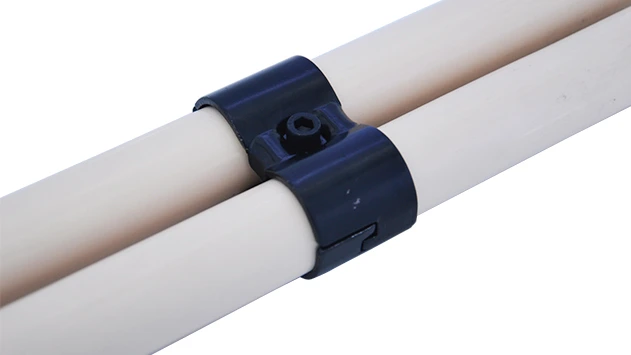
Now that we understand what chrome parallel lean pipe joints are, let's dig into the heart of the matter: how they enhance safety. We'll break this down into five key areas where these joints make a tangible difference, using real-world examples to show their impact.
1. Stability: The Foundation of Accident Prevention
Stability is the first line of defense against workplace accidents. A structure that doesn't wobble, shift, or tip over eliminates countless risks. Chrome parallel lean pipe joints excel here thanks to their design. Let's take a material rack B (3 row and 3 floor)—a common structure used to store boxes, parts, or tools. If this rack is built with low-quality joints, the shelves might sag under weight, or the entire unit could lean to one side. A leaning rack is a disaster waiting to happen: boxes could slide off,ing someone below, or the rack itself could collapse, trapping workers or damaging equipment.
With chrome parallel joints, the story changes. The parallel connection distributes the weight of each shelf evenly across the vertical pipes. The chrome coating ensures the joint doesn't corrode and weaken over time, even if the rack is in a humid warehouse. And because the joints clamp tightly onto the pipes, there's no "play" or movement. The rack stands straight, shelves stay level, and materials stay put. For workers like Raj, who moves boxes onto these racks daily, that stability means he can focus on lifting safely (using proper form) instead of bracing himself against a wobbly structure.
Another example: turnover trolleys. These carts are essential for moving materials between workstations, but if their joints are weak, the cart could sway when pushed, causing materials to fall off. A chrome parallel joint on the trolley's frame keeps the structure rigid, even when turning corners or moving over uneven floors. The caster wheels (which attach to the trolley via joints) stay aligned, preventing the cart from tipping. For someone like Jamal, who pushes a trolley loaded with 50-pound boxes 20 times a day, that stability isn't just convenient—it's a lifesaver.
2. Corrosion Resistance: Fighting the Hidden Enemy
Rust and corrosion might seem like cosmetic issues, but in reality, they're silent safety threats. When metal joints corrode, they lose strength. A joint that's rusted through can snap under pressure, even if it looks intact from the outside. This is especially dangerous in environments with moisture, chemicals, or high humidity—think food processing plants, car washes, or coastal warehouses.
Chrome coating is a powerful defense here. The chrome layer acts as a barrier, preventing water, salt, and chemicals from reaching the underlying metal. Let's say a facility uses a lean pipe workbench near a washing station, where water splashes occasionally. A standard steel joint might start rusting within months, weakening the connection. But a chrome parallel joint? It stays shiny and strong, maintaining its grip on the pipes. This isn't just about longevity—it's about reliability. Workers can trust that the structure will hold, even in tough conditions, because the joints aren't slowly deteriorating.
Maria, from our earlier example, works in a electronics plant where humidity is controlled but not perfect. Her workbench has been in use for 3 years, and the chrome parallel joints still look and function like new. No rust, no loosening, no signs of wear. That's peace of mind—knowing the tools and components she handles every day are supported by joints that won't fail.
3. Ergonomics: Reducing Strain, Preventing Injuries
Safety isn't just about avoiding sudden accidents—it's also about preventing long-term injuries, like strains, sprains, or repetitive motion disorders. Ergonomics plays a huge role here, and chrome parallel lean pipe joints contribute by enabling adjustable, worker-friendly structures.
Let's say a team needs to adjust the height of their lean pipe workbench to accommodate workers of different heights. With traditional welded joints, this would be impossible without rebuilding the entire bench. But with chrome parallel joints, it's simple: loosen the bolts, adjust the pipes to the desired height, and retighten the joints. The joints hold the new position securely, ensuring the bench remains stable. Now, shorter workers don't have to reach up, straining their shoulders, and taller workers don't have to hunch over, hurting their backs. This reduces the risk of chronic injuries, which are often more costly (in terms of time off and medical bills) than acute accidents.
Similarly, roller tracks—used to slide materials from one workstation to another—rely on stable joints to maintain a level surface. If a roller track is uneven because the joints holding it to the frame are loose, materials might get stuck, forcing workers to push or pull harder. This extra effort can lead to muscle strains. Chrome parallel joints keep the roller track aligned and level, so materials glide smoothly, reducing physical exertion. For workers like Priya, who slides 20-pound bins along a roller track dozens of times a day, this means less fatigue and fewer trips to the clinic.
4. Durability: Withstanding the Test of Time (and Use)
Workplaces are tough on equipment. Structures get bumped by forklifts, loaded beyond their rated capacity (even accidentally), and exposed to daily wear and tear. A joint that can't handle this abuse will fail, and failure equals risk. Chrome parallel lean pipe joints are built to last, thanks to their robust materials and design.
The chrome coating isn't just for corrosion resistance—it also adds hardness, making the joints scratch-resistant and able to withstand impacts. A stray bump from a pallet jack, for example, might leave a mark on a standard joint, but a chrome joint will stay intact. The parallel clamping mechanism also ensures that even under repeated stress (like the constant loading and unloading of a workbench), the joint doesn't loosen. Unlike some plastic or low-grade metal joints that wear out after a few months, chrome parallel joints can last for years, maintaining their grip and stability.
Consider a busy warehouse that uses stainless steel swivel roller balls (1 inch) on a material rack to make it easy to slide boxes. The roller balls are attached to a frame held together by joints. If those joints wear out, the roller track could sag, causing boxes to jam. Workers might try to force the boxes, leading to strained muscles or boxes toppling. But with chrome parallel joints, the frame stays rigid, the roller balls spin freely, and the workflow remains smooth. Durability here isn't just about saving money on replacements—it's about keeping the workplace running safely, day in and day out.
5. Compatibility: Building a Safety-First Ecosystem
Safety isn't just about individual components—it's about how they work together. A joint that only fits certain pipes or doesn't play well with other lean system parts limits flexibility and can create weak points. Chrome parallel lean pipe joints are designed to be compatible with a wide range of components, from basic aluminum tubes to aluminum profile accessories, ensuring that every structure is built with safety in mind.
For example, if a facility wants to add caster wheels to a lean pipe trolley, the joints must securely attach the caster mounting plates to the trolley's frame. Chrome parallel joints make this easy, providing a stable base for the casters to swivel and roll without wobbling. Similarly, when building a workbench E (single deck-without caster), these joints connect the tabletop to the frame, ensuring it doesn't flex or bow under weight. This compatibility means that no matter how a team configures their workspace—whether adding a new shelf, extending a roller track, or repurposing a cart—they can trust that the joints will keep everything secure.
This ecosystem approach to safety is key. When all components work together seamlessly, there are no "weak links" in the structure. Every pipe, joint, roller, and caster contributes to a safer environment, allowing workers to focus on their tasks instead of worrying about equipment failure.