- Company Articles
- Products and Technology
- Product knowledge
- Chrome-Plated Durability: Lifespan Expectations for Five Way Straight Lean Pipe Joints

Chrome-Plated Durability: Lifespan Expectations for Five Way Straight Lean Pipe Joints
Related Product
Five Way Straight Lean Pipe Joint
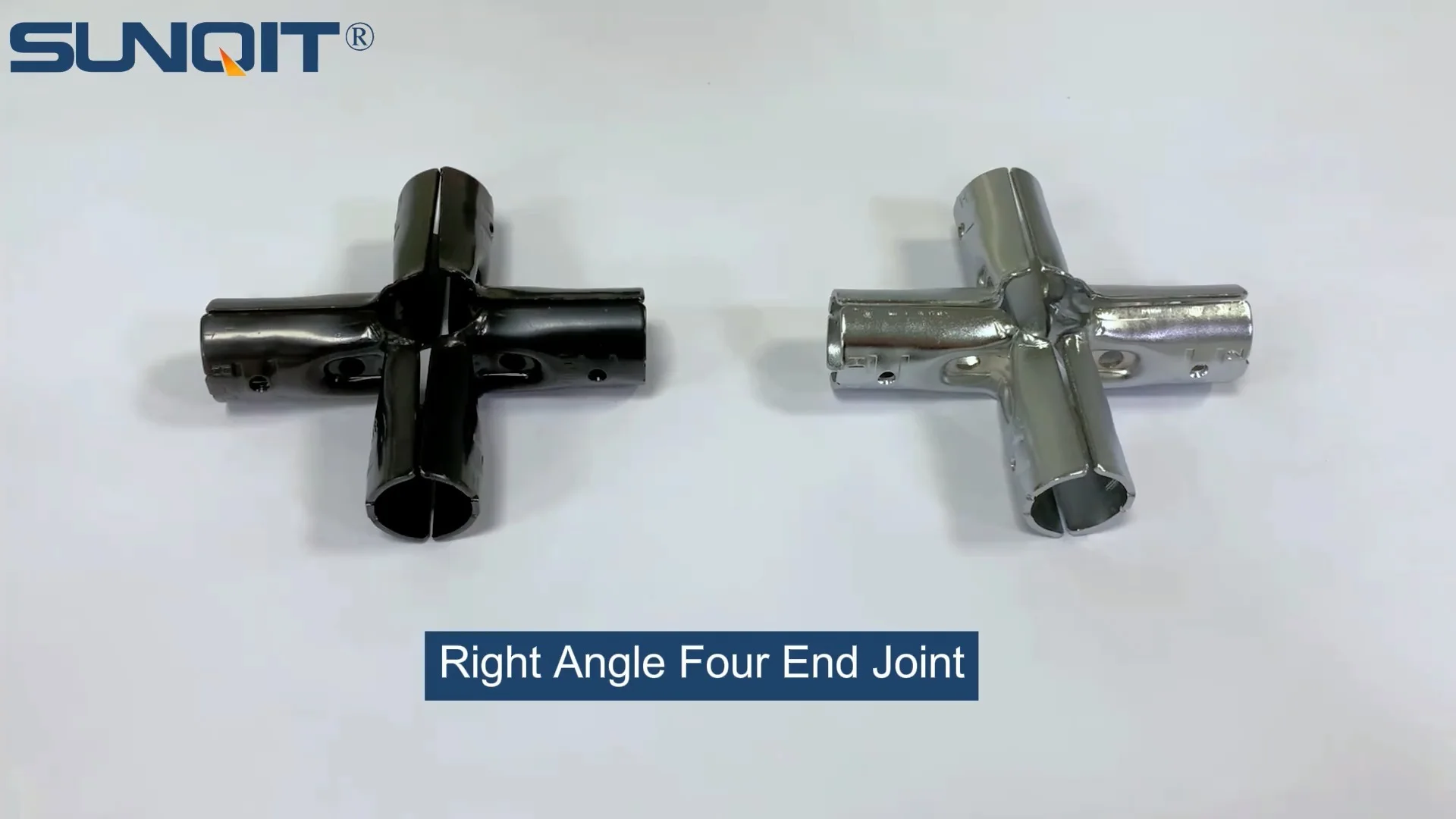
Five way straight lean pipe joint, for 5 pcs 28mm lean pipe connect in straight angle,which used widely in workbench, flow rack, hand trolley frame connection.
It's a busy Tuesday morning on the factory floor. Maria, the production supervisor at a mid-sized electronics assembly plant, is making her rounds when she notices something off: the lean pipe workbench at Station 5 is wobbling slightly. A quick inspection reveals the culprit—a loose joint connecting the workbench's vertical and horizontal pipes. "Again?" she mutters, recalling a similar issue with a roller track last month. Later, in the break room, she overhears the maintenance team discussing replacement costs for worn-out joints. "If we could just make these things last longer," she thinks, "we'd cut downtime and keep the line running smoother."
Maria's frustration is familiar to anyone managing a lean system. Lean manufacturing thrives on efficiency, and efficiency hinges on reliability—especially when it comes to the unsung heroes of the operation: the joints that hold everything together. Among these, the five way straight lean pipe joint chrome stands out as a workhorse, connecting pipes at multiple angles to build everything from workbenches to material racks. But how long can you really expect these chrome-plated components to last? And what can you do to extend their lifespan?
In this article, we'll dive into the world of five way straight lean pipe joints, focusing on their durability, the role of chrome plating, and the factors that determine how long they'll keep your lean system running strong. Whether you're a production manager like Maria, a facility engineer, or just curious about the nuts and bolts of manufacturing efficiency, let's unpack why these small but mighty components matter—and how to make them last.
What Are Five Way Straight Lean Pipe Joints, Anyway?
Before we talk about lifespan, let's get clear on what a five way straight lean pipe joint chrome actually is. If you've ever walked through a factory or warehouse, you've probably seen the modular structures they help build: workbenches cluttered with tools, roller tracks carrying components from station to station, or turnover trolleys zipping between departments. These structures are made by connecting lean pipes—typically aluminum, steel, or plastic-coated steel—using joints, and the five way straight joint is one of the most versatile in the toolbox.
Imagine a central hub with five connection points, all aligned in a straight plane (hence "straight"). Each point is a socket where a lean pipe can be inserted and secured, usually with a setscrew or bolt. This design lets you connect up to five pipes at once, creating angles and configurations that adapt to your workspace needs. Need a workbench with a shelf, a side rail, and a tool holder? A five way joint can tie all those pipes together. Building a roller track that splits into three lanes? This joint has you covered.
Now, the "chrome-plated" part is key. The base of the joint is usually made from steel—strong but prone to rust if left unprotected. Chrome plating adds a thin layer of chromium over the steel, creating a barrier that's both tough and sleek. But as we'll see later, this plating isn't just for looks; it's a critical factor in how long the joint will hold up under daily use.
To put it simply: these joints are the glue (or rather, the bolts) of lean systems. They turn basic pipes into custom, flexible structures that can be reconfigured as production needs change—without welding or heavy tools. And in a world where downtime costs money, that flexibility is gold. But flexibility only matters if the joints themselves are reliable.
Why Chrome Plating Makes All the Difference in Durability
Let's talk about chrome plating. You might associate it with shiny car bumpers or kitchen faucets, but in industrial settings, its purpose is far more functional than aesthetic. For five way straight lean pipe joints, chrome plating is a shield—a layer that stands between the steel base and the harsh realities of a manufacturing environment. Here's how it boosts durability:
1. Corrosion Resistance: Fighting the Silent Enemy
Rust is the bane of any metal component, and manufacturing floors are prime real estate for it. Spills, humidity, cleaning chemicals, even the sweat from workers' hands—all these can eat away at unprotected steel. Chrome plating, when done right, forms a dense, non-porous layer that repels moisture and oxygen, the two main culprits behind rust. Think of it like a raincoat for the joint: even if it gets wet, the water doesn't seep through to the steel underneath.
Compare this to a bare steel joint. In a humid electronics factory, Maria's workbench joint might start showing rust spots within months, weakening the metal and making the setscrews stick. A chrome-plated joint, though? It could go years without a hint of corrosion, even in the same conditions. That's a big deal when you're trying to avoid unexpected repairs.
2. Wear Resistance: Standing Up to Friction and Force
Every time you insert a pipe into a joint, tighten a setscrew, or reposition a structure, there's friction. Over time, that friction can wear down the joint's sockets, making pipes loose or wobbly. Chrome plating is harder than steel, so it resists this wear and tear. The surface is smooth but tough—pipes slide in and out without scratching the joint, and setscrews grip firmly without digging into soft metal.
Take roller tracks, for example. The joints holding up the track rails are under constant stress: components sliding over the rollers, vibrations from machinery, even the occasional bump from a forklift. A chrome-plated joint's hard surface won't chip or dent easily, ensuring the track stays aligned and the components keep moving smoothly.
3. Low Maintenance: Less Time Fixing, More Time Producing
Unplated joints need regular attention: painting to prevent rust, lubricating to keep parts moving, or replacing when they wear out. Chrome-plated joints? They're low-maintenance by design. The smooth, non-porous surface doesn't trap dirt or grime, so a quick wipe with a cloth is usually enough to keep them clean. And since they resist rust and wear, you won't be spending hours tightening loose pipes or swapping out corroded joints.
For Maria, that means less time coordinating maintenance and more time focusing on meeting production deadlines. "We used to have a guy dedicated to fixing wobbly workbenches every week," she says. "Since switching to chrome-plated joints, that's dropped to maybe once a month. It's like giving the team a silent helper."

What Determines How Long Your Joints Will Last? The Key Factors
Chrome plating gives five way straight lean pipe joints a strong foundation, but lifespan isn't just about the coating. How long they last depends on a mix of design, usage, and care. Let's break down the biggest factors, using real-world examples to see how they play out.
1. Load Capacity: Are You Asking Too Much?
Every joint has a maximum load it can handle—usually specified by the manufacturer (a good lean pipe supplier will provide this data). Exceed that load, and you're not just risking the joint; you're risking the entire structure. For example, a five way joint rated for 50kg per pipe might seem tough, but if you stack 100kg of tools on a shelf connected to it, the constant stress will stretch the socket, loosen the setscrew, or even crack the base over time.
Maria learned this the hard way. Last year, her team started using a lean pipe workbench to store heavy test equipment—far more than the joint was rated for. Within six months, the joint where the shelf met the leg had deformed, causing the shelf to tilt. "We thought, 'It's steel, it can handle it,'" she admits. "Turns out, even tough joints have limits." The fix? Downsizing the equipment on the shelf and upgrading to a higher-load joint for future setups.
2. Frequency of Use and Movement
Joints in static structures (like a fixed workbench) will last longer than those in dynamic ones (like a turnover trolley that's moved 50 times a day). Every time a trolley hits a bump, the joints absorb the shock. Every time you reconfigure a roller track, the joints are twisted and adjusted. Over time, this repeated movement can wear down the setscrews, loosen the sockets, or scratch the chrome plating (exposing the steel underneath to rust).
A facility that uses roller tracks for high-volume material handling, for instance, might see joints wear out in 3-4 years, while the same joint on a rarely moved workbench could last 7-8 years. The lesson? Match the joint to the job: use heavy-duty, high-movement joints for dynamic setups, and standard ones for static structures.
3. Environmental Conditions: Humidity, Chemicals, and Temperature
Chrome plating resists rust, but it's not invincible. In extremely humid environments (like a food processing plant) or areas with chemical exposure (like a cleaning station with harsh detergents), even plated joints can corrode if not cared for. Salt air in coastal factories is another enemy—salt accelerates rust, so joints near open doors or docks need extra protection.
Temperature swings matter too. A joint in a warehouse that gets freezing cold in winter and sweltering hot in summer will expand and contract, weakening the bond between the chrome plating and the steel base. Over time, this can cause the plating to peel, leaving the steel exposed.
4. Maintenance: A Little Care Goes a Long Way
Even the best joints won't last without basic maintenance. Let's say you ignore a loose setscrew on a joint. Every time the structure moves, the pipe wiggles in the socket, scratching the chrome and wearing down the threads. Soon, the setscrew won't tighten anymore, and the joint is useless. A quick 30-second check and tighten every month could have prevented that.
Other maintenance musts: cleaning off oil or chemical spills (they can eat through chrome over time), lubricating moving parts (like swivel joints), and replacing worn setscrews or bolts. It's not glamorous work, but it's the difference between a joint lasting 3 years and 7 years.
5. Quality of Materials and Manufacturing
Not all five way straight lean pipe joint chrome products are created equal. A cheap joint from a low-quality supplier might have thin chrome plating (less than 5 microns), porous steel, or poorly machined sockets. These will fail quickly, even under light use. A high-quality joint, though, will have thick plating (10+ microns), high-grade steel, and precise socket machining—ensuring a tight fit and long life.
How to tell the difference? Look for suppliers who test their joints (e.g., salt spray tests for corrosion resistance, load tests for durability) and provide certificates. A reputable lean pipe supplier won't just sell you a joint; they'll help you choose the right one for your needs.
At a Glance: Factors Affecting Joint Lifespan
| Factor | Impact on Lifespan | How to Mitigate |
|---|---|---|
| Exceeding load capacity | Deformation, cracking, or loosening of joints | Check manufacturer load ratings; avoid overloading shelves/structures |
| High frequency of movement | Wear on setscrews and sockets; plating scratches | Use heavy-duty joints for dynamic setups; inspect moving parts monthly |
| Harsh environments (humidity, chemicals) | Rust, plating peeling, corrosion | Choose thick chrome plating; clean joints regularly; use protective sprays in humid areas |
| Poor maintenance | Loose setscrews, dirt buildup, accelerated wear | Tighten setscrews monthly; wipe clean with a dry cloth; replace worn parts promptly |
| Low-quality materials/supplier | Early failure, weak plating, imprecise fit | Buy from reputable lean pipe suppliers; ask for test certificates |

From Workbenches to Roller Tracks: Real-World Lifespan Examples
Numbers and factors are helpful, but nothing beats real-world data. Let's look at how five way straight lean pipe joints perform in common applications, based on case studies and feedback from facilities that use them daily.
Case Study 1: Lean Pipe Workbenches in Electronics Assembly
An electronics manufacturer in California uses lean pipe workbenches (fitted with five way joints) for circuit board assembly. The workbenches are static (rarely moved) and hold moderate loads: tools, small components, and a light soldering station. The environment is climate-controlled (low humidity, no harsh chemicals), and the maintenance team tightens setscrews quarterly and wipes down joints monthly.
Result: After 6 years, the original five way straight lean pipe joint chrome components are still in use. The chrome plating shows minor scratches, but there's no rust, and the joints remain tight. The manufacturer estimates they'll need replacement in another 2-3 years—total lifespan of 8-9 years.
Case Study 2: Roller Tracks in Automotive Parts Distribution
A warehouse in Michigan uses roller tracks to move car parts from storage to the assembly line. The tracks are built with five way joints to split into multiple lanes, and they're in use 12 hours a day, 5 days a week. The environment is humid (Michigan winters bring condensation), and the tracks see occasional impacts from forklifts.
Maintenance here is more frequent: weekly inspections, biweekly tightening of setscrews, and monthly cleaning with a mild detergent. The joints are from a reputable lean pipe supplier, with thick (15-micron) chrome plating.
Result: After 4 years, about 10% of the joints show signs of wear (slightly loose sockets), but the majority are still functional. The facility plans to replace the worn joints next year, projecting a total lifespan of 5 years for high-use dynamic setups.
Case Study 3: Turnover Trolleys in a Food Processing Plant
A bakery uses turnover trolleys (built with five way joints) to move dough and baked goods between stations. The environment is warm and humid, with occasional exposure to water (from cleaning) and flour dust. The trolleys are moved 20-30 times a day, often over uneven floors.
Here, maintenance was initially lacking: the team didn't clean the joints regularly, and the humidity led to minor rust spots on some joints after 2 years. After tightening maintenance protocols (weekly cleaning with a dry cloth, monthly application of anti-rust spray), the remaining joints held up better.
Result: The first set of joints failed at 2.5 years (due to rust and loose setscrews). With improved maintenance, the replacement joints are now at 3.5 years and still going strong—showing how care can extend lifespan even in tough conditions.
These examples show that with proper selection and care, five way straight lean pipe joints can last anywhere from 3-9 years, depending on the application. For most facilities, that's a solid return on investment—especially considering how much cheaper joint replacement is than rebuilding an entire structure.

5 Maintenance Tips to Keep Your Joints Going Strong
We've seen that maintenance plays a huge role in lifespan. The good news? It doesn't take hours of work—just consistent, simple habits. Here's a step-by-step guide to keeping your five way straight lean pipe joint chrome components in top shape:
1. Inspect Regularly (And Actually Fix Issues)
Set a schedule: weekly for high-use structures (like roller tracks or trolleys), monthly for static ones (like fixed workbenches). During inspections, check for:
- Loose setscrews or bolts: If a pipe wiggles in the joint, tighten it immediately. Use a torque wrench to avoid over-tightening (which can strip threads).
- Rust or corrosion: Even chrome-plated joints can rust if the plating is scratched. Look for tiny brown spots—these are early warning signs. Treat them with a rust remover and apply a thin layer of anti-rust spray.
- Worn sockets: If a pipe slides in too easily (no resistance), the socket may be stretched. replace the joint—don't wait for it to fail.
- Scratches in the chrome: Deep scratches can expose the steel underneath. For minor scratches, clean the area and apply a chrome polish to seal it. For deep ones, consider replacing the joint if it's in a high-stress area.
2. Clean Smart—Avoid Harsh Chemicals
Dirt, dust, and grime can trap moisture against the joint, leading to rust. Wipe joints down regularly with a dry microfiber cloth to remove debris. For heavier buildup (like oil or grease), use a mild detergent mixed with water—avoid abrasive cleaners or solvents (like acetone), which can strip the chrome plating.
In food processing or medical facilities, where sanitization is key, use a food-safe disinfectant wipe (check the label to ensure it's compatible with chrome). Rinse with a damp cloth afterward and dry thoroughly to prevent water spots.
3. Lubricate Moving Parts (Yes, Even Joints Need It)
Setscrews and adjustable sockets can seize up over time, making them hard to tighten or loosen. Every 3-6 months, apply a small amount of dry lubricant (like graphite powder) or silicone spray to the setscrew threads and socket interiors. This keeps them moving smoothly and prevents stripping when you need to adjust the joint.
Avoid oil-based lubricants, though—they attract dust, which can gum up the works. Stick to dry or silicone-based options for best results.
4. Tighten Setscrews Before They Loosen Too Much
Loose setscrews are the number one cause of wobbly structures. Get into the habit of tightening them regularly—how often depends on usage:
- Static structures (fixed workbenches): Monthly
- Dynamic structures (roller tracks, trolleys): Weekly
- High-impact areas (near machinery, forklift paths): Biweekly
Use the right tool for the job—a hex key (Allen wrench) that fits the setscrew snugly. Over-tightening can strip the threads, so tighten until the pipe feels secure, then give it a quarter-turn more. If a setscrew keeps loosening, check if the threads are worn; if so, replace the joint.
5. replace Worn Joints Proactively
It's tempting to "run it until it breaks," but waiting for a joint to fail can lead to accidents (e.g., a shelf collapsing) or damage to other parts of the structure. If a joint shows signs of significant wear—deep rust, deformed sockets, or persistent looseness—replace it immediately. Keep a stock of spare joints on hand (your lean pipe supplier can help you estimate how many you'll need) so you're not stuck waiting for replacements.
Maria's team keeps a bin of extra five way straight lean pipe joint chrome components near the maintenance closet. "Last month, we noticed a joint on the main roller track was starting to loosen," she says. "We swapped it out in 10 minutes—no downtime, no drama. It's worth the small investment in spares to avoid big headaches."
How Do Chrome-Plated Five Way Joints Stack Up to Other Types?
Five way straight lean pipe joints aren't the only option out there. There are two-way, three-way, and four-way joints, as well as joints made from plastic, stainless steel, or unplated steel. How do chrome-plated five way joints compare? Let's break down the pros and cons to help you decide when to use them.
Chrome-Plated vs. Unplated Steel Joints
Unplated steel joints are cheaper upfront, but they're a classic case of "pay now or pay later." Without chrome plating, they're prone to rust, especially in humid or wet environments. A facility using unplated joints might replace them every 2-3 years, while chrome-plated ones last 5-7 years in the same setup. Over time, the cost of frequent replacements adds up—making chrome-plated joints the better long-term value.
Unplated joints also lack the smooth, wear-resistant surface of chrome, so they're more likely to scratch pipes or loosen over time. Unless you're on an extremely tight budget and working in a dry, low-use environment, chrome-plated is the way to go.
Chrome-Plated vs. Stainless Steel Joints
Stainless steel joints are naturally corrosion-resistant, so they're a good alternative in highly humid or chemical-heavy environments (like marine facilities or labs). They're also strong—often stronger than chrome-plated steel. However, they come with a higher price tag (20-30% more than chrome-plated) and are less common, which can make finding replacements harder.
For most manufacturing and warehouse settings, chrome-plated joints offer the best balance of cost, durability, and availability. Stainless steel is better reserved for specialized environments where corrosion resistance is critical.
Chrome-Plated vs. Plastic Joints
Plastic joints are lightweight and cheap, but they're not built for heavy loads or high use. They can warp in heat, crack under stress, and wear down quickly if pipes are frequently inserted or removed. They're fine for temporary structures or low-load applications (like a small parts bin), but for permanent lean systems, chrome-plated steel joints are far more reliable.
Five Way vs. Fewer-Way Joints
Two-way and three-way joints are simpler and cheaper, but they lack the versatility of five way joints. If you need to build complex structures with multiple connections (like a workbench with shelves, tool rails, and a roller track attachment), five way joints reduce the number of components needed, making the structure sturdier and easier to assemble. They're a bit more expensive than two-way joints, but the flexibility is worth it for most lean systems.
In short, chrome-plated five way straight lean pipe joints aren't the only option, but they're the most versatile and durable for the majority of industrial applications. They balance cost, lifespan, and adaptability—key traits for any component in a lean system.
Choosing the Right Supplier: Why It Matters for Lifespan
You could follow every maintenance tip in the book, but if your joints are low-quality to begin with, they won't last. That's why choosing a reputable lean pipe supplier is just as important as maintenance. Here's what to look for when shopping for five way straight lean pipe joint chrome components:
1. Quality Certifications
A good supplier will have certifications to back up their claims. Look for ISO 9001 (quality management) or RoHS compliance (for electronics manufacturing, ensuring no hazardous substances). For chrome plating, ask about salt spray test results—this measures corrosion resistance. A result of 48+ hours (ASTM B117 standard) means the plating is thick and well-applied.
2. Transparent Material and Plating Information
Reputable suppliers will tell you what the joint is made of (e.g., "low-carbon steel with 10-micron chrome plating") and provide data on load capacity, temperature resistance, and lifespan. If a supplier can't answer basic questions about materials or plating thickness, walk away—they're likely cutting corners.
3. Customer Support and Technical Help
Even the best joints need the right setup. A good supplier will help you choose the right joint for your application (e.g., high-load vs. standard, dynamic vs. static) and offer technical support if you run into issues. Maria's supplier, for example, sent a technician to her facility to assess the roller track setup and recommend joint placement—saving her team from trial-and-error mistakes.
4. Consistent Inventory and Fast Delivery
Nothing halts production like waiting for a replacement joint. Choose a supplier with consistent inventory and short lead times (ideally 1-3 days for standard parts). Some suppliers even offer bulk discounts if you stock up on spares—worth considering if you have multiple structures.
Don't just go with the cheapest option. A few extra dollars per joint can save you hundreds in downtime and replacements later. Ask for samples, read reviews, and talk to other facilities in your industry—word of mouth is often the best way to find a reliable supplier.
Final Thoughts: Small Joints, Big Impact on Lean Success
At the end of the day, five way straight lean pipe joints might seem like small fry in the grand scheme of manufacturing. But as Maria and countless other production managers have learned, they're the unsung heroes of lean systems. A single failed joint can disrupt a workflow, slow down production, or even cause accidents. On the flip side, a well-chosen, well-maintained joint can keep your structures sturdy, your operations efficient, and your team focused on what matters—making great products.
Chrome plating gives these joints the durability to stand up to daily wear and tear, while their versatile design lets you build the custom structures your workspace needs. By understanding the factors that affect lifespan (load, usage, environment) and following simple maintenance habits (regular inspections, cleaning, tightening), you can extend their life from years to decades—turning a small component into a long-term investment.
So the next time you walk past a lean pipe workbench or a roller track, take a second to appreciate the joints holding it all together. They might not be glamorous, but they're the backbone of lean efficiency. And with the right care, they'll keep your facility running smoothly for years to come.