- Company Articles
- Products and Technology
- Product knowledge
- Chrome-Plated Four Way Straight Lean Pipe Joint: Why It's Essential in Lean Manufacturing

Chrome-Plated Four Way Straight Lean Pipe Joint: Why It's Essential in Lean Manufacturing
Related Product
Four Way Straight Lean Pipe Joint
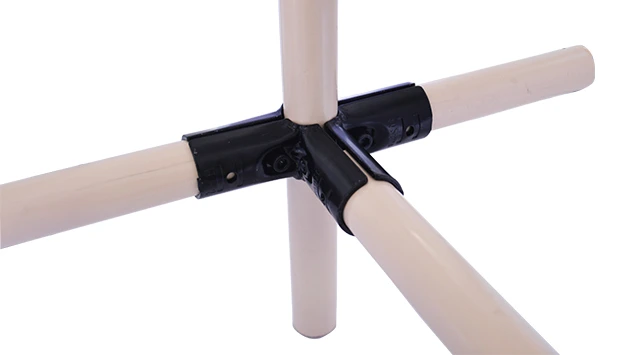
Four way lean pipe joint for 4 pcs 28MM lean pipe connection in straight angle, which used widely in workbench, flow rack, hand trolley frame connection.
Introduction: The Hidden Power of Small Components in Lean Manufacturing
Lean manufacturing isn't just a buzzword—it's a philosophy that transforms factories from chaotic, wasteful spaces into hubs of efficiency, where every action adds value and every resource is used wisely. At its core, lean is about eliminating waste: wasted time, wasted materials, wasted effort. But here's the thing: you can't build a lean operation on big ideas alone. You need the right tools—tools that are as adaptable, durable, and efficient as the philosophy itself. And often, the most critical tools are the smallest ones: the components that hold everything together.
Walk into any successful lean facility, and you'll notice a common thread: their physical infrastructure—workbenches, flow racks, material trolleys, conveyor systems—works in harmony with their processes. These structures aren't just "there"; they're designed to flex with changing needs, withstand daily wear and tear, and keep workflows moving without hiccups. And at the heart of that infrastructure? Lean pipe systems. But even the best lean pipe is only as good as the joints that connect it. Today, we're shining a spotlight on a component that might seem at first glance but plays a starring role in lean operations: the chrome-plated four way straight lean pipe joint.
This small, unassuming piece of hardware is more than just a connector. It's a bridge between flexibility and stability, between quick adaptation and long-term reliability. In this article, we'll explore why this joint has become a cornerstone of lean manufacturing systems, how its design solves common factory challenges, and why choosing the right joint can mean the difference between a production line that thrives and one that struggles to keep up.
The Backbone of Lean Systems: Lean Pipe and Its Unsung Heroes—Joints
Before diving into the specifics of the chrome-plated four way straight lean pipe joint, let's take a step back and talk about lean pipe systems. Lean pipe, also known as "flexible pipe" or "kitchen pipe" (a nod to its early use in restaurant kitchens), is a simple concept: lightweight, durable pipes (often steel with a plastic coating, or aluminum) that can be assembled into almost any structure imaginable—workbenches, shelves, flow racks, trolleys, and more. What makes lean pipe so powerful is its modularity: you don't need welding, specialized tools, or expert builders to create or reconfigure these structures. With the right joints, anyone on the factory floor can assemble, disassemble, or modify a lean pipe system in minutes.
But here's the catch: the entire system relies on the joints. Think of lean pipe as the bones of your structure, and joints as the joints in your body—they connect the bones, allow movement (or stability, when needed), and bear the weight of the entire framework. A weak joint, a poorly designed joint, or a joint that rusts and breaks down over time can turn a "flexible" system into a frustrating, unstable mess. That's why choosing high-quality joints isn't just a matter of cost—it's a matter of operational success.
Joints come in all shapes and sizes: two-way, three-way, swivel, fixed, plastic, steel, chrome-plated. Each serves a purpose, but few are as versatile and essential as the four way straight joint. And when that joint is chrome-plated? It becomes a game-changer for factories that demand both flexibility and durability.

Meet the Star: What Is a Chrome-Plated Four Way Straight Lean Pipe Joint?
Let's start with the basics. A chrome-plated four way straight lean pipe joint is a connector designed to join four lean pipes at a single point, all aligned in straight, perpendicular directions (think of a plus sign: up, down, left, right). Unlike three-way joints, which connect pipes in three directions, or two-way joints, which only connect two, the four way design allows for more complex, multi-directional structures without cluttering the frame with extra joints. And the "chrome-plated" part? That's a thin layer of chromium applied to the joint's surface, adding a protective barrier against corrosion, scratches, and wear.
But why does this matter? Let's break down the design:
- Four-Way Connectivity: Imagine building a flow rack with shelves on both sides, or a workbench with overhead storage and side bins. With a four way joint, you can connect vertical pipes for height, horizontal pipes for width, and even diagonal supports—all from a single point. This reduces the number of joints needed, simplifying the structure and making it sturdier (fewer joints mean fewer potential weak points).
- Chrome Plating: Factories are tough environments. There's oil, moisture, chemicals, and constant physical contact (bumping, cleaning, moving parts). A plain steel joint would rust quickly, weakening the connection and requiring frequent replacement. Chrome plating solves this: chromium is resistant to corrosion, so the joint stays strong and functional for years. It also adds a smooth, easy-to-clean surface, which is crucial for maintaining hygiene in industries like food processing or pharmaceuticals.
- Straight Design: "Straight" here means the joint connects pipes in linear directions (no angles like 45° or 135°), making it ideal for building square or rectangular structures—the most common shapes in factory setups. This simplicity ensures consistency in assembly; workers don't need to guess angles or measure complex connections.
In short, this joint is like a Swiss Army knife for lean pipe systems: it does more with less, adapts to multiple needs, and stands up to the daily grind of factory life.

Why It's Essential: 5 Key Advantages in Lean Operations
Now that we know what it is, let's dive into why the chrome-plated four way straight lean pipe joint is non-negotiable for lean manufacturing. These advantages aren't just "nice to have"—they directly impact productivity, cost, and worker satisfaction.
1. Unmatched Versatility: Build More, With Less
Lean manufacturing thrives on adaptability. Product lines change, order volumes fluctuate, and new tools or parts are introduced regularly. Your infrastructure needs to keep up. The four way joint excels here because it lets you build almost any structure you can imagine, and reconfigure it just as easily.
Take a lean pipe workbench, for example. Today, it might be used for assembling small electronics. Tomorrow, you might need to add a shelf for larger components, or attach a flow rack to the side for parts delivery. With a four way joint, you can add a vertical pipe to the back of the workbench, connect a horizontal pipe for the shelf, and another for the flow rack—all without disassembling the existing structure. This flexibility reduces downtime; instead of waiting days for a custom-built workbench, your team can modify the existing one in hours.
Or consider turnover trolleys. These are used to move materials from one station to another, and their design often needs to match the height of conveyor belts or storage racks. With four way joints, you can adjust the trolley's height by adding/removing vertical pipes, add side rails to prevent items from falling, or even attach casters (using caster accessories) for mobility—all with the same basic joint.
2. Durability That Cuts Maintenance Costs
In lean manufacturing, "waste" includes unnecessary maintenance and replacement costs. A joint that breaks every few months isn't just a hassle—it's a waste of money (for the joint itself), time (for replacing it), and labor (for taking apart and rebuilding the structure). Chrome-plated four way joints eliminate this waste.
Chrome's corrosion resistance means these joints last 3–5 times longer than unplated steel joints. In a factory with hundreds of joints, this adds up to significant savings. For example, if a standard steel joint costs $5 and needs replacement every 6 months, and a chrome-plated joint costs $8 but lasts 3 years, the chrome option saves $22 over 3 years per joint. Multiply that by 500 joints in a mid-sized factory, and you're looking at $11,000 in savings—just from choosing the right joint.
Plus, the smooth chrome surface is less likely to trap dirt or grime, reducing the time spent cleaning. In busy factories, where every minute counts, this small detail frees up workers to focus on value-adding tasks instead of scrubbing rusty joints.
3. Easy Assembly and Reconfiguration—No Experts Needed
One of the biggest barriers to lean adoption is the belief that you need expensive, custom-built infrastructure. Lean pipe systems debunk this by being DIY-friendly—and the four way joint takes this a step further. Unlike welded structures, which require skilled welders and are permanent, lean pipe joints use simple bolts or set screws to connect pipes. Even a new employee can learn to assemble a basic structure in minutes.
The four way joint's design makes this even easier. Its symmetrical, straight connections mean there's no "wrong" way to attach the pipes (as long as they're aligned). Workers don't need to measure angles or use complex tools—just slide the pipe into the joint, tighten the screw, and it's secure. This simplicity speeds up assembly, reduces errors, and empowers teams to take ownership of their workspaces. If a team needs a new shelf or a taller trolley, they can build it themselves, without waiting for maintenance or external contractors.
And when it's time to reconfigure? Just loosen the screws, move the pipes, and retighten. No cutting, no welding, no waste. This agility is critical for lean operations, where production lines are constantly evolving.
4. Compatibility with Other Lean Components
A lean pipe system isn't just pipes and joints—it's a ecosystem of components: roller tracks, casters, workbench tops, aluminum profiles, and more. The best joints play well with others, and the chrome-plated four way straight joint is no exception.
For example, if you're building a flow rack (a structure with roller tracks that let materials slide from one end to another), you can use four way joints to connect the vertical supports, then attach aluminum guide rails (like aluminum guide rail A or B) to the horizontal pipes. The joint's sturdy connection ensures the rails stay aligned, so materials flow smoothly without jamming. Similarly, adding casters to a trolley is easy: use four way joints to mount the caster wheels to the trolley's base, ensuring stability even when the trolley is fully loaded.
This compatibility also future-proofs your investment. As your factory grows, you can add new components (like stainless steel swivel roller balls for better material movement, or aluminum honeycomb panels for workbench tops) without replacing your existing joints. The four way joint acts as a universal connector, tying all these pieces together into a cohesive system.
5. Safety First: Reducing Risks on the Factory Floor
Safety is non-negotiable in manufacturing, and unstable structures are a major hazard. A wobbly workbench can cause tools to fall, a poorly built flow rack can collapse under weight, and rusted joints can snap unexpectedly—all leading to injuries or damaged products. The chrome-plated four way joint addresses these risks head-on.
First, its four-way design distributes weight evenly across the structure. Instead of stressing a single joint with multiple pipes, the load is spread out, making the entire framework more stable. Second, the chrome plating ensures the joint doesn't weaken over time, so the structure remains secure even after years of use. Third, the smooth surface reduces the risk of snags or cuts—no sharp edges or rust flakes to catch on gloves or clothing.
In industries like automotive or aerospace, where heavy parts are moved constantly, this stability is critical. A flow rack built with four way joints can safely hold hundreds of pounds of materials, and a workbench assembled with these joints won't shift or when workers apply pressure—keeping everyone safe and focused.
Real-World Applications: Where This Joint Shines Brightest
Theory is great, but let's look at how the chrome-plated four way straight lean pipe joint performs in real factories. Here are three common scenarios where it makes a tangible difference:
1. Lean Pipe Workbenches: The Heart of the Assembly Line
Workbenches are where the magic happens—where workers assemble products, test components, and prepare materials. A good workbench needs to be sturdy, customizable, and ergonomic (at the right height, with tools within reach). The four way joint is perfect for this.
Consider a workbench for electronics assembly. It needs a flat top (aluminum honeycomb panel, perhaps), shelves below for tools, a small flow rack on the side for parts, and overhead lights or storage. Using four way joints, you can build the frame: vertical pipes for height (adjustable to match worker heights), horizontal pipes for the top and bottom shelves, and side pipes to mount the flow rack. The four way joints at each corner connect all these pipes, creating a stable base that doesn't wobble, even when workers lean on it or place heavy equipment on top.
And if the team needs to add a bin for scrap materials? Just attach a short pipe to one of the four way joints and hang the bin—no need to rebuild the entire bench. This level of customization keeps workers efficient and comfortable, reducing fatigue and boosting productivity.
2. Flow Racks: Keeping Materials Moving
Flow racks are essential for "first in, first out" (FIFO) material handling—critical in lean manufacturing to reduce waste and ensure fresh materials are used first. A flow rack has inclined roller tracks that let materials slide from the loading end to the picking end, and it often has multiple levels to save space.
Building a multi-level flow rack with standard joints would require dozens of three-way or two-way connectors, making the frame bulky and hard to align. With four way joints, though, each vertical support can connect to both the front and back horizontal pipes (for the roller tracks) and the horizontal pipes of the level above or below. This creates a clean, grid-like structure where each level is perfectly aligned, ensuring materials flow smoothly without getting stuck. The chrome plating also stands up to the constant sliding of materials over the roller tracks—no rust buildup to jam the rollers or weaken the frame.
For example, a automotive parts supplier using a four way joint flow rack reported a 25% reduction in material jams and a 15% faster picking time, simply because the rack was sturdier and better aligned than their old, joint-cluttered design.
3. Turnover Trolleys: Mobile, Sturdy, and Adaptable
Turnover trolleys are used to move materials between stations—from the warehouse to the assembly line, or from assembly to packaging. They need to be lightweight (for easy pushing), sturdy (to carry heavy loads), and sometimes foldable or stackable when not in use.
Four way joints are ideal for trolley frames. They connect the vertical pipes (for the trolley's height), horizontal pipes (for the shelves), and caster mounts (for the wheels) in a single, compact joint. This reduces the trolley's weight (fewer joints mean less metal) while keeping it strong enough to carry heavy parts. The chrome plating ensures the trolley can be used in wet or oily environments (like a machine shop) without rusting, and the easy assembly means workers can modify the trolley's shelves (adding or removing levels) to fit different materials.
One furniture manufacturer, for instance, used to struggle with trolleys that bent under the weight of wooden planks. After switching to four way joint frames, they reported zero trolley failures and a 30% reduction in worker effort (thanks to the lighter, sturdier design).
Comparing the Competition: Why This Joint Stands Out
To truly appreciate the chrome-plated four way straight lean pipe joint, let's compare it to other common joint types. This will show why it's often the best choice for lean operations:
| Joint Type | Key Features | Pros | Cons | Best For |
|---|---|---|---|---|
| Chrome-Plated Four Way Straight | Four-way connectivity, chrome-plated steel, straight directions | Versatile, durable, easy to assemble, compatible with most components | Slightly higher cost than basic plastic joints | Complex structures (workbenches, flow racks, trolleys), heavy loads, corrosive environments |
| Plastic Two-Way Joint | Two-way connectivity, plastic material, lightweight | Cheap, lightweight, easy to handle | Low load capacity, not durable (breaks under stress), prone to cracking in cold environments | Light-duty, temporary structures (e.g., event displays, lightweight shelving) |
| Non-Chrome Steel Three-Way Joint | Three-way connectivity, unplated steel | Sturdier than plastic, lower cost than chrome | Rusts easily, limited to three directions, requires more joints for complex structures | Dry environments, simple structures (e.g., basic shelves, single-level racks) |
| Aluminum Swivel Joint | Multi-directional, aluminum material, swivel design | Lightweight, corrosion-resistant, flexible angles | Expensive, lower load capacity than steel, complex assembly | Lightweight, custom-angle structures (e.g., curved racks, specialized workstations) |
As the table shows, the chrome-plated four way straight joint strikes the perfect balance between versatility, durability, and cost. While plastic joints are cheaper, they can't handle factory demands. Non-chrome steel joints rust and limit design flexibility. Aluminum swivel joints are too expensive for most applications. For lean manufacturing, where efficiency, durability, and adaptability are priorities, the four way chrome joint is the clear winner.
Conclusion: Small Component, Big Impact
In the world of lean manufacturing, success lies in the details. It's not just about big-picture strategies; it's about the small components that make those strategies possible. The chrome-plated four way straight lean pipe joint is one of those components—a quiet workhorse that transforms ordinary lean pipe systems into powerful, adaptable, and durable infrastructure.
From its four-way design that simplifies complex structures to its chrome plating that ensures long-lasting performance, this joint addresses the core needs of lean operations: flexibility to adapt, durability to reduce waste, ease of use to empower teams, and safety to protect workers. Whether you're building a lean pipe workbench, a flow rack, or a turnover trolley, this joint makes the process faster, the structure sturdier, and the entire operation more efficient.
So, the next time you walk through a lean factory, take a closer look at the joints holding everything together. Chances are, you'll spot the chrome-plated four way straight lean pipe joint—and now you'll know why it's there: because in lean manufacturing, even the smallest components can make the biggest difference.