- Company Articles
- Products and Technology
- Product knowledge
- Chrome-Plated Parallel Lean Pipe Joints: Impact on Overall Production Costs

Chrome-Plated Parallel Lean Pipe Joints: Impact on Overall Production Costs
Related Product
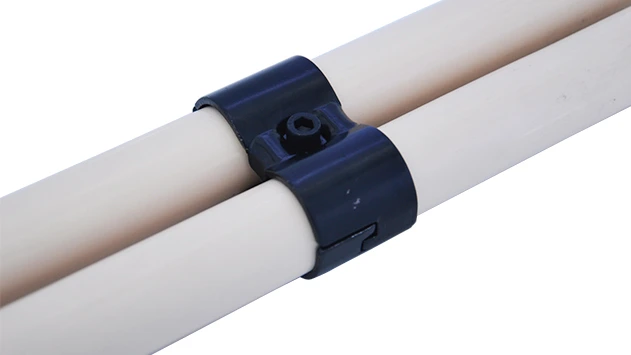
Parallel Lean Pipe Joint
Parallel lean pipe joint used for 2 pcs 28MM lean pipe connection in parallel direction to enhance frame structure, usually for heavy payload requirement for workbench. flow rack, hand trolley.
In the fast-paced world of manufacturing, where every second and every dollar counts, production managers and facility owners are constantly on the hunt for ways to trim costs without sacrificing efficiency. Often, the focus lands on big-ticket items like machinery upgrades or workforce training—but what if the key to significant savings lies in something far smaller, yet infinitely more critical? Enter the humble lean pipe joint. Specifically, chrome-plated parallel lean pipe joints, a component so unassuming that it's easy to overlook, yet so impactful that it can reshape your entire production cost structure. In this article, we'll dive deep into how these small but mighty connectors influence everything from labor hours to long-term maintenance expenses, and why choosing the right ones—paired with a reliable lean system supplier—can be a game-changer for your bottom line.
Understanding Chrome-Plated Parallel Lean Pipe Joints: More Than Just a "Connector"
Before we explore their cost implications, let's clarify what chrome-plated parallel lean pipe joints actually are. At their core, these joints are the building blocks of lean manufacturing systems, designed to connect lean pipes (often aluminum or steel) into structures like workbenches, flow racks, and material handling trolleys. What sets the "chrome-plated parallel" variety apart? First, the chrome plating: a thin layer of chromium applied to the joint's surface, which boosts corrosion resistance, (hardness), and durability. Then, the "parallel" design, which ensures that connected pipes remain aligned in a straight, parallel configuration—critical for stability in structures like a lean pipe workbench, where wobbling or misalignment can disrupt workflow and even compromise product quality.
But these joints aren't just about holding pipes together. They're engineered for flexibility. Unlike rigid, welded connections, chrome-plated parallel joints allow for quick disassembly and reconfiguration. Need to adjust the height of your workbench to accommodate a new product line? Swap out a few joints, and you're done. Want to repurpose a flow rack into a turnover trolley? The same joints can adapt. This adaptability is the cornerstone of lean manufacturing—minimizing waste by making systems responsive to changing needs. And as we'll see, that responsiveness directly translates to cost savings.
The Hidden Costs of Cutting Corners: Why Cheap Joints Cost You More in the Long Run
It's tempting to opt for the lowest-priced lean pipe joints on the market. After all, if two joints look similar, why pay extra? But here's the truth: cheap joints are a false economy. Let's break down the hidden costs that often go uncalculated until it's too late.
1. Frequent Replacements: The "Disposable Joint" Trap
Low-quality joints—often made from inferior metals or lacking proper plating—wear out quickly. Imagine a production line where a flow rack's joints start to loosen after just six months. The rack sags, materials get stuck, and workers waste time jiggling products free. Eventually, the joints fail entirely, forcing you to shut down the line, order replacements, and pay overtime to rebuild the structure. Now multiply that by dozens of racks and workbenches across your facility. Suddenly, those "cheap" joints are costing you in replacement parts, downtime, and rushed shipping fees. Chrome-plated parallel joints, by contrast, resist wear and corrosion. Their chrome coating acts as a barrier against moisture and chemicals common in manufacturing environments, while their robust construction ensures they can handle the daily stress of heavy loads and repeated adjustments. A joint that lasts 5–7 years instead of 1–2 years isn't just a longer-lasting product—it's a direct reduction in replacement costs.
2. Labor Inefficiency: When "Quick Assembly" Becomes "Endless Adjustment"
Time is money, and nowhere is that truer than on the factory floor. Poorly designed joints often require extra tools, excessive force, or precise alignment to install—turning a 30-minute workbench assembly into a two-hour ordeal. Even worse, once installed, they may not hold their position. A joint that slips or loosens slightly can throw an entire workbench out of level, leading to workers wasting time readjusting tools or fixing misaligned components. Chrome-plated parallel joints, with their smooth, precision-machined surfaces and secure locking mechanisms, eliminate this hassle. Many feature tool-free installation—simply twist or snap into place—and their parallel design ensures pipes stay aligned without constant tweaking. For a team assembling 20 lean pipe workbenches, that could mean saving 10–15 hours of labor per project. Multiply that by multiple projects per year, and the labor savings alone justify the investment.
3. Maintenance Nightmares: The Cost of "Fixing" Instead of "Preventing"
Maintenance is another area where cheap joints bleed your budget. Unplated or poorly plated joints are prone to rust, especially in humid or dusty environments. Rust doesn't just look bad—it weakens the joint, making it more likely to fail. Workers end up spending hours sanding rust, applying temporary coatings, or replacing corroded parts. Chrome-plated joints, however, are virtually maintenance-free. The chromium layer repels rust and grime, so a quick wipe with a cloth is usually all that's needed to keep them in top shape. This frees up your maintenance team to focus on more critical tasks—like servicing machinery—instead of babysitting joints.

How Chrome-Plated Parallel Lean Pipe Joints Drive Cost Savings: The Numbers Speak
Now that we've covered the costs of cutting corners, let's shift to the positive: how chrome-plated parallel lean pipe joints actively reduce expenses. To make this tangible, let's compare two scenarios: a facility using low-quality, unplated joints, and one using chrome-plated parallel joints, sourced from a reputable lean system supplier. We'll focus on a common structure: a lean pipe workbench, a staple in assembly lines, warehouses, and workshops.
| Cost Factor | Low-Quality Joints (5-Year Lifespan) | Chrome-Plated Parallel Joints (5-Year Lifespan) | Net Savings with Chrome-Plated Joints |
|---|---|---|---|
| Initial Joint Cost (per workbench: 12 joints) | $60 (5 joints @ $5 each) | $120 (12 joints @ $10 each) | -$60 (Higher initial cost) |
| Replacement Joints (over 5 years) | $180 (3 replacements @ $60 each) | $0 (No replacements needed) | +$180 |
| Labor for Assembly (per workbench) | 2 hours @ $25/hour = $50 | 1 hour @ $25/hour = $25 | +$25 |
| Maintenance Labor (per workbench/year) | 4 hours @ $25/hour = $100/year x 5 = $500 | 0.5 hours @ $25/hour = $12.5/year x 5 = $62.5 | +$437.5 |
| Downtime Costs (due to joint failure) | 10 hours/year @ $100/hour (lost production) x 5 = $5,000 | 0 hours | +$5,000 |
| Total 5-Year Cost per Workbench | $5,790 | $207.5 | +$5,582.5 |
The table tells a clear story: while chrome-plated parallel joints have a higher initial cost, the savings in replacements, labor, maintenance, and downtime are staggering. For a facility with just 10 workbenches, that's over $55,000 in savings over five years. And that's just workbenches—extend this to flow racks, trolleys, and other structures, and the numbers grow exponentially. It's a classic example of "paying a little more now to save a lot later."
Beyond the Table: The "Flexibility Dividend"
The table above captures tangible, quantifiable costs, but there's another savings driver that's harder to measure but equally valuable: flexibility. In today's manufacturing landscape, product lines change, order volumes fluctuate, and floor layouts evolve. A rigid production system that can't adapt is a liability. Chrome-plated parallel joints, with their easy-to-disassemble design, turn your structures into modular, reconfigurable assets. Need to shrink a flow rack to make space for a new machine? Take it apart and rebuild it in hours, not days. Want to add shelves to a workbench for a new tool? Swap out a few joints, and you're set. This agility reduces the need to invest in entirely new structures, saving you from costly overhauls. A lean system supplier that understands this flexibility will often provide not just joints, but also guidance on designing modular systems—maximizing your ability to adapt without overspending.

Real-World Impact: How One Manufacturer Slashed Costs by 32% with Chrome-Plated Joints
To ground this in reality, let's look at a case study. A mid-sized electronics manufacturer in the Midwest, let's call them "TechFlow," was struggling with rising production costs. Their assembly line relied on 40 lean pipe workbenches and 25 flow racks, all built with generic, unplated steel joints. The issues were mounting: workbenches wobbled, causing assembly errors; flow racks jammed due to misaligned rollers (a byproduct of loose joints); and maintenance crews spent 15+ hours weekly fixing rusted or broken joints. TechFlow's CFO calculated that these problems were costing the company $120,000 annually in downtime, labor, and replacements.
In 2023, TechFlow partnered with a lean system supplier specializing in chrome-plated parallel lean pipe joints. They replaced all joints across their workbenches and flow racks, a one-time investment of $35,000. The results? Within six months, downtime dropped by 80%, maintenance hours fell to 2 hours weekly, and assembly errors due to unstable workbenches decreased by 45%. By the end of the first year, TechFlow had saved $82,000—recouping their initial investment and then some. By year two, annual savings hit $158,000, representing a 32% reduction in their total production line costs. As the plant manager put it: "We used to see joints as a 'necessary evil.' Now, we see them as an investment that pays for itself—and then some."
Choosing the Right Lean System Supplier: It's About More Than "Buying Joints"
Of course, the quality of your chrome-plated parallel lean pipe joints is only as good as the supplier behind them. A reliable lean system supplier isn't just a vendor—they're a partner in your cost-saving journey. Here's what to look for when selecting one:
1. Quality Control: Ask about their plating process. Do they use electroplating (the most durable method) for chrome? What's their quality check protocol for joint alignment and strength? A supplier that skimps on quality control will leave you with joints that look good but fail early.
2. Range of Products: Do they offer not just joints, but the full ecosystem? From lean pipes to accessories like caster wheels and roller tracks, a supplier with a comprehensive catalog makes it easier to build cohesive, compatible systems—reducing the risk of mismatched parts that drive up costs.
3. Technical Support: Even the best joints are useless if you don't know how to use them. Look for suppliers that provide design assistance, assembly guides, and responsive customer support. A supplier that helps you optimize your workbench or flow rack design upfront can save you from costly mistakes later.
4. Consistency: Manufacturing is about reliability. You need joints that perform the same way, batch after batch. A supplier with stable production processes and strict quality standards ensures that the 100th joint you buy is as good as the first.
Conclusion: Small Joints, Big Impact—Your Cost-Saving Journey Starts Here
At the end of the day, production costs are a sum of thousands of small decisions. Choosing chrome-plated parallel lean pipe joints might seem like one of the smallest—but it's also one of the most consequential. By investing in joints that last longer, reduce labor time, minimize maintenance, and enable flexibility, you're not just buying a component—you're building a more efficient, resilient, and cost-effective production system. And when paired with a lean system supplier that prioritizes quality and support, those small joints become the foundation of a bottom line that's stronger, more stable, and better equipped to handle whatever the manufacturing world throws your way. So the next time you're reviewing your production costs, don't overlook the little things. Sometimes, the biggest savings come in the smallest packages.