- Company Articles
- Products and Technology
- Product knowledge
- Chrome-Plated Three Way Lean Pipe Joint: Definition, Structure & Functions

Chrome-Plated Three Way Lean Pipe Joint: Definition, Structure & Functions
Related Product
Three Way Lean Pipe Joint
Three way lean pipe joint for 3 pcs 28MM lean pipe connection in straight angle, which used widely in workbench, flow rack, hand trolley frame connection.
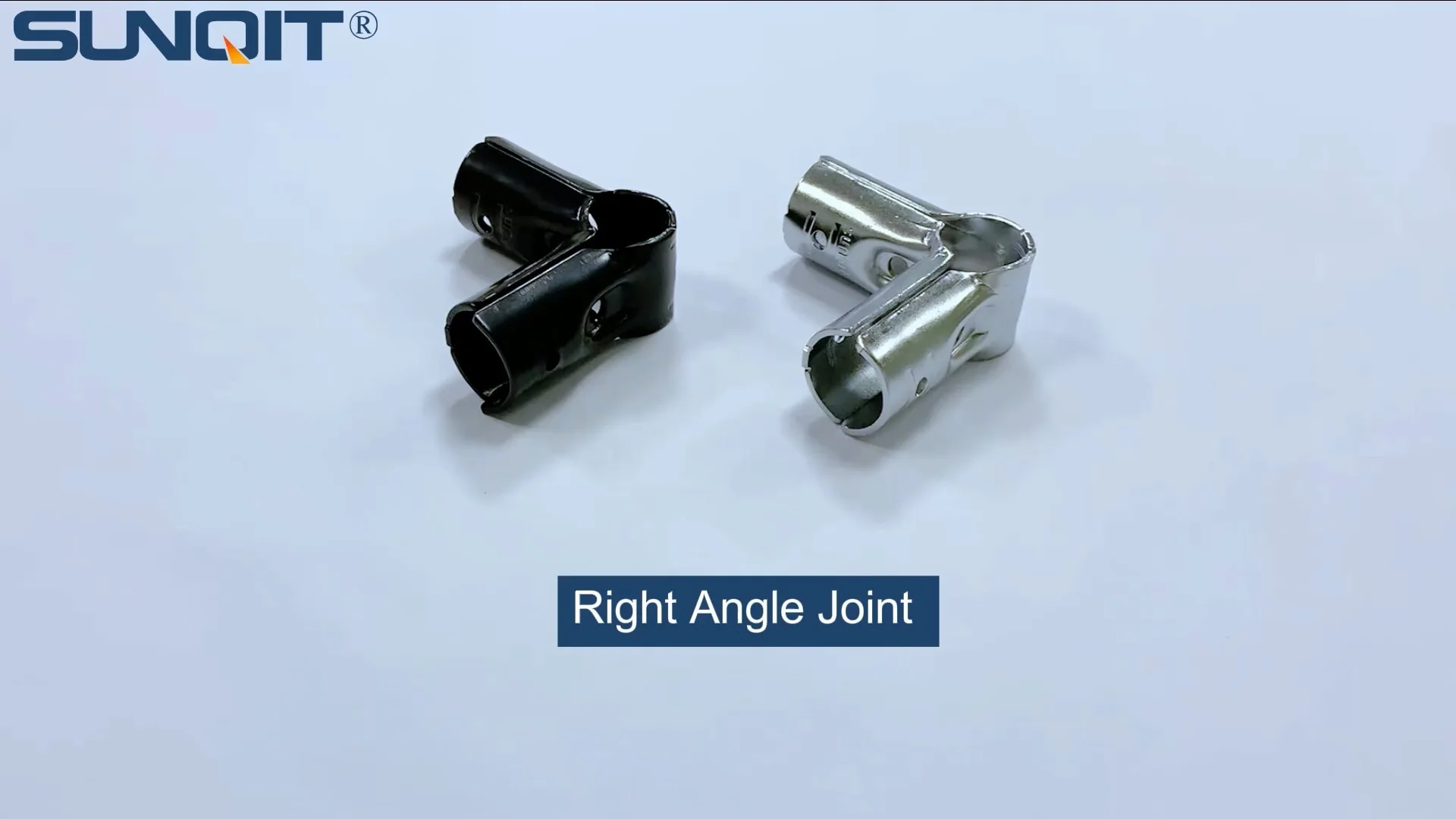
In the world of lean manufacturing, where efficiency and adaptability are the names of the game, it's often the smallest components that make the biggest difference. Walk through any production line, warehouse, or assembly shop, and you'll see workbenches, flow racks, and turnover trolleys that seem to "click" together like giant 3D puzzles. What holds these setups together? More often than not, it's a humble yet mighty component: the lean pipe joint. Today, we're zooming in on a true unsung hero of modular assembly—the chrome-plated three way lean pipe joint . This unassuming piece isn't just a connector; it's the backbone that lets manufacturers build, rebuild, and optimize their workspaces with ease. Let's dive into what it is, how it's built, and why it matters in the world of lean systems.
What Exactly Is a Chrome-Plated Three Way Lean Pipe Joint?
At its core, a chrome-plated three way lean pipe joint is a specialized connector designed to link lean pipes (or "lean tubes") in three directions—think of it as a T-junction, but with the flexibility to adapt to different angles and configurations. Unlike rigid, one-size-fits-all brackets, this joint is engineered to bring together three pipes at once, creating stable intersections that form the skeleton of everything from simple workbenches to complex material racks.
But why "chrome-plated"? Picture this: a busy factory floor where spills, humidity, and constant handling are part of daily life. A plain steel joint might rust, corrode, or wear down quickly under these conditions. Chrome plating adds a shiny, protective layer that stands up to moisture, scratches, and the chaos of industrial environments. It's not just about looks—though the sleek silver finish does add a professional touch to workspaces—it's about longevity. For manufacturers who can't afford downtime due to broken components, that extra durability is gold.
You'll often hear this joint referred to by its technical name, but in workshops, it's just "the three-way chrome joint." It's the go-to when a setup needs to branch out—like when a workbench adds a side shelf, a flow rack splits into multiple lanes, or a turnover trolley needs extra bracing. And because it's part of the lean system family, it plays nice with other components: aluminum profiles, casters, roller tracks, and even ESD (electrostatic discharge) workbench accessories. It's the ultimate team player in modular design.
Anatomy of a Workhorse: The Structure of the Chrome-Plated Three Way Joint
Materials: More Than Meets the Eye
Let's start with what's under the hood—or rather, under the chrome. Most three way lean pipe joints start as a base of high-quality carbon steel. Steel is chosen for its strength; after all, this joint needs to support the weight of tools, materials, and sometimes even heavy machinery parts. The steel is then precision-machined to create three hollow ports (the "ways") where the lean pipes will fit. These ports are typically slightly tapered or threaded to grip the pipes tightly once assembled—no wobbly connections here.
Then comes the chrome plating process. The steel joint is dipped in a chromium solution and electroplated, which bonds a thin layer of chromium to the surface. This layer is usually just a few micrometers thick, but it's enough to resist rust, repel water, and reduce friction. Ever noticed how chrome parts are easy to wipe clean? That's another perk—spills or grease can be wiped off with a cloth, keeping the joint looking new and functioning smoothly for years. For environments like food processing or electronics manufacturing, where cleanliness is critical, this is a game-changer.
Design Features: Engineered for Flexibility
Take a close look at a chrome-plated three way joint, and you'll notice some clever design details. First, the three ports are spaced at angles that balance stability and adaptability. Most are set at 90 degrees to each other (like the axes of a 3D grid), but some models allow for slight rotation—meaning you can tweak the angle by a few degrees if your design needs it. This is a lifesaver when you're building a custom setup and realize the plans need a small adjustment.
The ports themselves are sized to fit standard lean pipe diameters—usually 28mm or 30mm, the most common sizes in the industry. Inside each port, you might find small ridges or a clamping mechanism. When you insert a lean pipe (like a 2.0mm PE coated lean pipe or stainless steel pipe), a setscrew or cam lever tightens the joint around it, creating a secure hold. No welding, no drilling—just a simple twist of a wrench, and you're good to go. This "tool-less" assembly is a cornerstone of lean manufacturing; it lets teams reconfigure workspaces in hours instead of days.
Another subtle but important feature is the joint's weight distribution. The body is slightly thicker at the center, where the three ports meet, to prevent cracking under heavy loads. A well-made three way joint can support 150-200 kg of weight without bending—a must when you're stacking boxes on a flow rack or mounting heavy tools on a workbench.

What Does It Actually Do? The Core Functions
At first glance, a joint's job seems simple: connect things. But the chrome-plated three way lean pipe joint does so much more. Let's break down its key roles in the world of lean systems.
1. Creating Multi-Directional Stability
Imagine trying to build a workbench with only straight joints. You'd end up with a flat, 2D frame that can't support shelves, drawers, or side extensions. The three way joint adds the third dimension, letting you build upwards and outwards. For example, a basic workbench might start as a rectangular frame (using 90-degree joints), but when you add a shelf above, you'll need three way joints at each corner to connect the vertical supports, the horizontal shelf rails, and the cross-bracing for stability. Without this joint, you'd need complicated brackets or extra hardware—adding cost and assembly time.
2. Enabling Rapid Reconfiguration
Lean manufacturing isn't just about building efficient systems—it's about building systems that can change. A production line might need to switch from assembling small parts to large components overnight, and that means the workbench needs to grow (or shrink) on the fly. The three way joint makes this possible. Loosen the setscrews, pull out the pipes, reposition the joint, and tighten again. No cutting, no welding, no waiting for a maintenance crew. It's like Legos for adults, but with a serious purpose.
Case in point: A electronics manufacturer I worked with once needed to add ESD protection to their assembly line. Their existing workbenches (built with standard lean pipes) had open sides, so they used chrome-plated three way joints to attach ESD-safe side panels. In an afternoon, they transformed basic workbenches into static-free zones—all because the joints let them easily add new components without rebuilding from scratch.
3. Standing Up to the Grind
Let's talk about durability again. In a warehouse, a flow rack might get banged by forklifts, loaded with heavy boxes, and exposed to temperature swings. A plastic joint would crack; a plain steel joint would rust. But the chrome-plated three way joint? It laughs off these challenges. The chrome layer resists dents and scratches, while the steel core handles the weight. I've seen joints in auto repair shops that have been in use for 10+ years—still shiny, still tight, still doing their job. For businesses that want to invest in equipment that lasts, this is a no-brainer.
4. Integrating with the Lean Ecosystem
A joint is only as good as the components it connects. The chrome-plated three way joint plays well with others, making it a linchpin in lean setups. It works with:
•
Lean pipes
: PE-coated, stainless steel, or aluminum—whatever the job calls for.
•
Aluminum profiles
: For heavier-duty setups, it can connect aluminum extrusion profiles using adapters.
•
Casters
: Add a caster wheel to the bottom of a trolley frame by using a three way joint to anchor the caster stem.
•
Roller tracks
: Build a flow rack with multiple lanes by using three way joints to split the main track into branches.
This compatibility is key for lean pipe suppliers, who need to offer customers a "one-stop shop" for components. When a supplier can provide joints, pipes, casters, and accessories that all work together, it simplifies the buying process and ensures the final setup is reliable.

How Does It Compare? A Look at Lean Pipe Joints
Not all joints are created equal. Let's see how the chrome-plated three way joint stacks up against other common lean pipe joints:
| Joint Type | Number of Ports | Base Material | Coating/Plating | Est. Load Capacity | Best For |
|---|---|---|---|---|---|
| Chrome-Plated Three Way | 3 (X, Y, Z axes) | Carbon Steel | Chrome | 150-200 kg | Workbench corners, flow rack splits, material rack bracing |
| 90-Degree Fixed Joint | 2 (perpendicular) | Steel/Plastic | Zinc-Plated/None | 100-150 kg | Right-angle frames (e.g., table legs, shelf edges) |
| Straight Joint | 2 (inline) | Steel/Aluminum | Zinc-Plated/Anodized | 200-250 kg | Extending pipe lengths (e.g., long workbench rails) |
| Parallel Rotatory Joint | 2 (parallel, rotating) | Steel | Zinc-Plated | 80-120 kg | Adjustable shelves, tilting work surfaces |
As you can see, the chrome-plated three way joint shines when you need both strength and versatility. Its three ports and high load capacity make it indispensable for complex setups, while the chrome plating adds a layer of durability that other joints often lack.

Real-World Applications: Where This Joint Shines
Let's step out of the technical details and into the (chējiān)—that's "workshop" in Chinese, but you get the idea. Where do you actually find chrome-plated three way lean pipe joints hard at work?
Automotive Production Lines
Car manufacturers live and breathe lean principles, and their assembly lines are a maze of custom workbenches and material racks. A typical workstation might have a main bench for assembling door panels, with a side rack for tools and a overhead shelf for parts bins. Chrome-plated three way joints connect the vertical supports to the horizontal rails, ensuring the whole setup stays stable even when workers lean on it or heavy tools are placed on the shelves. The chrome finish also holds up to the lubricants and solvents often used in auto shops.
Electronics ESD Workstations
In electronics manufacturing, static electricity is the enemy—it can fry sensitive components like circuit boards. ESD workstations need to be grounded and stable, and three way joints are critical here. They're used to build the frame of the workstation, attach ESD-safe mats, and add side rails for cable management. The chrome plating helps with conductivity (though the steel core is the real star here), ensuring static dissipates safely. Plus, the joint's flexibility means workstations can be customized to fit different device sizes—from smartphones to laptops.
Warehouse Flow Racks
Ever walked through a warehouse and seen those racks where boxes glide down from the top to the picking area? Those are flow racks, and they rely on three way joints to split the main roller track into multiple lanes. For example, a "material rack b (3 row and 3 floor)" might use three way joints at each level to connect the vertical supports, the horizontal roller tracks, and the cross-bracing that prevents swaying. Without these joints, the rack would be a jumble of disconnected parts—hardly efficient for order fulfillment.
Small Business Workshops
It's not just big factories that love these joints. Small machine shops, woodworking studios, and even maker spaces use them to build affordable, custom workbenches. A local furniture maker I know built his entire workshop with lean pipes and chrome-plated three way joints—he can reconfigure his workbench in 10 minutes to fit a large tabletop or add a shelf for clamps. For small businesses on a budget, this modularity is a lifesaver; they don't need to buy new equipment every time their needs change.
Choosing the Right Joint: Tips for Buyers
If you're in the market for chrome-plated three way lean pipe joints, here's what to look for (and what to avoid):
1. Check the plating thickness : Not all chrome plating is the same. Thicker plating (0.0005 inches or more) offers better protection. Ask your lean pipe supplier for specs—reputable suppliers will have no problem sharing this info.
2. Test the fit : Bring a sample lean pipe to the supplier and test how the joint fits. It should grip tightly without being impossible to assemble. If it's too loose, the joint will wobble; too tight, and you'll struggle to adjust it later.
3. Look for certifications : For industries like food processing or pharmaceuticals, ensure the joint meets safety standards (e.g., FDA approval for materials). Chrome plating should be lead-free and non-toxic.
4. Avoid cheap plastic knockoffs : Plastic joints might be cheaper, but they'll crack under heavy loads. Stick with steel-core, chrome-plated joints for durability.
Caring for Your Joints: Maintenance Tips
Even the toughest joints need a little TLC. Here's how to keep your chrome-plated three way lean pipe joints in top shape:
• Wipe clean regularly : Use a soft cloth and mild detergent to remove grease or grime. Avoid abrasive cleaners—they'll scratch the chrome.
• Tighten setscrews quarterly : Over time, vibrations can loosen the screws. A quick twist with a hex key will keep the joint secure.
• Lubricate moving parts (if applicable) : Some three way joints have rotating ports. A drop of machine oil on the threads will keep them turning smoothly.
• replace if damaged : If the chrome plating is chipped down to the steel, or if the ports are bent, replace the joint. A damaged joint is a weak link in your setup.
Conclusion: The Little Joint That Does Big Things
In the grand scheme of manufacturing and warehousing, the chrome-plated three way lean pipe joint might seem small. But as we've seen, it's the glue that holds lean systems together—enabling flexibility, durability, and efficiency. Whether you're building a simple workbench or a complex production line, this joint is there, quietly ensuring everything stays connected and adaptable.
For lean pipe suppliers, it's a staple product that customers rely on. For manufacturers, it's a tool that turns "we can't" into "we can reconfigure." And for anyone who believes in the power of lean principles, it's a reminder that great systems are built from great components—one joint at a time.
So the next time you walk past a workbench or flow rack, take a closer look. Chances are, there's a chrome-plated three way joint holding it all together—proving that even the smallest parts can make the biggest impact.