- Company Articles
- Products and Technology
- Product knowledge
- Chrome vs. Zinc-Plated Five Way Straight Lean Pipe Joints: Performance Analysis

Chrome vs. Zinc-Plated Five Way Straight Lean Pipe Joints: Performance Analysis
Related Product
Five Way Straight Lean Pipe Joint
Five way straight lean pipe joint, for 5 pcs 28mm lean pipe connect in straight angle,which used widely in workbench, flow rack, hand trolley frame connection.
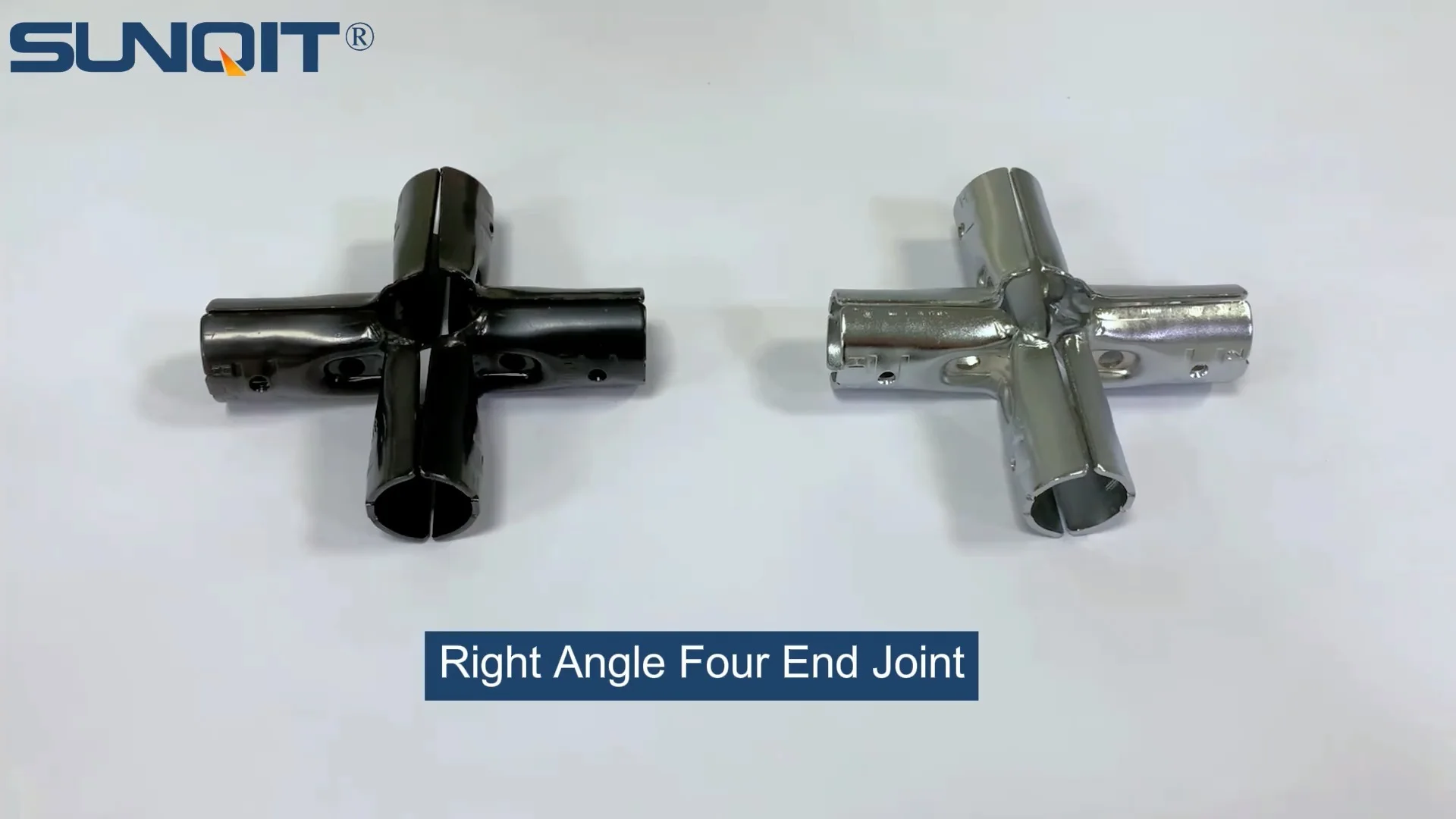
In the world of lean manufacturing, every component plays a silent but critical role in keeping production lines flowing smoothly. Today, we're zooming in on a small but mighty part: the five way straight lean pipe joint. These unassuming connectors are the backbone of modular workbenches, material racks, and assembly stations—but not all joints are created equal. When it comes to chrome-plated vs. zinc-plated options, the choice can impact everything from durability to daily operations. Let's dive into what makes each type tick, and how to decide which one fits your lean system best.
The Unsung Hero: What Are Five Way Straight Lean Pipe Joints?
Before we compare finishes, let's make sure we're all on the same page about the star of the show: the five way straight lean pipe joint. If you've ever walked through a factory floor, you've probably seen its handiwork—those sleek, customizable workbenches, flow racks, or turnover trolleys that seem to fit perfectly into every nook of the production line. Behind that flexibility is a network of lean pipes (think aluminum, steel, or stainless steel tubes) connected by joints, and the five way straight joint is one of the most versatile in the lineup.
As the name suggests, this joint is designed to connect five pipes in a straight line, allowing for multi-directional builds. Picture a central hub with five openings, each accepting a lean pipe to extend horizontally, vertically, or at angles—suddenly, you're not just building a simple shelf; you're crafting a tailored material handling system that grows with your needs. Whether you're assembling a multi-tiered material rack B (3 row and 3 floor) or a custom workbench, these joints are the glue that holds the structure together.
But here's the thing: the joint itself is just a metal piece until it's coated. That coating—chrome or zinc—isn't just for looks. It's a protective barrier, a durability booster, and sometimes even a cost factor. For a lean system that prides itself on efficiency and waste reduction, choosing the right coating can mean fewer replacements, less downtime, and a smoother workflow. So let's break down how chrome and zinc coatings stack up.
Under the Surface: How Chrome and Zinc Coatings Are Made
To understand why these coatings matter, we first need to peek into how they're applied. Both processes involve electroplating—using an electric current to deposit a thin layer of metal onto the joint's surface—but the similarities end there.
Chrome Plating: The Hard, Shiny Shield
Chrome plating (short for chromium plating) is a multi-step process. First, the raw metal joint (usually steel) is cleaned to remove dirt, oil, and rust—any impurity can ruin the plating. Then, it's dipped into a bath of chromic acid and other chemicals, with an electric current passing through to dissolve chromium ions and bond them to the joint's surface. The result? A hard, mirror-like layer that's typically 0.0005 to 0.002 inches thick.
What makes chrome stand out is its hardness. Chromium has a Mohs hardness rating of 8.5 (for reference, a penny is 3, a knife blade is 5.5), so it resists scratches and dents better than many other coatings. It's also naturally resistant to tarnishing, which is why it stays shiny even in humid environments. But there's a catch: chrome plating is more complex and uses toxic chemicals (like hexavalent chromium), which means stricter safety protocols and higher production costs.
Zinc Plating: The Sacrificial Protector
Zinc plating, on the other hand, is a simpler, more budget-friendly process. The joint is cleaned, then submerged in a zinc salt solution. When electricity is applied, zinc ions attach to the joint, forming a thin layer (usually 0.0002 to 0.001 inches thick). Sometimes, the zinc layer is treated with a clear chromate conversion coating to boost corrosion resistance, giving it a slightly yellowish or blueish tint.
Zinc's superpower is "sacrificial protection." Unlike chrome, which acts as a physical barrier, zinc corrodes first. If the coating gets scratched and the steel underneath is exposed, the zinc around the scratch will oxidize (form zinc oxide) instead of the steel rusting. It's like having a bodyguard for your joint—zinc takes the hit so the base metal doesn't have to. This makes it great for indoor use, but it's softer than chrome (Mohs hardness of 2.5) and can wear down faster in high-friction environments.
Real-World Impact:
Imagine a busy assembly line where workers are constantly sliding bins onto a flow rack. A zinc-plated joint might start showing wear after a year of daily use, developing tiny scratches that let moisture in. A chrome-plated joint, with its harder surface, could go two or three years without visible damage. For a lean pipe supplier, that difference translates to how often they get calls for replacements—and for a factory, it means fewer interruptions to swap out worn joints.

Head-to-Head: Key Performance Metrics
Now that we know how they're made, let's compare chrome and zinc-plated five way straight lean pipe joints across the metrics that matter most in a factory setting.
| Performance Metric | Chrome-Plated Five Way Straight Lean Pipe Joint | Zinc-Plated Five Way Straight Lean Pipe Joint |
|---|---|---|
| Corrosion Resistance | Excellent in dry, chemical-exposed environments; resists acids and alkalis well. | Good in indoor, low-moisture settings; sacrificial protection fails faster in high humidity or salt air. |
| Hardness (Mohs Scale) | 8.5 – highly scratch and dent resistant. | 2.5 – prone to wear from friction or impact. |
| Load Capacity | Same base steel strength; coating doesn't affect load, but harder surface maintains tightness longer. | Same base steel strength; softer coating may loosen slightly over time with heavy loads. |
| Cost | Higher upfront cost (30-50% more than zinc). | Lower initial cost; budget-friendly for high-volume builds. |
| Maintenance Needs | Low – wipe clean occasionally; no special treatments needed. | Moderate – check for white rust (zinc oxide) in humid areas; may need re-coating after 2-3 years. |
| Environmental Impact | Higher – uses toxic hexavalent chromium; requires strict waste disposal. | Lower – zinc is recyclable; chromate conversion (if used) is less toxic than chrome plating chemicals. |
Corrosion Resistance: When Environment Matters Most
Let's start with corrosion—the enemy of any metal part in a factory. If you're running a plant in a dry, air-conditioned space (like an electronics assembly line), zinc might hold up just fine. The sacrificial protection will kick in if there's a scratch, and you might not see rust for years. But if your facility is humid (think food processing, where steam is common) or near the coast (salt air), zinc's protection can fail quickly. White rust (a powdery zinc oxide layer) will form, and once that's gone, the steel underneath starts to rust—weakening the joint and making it wobbly.
Chrome, on the other hand, laughs at moisture and mild chemicals. In a automotive plant where oil and cleaning solvents are everywhere, a chrome-plated joint won't corrode or degrade. It's also a favorite in pharmaceutical facilities, where strict cleanliness standards mean frequent wipe-downs with disinfectants—chrome resists those chemicals without losing its shine or protection.
Durability: Scratches, Dents, and Daily Wear
Factories are rough places. Joints get bumped by forklifts, scraped by tools, and tightened/loosened repeatedly during reconfigurations. Here, chrome's hardness is a game-changer. A zinc-plated joint might get a dent from a stray tool drop, creating a weak spot. Chrome, being harder, is more likely to bounce back without damage. Over time, this means chrome joints stay tight longer. A loose joint in a material rack B (3 row and 3 floor) could cause bins to tip, leading to product damage or worker injury—so tightness isn't just about efficiency; it's about safety.
Cost: Upfront vs. Long-Term
Zinc-plated joints are cheaper to buy initially—sometimes by 30% or more. For a small workshop building a single workbench, that might be the deciding factor. But for a large manufacturer with hundreds of joints in their lean system, the math shifts. If a zinc joint needs replacement every 2 years and a chrome joint every 5 years, the long-term cost of zinc (buying 2-3x more joints) could surpass chrome's upfront price. A smart lean pipe supplier will often point this out: "Yes, chrome costs more now, but you'll save on replacements later."
Environmental Considerations: Green Manufacturing Matters
Modern factories aren't just focused on efficiency—they're also leaning into sustainability. Chrome plating uses hexavalent chromium, a known carcinogen, which requires careful disposal to avoid polluting waterways. Many regions have strict regulations on chrome plating waste, which can drive up production costs. Zinc plating, while not entirely harmless, uses less toxic chemicals and is easier to recycle. For companies aiming for eco-friendly certifications, zinc might be the better choice, even if it means slightly higher maintenance.

Where to Use Each: Application Scenarios
There's no "one size fits all" here—each coating shines in specific environments. Let's map out where chrome and zinc make the most sense.
Chrome-Plated Joints: Best for High-Stress, Harsh Environments
- Automotive and Aerospace Plants: These facilities deal with oils, greases, and cleaning chemicals. Chrome's chemical resistance prevents corrosion, and its hardness stands up to heavy tool traffic.
- Outdoor or Coastal Facilities: Salt air and rain are zinc's worst enemies. Chrome's barrier protection keeps joints intact longer in humid, salty climates.
- Heavy-Duty Racks and Conveyors: Material racks holding heavy parts or roller tracks moving constant loads need joints that stay tight. Chrome's durability reduces the risk of loosening over time.
Zinc-Plated Joints: Best for Indoor, Low-Cost, or Eco-Focused Settings
- Electronics Assembly Lines: These are often clean, dry, and low-moisture. Zinc's sacrificial protection is more than enough, and the lower cost helps keep budget in check for high-volume builds.
- Small Workshops or Startups: If you're just starting out and can't afford chrome's upfront cost, zinc lets you build a functional lean system without breaking the bank. You can always upgrade later.
- Eco-Conscious Factories: For plants aiming to reduce toxic waste, zinc's simpler, less harmful plating process aligns with sustainability goals.
Case in Point:
A medical device manufacturer we worked with once had to choose between chrome and zinc for their cleanroom workbenches. The cleanroom is dry and strictly temperature-controlled, so corrosion wasn't a big risk. They opted for zinc-plated joints to cut costs, and three years later, those joints still look new. On the flip side, their warehouse near the coast uses chrome-plated joints for material racks—after a zinc-plated rack collapsed due to rust in year two, the switch to chrome was a no-brainer.

Maintenance Tips: Making Your Joints Last Longer
Whichever coating you choose, a little maintenance goes a long way. Here's how to extend the life of your five way straight lean pipe joints:
For Chrome-Plated Joints:
Chrome is low-maintenance, but it's not invincible. Wipe joints with a dry cloth periodically to remove dust and grime—buildup can hide scratches. If you notice a scratch, apply a small amount of clear nail polish to seal it (temporarily, at least) until you can replace the joint. Avoid using abrasive cleaners, as they can wear away the chrome layer.
For Zinc-Plated Joints:
Check for white rust (a powdery, white coating) every few months, especially in humid areas. If you see it, gently scrub it off with a soft brush and apply a zinc-rich primer to the area. This adds a fresh layer of sacrificial protection. Also, tighten loose joints promptly—wobbling increases friction, which wears down the zinc coating faster.
Remember: in a lean system, proactive maintenance is cheaper than reactive repairs. A 5-minute monthly check of joints can prevent a 2-hour production shutdown later.
Choosing a Supplier: What to Ask
Your lean pipe supplier isn't just a vendor—they're a partner in building an efficient system. When shopping for five way straight lean pipe joints, ask these questions to ensure you're getting the right product:
- What's the coating thickness? Thicker chrome (0.0015+ inches) is more durable than thin layers. For zinc, look for at least 0.0005 inches with a chromate conversion coating.
- Do you have test data on corrosion resistance? Reputable suppliers will have salt spray test results (how long the joint resists rust in a salt mist chamber). Chrome should last 500+ hours; zinc with chromate, 200+ hours.
- Can you help with material selection? A good supplier will ask about your environment (humidity, chemicals, load) and recommend chrome or zinc based on that, not just push the more expensive option.
- What's your lead time for replacements? Even the best joints wear out. Make sure your supplier can deliver spares quickly to avoid downtime.
A supplier who takes the time to understand your lean system's unique needs is worth their weight in (chrome-plated) joints. They'll help you balance cost, durability, and sustainability—so you can focus on what matters: making products, not fixing joints.
Final Thoughts: It's About Balance
At the end of the day, choosing between chrome and zinc-plated five way straight lean pipe joints isn't about picking "the best"—it's about picking what's best for your factory. Zinc is budget-friendly and eco-smart for dry, low-stress settings; chrome is the tough, long-lasting workhorse for harsh or heavy-duty environments.
Remember, these joints are the quiet architects of your lean system. They hold up your workbenches, guide your flow racks, and keep your materials moving. Skimping on quality here can lead to wobbly structures, frequent replacements, and workflow interruptions—all the things lean manufacturing aims to eliminate. So whether you go with the shiny durability of chrome or the cost-effective protection of zinc, choose intentionally. Your production line (and your bottom line) will thank you.
And if you're still unsure? Talk to your lean pipe supplier. They've seen it all—humid warehouses, chemical-soaked factories, budget-strapped startups—and they can help you find the sweet spot between performance and practicality. After all, in lean manufacturing, the best solutions are always collaborative.