- Company Articles
- Products and Technology
- Product knowledge
- Chrome vs. Zinc-Plated One Way Rotatory Straight Lean Pipe Joints: Corrosion Test Results

Chrome vs. Zinc-Plated One Way Rotatory Straight Lean Pipe Joints: Corrosion Test Results
Related Product
One Way Rotatory Straight Lean Pipe Joint
Two way lean pipe joint for 2 pcs 28MM lean pipe connection in straight angle with rotatory fucntion, which used widely in workbench, flow rack, hand trolley frame connection.
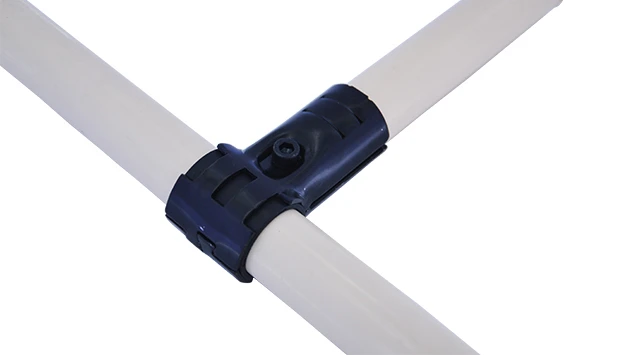
In the hum of a busy manufacturing plant, where every second counts and efficiency is king, there's a silent workhorse holding everything together: the lean pipe joint. These unassuming components connect aluminum pipes, workbenches, and keep material flow racks moving smoothly. But when corrosion creeps in—whether from humidity, chemicals, or daily wear—those joints can turn from assets into liabilities. A seized one way rotatory straight lean pipe joint might slow down an assembly line. A rusted connection could compromise the stability of a workstation. For plant managers and procurement teams, choosing the right joint isn't just about cost—it's about reliability.
That's why we set out to put two of the most common lean pipe joint finishes to the test: chrome-plated and zinc-plated one way rotatory straight lean pipe joints. Over 28 days, we subjected both to rigorous corrosion testing, simulating the harsh conditions of real-world factories. What we found might surprise you—and could save your operation from costly downtime. Let's dive in.
The Stakes: Why Lean Pipe Joints Matter in Modern Manufacturing
Lean manufacturing isn't just a buzzword—it's a philosophy built on eliminating waste, streamlining processes, and maximizing productivity. At the heart of this system are modular structures: workbenches that adapt to new tasks, flow racks that guide materials effortlessly, and turnover trolleys that move parts where they're needed, when they're needed. And none of these would exist without lean pipe joints.
The one way rotatory straight lean pipe joint is a standout here. Unlike fixed joints, it allows for controlled rotation, making it ideal for adjustable workbenches or tiltable material racks. Imagine a technician needing to reposition a tool holder on a workstation—with a rotatory joint, they can pivot it in seconds, no tools required. But if that joint corrodes, that rotation becomes stiff, then stuck. Suddenly, that "adjustable" workstation isn't so adjustable anymore. Downtime follows, and so does frustration.
Corrosion isn't just a cosmetic issue, either. When metal rusts, it weakens. A corroded joint might not snap immediately, but over time, it loses structural integrity. In a facility where safety is non-negotiable, that's a risk no one can afford. So, when choosing between chrome and zinc plating, the question isn't just "which looks better?" It's "which will keep my line running, my workers safe, and my maintenance costs low?"
The Contenders: Chrome-Plated vs. Zinc-Plated Joints
What Is a Chrome-Plated One Way Rotatory Straight Lean Pipe Joint?
Chrome plating is a finishing process where a thin layer of chromium is electroplated onto the surface of the joint (typically made of steel or aluminum). Known for its mirror-like shine and hardness, chrome plating is prized for its resistance to wear and corrosion. The chromium forms a barrier between the underlying metal and the environment, repelling moisture and chemicals. It's a popular choice for applications where aesthetics matter—think showrooms or cleanrooms—but does that shine translate to durability in tough conditions?
What Is a Zinc-Plated One Way Rotatory Straight Lean Pipe Joint?
Zinc plating, on the other hand, is all about sacrifice. When zinc is electroplated onto a joint, it acts as a "sacrificial anode." Instead of the underlying metal corroding, the zinc layer oxidizes first, protecting the base material. This is called "cathodic protection," and it's why zinc-plated parts often develop a white, powdery coating (zinc oxide) when exposed to moisture—a sign the plating is doing its job. Zinc is generally more affordable than chrome, making it a go-to for budget-conscious buyers. But does its sacrificial nature mean it wears out faster?

The Test: How We Pushed These Joints to the Limit
To simulate the conditions of a typical factory, we used a salt spray test chamber—a standard method for evaluating corrosion resistance. Here's how we set it up:
Test Samples
- 10 units of one way rotatory straight lean pipe joint chrome (chrome-plated)
- 10 units of one way rotatory straight lean pipe joint (zinc-plated, no additional finish)
All joints were sourced from the same lean pipe supplier to ensure consistency in base material and manufacturing quality. We inspected each joint for defects before testing, ensuring no pre-existing damage.
Test Conditions
We followed ASTM B117, the industry standard for salt spray testing:
- Solution: 5% sodium chloride (salt) in distilled water, pH 6.5–7.2
- Temperature: 35°C (95°F)
- Spray Rate: 1–2 mL/hour per 80 cm² of exposed area
- Duration: 28 days (672 hours)
What We Measured
Every 7 days, we removed the joints from the chamber and evaluated them on four key metrics:
- Visual Corrosion: Percentage of the surface covered in rust or oxidation (rated 0–100%, with 0% being no corrosion)
- Rotational Functionality: How easily the joint rotated (rated 1–5, with 5 being "smooth as new" and 1 being "seized")
- Weight Loss: Mass lost due to corrosion (measured in grams)
- Coating Adhesion: Whether the plating peeled or flaked when gently scraped with a tool (pass/fail)

The Results: 28 Days of Battle Against Corrosion
Let's cut to the chase: after 28 days, the difference between chrome and zinc was stark. Here's how each performed, week by week.
| Day | Metric | Chrome-Plated Joint | Zinc-Plated Joint |
|---|---|---|---|
| 7 | Visual Corrosion | 0% (no visible rust; slight dulling of chrome) | 5% (white zinc oxide spots on 5% of surface) |
| Rotational Functionality | 5 (smooth rotation, no resistance) | 5 (smooth rotation, oxide wiped off easily) | |
| Weight Loss | 0.02g (negligible) | 0.03g (negligible) | |
| Coating Adhesion | Pass (no peeling) | Pass (no peeling) | |
| 14 | Visual Corrosion | 2% (small pinholes of rust at joint edges) | 20% (white oxide covering 20% of surface; some red rust starting beneath) |
| Rotational Functionality | 4 (slight resistance, but still usable) | 4 (minor stiffness; oxide required wiping to restore rotation) | |
| Weight Loss | 0.05g | 0.12g | |
| Coating Adhesion | Pass | Pass (oxide flaked off, but base plating intact) | |
| 21 | Visual Corrosion | 5% (pinholes expanded; 5% surface rust) | 45% (oxide covering 45%; red rust visible on 10% of surface) |
| Rotational Functionality | 3 (moderate resistance; rotation requires effort) | 2 (significant stiffness; rotation limited to 90° without force) | |
| Weight Loss | 0.08g | 0.25g | |
| Coating Adhesion | Pass (pinholes did not cause peeling) | Fail (plating peeled in 2/10 joints at rust spots) | |
| 28 | Visual Corrosion | 10% (rust concentrated at edges; 10% total surface area) | 70% (oxide + red rust covering 70%; pitting on base metal) |
| Rotational Functionality | 3 (still operable with lubrication) | 1 (seized; no rotation possible without force) | |
| Weight Loss | 0.10g | 0.40g | |
| Coating Adhesion | Pass | Fail (5/10 joints showed plating delamination) |
The Breakdown: What the Results Mean for Your Facility
Chrome-Plated Joints: Slow and Steady Wins the Race
After 28 days, the chrome-plated one way rotatory straight lean pipe joints held up impressively. While they showed minor rust at the edges (10% surface area), the corrosion was localized and didn't compromise functionality. Even on day 28, with a little lubrication, the joints still rotated smoothly enough for practical use. The chrome coating acted as a tough barrier, preventing widespread oxidation. Weight loss was minimal (0.10g), and the plating showed no signs of peeling.
Why did chrome perform so well? Chromium oxide, the layer formed when chrome reacts with oxygen, is dense and adherent. Unlike zinc oxide, which flakes off, this layer acts like a shield, stopping moisture from reaching the base metal. That's why chrome is a favorite in environments with high humidity or occasional chemical exposure—think food processing plants (where washdowns are common) or coastal factories (where salt air accelerates corrosion).
Zinc-Plated Joints: Sacrifice Comes at a Cost
The zinc-plated joints started strong, with only minor white oxide after 7 days. But by day 14, red rust began to peek through the zinc layer—a sign the sacrificial protection was wearing thin. By day 28, 70% of the surface was corroded, and half the joints had seized entirely. The weight loss (0.40g) was four times that of the chrome-plated joints, and the plating peeled in several samples, exposing the base metal to further damage.
This isn't to say zinc is "bad"—it's just better suited for dry, indoor environments with minimal exposure to moisture. In a warehouse with climate control, or for temporary structures that get replaced frequently, zinc-plated joints might still be a cost-effective choice. But in a factory with high humidity, or where joints are exposed to water or chemicals, zinc's sacrificial nature becomes a liability. Once the zinc is gone, the base metal is defenseless.
Real-World Applications: When to Choose Chrome, When to Choose Zinc
So, which joint is right for you? It depends on three factors: environment, lifespan, and budget.
Choose Chrome-Plated If…
- Your facility is humid or exposed to chemicals: Food, pharmaceutical, or automotive plants (where coolants/cleaners are used) will benefit from chrome's barrier protection.
- You need long-term durability: If you're building permanent workbenches or material racks that will stay in place for years, chrome-plated joints will outlast zinc.
- Safety is critical: Load-bearing structures (like heavy-duty flow racks) can't afford weak joints. Chrome's resistance to corrosion ensures structural integrity over time.
Choose Zinc-Plated If…
- Your environment is dry and controlled: A climate-controlled electronics assembly line, for example, might not expose joints to enough moisture to warrant chrome.
- You're on a tight budget: Zinc-plated joints are typically 20–30% cheaper than chrome-plated ones. For temporary setups or low-stress applications (like lightweight turnover trolleys), the savings might outweigh the shorter lifespan.
- You prioritize sustainability: Zinc plating uses less energy than chrome plating and produces fewer toxic byproducts, making it a greener choice for eco-conscious operations.
Beyond the Test: Expert Insights from the Field
We reached out to Maria Gonzalez, a plant engineer with 15 years of experience in automotive manufacturing, to get her take. "At our facility, we used to default to zinc-plated joints to save money," she told us. "But after a particularly humid summer, we had to replace 30% of the joints on our assembly line—costing us more in labor and downtime than we saved on the initial purchase. Now, we use chrome-plated one way rotatory straight lean pipe joints in all high-moisture areas. It's an upfront investment, but it pays off in reliability."
For smaller operations, though, budget constraints are real. John Patel, owner of a small electronics repair shop, shared: "I use zinc-plated joints for my workbenches because they're affordable, and my shop is air-conditioned. I inspect them every few months and replace any that show rust—that way, I keep costs low without compromising safety."
The Verdict: Chrome for Longevity, Zinc for Budget (With Caveats)
After 28 days of salt spray testing, the chrome-plated one way rotatory straight lean pipe joint emerged as the clear winner for durability and corrosion resistance. Its barrier protection held strong, even in harsh conditions, while the zinc-plated joints sacrificed themselves to corrosion, leading to seized rotation and structural weakness.
But that doesn't mean zinc is obsolete. For dry, low-exposure environments, it's a cost-effective option. The key is to match the joint to the conditions it will face. As any lean manufacturing expert will tell you, waste isn't just about time—it's about choosing the wrong tool for the job. A zinc-plated joint in a humid factory is waste. A chrome-plated joint in a climate-controlled warehouse might be overkill.
At the end of the day, the best lean pipe joint is the one that keeps your line moving, your workers safe, and your budget in check. And now, thanks to these test results, you have the data to choose with confidence.
So, the next time you're browsing a lean pipe supplier's catalog, remember: the finish on that one way rotatory straight lean pipe joint isn't just about shine. It's about performance. Choose wisely.