- Company Articles
- Products and Technology
- Product knowledge
- Cleanroom-Ready: Aluminum Pipe with Board Holder for Labs

Cleanroom-Ready: Aluminum Pipe with Board Holder for Labs
Related Product
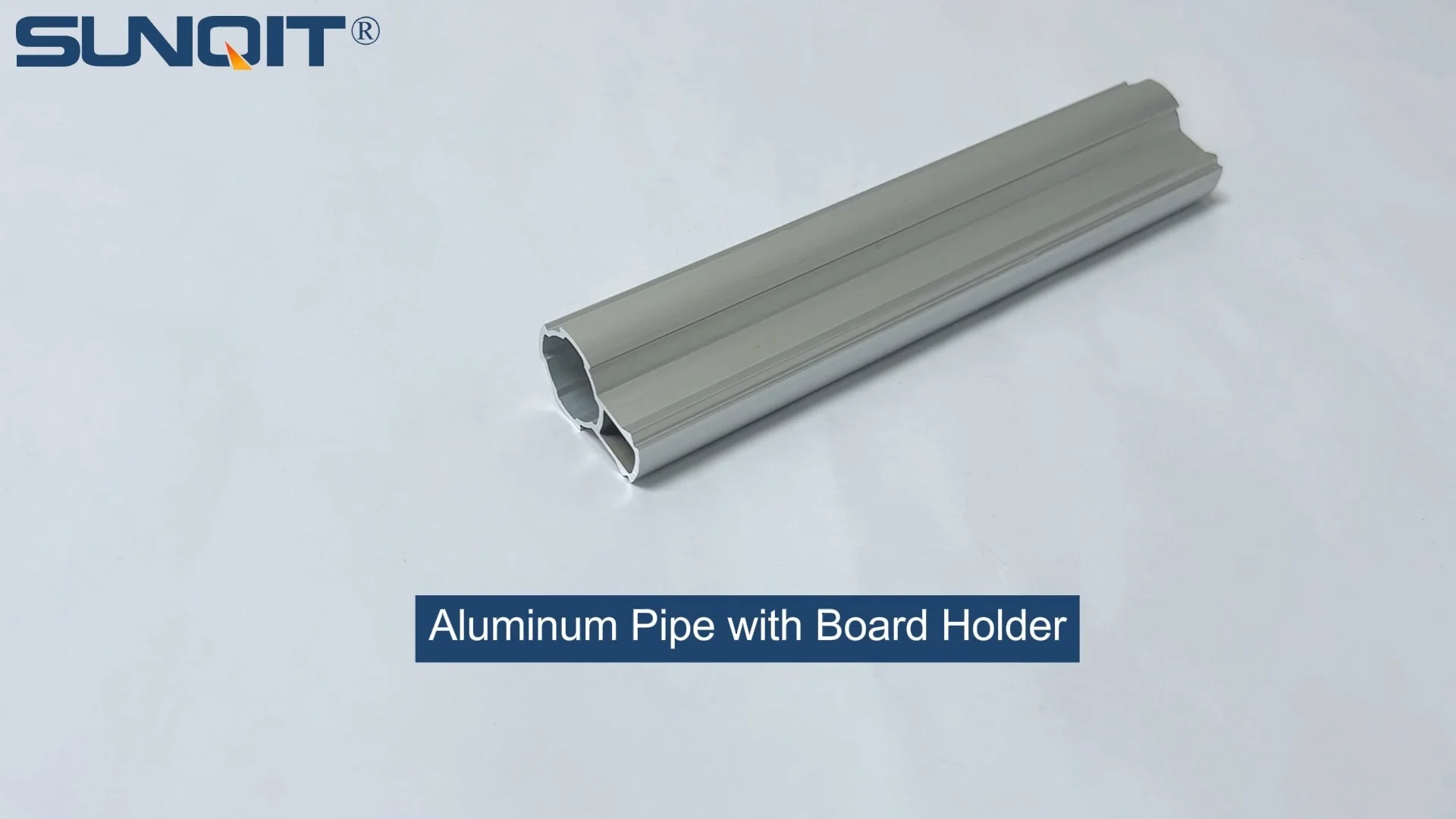
Aluminum Pipe with Board Holder
The linear rolling assembly can be arbitrarily connected in the protruding part of the card slot to increase the rigidity of the track.
The Hidden Challenge in Lab Efficiency: Workspace Design
Walk into any modern laboratory—whether it's a pharmaceutical research facility, a semiconductor cleanroom, or a biotech lab—and you'll notice the same thing: precision is everything. Every instrument, every sample, and every process demands meticulous attention to detail. But there's one aspect of lab operations that often gets overlooked, yet can make or break efficiency, compliance, and even safety: the design of the workspace itself. Cluttered benches, static-charged surfaces, and inflexible setups don't just slow down workflows—they create risks. Contamination, human error, and wasted time are the unspoken costs of a poorly designed lab environment. And in spaces where even a single particle can compromise a multi-million-dollar experiment, those costs are too high to ignore.
For lab managers and safety officers, the struggle is real. Traditional workbenches and storage solutions often feel like square pegs in round holes. They're heavy, hard to reconfigure, and rarely designed with the unique needs of cleanrooms in mind. Plastic shelving might be lightweight, but it scratches easily, harboring bacteria. Stainless steel is durable, but it's expensive and cumbersome to adjust. And when you add in the need for electrostatic discharge (ESD) protection—critical for labs handling sensitive electronics or volatile samples—the options shrink even further. What if there was a solution that checked all the boxes: lightweight, modular, ESD-safe, easy to clean, and built to adapt as lab needs change? That's where aluminum comes into play—and more specifically, the unsung hero of lab organization: the aluminum pipe with board holder.
Aluminum Lean Pipe: The Foundation of Modern Lab Design
Before diving into the specifics of the aluminum pipe with board holder, let's talk about the material that makes it all possible: aluminum lean pipe. You might have heard of lean manufacturing principles—streamlining processes, eliminating waste, and maximizing value. Aluminum lean pipe takes those principles and applies them to physical infrastructure. Unlike traditional steel pipes, which are heavy and prone to rust, aluminum lean pipe is lightweight, corrosion-resistant, and designed for modularity. It's the backbone of flexible workspaces, allowing teams to build, adjust, and repurpose structures with minimal effort. And in cleanrooms, where every component must meet strict standards for particle generation and chemical resistance, aluminum lean pipe stands out as a material that doesn't just meet the rules—it elevates them.
Aluminum lean pipe is typically made from high-grade aluminum alloys, chosen for their strength-to-weight ratio. Most options on the market today feature a smooth, anodized finish that resists scratches and chemical exposure—perfect for labs that use harsh disinfectants or solvents. But what really sets it apart is its versatility. Thanks to compatible accessories like joints, clamps, and brackets, aluminum lean pipe can be combined to create everything from workbenches to material racks. And yes, that includes the aluminum pipe with board holder—a component that might seem simple, but plays a critical role in keeping lab workflows organized and efficient.

Aluminum vs. Other Materials: Why It's the Clear Choice for Cleanrooms
To truly understand why aluminum pipe with board holder is a game-changer, it helps to see how it stacks up against other common materials used in lab setups. Let's break down the key factors that matter most in cleanroom environments: weight, corrosion resistance, ESD performance, cleanability, and cost. Here's how aluminum compares to stainless steel and plastic—two of the most popular alternatives:
| Material | Weight (per linear foot) | Corrosion Resistance | ESD Performance | Cleanability | Cost (Relative) | Best For |
|---|---|---|---|---|---|---|
| Aluminum (Aluminum Lean Pipe) | 1.2–1.8 lbs | Excellent (anodized finish resists chemicals, moisture) | Good (can be treated for ESD; compatible with grounding systems) | High (smooth, non-porous surface; easy to wipe down with disinfectants) | Moderate (more affordable than stainless steel, more durable than plastic) | Modular cleanrooms, ESD workstations, labs needing frequent reconfiguration |
| Stainless Steel | 3.5–4.2 lbs | Excellent (resists rust and chemicals) | Poor (conductive but heavy; hard to ground effectively in modular setups) | High (non-porous, but heavier and harder to move for deep cleaning) | High (2–3x the cost of aluminum) | Static-free environments with fixed layouts (e.g., industrial labs with minimal changes) |
| Plastic (PVC/ABS) | 0.8–1.0 lbs | Poor (prone to cracking, discoloration from chemicals) | Very Poor (insulative; builds static charge easily) | Low (scratches harbor bacteria; porous surface traps particles) | Low (affordable upfront, but needs frequent replacement) | Temporary setups or non-critical environments (e.g., teaching labs with minimal contamination risks) |
The takeaway? Aluminum lean pipe hits the sweet spot. It's light enough to reconfigure without heavy machinery, durable enough to withstand daily use and harsh cleaners, and adaptable enough to integrate with ESD workstation setups. And when paired with components like the aluminum pipe with board holder, it becomes a tool for transforming chaotic labs into streamlined, compliant workspaces.

Aluminum Pipe with Board Holder: What It Is and Why Labs Need It
So, what exactly is an aluminum pipe with board holder? At first glance, it might seem like a simple component—a length of aluminum pipe with a bracket attached to hold a board. But in reality, it's a masterclass in functional design. Let's break it down: the pipe itself is typically made from high-grade aluminum alloy (often 6063-T5, a material known for its strength and corrosion resistance). It's often designed with a T-groove along its length, which means it can accept a variety of accessories—clamps, shelves, hooks—without the need for drilling or welding. The board holder, usually made from the same aluminum alloy, is a slim, adjustable bracket that attaches to the pipe, creating a stable surface for holding everything from protocol sheets and checklists to small tools or digital tablets. It's not just about holding paper; it's about keeping critical information and tools within arm's reach, without cluttering the workbench.
But why does this matter in a cleanroom? Let's think about a typical lab workflow. A researcher is preparing a sample for analysis. They need to reference a protocol, track time on a timer, and keep a pipette within easy reach. Without a dedicated space for these items, they end up scattered across the bench—taking up valuable real estate, getting in the way of the sample, and increasing the risk of spills or contamination. The aluminum pipe with board holder solves this by elevating those essentials: the protocol sheet stays clean and visible, the timer is within sight but not in the way, and the pipette hangs neatly from a hook attached to the pipe. Suddenly, the workbench is clear, the researcher can focus, and the risk of error drops.
What makes this component truly cleanroom-ready is its attention to detail. The aluminum surface is anodized, which creates a smooth, non-porous finish that resists scratches and chemical damage. No cracks, no crevices—just a surface that can be wiped down with isopropyl alcohol or bleach without degradation. The board holder itself is designed with minimal gaps, preventing dust or particles from collecting. And because it's made from aluminum, it's naturally conductive, which means it can be grounded as part of an ESD workstation setup. For labs handling sensitive electronics, like those in semiconductor manufacturing, this is a game-changer: static buildup is neutralized, protecting both the equipment and the samples.
ESD Workstation Compatibility: Protecting Sensitive Samples and Electronics
Electrostatic discharge (ESD) is a silent threat in many labs. A single static spark—often undetectable to the human eye—can destroy a microchip, corrupt data, or even ignite volatile compounds. That's why ESD workstations are non-negotiable in environments where sensitivity matters. These workstations are designed to dissipate static charge, grounding both the operator and the equipment to prevent buildup. But for an ESD workstation to be effective, every component must play by the rules—including accessories like the aluminum pipe with board holder.
The good news? Aluminum pipe with board holder is inherently compatible with ESD workstation setups. Aluminum is a conductive material, which means when properly grounded, it can channel static charge away from sensitive areas. Many manufacturers take this a step further by treating the aluminum surface with a dissipative coating, ensuring charge is released slowly and safely (rather than all at once, which could still damage components). The board holder, too, is designed with ESD in mind: its smooth, non-scratching surface won't generate static when items are placed on or removed from it. Even the fasteners used to attach the holder to the pipe are often made from conductive materials, ensuring the entire assembly is grounded.
Consider integrating this into an ESD workstation: the main workbench is an ESD-safe surface, grounded to the lab's electrical system. The aluminum pipe runs vertically along the back of the bench, with the board holder at eye level. A digital tablet displaying the experiment protocol sits in the holder, grounded via a cable connected to the pipe. The researcher, wearing an ESD wristband, can reference the protocol without leaning over the sample, and the tablet stays charged (via a cable routed through the T-groove of the pipe) without creating a tripping hazard. Every component works in harmony to keep static at bay. It's not just about compliance with standards like ANSI/ESD S20.20—it's about peace of mind.
From Assembly to Adaptation: The Modular Advantage
One of the biggest frustrations with traditional lab furniture is how permanent it feels. Order a custom stainless steel workbench, and if your lab needs change six months later—say, you add a new instrument or shift to a different workflow—you're stuck. You either live with an inefficient setup or shell out for a whole new bench. Aluminum pipe with board holder, by contrast, is built for adaptation. Thanks to its modular design, it can be assembled, disassembled, and reconfigured in minutes, with nothing more than a hex key. No welding, no drilling, no specialized tools. This isn't just convenient—it's essential in labs where flexibility is key.
Let's say a biotech lab needs to reconfigure its workspace to accommodate a new PCR machine. With aluminum profiles as the framework, the existing aluminum pipe with board holder can be detached, moved to a new position, and reattached in under an hour. The board holder can be adjusted up or down to align with the new bench height, and additional accessories—like a small shelf for PCR reagents—can be added to the T-groove of the pipe. It's like building with Legos, but for grown-ups with strict compliance requirements. And because aluminum is lightweight, even a single lab technician can handle the reconfiguration, without needing to hire a contractor or shut down the workspace for a day.
This modularity also extends to scalability. Start small: a single aluminum pipe with board holder on one workbench. As the lab grows, add more pipes, more holders, and more accessories. Maybe you need a second board holder for a different protocol, or a hook for a lab coat. The T-groove design makes it easy to add these later, without disrupting the existing setup. In a world where lab budgets are tight and needs are ever-changing, this ability to start small and scale as needed is a huge advantage.
Case Study: How One Pharma Lab Cut Contamination Risks with Aluminum Pipe with Board Holder
To put this all into perspective, let's look at a real-world example. A mid-sized pharmaceutical lab in the Midwest was struggling with contamination issues in its sterile compounding area. Despite strict cleaning protocols, particulate counts kept creeping above acceptable levels, leading to failed audits and delayed production. The root cause? Cluttered workbenches. Technicians were placing protocol sheets directly on the bench surface, which meant moving them every time they needed to sanitize. This not only created gaps in cleaning but also increased the risk of paper fibers (a common source of particulates) contaminating sterile vials.
The lab manager decided to invest in aluminum lean pipe and aluminum pipe with board holders. They replaced the traditional wooden shelves with aluminum profiles, adding aluminum pipes along the back of each workbench. The board holders were mounted at eye level, holding digital tablets (loaded with protocols) instead of paper. Suddenly, workbenches were clear. No more paper, no more clutter, and no more gaps in cleaning. Within three months, particulate counts dropped by 40%, and the lab passed its next audit with zero findings. But the benefits didn't stop there: technicians reported less eye strain (no more leaning over paper to read protocols), and setup time for new experiments decreased by 25% because tools and information were always within reach.
This isn't an isolated case. Labs across industries—from aerospace to food science—are discovering that the right infrastructure can transform their operations. The aluminum pipe with board holder might seem like a small component, but when combined with aluminum profiles and ESD workstations, it becomes part of a system that solves big problems.
Choosing the Right Aluminum Pipe with Board Holder: What to Look For
Now that you're convinced of the benefits, how do you choose the right aluminum pipe with board holder for your lab? Not all products are created equal, and cutting corners here could lead to issues down the line. Here are the key factors to consider:
Material Quality
Not all aluminum is the same. Look for pipes made from 6063-T5 aluminum alloy—this is the industry standard for structural components, offering the perfect balance of strength, weight, and corrosion resistance. Avoid cheaper alloys, which may bend or degrade over time, especially in harsh lab environments.
ESD Ratings
If your lab requires ESD protection, check the product's surface resistance. The ideal range is 10^6 to 10^9 ohms, which ensures charge is dissipated safely. Ask the supplier for test reports or certifications to verify these ratings—don't just take their word for it.
Finish
The pipe and board holder should have an anodized finish. Anodization creates a hard, non-porous layer on the aluminum surface, making it resistant to scratches, chemicals, and corrosion. It also ensures the surface is easy to clean, which is critical for cleanroom compliance.
Compatibility
Make sure the aluminum pipe with board holder is compatible with your existing setup. If you're using aluminum profiles, check that the pipe's T-groove matches the profile's slot size. If you're building a new ESD workstation, ensure the pipe can be grounded to your lab's electrical system.
The Bottom Line: Invest in Infrastructure That Invests in You
In the world of lab management, it's easy to focus on the big-ticket items: the mass spectrometers, the bioreactors, the automated pipetting systems. But the truth is, the infrastructure that supports those tools matters just as much. A cluttered, inflexible workspace can turn even the most advanced equipment into a source of frustration. Aluminum pipe with board holder, paired with aluminum lean pipe, aluminum profiles, and ESD workstations, offers a better way. It's not just about holding a board—it's about creating a workspace that works for you: adaptable, compliant, and designed to elevate every aspect of lab operations.
So, the next time you walk through your lab, take a look around. Are your workbenches cluttered? Are your technicians struggling to access critical information? Is static a constant concern? If the answer is yes, it might be time to consider aluminum. It's more than a material—it's a solution. And in labs where precision and efficiency are non-negotiable, solutions like the aluminum pipe with board holder aren't just nice to have. They're essential.