- Company Articles
- Products and Technology
- Product knowledge
- Color-Coded Lean Pipe Clamp B Chrome: Organizing Workstations Efficiently

Color-Coded Lean Pipe Clamp B Chrome: Organizing Workstations Efficiently
Related Product
Lean Pipe Clamp B Chrome
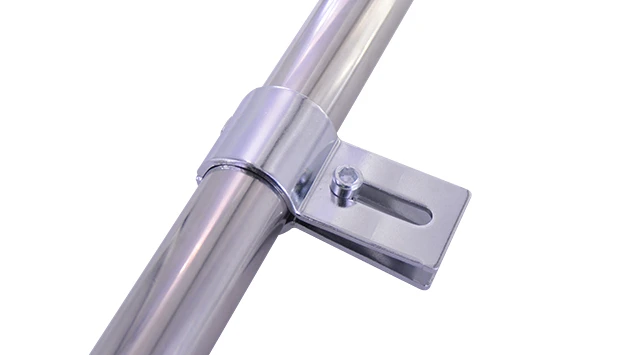
Lean pipe clamp is used for turnover trolley, workbench, flowrack adjust the frame or fix some accessory.
Walk into any busy workshop, manufacturing floor, or warehouse, and you'll likely be greeted by a familiar sight: tools scattered across workbenches, materials stacked haphazardly, and pipes and racks that seem to have been assembled with little rhyme or reason. It's not just messy—it's a productivity killer. Lost tools, delayed material retrieval, and even safety hazards often stem from disorganized workspaces. But what if there was a small, unassuming component that could turn this chaos into calm? Enter the color-coded lean pipe clamp B chrome—a unsung hero in the world of workstation organization. In this article, we'll explore how this simple yet ingenious tool, when integrated with lean pipe workbenches, flow racks, and broader lean systems, transforms cluttered workspaces into models of efficiency.
The Role of Lean Systems in Modern Workspaces
Before diving into the specifics of the color-coded lean pipe clamp B chrome, let's take a step back to understand the bigger picture: lean systems. Lean principles, born from Toyota's production philosophy, focus on eliminating waste ("muda") in all forms—whether it's wasted time, materials, or effort. At the heart of lean is the idea that every component in a workspace should serve a purpose, and that purpose should align with creating value for the customer.
In practice, this means workspaces need to be flexible, visually intuitive, and easy to adapt. Static, one-size-fits-all setups simply don't cut it anymore. Modern manufacturing and warehousing demand tools that can be reconfigured on the fly to accommodate new products, changing order volumes, or updated safety protocols. This is where modular organization tools—like lean pipes, joints, and clamps—shine. They allow teams to build, break down, and rebuild workstations with minimal effort, ensuring that the workspace evolves as needs change.
But even the most modular systems can fall short without the right connectors. That's where clamps come in. They're the glue that holds lean workspaces together—literally. And not just any clamps: color-coded, chrome-plated clamps designed with both durability and usability in mind.
Meet the Star: Color-Coded Lean Pipe Clamp B Chrome
At first glance, the color-coded lean pipe clamp B chrome might seem like a piece of hardware. It's small, metallic, and designed to do one basic job: connect pipes. But looks can be deceiving. This clamp is a masterclass in functional design, engineered to solve two critical challenges in workstation setup: stability and simplicity.
Let's start with the basics: materials. The "chrome" in its name isn't just for show. Chrome plating adds a layer of protection against rust, corrosion, and scratches—essential in environments where tools, chemicals, or moisture might take a toll. Unlike plastic clamps that crack under pressure or painted metal ones that chip over time, the chrome finish ensures the clamp retains its integrity even in high-traffic workspaces. This durability means fewer replacements, lower long-term costs, and a workspace that stays looking professional.
Then there's the "B" designation, which refers to its design. The clamp features a robust, U-shaped body with a tightening mechanism—typically a hex screw or lever—that secures two intersecting pipes at 90-degree angles (though some models accommodate other angles). What sets the "B" model apart is its precision fit: it's engineered to grip standard lean pipes (often 28mm or 30mm in diameter) tightly, preventing wobbling or slipping even when supporting heavy loads. Whether you're building a lightweight tool rack or a sturdy workbench, this clamp ensures the structure stays stable.
But the real game-changer? The color-coding. Each clamp is coated in a vibrant, durable color—think red, blue, green, or yellow—turning a purely functional part into a powerful visual management tool. We'll dive deeper into why color matters later, but for now, suffice it to say: color-coding transforms how teams interact with their workspace, making setup faster, errors fewer, and training simpler.
The Power of Color-Coding: More Than Just a Pretty Hue
In a fast-paced workspace, every second counts. Imagine a new employee tasked with assembling a flow rack for incoming inventory. Without clear guidance, they might fumble with clamps, checking labels or trial-and-error to find the right fit. Now imagine the same scenario with color-coded clamps: green for general-purpose connections, red for high-weight applications, and blue for ESD (electrostatic discharge) sensitive zones. Suddenly, the employee doesn't need to read fine print—they just grab the color that matches the task. That's the power of visual management.
Color-coding reduces cognitive load. Our brains process colors faster than text, so a glance at a red clamp immediately signals "use this for heavy loads" without requiring conscious thought. This speed translates to faster setup times: studies on workplace efficiency have shown that visual cues can reduce task completion time by up to 30% in repetitive tasks like workstation assembly. For a factory reconfiguring production lines between shifts or a warehouse adapting to seasonal demand spikes, those minutes add up to significant productivity gains.
Color also minimizes errors. In traditional setups, using the wrong clamp (e.g., a weak plastic clamp for a heavy load) can lead to collapsed racks, damaged materials, or even injuries. With color-coding, the risk of mismatched components plummets. A maintenance worker replacing a worn clamp on a flow rack will instinctively reach for the yellow clamp that matches the existing ones, ensuring consistency and safety. Over time, this reduces waste from broken parts and rework, aligning perfectly with lean principles.
Perhaps most importantly, color-coding fosters standardization. In large facilities with multiple teams or shifts, consistency can be hard to maintain. But when everyone knows that "blue clamps mean ESD areas," there's no confusion about where sensitive electronics should be placed or how to handle them. This standardization not only improves efficiency but also builds a culture of accountability—team members take pride in keeping the workspace organized because the visual cues make it clear what "organized" looks like.
Integration with Key Workstation Components
A clamp is only as useful as its ability to work with other components. The color-coded lean pipe clamp B chrome isn't a standalone tool—it's part of a ecosystem that includes lean pipe workbenches, flow racks, and other modular elements. Let's explore how it enhances three critical workstation components:
1. Lean Pipe Workbenches: The Foundation of Productivity
Lean pipe workbenches are the workhorses of manufacturing and assembly lines. They're customizable, lightweight, and designed to keep tools and materials within arm's reach. But a workbench is only as good as its frame—and the frame is only as strong as its connections. This is where the color-coded clamp B chrome shines.
Consider a typical workbench setup: aluminum or steel pipes form the legs, rails, and shelves. The clamp B chrome connects these pipes at every joint, ensuring the structure can support the weight of tools, laptops, and even heavy machinery. The chrome finish resists scratches from daily use, so the workbench stays looking neat even after years of hammering, drilling, and tool storage. And because the clamps are adjustable, the workbench can be reconfigured in minutes: raise the height for a taller worker, add a side shelf for extra materials, or remove a rail to accommodate a larger project. No need for saws or welding—just loosen the clamp, adjust the pipe, and retighten.
Color-coding adds another layer of customization. For example, a workbench used for electronics assembly might use blue clamps to mark ESD-safe zones, ensuring that static-sensitive components are placed only in areas protected by grounding mats. Meanwhile, a workbench in a auto repair shop could use red clamps to indicate where heavy tools (like impact wrenches) should be mounted, preventing overloading weaker connections. This level of specificity turns a generic workbench into a task-specific station tailored to the job at hand.
2. Flow Racks: Keeping Materials Moving
In lean manufacturing, "flow" is everything. Materials should move seamlessly from storage to production to shipping, with minimal handling. Flow racks—tilted racks fitted with roller tracks—make this possible by using gravity to slide materials forward as items are removed. But to work effectively, flow racks need to be stable, adjustable, and easy to maintain. Again, the color-coded lean pipe clamp B chrome plays a vital role.
Flow racks are typically built from lean pipes and roller tracks, with the clamps securing the tracks to the frame. The clamp B chrome's tight grip ensures the tracks stay aligned, preventing jams that could halt production. For example, in a warehouse shipping zone, a flow rack loaded with boxes needs to maintain a consistent slope—even a slight misalignment can cause boxes to get stuck. The clamp's precision fit keeps the tracks in place, ensuring smooth, uninterrupted flow.
Color-coding here helps with load management. A flow rack used for heavy automotive parts might use red clamps to indicate connections rated for 50kg+ loads, while a rack for small electronics could use green clamps for lighter loads. This prevents overloading, which is a common cause of track damage and rack collapse. Additionally, when reconfiguring the rack for different-sized items (e.g., switching from small boxes to larger bins), color-coded clamps make it easy to identify which connections can be adjusted and which should remain fixed. This flexibility is key for adapting to changing inventory needs.
3. Lean Systems: The Big Picture
Beyond individual workbenches and racks, the color-coded lean pipe clamp B chrome is a cornerstone of broader lean systems. Lean isn't just about organizing a single workstation—it's about creating a cohesive, interconnected workspace where every component supports the next. For example, a lean system might include a production line with workbenches, flow racks for materials, and trolleys for transporting finished goods. The clamps ensure all these elements work together harmoniously.
Take a typical assembly line: each workstation is a lean pipe workbench equipped with tools and parts from adjacent flow racks. When a new product is introduced, the line needs to be reconfigured. With color-coded clamps, teams can quickly disassemble and rebuild workbenches and racks, using colors to ensure consistency across stations. Red clamps might denote the "main line" connections, while yellow clamps mark auxiliary components like tool holders. This standardization ensures that every station operates the same way, reducing variability in output quality.
Color-coding also supports continuous improvement, a core lean principle. By tracking which clamp colors are used most frequently, managers can identify bottlenecks. For example, if red clamps (high-weight) are constantly in short supply, it might signal a need to invest in more heavy-duty racks. Conversely, if green clamps (general use) are rarely used, it could indicate overcapacity in certain areas. This data-driven insight helps teams refine their workspace design over time, making the lean system even more efficient.
Installation Made Simple: No Expertise Required
One of the biggest barriers to adopting new workspace tools is complexity. Many organizations avoid reconfiguring workstations because they assume it requires skilled labor or specialized tools. The color-coded lean pipe clamp B chrome smashes this myth. Installation is so simple that even someone with no technical training can master it in minutes.
Here's a typical setup process: First, align the two pipes at the desired angle (usually 90 degrees for most structures). Next, slide the clamp over the intersection, ensuring the pipes fit snugly into the clamp's grooves. Then, tighten the hex screw using a standard Allen key—no power tools needed. That's it. The clamp's design ensures a secure fit with minimal effort, and because the chrome finish is smooth, there's no risk of damaging the pipes during installation.
Adjustments are just as easy. Need to raise a shelf on a workbench? Loosen the clamp, slide the pipe to the new height, and retighten. Want to reposition a roller track on a flow rack? Simply loosen the relevant clamps, realign the track, and secure them again. This flexibility means workstations can evolve with the task at hand, whether it's a temporary project or a permanent change. And because the clamps are reusable, there's no waste—when a structure is no longer needed, the clamps can be removed and used elsewhere, reducing costs and environmental impact.
Even maintenance is a breeze. Over time, clamps might loosen due to vibration or heavy use. A quick tighten with an Allen key is all it takes to restore stability. And if a clamp does wear out (a rare occurrence, thanks to the chrome plating), replacing it is as simple as removing the old one and installing a new color-matched clamp. No need to replace the entire structure—just the worn part.
Color-Coded Clamp B Chrome in Action: Real-World Impact
To truly appreciate the value of the color-coded lean pipe clamp B chrome, let's look at some real-world scenarios where it has made a tangible difference. These examples, drawn from common industry challenges, highlight how this small component drives big results.
Scenario 1: A Busy Electronics Assembly Plant
A mid-sized electronics manufacturer was struggling with high turnover and frequent workstation reconfigurations. New hires took weeks to learn how to assemble and adjust lean pipe workbenches, leading to production delays. After switching to color-coded clamps (blue for ESD zones, green for general use, red for tool mounts), training time dropped by 40%. New employees could now identify the right clamps at a glance, and reconfiguring workbenches for new product lines took hours instead of days. The plant also reported a 15% reduction in static damage incidents, as blue clamps made it clear where ESD protocols applied.
Scenario 2: A Warehouse with Seasonal Demand Spikes
A retail warehouse faced a familiar challenge: surging inventory during holiday seasons required rapid expansion of flow racks. Previously, teams spent weekends assembling new racks, using generic clamps that often didn't fit properly, leading to wobbly structures and frequent collapses. After adopting color-coded clamp B chrome (yellow for lightweight boxes, red for heavy cartons), setup time was cut in half. The clamps' precise fit ensured stability, and color-coding prevented overloading—collapses dropped to zero. What's more, after the season, the racks were disassembled, and the clamps were reused to build smaller storage units, eliminating waste.
Scenario 3: A Automotive Repair Shop
An auto repair shop with limited space needed workbenches that could adapt to different vehicle models. Mechanics often wasted time searching for tools or adjusting workbench heights. By installing color-coded clamps (orange for adjustable joints, black for fixed), mechanics could quickly reposition shelves and tool holders. For example, orange clamps on the workbench legs allowed height adjustments in seconds, while black clamps secured permanent fixtures like vice mounts. Tool retrieval time decreased by 25%, and the shop's safety inspector noted fewer tripping hazards, as clamps kept loose pipes securely fastened.
Choosing the Right Color-Coded Clamp: A Quick Guide
Not all color-coded clamps are created equal, and choosing the right one depends on your workspace needs. Here's a handy table to help you select the best color and configuration for common applications:
| Clamp Color | Typical Application | Compatible Components | Key Benefit |
|---|---|---|---|
| Green | General-purpose connections (e.g., workbench frames, light tool racks) | Standard lean pipes (28mm), aluminum profiles, basic roller tracks | Versatile, cost-effective, ideal for most everyday setups |
| Red | Heavy-load applications (e.g., flow racks for large parts, equipment mounts) | Thick-walled steel pipes, reinforced aluminum profiles, heavy-duty roller tracks | High strength rating (up to 100kg per clamp), prevents overloading |
| Blue | ESD-sensitive zones (e.g., electronics assembly workbenches, static-safe material racks) | ESD lean pipes, grounding accessories, ESD workbench tops | Compatible with static control systems, reduces risk of electrostatic damage |
| Yellow | Caution or temporary setups (e.g., temporary flow racks, project-specific workstations) | Lightweight aluminum pipes, plastic roller tracks, mobile trolley frames | Highly visible, easy to identify and reconfigure as needed |
Remember, these are general guidelines—many manufacturers allow custom color coding to match your company's existing visual management system. The key is consistency: once you choose a color scheme, stick with it across all workspaces to avoid confusion.
Conclusion: Small Clamp, Big Results
In the world of workstation organization, it's often the smallest components that make the biggest impact. The color-coded lean pipe clamp B chrome is a perfect example. It's not flashy or high-tech, but it embodies the core principles of lean systems: simplicity, flexibility, and visual clarity. By securing structures tightly, reducing setup time, minimizing errors, and integrating seamlessly with lean pipe workbenches, flow racks, and broader lean systems, this clamp transforms chaotic workspaces into engines of productivity.
Whether you're running a large manufacturing plant, a bustling warehouse, or a small workshop, the color-coded lean pipe clamp B chrome offers a cost-effective, easy-to-implement solution for better organization. It's a reminder that efficiency doesn't always require overhauls or expensive equipment—sometimes, it's the simple tools that deliver the most value.
So the next time you look at a cluttered workstation, don't just see mess—see potential. With the right clamps, that chaos can become a well-oiled, color-coded machine. And isn't that what lean is all about?