- Company Articles
- Products and Technology
- Product knowledge
- Color-Coded Three Way Lean Pipe Joint: Organizing Lean Workspaces

Color-Coded Three Way Lean Pipe Joint: Organizing Lean Workspaces
Related Product
Three Way Lean Pipe Joint
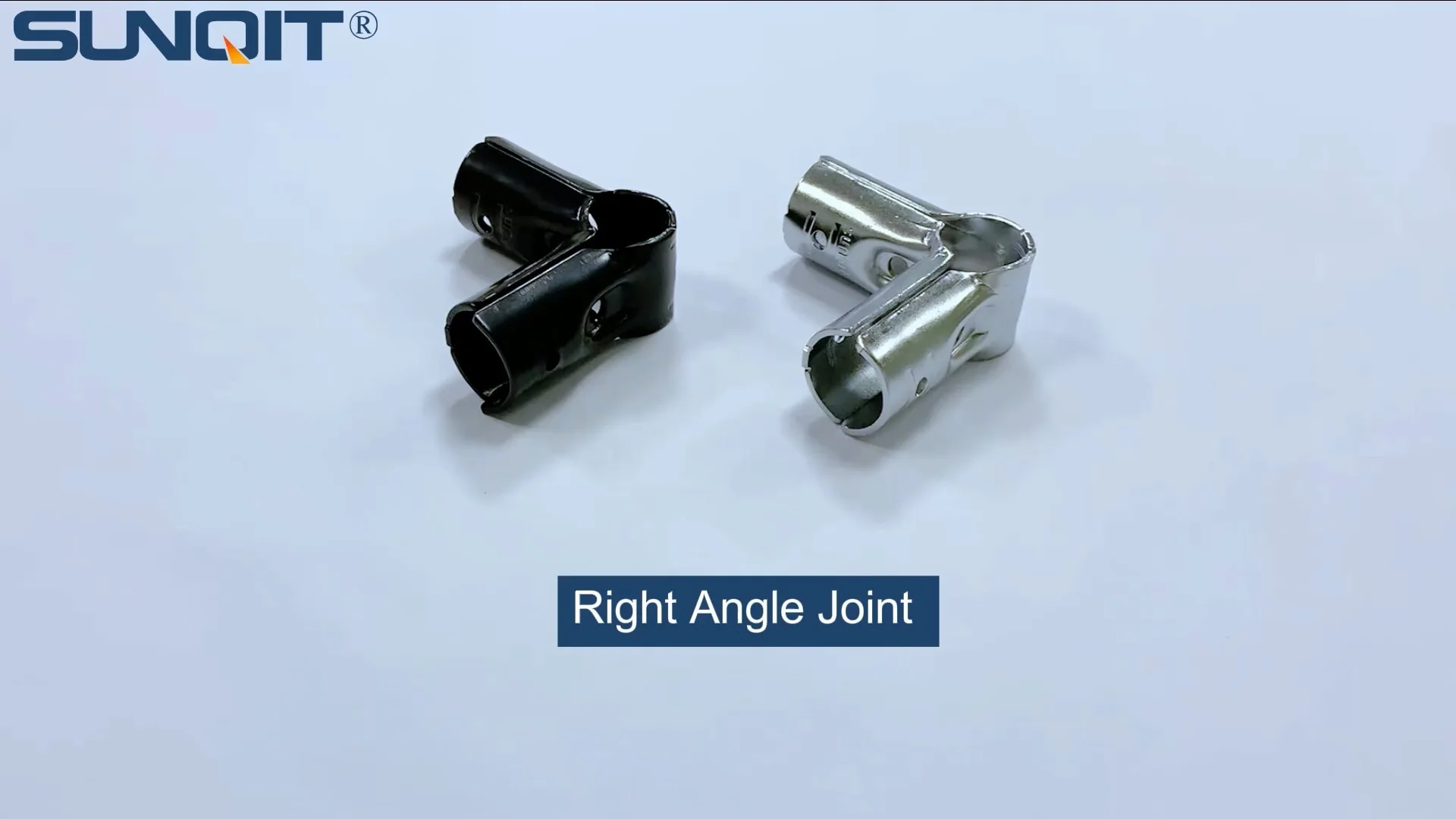
Three way lean pipe joint for 3 pcs 28MM lean pipe connection in straight angle, which used widely in workbench, flow rack, hand trolley frame connection.
Picture this: You walk into a manufacturing plant or a workshop, and instead of tripping over misplaced tools, squinting to read faded labels, or spending 10 minutes hunting for the right part, everything flows. Workers move with purpose, materials glide smoothly from one station to the next, and even new team members seem to know exactly where everything belongs. What's the secret? It might just start with something small—something as unassuming as a color-coded three way lean pipe joint.
The Heartbeat of a Lean Workspace: Why Organization Isn't Just About "Looking Neat"
We've all heard the phrase "lean system," but what does it really mean for the people on the ground? At its core, a lean system is about respect—respect for your team's time, energy, and peace of mind. When workspaces are disorganized, it's not just inefficiency that piles up; it's frustration. A worker who spends 15 minutes searching for a misplaced clamp isn't just wasting time—they're starting to feel undervalued, like their productivity doesn't matter. On the flip side, a workspace that's been thoughtfully organized with lean principles in mind feels like a well-tuned instrument: every part has a role, every movement has a purpose, and everyone can focus on what they do best.
But here's the thing: lean systems don't just happen. They're built—brick by brick, or in this case, pipe by pipe and joint by joint. And if the foundation of that system is shaky, the whole structure suffers. That's where modular components like lean pipe, workbenches, and roller tracks come in. They're the building blocks, but today, we're shining a light on a component that often flies under the radar: the three way lean pipe joint. And more specifically, how adding a splash of color to these joints is transforming how teams build, organize, and maintain their workspaces.
Meet the Unsung Hero: The Three Way Lean Pipe Joint
Let's start with the basics. A three way lean pipe joint is exactly what it sounds like: a small, durable connector that joins three lean pipes at once, forming stable, customizable structures. Think of it as the "cornerstone" of modular setups—whether you're building a workbench, a material rack, or a roller track system, chances are you'll need a three way joint to hold it all together. These joints are designed to be strong (they can handle the weight of tools, materials, even heavy machinery), yet flexible (you can disassemble and reconfigure them in minutes, no welding or special tools required).
But for years, most lean pipe joints came in one color—usually silver, black, or gray. Functional? Sure. But here's the problem: when every joint looks the same, even seasoned workers can struggle to remember which pipe connects where, especially in complex setups. Imagine trying to assemble a workbench with 20 joints, all identical. You might second-guess yourself: "Is this the joint for the upper shelf or the lower one?" "Does this pipe go left or right?" Those split-second hesitations add up, turning a 30-minute task into an hour-long headache.
Enter color-coding. It's not a new idea—hospitals use color-coded wristbands, kitchens use color-coded cutting boards, and offices use color-coded folders. But in the world of lean manufacturing, color-coded three way lean pipe joints are a game-changer. They turn "guesswork" into "second nature."

Color-Coding: Speaking the Language of Efficiency
Why colors? Because our brains process visual information faster than text. A bright red joint catches your eye in a split second; reading a tiny label takes longer, and if the label's smudged or facing the wrong way, it might as well not exist. Color-coding turns joints into "silent communicators"—they tell you what they're for, where they go, and even how to use them, without a single word.
Let's break down how this works in practice. Imagine walking into a workshop where every three way lean pipe joint is color-coded. Red joints? They mark high-priority zones, like assembly stations where materials need to move quickly. Blue joints? They're for tool storage areas, so you know at a glance where to grab your wrench or screwdriver. Green joints? Those signal material flow paths, guiding roller tracks that carry parts from one station to the next. It's like painting a roadmap directly onto the workspace—and everyone on the team, from veterans to new hires, can follow it.
| Joint Color | What It Means | Common Uses |
|---|---|---|
| Red | High-priority zones, critical workflows | Assembly workbenches, quality control stations |
| Blue | Tool storage and organization | Tool racks, pegboards, supply cabinets |
| Green | Material flow and supply routes | Roller tracks, conveyor systems, material racks |
| Yellow | Warning or caution zones | Edges of workbenches, moving parts, heavy equipment areas |
| Purple | Custom or team-specific zones | Team A's workbench, maintenance areas, prototype stations |
The beauty of this system is its simplicity. You don't need a training manual to understand it. A new employee can walk in, see a green joint, and think, "Okay, green is for materials—I should follow that path if I need to restock parts." A veteran worker can glance at a red joint and know, "This is the critical assembly line—no shortcuts here." It's universal, intuitive, and it cuts through the noise of a busy workspace.

From Joints to Workspaces: Real-World Impact
Let's get concrete. How does a color-coded three way lean pipe joint actually change day-to-day work? Let's take a common scenario: reconfiguring a workbench. Maybe your team needs to add a new shelf for larger tools, or rearrange the layout to accommodate a new project. Without color codes, this might involve grabbing a diagram, double-checking measurements, and triple-checking which joint goes where. With color codes? It's like following a recipe with step-by-step photos.
Take Maria, a production supervisor at a small electronics plant. "Before color-coded joints, reconfiguring our workbenches used to take forever," she says. "We'd have a team of two people spending an hour or more, and we'd still make mistakes—like putting the upper shelf too low, or the tool rack on the wrong side. Now, with red joints for the main frame, blue for the tool area, and green for the material shelf, it's a breeze. Last week, a new intern helped me reconfigure a bench in 20 minutes. He didn't even need the manual—he just followed the colors."
Another example: roller track systems. Roller tracks are essential for moving materials smoothly across a workspace—think of them as "conveyor belts" for small parts, boxes, or even finished products. But if the joints holding the roller track together are all the same color, aligning the track correctly can be tricky. A misaligned track means materials get stuck, workers have to stop and fix jams, and deadlines get pushed. With color-coded joints (say, green for the main track and yellow for the guide rails), alignment becomes foolproof. The green joints line up with the main frame, the yellow joints lock into the side rails, and suddenly, that roller track glides like butter.
And let's not forget training. Onboarding new employees is always a challenge, especially in fast-paced environments. But when your workspace "speaks" through colors, training becomes faster and more effective. New hires don't have to memorize 10 different joint types—they just need to remember, "Red = important, blue = tools, green = materials." It reduces stress, builds confidence, and gets them contributing to the team sooner.

Beyond the Joint: Building a Lean Ecosystem
Color-coded three way lean pipe joints don't work in a vacuum—they're part of a larger lean ecosystem, working alongside other components like aluminum profile, workbenches, and roller tracks. Let's talk about aluminum profile for a second. Aluminum profiles are sturdy, lightweight, and perfect for building durable structures (think workbench frames or material racks). When you pair color-coded lean pipe joints with aluminum profile, you get the best of both worlds: strength and flexibility. The aluminum provides the backbone, and the color-coded joints make it easy to customize the setup to your team's needs.
For example, imagine building a material rack with three shelves. You use aluminum profile for the vertical supports (they're strong enough to hold heavy boxes), and color-coded three way joints to attach the horizontal shelves. Green joints for the bottom shelf (where you store bulk materials), blue joints for the middle shelf (tools and supplies), and red joints for the top shelf (finished products ready for shipping). Not only is the rack sturdy, but anyone walking by can look at the colors and know exactly where to find (or place) items. No more "Is this box supposed to go on the top or bottom shelf?" debates.
The Human Side of Lean: When Workspaces Feel "Designed for People"
At the end of the day, lean systems are about people. A color-coded joint might seem like a small detail, but small details add up to big changes in how people feel about their work. When a workspace is organized with thought and intention—when someone took the time to say, "We want this to be easy for you"—it sends a message: "Your time matters. Your effort matters. We care about making your job better."
Think about it: How do you feel when you walk into a space that's chaotic? Stressed? Overwhelmed? Now, how do you feel when you walk into a space that's organized, intuitive, and even a little "smart"? Calm. Focused. Ready to tackle the day. That's the emotional impact of good design—and color-coded three way lean pipe joints are a part of that design. They're not just tools; they're a sign that the people in charge are paying attention, that they value their team's well-being as much as they value productivity.
Choosing the Right Color-Coded Joints: What to Look For
If you're thinking, "This sounds great—I want to try color-coded three way lean pipe joints," here's what to keep in mind. First, consistency. Look for a supplier that offers a clear, standardized color system (like the red/blue/green/yellow we discussed earlier). The last thing you want is one batch of red joints being "cherry red" and the next being "maroon"—confusion will creep right back in.
Second, durability. The color should hold up to daily wear and tear—scratches, spills, even the occasional bump from a forklift. Look for joints with a high-quality, fade-resistant coating (powder coating is usually a safe bet). You don't want the color to chip off after a month, turning your "blue tool joint" into a "half-blue, half-silver mystery joint."
Third, compatibility. Make sure the color-coded joints work with your existing lean pipe, aluminum profile, and roller track systems. Most lean pipe joints are designed to fit standard pipe sizes (like 28mm or 30mm), but it never hurts to double-check. The goal is to integrate seamlessly, not start from scratch.
Wrapping Up: Small Joints, Big Change
At the end of the day, a color-coded three way lean pipe joint is a small thing. It's not flashy, it doesn't have any buttons or screens, and it won't make headlines. But in the world of lean systems, small things add up to big results: less time wasted, fewer mistakes, happier workers, and a workspace that feels like it's working with you, not against you.
So the next time you walk into a workshop or a manufacturing plant, take a closer look at the joints holding everything together. If you see a splash of color—red, blue, green, yellow—chances are, that's a space that's been designed with intention. A space where someone thought, "How can we make this easier for the people who work here?" And that, more than any tool or technology, is the true spirit of a lean system.
Because at the end of the day, lean isn't just about efficiency. It's about respect—for your team, for your work, and for the belief that even the smallest details can make a big difference.