- Company Articles
- Products and Technology
- Product knowledge
- Color Options for 3060 National Standard Profile A: Industrial Design Trends

Color Options for 3060 National Standard Profile A: Industrial Design Trends
Related Product
3060 National Standard Profile A
Workbench, production line, logistic rack, warehouse rack Industry: Manufacturer workshop, Automobile, Electronic, Assembling, logistic
Walk into any modern manufacturing facility, tech lab, or warehouse today, and you'll notice something different from the drab, monochrome industrial spaces of the past. These environments are brighter, more intentional, and—dare we say—designed with people in mind. At the heart of this transformation? Aluminum extrusion profiles, the unsung heroes of industrial infrastructure. Among these, the 3060 National Standard Profile A stands out as a versatile workhorse, and lately, its color options have become a hot topic in industrial design circles. Let's dive into why color matters, what trends are shaping these choices, and how this humble profile is redefining the look and feel of workspaces everywhere.
Understanding the 3060 National Standard Profile A
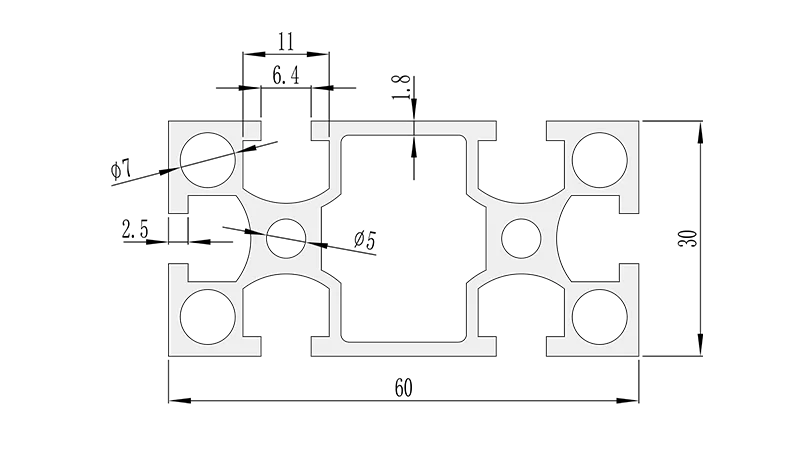
First, let's get to know the star of the show: the 3060 National Standard Profile A. If you're not familiar with aluminum profiles, think of them as the building blocks of industrial frames—they're lightweight, strong, and infinitely customizable. The "3060" refers to its dimensions: 30mm in width and 60mm in height, making it a medium-duty option that balances stability with flexibility. Crafted from high-grade aluminum alloy, it's resistant to corrosion, easy to assemble, and compatible with a wide range of aluminum profile accessories, from connectors to end caps.
What makes this profile a favorite among designers and engineers? Its T-slot design. Those grooves running along its length aren't just for show—they let you attach accessories without welding or drilling, turning a basic frame into a workbench, a material rack, or even a custom conveyor system in minutes. And while its functionality is impressive, it's the recent focus on color that's elevating its role from "utilitarian" to "design-forward."
Why Color Matters in Industrial Design
Gone are the days when industrial spaces prioritized function over form. Today, we know that the environment directly impacts employee morale, productivity, and even safety. Color, in particular, plays a surprisingly powerful role. Think about it: a workspace bathed in harsh, clinical white might feel sterile, while a room with warm, muted tones can reduce stress. Bright accents can draw attention to critical areas (like emergency exits or tool stations), and color-coding can streamline workflows by visually separating zones (e.g., assembly vs. packaging).
In short, color isn't just about aesthetics—it's a tool. And for the 3060 National Standard Profile A, which is used in everything from factory workbenches to lab equipment, getting the color right can turn a generic setup into a space that feels intentional and tailored to its purpose.
Current Color Trends for 3060 National Standard Profile A
So, what colors are leading the pack for this profile? Let's break down the trends we're seeing in 2024 and beyond.
1. Neutral Dominance: The Rise of "Quiet Confidence"
Neutrals are nothing new, but their role has evolved. Today's industrial designers aren't reaching for plain silver or basic gray—they're opting for "warm neutrals" that add subtle depth. Think soft whites with a hint of cream, light grays with beige undertones, or even pale taupe. These colors create a calm backdrop that doesn't compete with tools, machinery, or digital screens, making them ideal for workbenches where focus is key.
Take a tech manufacturing line, for example. A workbench built with 3060 National Standard Profile A in "Cloud White" feels bright and clean, reducing eye strain during long shifts. Pair it with aluminum profile accessories in matte black, and you've got a look that's modern but not cold—perfect for precision work like circuit board assembly.
2. Bold Accents: Pop of Personality
While neutrals set the stage, bold accents are stealing the spotlight. Designers are using vibrant hues sparingly to highlight key areas or add brand personality. Think safety yellow for material flow paths, deep blue for tool storage zones, or even forest green for sustainability-focused brands. These pops of color aren't random—they're strategic.
For instance, a lean system in an automotive plant might use 3060 profiles in "Slate Gray" for the main frame, then add bright orange connectors to mark where parts should be staged. This visual cue helps workers quickly identify workflow steps, cutting down on errors and speeding up production. It's functional design with a dash of energy.
3. Metallics: Timeless with a Twist
Metallic finishes are making a comeback, but not in the shiny, reflective way of the past. Brushed aluminum, matte nickel, and even copper-toned coatings are trending for their ability to add sophistication without overwhelming a space. These finishes work especially well in high-end settings, like medical device labs or tech R&D facilities, where aesthetics and professionalism go hand in hand.
Imagine a cleanroom workbench built with 3060 National Standard Profile A in "Brushed Silver." The soft metallic sheen resists fingerprints, looks sleek, and complements the sterile environment—proving that industrial design can be both functional and refined.
4. Custom Color Matching: Brand Identity in Every Beam
Here's where it gets really exciting: custom color matching. More and more suppliers are offering powder coating services that let you match the profile's color to your brand's Pantone code. Suddenly, a basic material rack isn't just a storage solution—it's a brand ambassador. A beverage company might use 3060 profiles in their signature red to build production line frames; a tech startup could opt for their logo's electric blue for office workstations. It's a small detail that turns a generic workspace into something uniquely "you."
The Functional Impact of Color Choices
We've talked about the "why" of color trends, but let's dig into the "how"—how do these color options actually improve day-to-day operations? Let's break it down with real-world examples.
Case Study 1: A Electronics Assembly Workbench
A mid-sized electronics manufacturer was struggling with disorganized workbenches. Tools were scattered, parts got mixed up, and new employees took weeks to get up to speed. Their solution? A custom workbench built with 3060 National Standard Profile A in "Soft Gray" as the base. They added:
- Light blue aluminum profile accessories (shelves and tool hooks) for frequently used tools.
- Yellow guide rails along the edge to mark where circuit boards should rest during assembly.
- White end caps to cover sharp edges, doubling as visual markers for "completed" zones.
The result? A 20% reduction in errors, faster onboarding for new hires, and employees reporting less eye strain. The color-coding turned chaos into clarity—proving that color isn't just pretty; it's practical.
Case Study 2: A Lean System for Food Packaging
A food packaging plant wanted to optimize their lean system to reduce waste and speed up packaging times. They chose 3060 National Standard Profile A in "Cream White" for the main structure (to reflect light and keep the space bright) and added:
- Green roller tracks for "unprocessed" ingredients.
- Orange tracks for "in-progress" packaging.
- Purple tracks for "quality checked" products.
Workers now follow the color flow from green to purple, eliminating confusion about which products need attention. Plus, the white profiles make it easier to spot spills or debris, improving hygiene standards. It's a lean system that's as easy to follow as a traffic light.
Color Options and Aluminum Profile Accessories: A Perfect Pair
You can't talk about the 3060 National Standard Profile A's color without mentioning its sidekicks: aluminum profile accessories. These small but mighty parts—connectors, end caps, hinges, and more—are now available in a rainbow of colors, letting you create cohesive or contrasting designs. Want a monochromatic look? Match your profile and accessories in "Charcoal Gray." Prefer contrast? Pair "Sunshine Yellow" profiles with black connectors for a bold statement.
Take end caps, for example. These simple pieces cover the ends of profiles, hiding sharp edges and giving a finished look. Now, they come in colors like "Sky Blue" or "Lime Green," turning a functional necessity into a design detail. Or consider casters: adding lockable casters in red to a mobile workbench built with silver profiles doesn't just make it movable—it adds a pop of color that makes it easy to spot in a busy warehouse.
The best part? Mixing and matching is encouraged. There's no rule that says all accessories have to match the profile. In fact, designers often use contrasting colors to create visual hierarchy. A white workbench with gray shelves and blue tool hooks? That's intentional—each color signals a different function, making the space intuitive to use.
Choosing the Right Color for Your Space: A Practical Guide
With so many options, how do you pick the right color for your 3060 National Standard Profile A? Here are a few tips to guide you:
1. Consider the Environment
Is your space well-lit? Dark colors can make a dim room feel smaller, while light colors reflect light and open it up. Do you work with messy materials? Light neutrals might show stains, so a darker gray or beige could be smarter. Think about daily use—function first, then fashion.
2. Align with Brand or Culture
Your workspace is an extension of your brand. If your company values innovation, bold accents might fit. If sustainability is key, earth tones like "Olive Green" or "Sandy Beige" could resonate. Don't forget employee culture, too—poll your team! They're the ones using the space daily, and their input can lead to colors that boost morale.
3. Test Before Committing
Colors look different under factory lights than they do on a screen. Ask your supplier for color swatches or sample profiles, and test them in your actual workspace at different times of day. You might be surprised how "Navy Blue" shifts from morning to afternoon light!
4. Plan for the Future
Trends come and go, but your 3060 profiles are built to last. If you're worried about colors going out of style, stick with neutrals for the main structure and use accessories for trendy accents. That way, you can swap out a few parts (like connectors or end caps) down the line instead of rebuilding the whole frame.
The Future of Color in Industrial Design
What's next for color options in aluminum extrusion profiles? We're already seeing exciting innovations. One trend to watch is "biophilic colors"—earthy tones inspired by nature, like forest greens, sky blues, and terracotta. These colors aim to connect industrial spaces with the outdoors, reducing stress and boosting creativity. Imagine a warehouse with 3060 profiles in "Moss Green" and "Stone Gray," mimicking a forest floor—suddenly, a long shift feels a little less industrial.
Another trend is smart color technology. Some suppliers are experimenting with thermochromic coatings that change color when temperatures rise, alerting workers to overheating machinery. Or photochromic finishes that darken in bright light, reducing glare on workbenches. These aren't just cool party tricks—they're functional tools that add a new layer of safety and efficiency.
And let's not forget customization. As demand grows, we'll likely see even more options, from gradient colors to printed patterns (yes, you could theoretically have a profile with your company logo printed on it). The sky's the limit when it comes to making industrial spaces feel unique and intentional.
Color Psychology in Action: A Comparative Table
| Color | Best For | Psychological Impact | Complementary Accessories |
|---|---|---|---|
| Cloud White | Cleanrooms, labs, precision workbenches | Calming, brightens space, reduces eye strain | Gray shelves, black tool hooks |
| Slate Gray | Manufacturing lines, lean systems | Professional, neutral, hides wear | Yellow connectors, orange casters |
| Navy Blue | Tech workspaces, office furniture | Trustworthy, focused, reduces stress | Silver hinges, white end caps |
| Safety Yellow | Material flow paths, emergency zones | Energizing, attention-grabbing, signals caution | Black brackets, gray roller tracks |
| Brushed Silver | High-end labs, medical equipment | Sophisticated, clean, reflective (reduces shadows) | Chrome connectors, clear end caps |
Final Thoughts: Color as a Catalyst for Change
The 3060 National Standard Profile A has always been a reliable choice for industrial design, but its color options are transforming it into something more: a catalyst for creating better workspaces. No longer just a frame, it's a tool that shapes how we feel, work, and interact with our environment. Whether you're building a lean system, a workbench, or a custom storage solution, the right color can turn a functional setup into one that inspires, energizes, and simplifies.
So, the next time you're planning an industrial project, don't overlook the color of your aluminum extrusion profiles. Think about the mood you want to set, the workflows you want to streamline, and the brand you want to reflect. With the 3060 National Standard Profile A and its endless color possibilities, you're not just building a frame—you're building a space that works as hard as your team does.
After all, industrial design isn't just about function. It's about creating spaces that make people proud to show up, eager to collaborate, and able to do their best work. And with the right color choices, that's a goal well within reach.