- Company Articles
- Products and Technology
- Product knowledge
- Color Options for 4040F EU Standard Aluminum Profile: Matching Industry-Specific Aesthetics

Color Options for 4040F EU Standard Aluminum Profile: Matching Industry-Specific Aesthetics
Related Product
4040F EU Standard Aluminum Profile
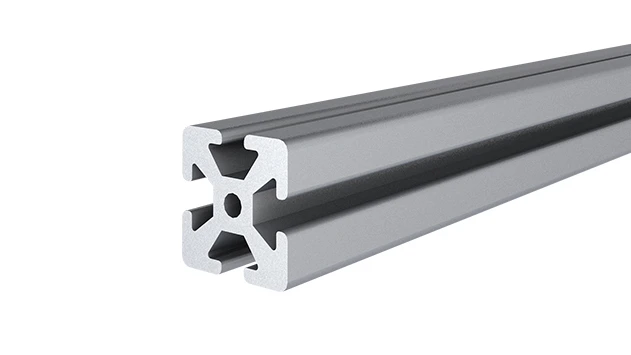
4040F is a 4.00x4.00 CM fractional 40 series square extrusion T-slot profile with four side open T-slots, each side with 4.00cm face. The profile has align-a-grooves to assist in aligning connecting profiles.
Walk into any modern factory, warehouse, or workshop, and you'll likely spot them: sleek, modular structures holding tools, parts, and equipment. Chances are, those structures are built with aluminum profiles—and if they're sturdy, versatile, and designed to last, there's a good bet they include the 4040F EU standard aluminum profile. It's the unsung hero of industrial design, the backbone of workbenches, flow racks, and material racks that keep operations running smoothly. But here's the thing: while we often focus on its strength or modularity, there's another detail that quietly shapes how these profiles perform in the real world: color.
Color isn't just about making a workspace look "nice." In industrial settings, it's a tool—one that influences everything from employee morale to brand identity, from safety protocols to workflow efficiency. And when it comes to the 4040F profile, choosing the right color can turn a functional setup into one that feels intentional, cohesive, and tailored to your industry's unique needs. Let's dive into why color matters, explore the most common options for 4040F profiles, and how to match them to the aesthetics and demands of your workspace.
First Things First: What Makes 4040F EU Standard Aluminum Profile So Popular?
Before we talk colors, let's get to know the star of the show: the 4040F EU standard aluminum profile. If you've ever assembled a workbench, organized a flow rack, or built a material rack (like the handy Material Rack B with 3 rows and 3 floors), you've probably worked with something similar. The "4040" refers to its dimensions—40mm by 40mm—making it sturdy enough to support heavy loads but lightweight enough for easy assembly. The "F" denotes its specific groove design, which works seamlessly with aluminum profile accessories like joints, end caps, and brackets, letting you customize structures without welding.
What sets it apart? Versatility. It's used in everything from simple workbenches in small garages to complex ESD workstations in electronics factories, and even large-scale flow racks in distribution centers. Its modular design means you can tweak, expand, or repurpose it as your needs change. But here's where color comes in: when you're building these structures, the profile's color ties the whole look together. A mismatched or thoughtless color choice can make even the most well-designed setup feel haphazard. On the flip side, the right color can your brand, boost safety, and even make daily tasks feel a little smoother.
Why Color Matters in Industrial Design: More Than Just a Pretty Finish
At first glance, you might think, "It's just metal—why does the color matter?" But anyone who's spent time in a busy workspace knows better. Color impacts how we perceive a space, how we move through it, and even how productive we feel. Let's break down the key reasons color choices for 4040F profiles deserve your attention:
- Brand Identity: Your workspace is an extension of your brand. If your company uses specific colors in its logo or marketing, incorporating those hues into your 4040F structures (like workbenches or material racks) reinforces consistency. Imagine walking into a tech startup with bright blue 4040F workbenches that match their logo—it feels intentional, not random.
- Safety & Organization: Color coding can reduce errors and keep workflows on track. For example, yellow accents on flow racks might signal "fast-moving parts," while red could mark "restricted areas." Even subtle differences, like gray profiles for maintenance zones vs. silver for production, help employees navigate the space intuitively.
- Psychology & Morale: Colors affect mood. A sterile, all-silver workspace might feel cold, while warm-toned accents (think soft orange or blue) can make long shifts feel more manageable. In high-precision fields like electronics, where focus is critical, muted colors (like black or dark gray) on ESD workstations can minimize distractions.
- Functionality: Some colors hide wear and tear better than others. A silver profile might mask scratches and grease in a mechanic's shop, while white profiles in a food processing plant make spills and dirt easier to spot—keeping spaces cleaner and safer.

Exploring 4040F Color Options: From Classic to Custom
4040F EU standard aluminum profiles come in a range of colors, each with its own personality and practical perks. Let's take a closer look at the most popular options, their best uses, and how they hold up in real-world settings.
| Color | Best For Industries | Key Benefits | Potential Drawbacks | Coordinating Accessories |
|---|---|---|---|---|
| Silver/Metallic | General manufacturing, automotive, warehouses | Timeless, hides scratches and grease, matches any setup | Shows fingerprints; can feel "basic" without accents | Silver joints, black caster wheels, gray end caps |
| Black | Electronics (ESD workstations), tech, high-end manufacturing | Sleek, modern, hides dust, minimizes distractions | Scratches and dents are more visible; can feel dark in low light | Black ESD wheels, silver brackets, black aluminum profile accessories |
| White | Healthcare, food processing, cleanrooms | Bright, reflective, makes spaces feel larger; easy to spot contaminants | Shows dirt and stains; requires frequent cleaning | White end caps, clear plastic roller tracks, stainless steel joints |
| Gray | Labs, offices, logistics, R&D | Neutral, balances warmth and professionalism; hides minor dirt | Less vibrant than custom colors; can feel "plain" in creative spaces | Gray caster accessories, yellow plastic roller tracks (for contrast) |
| Custom (RAL Codes) | Branded spaces, retail, specialized manufacturing | Tailored to brand identity; unique and memorable | Longer lead times; higher cost for small batches | Accessories in matching or complementary RAL colors |
Silver/Metallic: The "Everyday Hero" of Profiles
Silver (or metallic) is the OG of 4040F colors—and for good reason. It's the default finish for most aluminum profiles, thanks to its raw, industrial look that fits into just about any workspace. Think of it as the "khaki pants" of industrial design: not flashy, but reliable and versatile.
In automotive workshops, silver 4040F profiles on workbenches and flow racks blend right in with tools, machinery, and concrete floors. They hide oil stains and scratches better than lighter colors, which is a lifesaver in high-traffic areas. In warehouses, silver material racks (like the 3-row, 3-floor Material Rack B) look cohesive next to metal shelving and shipping containers, creating a unified backdrop for labeled bins and boxes.
The downside? It's not the most exciting choice. If you want your workspace to stand out or reflect a modern brand, silver alone might feel a bit dated. Pairing it with colored accessories—like yellow plastic roller tracks on flow racks or red end caps on workbenches—can add personality without losing its practicality.
Black: Sleek, Modern, and Perfect for High-Tech Spaces
Black 4040F profiles are having a moment—and it's easy to see why. They exude professionalism and modernity, making them a top pick for electronics manufacturers, tech startups, and any space where "clean and cutting-edge" is the vibe. Walk into an ESD workstation area, and you'll often find black profiles paired with antistatic mats and dark gray work surfaces—creating a focused, distraction-free zone where precision matters most.
Black profiles also have a practical side: they hide dust better than silver or white, which is a big plus in environments where cleanliness is key (but constant wiping isn't feasible). In a busy electronics lab, for example, a black flow rack loaded with circuit boards looks neat and intentional, even on a chaotic day. The tradeoff? Scratches and dents show up more prominently on black. If your setup sees heavy use (like a workbench in a repair shop), you might want to opt for a matte black finish, which is more forgiving than glossy.
White: Bright, Clean, and Ideal for Sensitive Industries
White 4040F profiles are all about clarity and hygiene. In healthcare facilities, pharmaceutical labs, and food processing plants, white is non-negotiable—it signals cleanliness and compliance with strict safety standards. Imagine a Material Rack B (3 row, 3 floor) in white, stocked with sterile medical supplies: it feels trustworthy and precise, which is exactly what patients and regulators want to see.
White also has a psychological benefit: it reflects light, making small or windowless spaces feel larger and more open. In a cramped lab with limited natural light, white profiles on workbenches and storage racks can prevent the space from feeling claustrophobic. The catch? White shows every smudge, spill, or fingerprint. If you go with white, plan for regular cleaning—especially in high-traffic areas like loading docks or assembly lines.
Gray: The "Swiss Army Knife" of Neutral Colors
Gray is the middle child of 4040F colors: not as flashy as black, not as stark as white, but endlessly adaptable. It's the go-to for spaces that need to feel professional without being too formal—think logistics hubs, R&D labs, or office-workshop hybrids. A gray workbench in a startup's prototyping area, for example, balances the creativity of the team with the functionality of the tools.
Gray also plays well with others. It pairs effortlessly with bold accents (like blue or green aluminum profile accessories) for a pop of color, or keeps things calm with muted tones. In a warehouse using flow racks to sort packages, gray profiles with color-coded labels (red for urgent, green for standard) create a system that's easy to follow at a glance. And unlike white, gray hides minor dirt and stains, making it a low-maintenance choice for busy teams.
Custom Colors: When "One Size Fits All" Isn't Enough
Sometimes, off-the-shelf colors just won't cut it. Maybe your brand has a signature teal that you want to showcase on your workbenches, or you need bright orange profiles to align with safety protocols in a construction zone. That's where custom colors come in. Most suppliers offer 4040F profiles in custom RAL codes (a standard color-matching system), letting you dial in exactly the hue you need.
Custom colors are a game-changer for branded spaces. Imagine a brewery using copper-colored 4040F profiles for their production line workbenches, tying into their rustic brand aesthetic. Or a children's toy manufacturer with bright yellow material racks that feel playful and inviting. The downside? Custom colors often require minimum order quantities and longer lead times, so they're best for larger projects where cohesion is a priority.
Matching Colors to Your Industry: Real-World Examples
Choosing a color isn't just about personal preference—it should align with your industry's norms, challenges, and goals. Let's walk through a few scenarios to see how 4040F color choices play out in different workspaces.
Scenario 1: Electronics Manufacturing (ESD Workstations)
Electronics assembly demands precision, cleanliness, and focus. ESD workstations, designed to prevent static damage to sensitive components, need to feel calm and distraction-free. Black 4040F profiles are a popular choice here: they pair seamlessly with black ESD mats, gray antistatic flooring, and silver aluminum profile accessories (like joints and brackets). The dark color minimizes visual clutter, helping technicians stay focused on tiny circuit boards. Plus, black hides dust and lint—critical in a space where even a speck can ruin a product.
Pro tip: Add subtle accents with ESD-safe accessories, like blue caster wheels or white end caps, to break up the darkness without overwhelming the space.
Scenario 2: Healthcare (Material Racks & Cleanrooms)
In hospitals or pharmaceutical labs, cleanliness is non-negotiable. White 4040F profiles are the gold standard for material racks (like Material Rack B with 3 rows and 3 floors) and workbenches. White reflects UV light used in sanitization processes, and any spills or contaminants show up immediately—making it easier to maintain sterile conditions. Pair white profiles with stainless steel accessories (like joints and brackets) for a look that feels clinical and trustworthy. For added contrast, use clear plastic roller tracks on flow racks to keep supplies visible and accessible.
Scenario 3: Automotive Repair (Workbenches & Flow Racks)
Automotive shops are tough on equipment—grease, oil, and heavy tools are part of the daily grind. Silver or metallic 4040F profiles are ideal here: they hide stains and scratches, and their industrial look fits right in with machinery and tool chests. A silver workbench with yellow plastic roller tracks (to highlight tool bins) and black caster wheels creates a setup that's both functional and easy to keep organized. Plus, silver profiles won't clash with the shop's existing equipment, which is often painted in bold colors (think red toolboxes or blue lifts).
Scenario 4: E-Commerce Warehousing (Flow Racks & Material Handling)
Warehouses thrive on efficiency, and color coding is a secret weapon for keeping workflows fast and error-free. Gray 4040F profiles are a great base here—neutral enough to work with multiple color accents. For example, use green roller tracks on flow racks for "incoming" inventory, yellow for "processing," and red for "shipped." Gray profiles let these colors pop without competing, making it easy for pickers to navigate the space at a glance. Add gray caster accessories and white end caps to keep the look cohesive, even as the warehouse grows.
How to Choose the Right Color for Your 4040F Setup: A Step-by-Step Guide
Feeling overwhelmed? Don't worry—choosing a color for your 4040F profiles doesn't have to be stressful. Follow these steps to narrow down your options and land on a choice that works for your space, team, and industry.
Step 1: Define Your Priorities
Start by asking: What matters most? Branding? Safety? Low maintenance? For example, a startup might prioritize brand colors to stand out, while a food plant will focus on cleanliness (white) and a repair shop on durability (silver). Jot down your top 2-3 priorities to guide your decision.
Step 2: Consider Your Workspace's Lighting
Colors look different under fluorescent lights than they do in natural sunlight. A white profile that shines in a windowed office might feel harsh under cool warehouse lighting, while a black profile could make a dimly lit corner feel even darker. If possible, order color swatches and test them in your actual workspace at different times of day.
Step 3: Think About Accessories
Your 4040F profiles won't exist in a vacuum—they'll be paired with aluminum profile accessories, caster wheels, roller tracks, and more. Check if your supplier offers accessories in colors that coordinate with your profile choice. For example, if you pick black profiles, make sure black ESD wheels or gray brackets are available. Mismatched accessories can undermine even the best color choice.
Step 4: Test Durability in Your Environment
Will your profiles be exposed to chemicals? Heavy abrasion? Grease? A white profile might look great in a healthcare lab but fail in a mechanic's shop, where oil stains would be impossible to hide. Ask your supplier about finish durability—some colors (like matte black) are more scratch-resistant than others (like glossy white).
Step 5: Get Team Feedback
Your team uses the workspace every day—their input matters! Run color options by a few employees and ask: Does this color make the space feel brighter? More organized? Less stressful? A color that your team loves will boost morale and make them more likely to take pride in keeping the space clean.
Final Thoughts: Color as a Tool for Better Workspaces
At the end of the day, 4040F EU standard aluminum profile color choices are about more than aesthetics—they're about creating a workspace that works for you. Whether you opt for classic silver, sleek black, clean white, versatile gray, or a custom hue, the right color can enhance brand identity, improve safety, and even make long workdays feel a little lighter.
Remember: There's no "perfect" color—only the one that fits your industry, your team, and your goals. Take the time to test options, consider accessories, and think about how the color will evolve with your space. With a little planning, your 4040F profiles won't just hold up your workbench or flow rack—they'll elevate your entire workspace.