- Company Articles
- Products and Technology
- Product knowledge
- Color Options for Gusset ALP 4040: Customization for Branding and Safety Coding

Color Options for Gusset ALP 4040: Customization for Branding and Safety Coding
Related Product
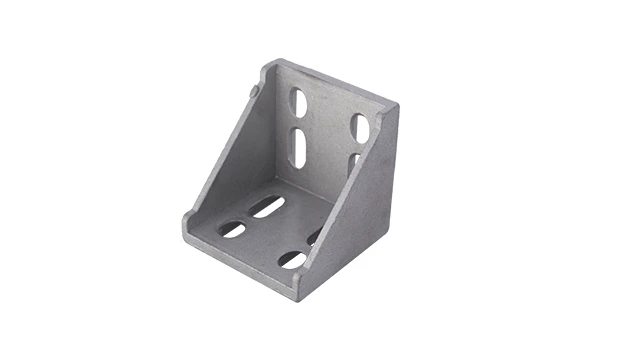
Gusset ALP 4040
The 4040 bracket/Gusset is an external fastening method that creates a 90 degree connection. 4040 means this size is used for 40 series aluminum profile with a quick connection by bolt and nut. It is a lightweight bracket that requires no machining servic
In the world of industrial design and manufacturing, every component tells a story—from the robustness of the materials to the precision of the engineering. But there's one element that often flies under the radar, yet wields immense power: color. Today, we're diving into a component that's small in size but big in impact: the Gusset ALP 4040. Specifically, we're exploring how its color options aren't just about aesthetics—they're strategic tools for branding and safety coding that can transform workspaces, boost efficiency, and even strengthen a company's identity. Whether you're outfitting a lean system on the factory floor, building a custom workbench, or integrating aluminum profile components into your operations, understanding the "why" behind color choices for Gusset ALP 4040 will help you make decisions that go beyond looks.
Let's Start with the Basics: What Even Is a Gusset ALP 4040?
Before we get into the rainbow of possibilities, let's ground ourselves in what a Gusset ALP 4040 actually is. If you've ever worked with aluminum extrusion profile systems—think workbenches, material racks, or assembly lines—you've likely encountered gussets. These are small, angular plates (often triangular or square) designed to reinforce joints where two or more aluminum profiles meet. They add rigidity, prevent wobbling, and ensure the structure can handle the daily wear and tear of industrial use.
The "ALP 4040" part? That refers to the specific size and compatibility. It's engineered to pair seamlessly with 4040 aluminum profiles—the workhorses of the industrial world, known for their versatility and strength. So, when we talk about Gusset ALP 4040, we're talking about a critical supporting player in the backbone of your workspace. It's not the star of the show, but try building a stable workbench or a durable flow rack without it, and you'll quickly realize its importance.
Now, why does color matter for something as utilitarian as a gusset? Because in industrial settings, every detail serves a purpose. Color isn't just about making things "look nice"—it's a language. It communicates brand identity, guides workers through complex spaces, and even warns them of potential hazards. And when that color is applied to a component as widely used as the Gusset ALP 4040, its impact multiplies.
The Hidden Power of Color in Industrial Components
Walk into any modern manufacturing facility, and you'll notice a pattern: color is everywhere. From the bright yellow of caution signs to the sleek blue of a company's logo emblazoned on machinery, hues are hard at work behind the scenes. But why? Because humans are visual creatures. We process color faster than text, and it triggers emotional and cognitive responses that words alone can't match. In a busy factory or warehouse—where workers are focused on speed, precision, and safety—color becomes a silent supervisor, guiding actions and reducing errors.
For components like the Gusset ALP 4040, color serves two primary roles: branding and safety coding. Let's break them down.
Branding: Color as a Tool for Identity
In today's competitive market, brand identity isn't confined to marketing materials or product packaging. It's in the walls of your office, the uniforms of your team, and yes—even the components of your workspace. When employees and visitors step into your facility, they should feel like they're "in your world." Custom colors on everyday components like gussets help create that cohesion.
Imagine a tech company known for its bold, innovative brand—let's call them "NexGen Innovations" with a signature electric blue logo. Now, picture their factory floor: aluminum profile workbenches, flow racks, and assembly stations, all accented with Gusset ALP 4040 in that same electric blue. Suddenly, even the smallest parts are reinforcing the brand message: "We're NexGen—innovative, precise, and unapologetically bold." It's a subtle touch, but over time, it builds a sense of pride and unity among employees. They don't just work at NexGen; they work in a space that feels uniquely theirs.
And it's not just about internal morale. Clients, partners, or auditors visiting the facility will notice the attention to detail. A workspace that's color-coordinated with the brand feels intentional and professional—it signals that the company cares about every aspect of its operation, right down to the gussets holding up the workbenches. That level of consistency builds trust.
Safety Coding: Color as a Language of Caution and Clarity
If branding is about identity, safety coding is about survival—literally. In fast-paced industrial environments, where heavy machinery, moving parts, and high-traffic zones are the norm, confusion can lead to accidents. That's where color coding comes in. It's a universal language that transcends language barriers, training levels, and even fatigue. A red component might signal "danger—keep away," while a green one could mean "safe to touch" or "this area is for finished products only."
The Gusset ALP 4040, being a component that's visible at joint intersections (think corners of workbenches, edges of material racks, or connections on conveyor systems), is perfectly positioned to contribute to this safety ecosystem. For example, in a warehouse where forklifts and pedestrians share space, gussets painted bright yellow could mark zones where foot traffic is high, alerting drivers to slow down. In a chemical processing plant, red gussets might denote areas with hazardous materials, ensuring workers take extra precautions when near those structures.
Regulatory bodies like OSHA (Occupational Safety and Health Administration) even have guidelines for color use in industrial settings. While these standards are often focused on larger equipment or signage, extending them to smaller components like gussets creates a more cohesive safety net. When every detail aligns with the color code, workers don't have to second-guess themselves. They see a color, recognize its meaning instantly, and act accordingly.

Popular Color Options for Gusset ALP 4040: A Palette for Purpose
Now that we understand why color matters, let's explore which colors are most commonly used for Gusset ALP 4040—and what they're trying to achieve. While custom color matching is always an option (more on that later), most suppliers offer a range of standard hues tailored to the dual needs of branding and safety. Here's a breakdown of the most popular choices, along with their typical applications:
| Color | Primary Use Case | Example Scenarios |
|---|---|---|
| Safety Yellow | Safety Coding (Caution, High-Traffic Zones) | Used on gussets near walkways, loading docks, or areas where machinery and pedestrians interact. Aligns with OSHA standards for "warning" colors. |
| Brand-Specific Hues | Branding (Identity Reinforcement) | Custom-matched to a company's logo color (e.g., Coca-Cola red, FedEx purple). Used across all Gusset ALP 4040 components to create a cohesive workspace. |
| Industrial Grey | Neutral Branding, Subtle Integration | A go-to for companies that prefer a clean, understated look. Blends with most aluminum profiles and allows other colors (like safety signs) to stand out. |
| Signal Red | Safety Coding (Danger, Hazardous Areas) | Marks gussets in zones with electrical hazards, heavy machinery pinch points, or toxic material storage. Immediately grabs attention to prevent accidents. |
| Forest Green | Safety Coding (Safe Zones, Finished Goods) | Used in areas where products are inspected, packaged, or stored after completion. Signals "no active work here—proceed with care to avoid damage." |
| Navy Blue | Branding (Professionalism, Trust) | Popular in industries like aerospace or medical manufacturing, where precision and reliability are key. Conveys stability and attention to detail. |
Of course, these are just the basics. Some suppliers offer metallic finishes (like brushed silver or matte black) for a more modern aesthetic, or even two-tone options (e.g., a safety yellow base with a brand blue stripe) for components that need to serve both purposes. The key is to align the color with its intended message—don't use safety red for branding unless your brand color is red and the component is in a non-hazardous area (confusion is the last thing you want).

Real-World Impact: How Colorful Gussets Transform Workspaces
To truly grasp the power of color in Gusset ALP 4040, let's look at a few real-world examples. These aren't hypothetical—they're stories from companies that've leveraged color to solve specific challenges.
Case Study 1: Automotive Plant Boosts Brand Pride with Custom Blue Gussets
A leading automotive manufacturer was struggling with low morale on its assembly lines. Employee surveys revealed that workers felt disconnected from the company's brand—they saw themselves as "just building parts," not contributing to a larger mission. The leadership team decided to overhaul the workspace, starting with the little things. They chose to color-match all Gusset ALP 4040 components to the company's signature blue (a shade featured in their logo and marketing materials).
The result? Within six months, surveys showed a 22% increase in reported "brand pride" among workers. One employee noted, "It sounds silly, but seeing that blue everywhere—on the workbenches, the racks, even the little brackets—reminds me I'm part of something bigger. It's not just a factory; it's our factory." Productivity also ticked up slightly, as workers reported feeling more "invested" in keeping the space organized and efficient.
Case Study 2: Electronics Facility Cuts Accidents with Color-Coded Gussets
A mid-sized electronics manufacturer was dealing with a high rate of minor accidents—scrapes, bumps, and near-misses—on its warehouse floor. The issue? The facility was cramped, with narrow pathways between material racks and workbenches. Workers often had to squeeze past each other, leading to collisions with equipment.
The solution? A color-coding system using Gusset ALP 4040. They painted gussets on racks along pedestrian pathways bright safety yellow, and gussets on racks near heavy machinery (like conveyor systems) signal red. They also added green gussets to mark "buffer zones" where workers could set down tools or materials without blocking traffic. Within three months, accident reports dropped by 35%. As one supervisor put it, "Workers don't have to think anymore—they see yellow, they slow down. They see red, they give that area a wide berth. It's like adding extra eyes on the floor."
Choosing the Right Color: Factors to Consider
So, you're convinced color matters—now how do you choose the right one for your Gusset ALP 4040? It's not as simple as picking your favorite shade. Here are the key factors to weigh:
1. Your Brand Guidelines (If Branding is the Goal)
If you're using color for branding, start with your existing brand guidelines. What are your core colors? Are there specific Pantone or RGB values you need to match? Most suppliers can provide custom color matching, but it may come with a minimum order quantity or a slight upcharge. If you're a small business or just starting out, you might opt for a standard color that's close to your brand hue to keep costs low.
2. Safety Regulations (If Safety Coding is the Goal)
For safety, check local and industry regulations first. OSHA, for example, has strict guidelines for colors used in "danger" (red), "warning" (orange or yellow), and "safety" (green) contexts. Using non-standard colors here could lead to confusion or even regulatory fines. When in doubt, stick to the classics: yellow for caution, red for danger, green for safe zones.
3. Durability and Maintenance
Industrial environments are tough on finishes. Grease, oil, chemicals, and UV light can fade or stain colors over time. Darker hues (like black or navy) may show dust and scratches more easily, while lighter colors (like white or pastels) can yellow with age. Ask your supplier about the finish type—powder coating is generally more durable than paint, and some suppliers offer "industrial-grade" coatings designed to resist chipping and fading.
4. Visibility and Contrast
How visible do you need the gusset to be? If it's for safety, you want it to stand out against its surroundings. For example, a yellow gusset on a grey aluminum profile will pop, but a yellow gusset on a yellow wall might blend in. Conversely, if you're using color for subtle branding, you might want it to complement (not clash with) the existing workspace palette.
5. Cost and Lead Time
Standard colors are usually in stock and cost less than custom hues. If you need Gusset ALP 4040 quickly, a standard option is the way to go. Custom colors, on the other hand, may require a longer lead time (think 4–6 weeks) and a higher minimum order. Balance your need for uniqueness with practical constraints like budget and timeline.
Beyond the Gusset: Extending Color Consistency to Other Components
While we've focused on Gusset ALP 4040, it's worth noting that color consistency works best when applied across multiple components. If you're using blue gussets, why not extend that blue to other aluminum profile accessories—like end caps, handles, or even the casters on your turnover trolleys? This creates a unified look that both branding and safety.
For example, a company that uses safety yellow on Gusset ALP 4040 near walkways could also use yellow roller track guide rails (another common component in flow racks) to mark the edges of conveyor systems. This repetition reinforces the color's meaning, making it easier for workers to learn and remember.
It's also worth considering how color interacts with other materials. If your workspace uses a mix of aluminum profiles and stainless steel components, for instance, a neutral color (like industrial grey) on gussets can help bridge the gap, creating a cohesive look even with mixed materials.
Conclusion: Small Component, Big Impact
At the end of the day, the Gusset ALP 4040 is a small component. But as we've explored, its color options carry outsized importance. They're not just about aesthetics—they're about building a workspace that feels like an extension of your brand, where employees take pride in their environment, and where safety is woven into every joint and connection.
Whether you're a lean system supplier looking to offer more value to clients, a manufacturer building a new facility, or a plant manager aiming to boost morale and reduce accidents, don't overlook the power of color in components like the Gusset ALP 4040. It's a simple, cost-effective way to make a big difference.
So, the next time you're specifying components for your workspace, take a moment to think about the color. Ask: What story do we want to tell? What messages do we need to communicate? The answers might just lead you to a hue that transforms your operations—one gusset at a time.