- Company Articles
- Products and Technology
- Product knowledge
- Common Accessories for 4040F EU Standard Aluminum Profile: Connectors, Brackets & End Caps

Common Accessories for 4040F EU Standard Aluminum Profile: Connectors, Brackets & End Caps
Related Product
4040F EU Standard Aluminum Profile
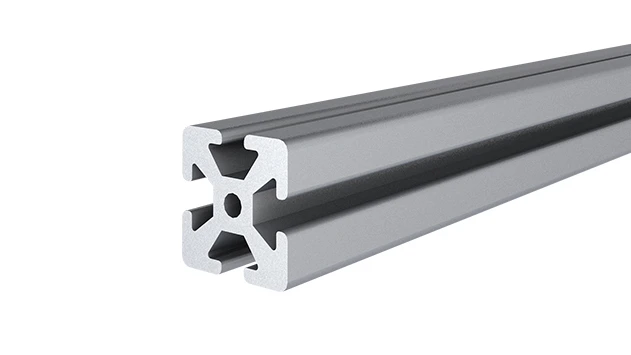
4040F is a 4.00x4.00 CM fractional 40 series square extrusion T-slot profile with four side open T-slots, each side with 4.00cm face. The profile has align-a-grooves to assist in aligning connecting profiles.
Walk into any modern factory, workshop, or manufacturing facility, and you'll likely spot a familiar sight: sleek, silver structures holding up workbenches, organizing tools, or guiding products along assembly lines. Chances are, those structures are built from aluminum profiles—and if they're designed for efficiency and adaptability, there's a good bet they're using 4040F EU Standard Aluminum Profile. But here's the thing: the profile itself is just the starting point. What turns a simple length of aluminum into a fully functional, modular system are the unsung heroes of industrial design: the accessories. Today, we're diving deep into three of the most critical ones—connectors, brackets, and end caps—to show you how these small but mighty components transform 4040F profiles from basic building blocks into the backbone of your workspace.
Understanding the 4040F EU Standard Aluminum Profile
Before we jump into accessories, let's take a quick look at the star of the show: the 4040F EU Standard Aluminum Profile. As the name suggests, it measures 40mm by 40mm in cross-section—a sweet spot between compactness and load-bearing capacity. Made from high-grade aluminum alloy (typically 6063-T5, known for its strength and corrosion resistance), it's extruded with precision to create T-slots along its length. These T-slots are the secret to its versatility: they allow accessories to slide in, lock into place, and create custom configurations without welding or drilling. Whether you're building a lightweight workbench for a small workshop or a heavy-duty material rack for a warehouse, 4040F profiles balance durability, weight, and flexibility. It's no wonder they're a favorite in lean manufacturing, automotive, electronics, and even DIY projects—they're designed to grow and change with your needs.
Connectors – The "Glue" of Modular Systems
If 4040F profiles are the bones of your structure, connectors are the joints that hold everything together. Without the right connectors, even the sturdiest profile would be little more than a pile of metal bars. What makes connectors so essential is their ability to turn linear profiles into 3D structures—angles, corners, intersections—all while maintaining the system's modularity. Let's break down the most common types you'll encounter.
90° Aluminum Profile Connectors – The Workhorse of Right Angles
When you need to join two profiles at a perfect right angle—say, building the corner of a workbench or a vertical shelf support—the 90° aluminum profile connector is your first choice. These connectors are designed to fit snugly into the T-slots of two perpendicular 4040F profiles, creating a rigid, stable joint. Most 90° connectors are made from die-cast aluminum or high-strength plastic, with pre-drilled holes that align with the T-slots. Installation is straightforward: slide a T-slot nut into the profile's slot, position the connector, and tighten a bolt to lock it in place. What's great about these connectors is their adjustability—if you need to tweak the angle slightly (though 90° is standard), many models allow for minor adjustments before final tightening. They're available in "L" shapes for external corners or "T" shapes for internal joints, ensuring you can handle any right-angle scenario.
Beyond 90° – 45°, 135°, and Multi-Way Connectors
Not every project is built with right angles alone. That's where 45° and 135° connectors come in. A 45° aluminum profile connector is ideal for sloped surfaces, like the sides of a material rack that needs to guide items downward, or a workbench with angled legs for stability. Meanwhile, 135° connectors (essentially a "reversed" 45°) are perfect for creating obtuse angles, such as the corners of a roof-like structure or a frame that needs to wrap around an obstacle.
For more complex setups, multi-way connectors take center stage. Three-way connectors, for example, let you join three profiles at a single point—great for adding a vertical support to a horizontal frame. Four-way connectors (sometimes called "cross" connectors) do the same for four profiles, making them useful for grid-like structures or shelving units with multiple levels. Even five-way connectors exist for specialized applications, though they're less common in everyday builds. The key here is that no matter how complex your design, there's a connector tailored to your angle and number of profiles.
| Connector Type | Angle/Configuration | Common Use Case | Material |
|---|---|---|---|
| 90° Aluminum Profile Connector | 90° (right angle) | Workbench corners, vertical shelf supports | Aluminum alloy or reinforced plastic |
| 45° Connector | 45° (acute angle) | Sloped material racks, angled legs | Aluminum alloy |
| 135° Connector | 135° (obtuse angle) | Roof-like structures, wraparound frames | Aluminum alloy |
| Three-Way Connector | Three profiles intersecting | Adding vertical supports to horizontal frames | Aluminum alloy |

Brackets – Adding Stability and Versatility
Connectors handle the angles, but brackets are what add strength, support, and functionality to your 4040F system. Think of them as the "reinforcements"—they take a basic joint and make it stronger, or turn a flat profile into a surface that can hold weight. Without brackets, even well-connected profiles might wobble under load or fail to support shelves, tools, or workbench tops. Let's explore the types you'll use most often.
Gusset Plates (Angle Brackets) – The Reinforcers
If you've ever built something with wood, you're familiar with angle brackets—small metal plates that screw into two perpendicular pieces to strengthen the corner. In the aluminum profile world, these are called gusset plates, and the 4040F profile has its own dedicated version: the gusset alp 4040. These brackets are shaped like right triangles (or sometimes squares) and fit over the outside of a 90° joint. They're typically made from thick aluminum or steel, with holes that align with the T-slots of the 4040F profile. By securing the gusset plate to both profiles with bolts, you add significant rigidity to the joint—critical for structures that bear heavy loads, like workbenches holding machinery or material racks stacked with inventory. Pro tip: Always pair gusset plates with your 90° connectors for maximum stability; the connector holds the angle, and the gusset plate prevents it from flexing.
Real-World Example: Imagine a workbench built with 4040F profiles. The vertical legs are connected to the horizontal frame using 90° connectors—but without gusset plates, leaning on the bench or placing a heavy tool on it might cause the legs to shift slightly. Add gusset alp 4040 brackets at each corner, and suddenly the bench feels rock-solid. That's the difference brackets make.
Support Brackets – Holding Up the Heavy Stuff
Support brackets are all about adding functionality to your profiles. Unlike gusset plates, which reinforce existing joints, support brackets create new points of contact for shelves, bins, or equipment. For example, a simple L-shaped support bracket can be mounted to a vertical 4040F profile to hold a shelf board. Or, if you need to hang tools from the underside of a workbench, a flat support bracket with slots for hooks would do the trick. Some support brackets are adjustable, sliding along the T-slot to let you position shelves at different heights—perfect for a material rack where you need to accommodate items of varying sizes. They're also available in different lengths and thicknesses: a thin bracket might work for lightweight tools, while a thick, reinforced one is better for heavy boxes or machinery parts.
Mounting Brackets – Bridging the Gap Between Profiles and the World
Sometimes, your 4040F structure needs to connect to something outside the profile system—like a wall, a floor, or a piece of equipment. That's where mounting brackets shine. Wall-mounting brackets, for instance, let you attach a horizontal profile to a concrete or drywall wall, turning it into a hanging tool rack. Floor-mounting brackets anchor vertical profiles to the ground, preventing tipping in high-traffic areas. Even specialized brackets exist for mounting conveyor belts, lighting, or monitors to your profile setup. The beauty of these brackets is that they adapt the modularity of 4040F profiles to the "real world," ensuring your structure plays well with existing infrastructure.
End Caps – The Finishing Touch with Purpose
At first glance, end caps might seem like purely aesthetic accessories—and while they do make your 4040F structure look cleaner, their value goes far beyond looks. Think about it: the ends of aluminum profiles are often sharp, with rough edges from the extrusion process. Without end caps, those edges could scratch hands, catch on clothing, or even damage delicate items sliding past. End caps solve that by covering the open ends, turning a potential hazard into a smooth, safe surface. But that's not all—they also seal the T-slots from dust, debris, and moisture, which can corrode the profile or jam accessories over time. And yes, they do add a polished, professional look, which matters when your workspace is on display to clients or auditors.
Types of End Caps for 4040F Profiles
The most common end caps for 4040F profiles are plastic and aluminum. Plastic end caps are lightweight, affordable, and come in a range of colors (though black and gray are standard). They're easy to install—just press them into the end of the profile until they snap into place. They're great for indoor use, where corrosion isn't a concern, and their flexibility makes them ideal for absorbing minor impacts (like a tool accidentally bumping the end of a profile). Aluminum end caps, on the other hand, are more durable and better suited for outdoor use or harsh environments (think factories with heavy dust or moisture). They're typically secured with a small screw or bolt, ensuring they stay in place even under vibration. For the 4040F profile, the 4040 aluminum profile end cap is the most popular choice—designed to fit the 40mm x 40mm opening perfectly, with a lip that sits flush against the profile's surface.
- Safety First: Sharp profile ends are a common workplace hazard. End caps eliminate that risk, making your structure safer for employees and visitors.
- Dust and Debris Protection: T-slots are precision-engineered for accessories to slide smoothly. Dust or small particles can gum up the works, but end caps keep them out.
- Aesthetic Consistency: A row of profiles with exposed ends looks unfinished. End caps create a uniform, professional appearance—important for lean workspaces focused on organization.
- Customization: Some end caps come in bright colors (like red or yellow) to mark hazards or highlight specific areas of a structure, adding a functional design element.
Beyond the Basics – Complementary Accessories
While connectors, brackets, and end caps are the "big three," no discussion of 4040F accessories is complete without mentioning aluminum profile fixings—the tiny parts that make everything else work. These include T-slot nuts (which slide into the T-slots and lock in place when a bolt is tightened), hex bolts, washers, and spring nuts. Without these, your connectors and brackets wouldn't stay attached to the profile. For example, a 90° aluminum profile connector relies on a T-slot nut and bolt to grip the profile's T-slot; without the nut, the bolt would just spin. Aluminum profile fixings are like the screws and nails of the modular world—small, but absolutely essential.
Other complementary accessories include T-slot covers (rubber strips that fill unused T-slots to prevent dust buildup and add grip), hinges for foldable structures, and even cable management clips that attach to profiles to keep wires organized. Together, these accessories turn a basic 4040F setup into a fully integrated workspace solution.
Putting It All Together: A Material Rack Build
Let's walk through a practical example to see how these accessories work in harmony. Suppose you need a 3-tier material rack for your warehouse, using 4040F profiles. Here's how the accessories come into play:
- Frame Construction: Use 4040F profiles for the vertical posts and horizontal beams. Connect the posts to the beams with 90° aluminum profile connectors at each corner.
- Reinforcement: Add gusset alp 4040 brackets at every vertical-horizontal joint to strengthen the frame.
- Shelves: Mount support brackets to the vertical posts at three different heights. Place plywood shelves on top of the brackets.
- Stability: Secure the shelves to the support brackets with aluminum profile fixings (T-slot nuts and bolts) to prevent sliding.
- Finishing: Cap all exposed profile ends with 4040 aluminum profile end caps to protect workers and keep out dust.
The result? A sturdy, adjustable material rack that can be reconfigured if you need more shelves later—all thanks to connectors, brackets, end caps, and fixings working together.
Choosing the Right Accessories: Pro Tips
Not all accessories are created equal. Here's how to pick the best ones for your 4040F project:
- Match the Profile: Ensure accessories are designed for 4040F EU Standard profiles. EU standards have specific T-slot dimensions, so accessories for "national standard" profiles might not fit.
- Load Rating Matters: Check the load capacity of connectors and brackets. A plastic connector might work for a lightweight shelf, but a steel-reinforced one is better for heavy loads.
- Environment Counts: For outdoor use or humid areas, choose aluminum (not plastic) end caps and stainless steel fixings to prevent rust.
- Don't Skimp on Gussets: It's tempting to skip brackets to save time, but for load-bearing structures, they're non-negotiable. A wobbly rack isn't just inefficient—it's dangerous.
- Buy Spares: Accessories are small and easy to lose. Keep extra connectors, bolts, and end caps on hand for quick repairs or modifications.
Final Thoughts: Accessories Make the System
At the end of the day, the 4040F EU Standard Aluminum Profile is a fantastic building block—but it's the accessories that unlock its full potential. Connectors turn profiles into angles and intersections, brackets add strength and functionality, and end caps finish the job with safety and style. Together with aluminum profile fixings and other complementary parts, they create a system that's not just modular, but truly adaptable. Whether you're building a workbench, a material rack, or a custom assembly line, investing in quality accessories ensures your structure is safe, durable, and ready to evolve with your needs. So next time you look at that aluminum profile, remember: the real magic is in the details.