- Company Articles
- Products and Technology
- Application Cases
- Common Applications of External Straight Aluminum Joints in 3C Assembly

Common Applications of External Straight Aluminum Joints in 3C Assembly
Related Product
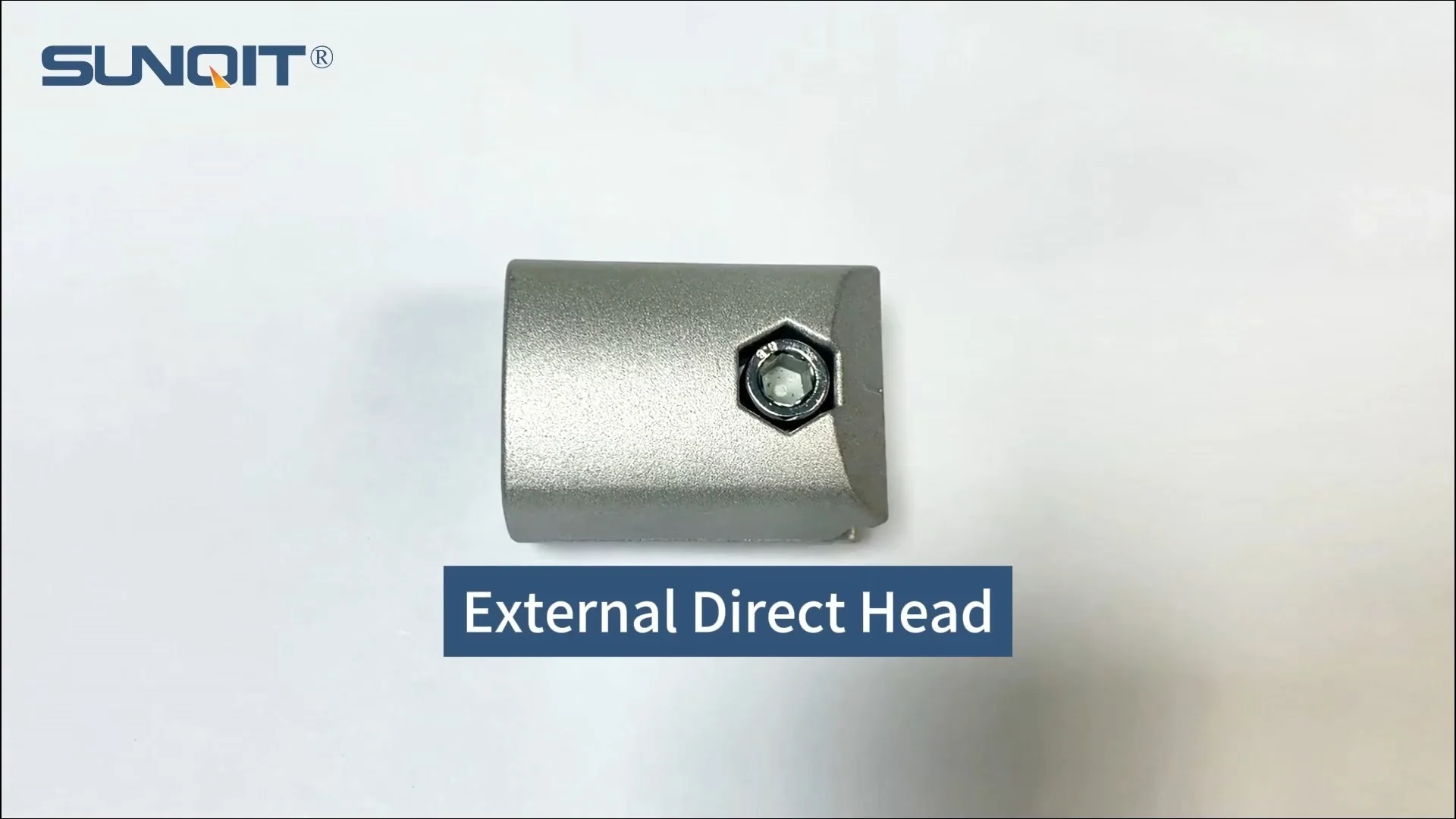
External Straight Aluminum Joint
Aluminum pipe joint outside connection used for two pcs 28pcs aluminum pipe connection in straight angle,it connects two pcs pipe from outside.
In the fast-paced world of 3C manufacturing—where "3C" stands for computers, communication devices, and consumer electronics—every second counts. From smartphones that hit the market with annual upgrades to laptops tailored for remote work, the industry thrives on agility, precision, and adaptability. At the heart of this dynamism lies the assembly line: a complex ecosystem where components flow, workers collaborate, and efficiency determines success. Yet, as product cycles shrink and customization demands grow, traditional rigid assembly setups—built with welded steel or fixed wooden frames—often fall short. They're slow to reconfigure, heavy to move, and costly to replace when a new model rolls out. This is where external straight aluminum joints step in: unassuming yet powerful connectors that transform aluminum profiles into the backbone of flexible, future-ready 3C assembly systems. Let's dive into how these small but mighty components are reshaping workbenches, material flow, and lean manufacturing practices across the 3C sector.
The Role of External Straight Aluminum Joints in 3C Assembly
Before we explore their applications, let's clarify what external straight aluminum joints are. These are specialized connectors designed to join aluminum profiles —hollow, T-slotted extrusions—into stable, load-bearing structures. Unlike welded joints or permanent fasteners, they attach to the T-slots of aluminum profiles using bolts or set screws, allowing for tool-free adjustments or complete disassembly. Their "straight" design means they excel at creating linear connections, making them ideal for building frames, rails, and supports where alignment and strength are critical. In 3C assembly, where precision is non-negotiable (think: aligning tiny circuit boards or fitting delicate screens), this reliability is a game-changer. But their true value lies in flexibility: when a factory shifts from assembling smartwatches to tablets, or from 4G to 5G routers, these joints let teams reconfigure workstations and material paths in hours, not weeks.
Application 1: Building Adaptive Workbenches for Precision Assembly
Walk into any 3C assembly plant, and you'll notice the workbench is the command center. It's where technicians solder microchips, test touchscreens, and assemble circuit boards—tasks that demand stability, ergonomics, and sometimes ESD (electrostatic discharge) protection. Traditional workbenches, often made of fixed steel or wood, struggle to keep up with 3C's ever-changing needs. A bench built for a 6-inch smartphone may be too narrow for a foldable device, or too low for a new ergonomic standard. External straight aluminum joints solve this by turning aluminum profiles into modular workbench frames that adapt on the fly.
Consider a typical workbench in a smartphone assembly line. The frame is constructed from 4040 or 3030 aluminum profiles (common in 3C for their balance of strength and weight), connected end-to-end with external straight aluminum joints. These joints ensure the legs, crossbars, and shelves are rigid enough to support heavy tools—like precision screwdrivers or thermal cameras—yet easy to adjust. Need to raise the work surface by 10cm to reduce technician strain? Loosen the set screws on the joints, slide the profiles, and retighten. Adding a side shelf for component bins? Attach new profiles to the existing frame using a few extra joints. Even specialized workbenches, like those with ESD-safe surfaces or integrated lighting, rely on these joints to maintain structural integrity while accommodating add-ons.
What makes this setup indispensable for 3C is its responsiveness to product changes. When a manufacturer launches a new tablet model with a larger battery, the workbench might need deeper shelves to hold battery installation tools. With external straight aluminum joints, the team doesn't need to order a new bench—they simply extend the shelf supports by adding more aluminum profile segments. This not only cuts costs but also reduces downtime, a critical factor in an industry where missing a launch window can mean losing market share.

Application 2: Streamlining Material Flow with Roller Tracks
In 3C assembly, components don't just sit on workbenches—they move. From PCBs arriving from the SMT (surface-mount technology) line to finished displays heading to quality control, efficient material flow is the lifeblood of the production floor. This is where roller tracks come in: gravity-fed or motorized rails that carry bins, trays, and components along the assembly line. But roller tracks are only as reliable as their mounting systems, and here again, external straight aluminum joints prove their worth.
Roller tracks in 3C environments are often mounted to aluminum profile frames, which can be positioned above workbenches, alongside conveyor belts, or between stations. External straight aluminum joints secure the roller track brackets to the profiles, ensuring the track stays level and stable even as heavy trays glide over it. For example, a track carrying smartphone casings (each tray holding 20 units) needs to maintain a consistent slope to prevent jamming. The joints lock the track's supports into place, preventing shifts that could disrupt the flow. If the line switches to larger casings (for a phablet model), the track might need to be widened or repositioned. With external straight joints, the mounting frame can be adjusted by detaching the track, reconfiguring the profiles, and reattaching—all in under an hour.
These joints also play a role in integrating roller tracks with other systems. Imagine a "pick-to-light" station where workers retrieve components based on LED cues. The roller track feeding this station might need to connect to a vertical material rack (like "material rack b (3 row and 3 floor)" from common 3C setups). External straight aluminum joints bridge the gap, connecting the track's aluminum profile frame to the rack's uprights, creating a seamless path from storage to assembly. They even work with specialized roller track accessories, like "roller track placon mount for aluminum profile flat" (used to secure tracks to flat-profile surfaces), ensuring compatibility across the production floor.

Application 3: Enabling Lean System Principles in 3C Manufacturing
Lean manufacturing isn't just a buzzword in 3C—it's a survival strategy. With slim profit margins and intense competition, reducing waste (time, materials, space) is essential. Lean system principles, like "just-in-time" production and "continuous improvement," rely on tools that support flexibility and efficiency. External straight aluminum joints are a cornerstone of such systems, enabling the modular, reusable structures that minimize waste.
Take "5S" (Sort, Set in Order, Shine, Standardize, Sustain)—a lean methodology focused on workplace organization. In a 3C plant, 5S requires that tools and materials are stored in designated, accessible locations. External straight aluminum joints help build custom storage solutions, like tool racks or component bins, that can be rearranged as workflows evolve. For instance, a "material rack b (3 row and 3 floor)" might start holding charging ports for a basic phone model, but after a line upgrade, it needs to store wireless charging modules. The joints allow workers to adjust shelf heights or add dividers without replacing the entire rack, keeping the workspace organized and reducing "search waste" (time spent looking for tools).
Another lean principle is "value stream mapping," which identifies bottlenecks in production. Suppose a bottleneck emerges at the camera module installation station because the roller track feeding components is too slow. With external straight aluminum joints, the team can quickly modify the track's angle or add a parallel track to double throughput—no need for expensive new equipment. This agility aligns with the lean goal of "continuous improvement," letting manufacturers adapt to inefficiencies in real time.
Perhaps most importantly, these joints support "cellular manufacturing," a lean approach where small, self-contained teams assemble entire products (or subassemblies) in compact work cells. Each cell might include a workbench, roller track, and storage rack—all built with aluminum profiles and external straight joints. If demand for a product spikes, cells can be duplicated by reusing joints and profiles from less busy lines, avoiding the waste of building new cells from scratch. This reusability is a hallmark of lean systems, and external straight aluminum joints make it possible.

Application 4: Enhancing Customization with Aluminum Pipe Accessories
No two 3C assembly lines are identical. A factory assembling smart speakers needs different setups than one building fitness trackers, and even within a single plant, stations vary by task (e.g., soldering vs. quality inspection). This diversity demands components that play well with others—and external straight aluminum joints excel at integrating with aluminum pipe accessories to create tailored solutions.
Consider a workstation where technicians test laptop hinges for durability. The setup needs a clamp to hold the laptop, a motorized arm to simulate opening/closing, and a display to monitor torque. External straight aluminum joints connect the aluminum profile frame to accessories like "aluminum pipe clamps" (to secure the clamp), "parallel fixation aluminum pipe joints" (to stabilize the motorized arm), and "caster wheels" (to make the entire station mobile for maintenance). This mix-and-match approach means the station can be customized without engineering a new frame from scratch.
Accessories like "aluminum guide rail a" or "plastic roller track guide rail yellow" further extend functionality. For example, adding a yellow plastic guide rail to a roller track (secured with external straight joints) creates a visual cue for where components should be placed, reducing errors. Or using "aluminum guide rail b" as a stop at the end of a track prevents bins from sliding off—simple, effective, and made possible by the joint's compatibility with diverse accessories. In 3C, where even small improvements in accuracy or speed add up, these custom touches are invaluable.
Comparing Traditional Joints to External Straight Aluminum Joints in 3C Assembly
| Feature | Traditional Steel Welded Joints | External Straight Aluminum Joints |
|---|---|---|
| Installation Time | Hours (requires welding equipment and skilled labor) | Minutes (tool-free or hex key assembly; no special skills needed) |
| Reusability | Low (welded joints are permanent; profiles often damaged during disassembly) | High (can be disassembled and reused multiple times without damage) |
| Weight | Heavy (steel profiles add bulk, making reconfiguration difficult) | Lightweight (aluminum profiles reduce frame weight by 30-50% vs. steel) |
| Corrosion Resistance | Low (steel rusts without frequent maintenance, risky for electronics) | High (aluminum resists corrosion; ideal for clean 3C environments) |
| Cost Over Time | High (frequent replacements and rework add up) | Low (one-time purchase; adapts to changing needs, reducing long-term costs) |
Conclusion: The Unsung Hero of 3C Assembly Flexibility
In the high-stakes world of 3C manufacturing, where innovation and speed reign supreme, external straight aluminum joints are more than just connectors—they're enablers. They turn aluminum profiles into workbenches that adapt to new products, roller tracks that keep components flowing, and lean systems that cut waste. By prioritizing flexibility, reusability, and compatibility with aluminum pipe accessories, these joints empower manufacturers to stay ahead in an industry that waits for no one.
As 3C products grow smaller, smarter, and more complex, the demand for agile assembly solutions will only rise. External straight aluminum joints, with their ability to bridge standardization and customization, are poised to remain a critical part of this evolution. For plant managers, technicians, and engineers, understanding their applications isn't just about improving today's assembly line—it's about building the factories of tomorrow: ones that can pivot, adapt, and thrive in the face of endless change.