- Company Articles
- Products and Technology
- Application Cases
- Common Applications of Parallel Lean Pipe Joints in Automotive Factories

Common Applications of Parallel Lean Pipe Joints in Automotive Factories
Related Product
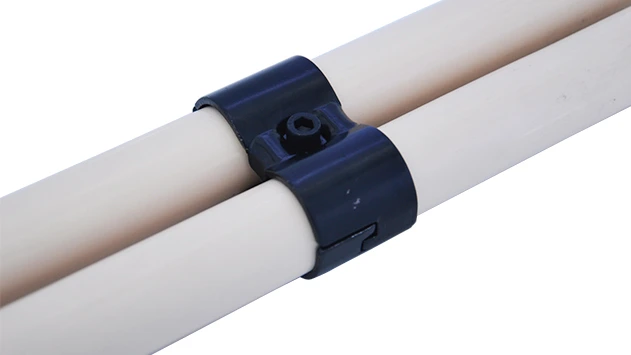
Parallel Lean Pipe Joint
Parallel lean pipe joint used for 2 pcs 28MM lean pipe connection in parallel direction to enhance frame structure, usually for heavy payload requirement for workbench. flow rack, hand trolley.
In the high-stakes world of automotive manufacturing, where every second counts and precision is non-negotiable, the difference between a good production line and a great one often lies in the details. Enter lean manufacturing—a philosophy built on efficiency, flexibility, and continuous improvement. At the heart of many lean systems are unassuming yet critical components: lean pipes and their connectors. Among these, parallel lean pipe joints stand out as silent workhorses, ensuring stability, adaptability, and seamless workflow. Let's dive into how these small but mighty connectors are transforming automotive factories, from assembly lines to material handling.
What Are Parallel Lean Pipe Joints, Anyway?
Before we jump into their applications, let's get clear on what parallel lean pipe joints are. In the world of lean pipe systems—also called flexible pipe systems—joints are the "glue" that holds everything together. They connect pipes, form structures, and enable the flexibility that makes lean manufacturing so powerful. Parallel lean pipe joints, as the name suggests, are designed to link two or more pipes in a parallel configuration. Unlike 90-degree joints that create corners or swivel joints that allow rotation, parallel joints focus on alignment: keeping pipes straight, level, and perfectly spaced along the same plane.
Think of them as the backbone of any stable lean structure. When you see a workbench that doesn't wobble under the weight of a car engine, or a flow rack where parts glide smoothly without jamming, chances are parallel lean pipe joints are hard at work. They're not flashy, but they're essential—ensuring that shelves don't sag, conveyors stay on track, and assembly stations remain ergonomic and efficient.
Key Features That Make Parallel Lean Pipe Joints Indispensable
What sets parallel lean pipe joints apart in automotive settings? Let's break down their most critical features:
Durability That Withstands the Factory Floor
Automotive factories are tough environments. Oils, coolants, heavy machinery, and constant foot traffic mean components need to stand up to daily wear and tear. Parallel lean pipe joints are typically made from high-grade materials like aluminum or zinc-plated steel, both of which resist corrosion and impact. Some even come with a powder-coated finish for extra protection against scratches and chemical spills—perfect for areas where engine parts (and their greasy residues) are handled regularly.
Load Capacity for Heavy-Duty Tasks
Cars are heavy, and their parts are no exception. A single transmission can weigh over 200 pounds, and a car door panel might not be light either. Parallel lean pipe joints are engineered to handle these loads without bending or failing. Most can support anywhere from 150 to 500 pounds per joint, depending on the material and design—critical for structures like workbenches or flow racks that hold multiple heavy parts at once.
Flexibility to Adapt to Changing Needs
Automotive manufacturing isn't static. One month, a factory might be producing sedans; the next, it's switching to SUVs or electric vehicles with entirely different part sizes. Parallel lean pipe joints thrive here. Unlike welded steel structures, which are fixed forever, these joints can be disassembled and reassembled in minutes with basic tools (think hex keys or wrenches). Need to raise a workbench by 6 inches for taller workers? Loosen the joints, adjust the pipes, retighten, and you're done. No need for a welder or a new workbench—just quick, cost-effective change.
Precision Alignment for Smooth Workflows
In automotive, even a tiny misalignment can cause big problems. A flow rack that's off by a few degrees might make parts get stuck. A conveyor that's not level could damage delicate electronics. Parallel lean pipe joints solve this by ensuring pipes stay perfectly parallel. Their design includes built-in guides or locking mechanisms that prevent pipes from twisting or shifting, keeping shelves, tracks, and frames aligned exactly where they need to be.

Where Parallel Lean Pipe Joints Shine: 4 Critical Applications in Automotive Factories
Now that we understand their features, let's explore the real-world applications where parallel lean pipe joints make the biggest impact. From the assembly line to the warehouse, these connectors are hard at work keeping operations running smoothly.
1. Lean Pipe Workbenches: The Hub of Assembly
Walk through any automotive assembly line, and you'll see workbenches everywhere. These are the workstations where technicians spend hours assembling components—from wiring harnesses and brake calipers to dashboard panels and airbag modules. A good workbench needs to be sturdy, customizable, and ergonomic. That's where parallel lean pipe joints come in.
Most lean pipe workbenches are built with a frame of vertical and horizontal pipes. The horizontal pipes that form the tabletop and shelves rely on parallel joints to stay level and stable. Imagine a workbench used to assemble engine control units (ECUs)—small, delicate components that require precision. The tabletop, supported by parallel joints, can't wobble, or a technician might misalign a circuit board. Underneath, shelves holding tools, bins of screws, and testing equipment need to stay parallel to prevent items from sliding off. Parallel joints ensure the entire structure remains rigid, even when a technician leans on the bench or sets down a heavy toolbox.
The best part? When the factory switches to a new ECU model with different tools, the workbench can evolve. Add a shelf by connecting two new parallel pipes with joints, or raise the tabletop to reduce back strain—all without replacing the entire bench. This flexibility is why automotive plants worldwide are swapping fixed wooden or steel workbenches for lean pipe versions with parallel joints.
2. Flow Racks: Keeping Parts Moving to the Line
In automotive manufacturing, parts need to flow from storage to the assembly line quickly and efficiently. That's where flow racks (or gravity flow racks) come in. These racks use inclined roller tracks to let parts slide down to the pick point via gravity, ensuring "First In, First Out" (FIFO) inventory management—critical for reducing waste and keeping production on schedule.
Parallel lean pipe joints are the unsung heroes of flow rack design. Here's why: A flow rack has two parallel side rails that support the roller track. If these rails aren't perfectly parallel, the track will slope unevenly, causing parts to get stuck or slide too fast (risking damage). Parallel joints connect these side rails to the rack's vertical supports, locking them into place. They also ensure the rails are spaced consistently along the rack's length, so every section of the roller track works the same way—no surprises for the technician grabbing parts.
Take a flow rack storing plastic trim pieces for car interiors. These parts are lightweight but can scratch easily. The roller track, mounted between parallel-jointed rails, ensures they glide gently to the front. If the factory starts using larger trim pieces for SUVs, the same rack can be reconfigured by adjusting the vertical pipes (and their parallel joints) to widen the rails—no need for a new rack. This adaptability is a game-changer for factories juggling multiple models.
3. Conveyors: The Lifeline of Material Transport
Conveyors are the arteries of automotive plants, moving parts between stations—from the body shop (where panels are welded) to the paint shop, and finally to final assembly. While large, motorized conveyors handle the big stuff (like entire car bodies), smaller, flexible conveyors are essential for moving parts within work cells. These smaller conveyors are often built with lean pipe systems, and parallel joints play a key role in their frames.
Consider a roller conveyor used to move brake rotors from the machining station to inspection. The conveyor's frame consists of two parallel pipes running the length of the system, with rollers mounted between them. Parallel lean pipe joints connect these pipes to the legs of the frame, ensuring they stay perfectly aligned. If the pipes were to bend or shift, the rollers would misalign, and rotors could jam or fall off—slowing down production and risking damage. Parallel joints prevent this by locking the pipes in place, even when heavy rotors pass over them.
And when the production line is reorganized (say, to add a new inspection step), the conveyor can be shortened or extended by adding/removing pipe sections and parallel joints. No need to call in a contractor—factory staff can handle it with basic tools, minimizing downtime.
4. Turnover Trolleys: Mobile Material Handling Made Easy
Not all parts stay on the line—some need to be transported across the factory, from storage areas to assembly cells or between shifts. Turnover trolleys (also called material handling trolleys) are the go-to solution here, and they rely heavily on parallel lean pipe joints for stability.
A typical turnover trolley has a frame with shelves, a handle, and casters for mobility. The shelves, which hold bins of screws, hoses, or even larger parts like alternators, are supported by horizontal pipes connected with parallel joints. These joints ensure the shelves don't sag under the weight, even when the trolley is pushed over uneven factory floors. Imagine a trolley carrying 100-pound battery packs—without parallel joints, the shelves might bow, causing the batteries to tip and spill. With parallel joints, the structure stays rigid, keeping the load secure.
Like other lean structures, these trolleys are customizable. Need to carry taller bins? Loosen the parallel joints, adjust the shelf height, and retighten. Done. When the trolley isn't needed, it can be disassembled and stored compactly, freeing up valuable floor space—something every automotive factory craves.

Why Parallel Joints Beat Other Connectors in Automotive Settings
Lean pipe systems offer a variety of joint types—90-degree corners, swivel joints, three-way connectors—but parallel joints have unique advantages for automotive manufacturing. Let's compare them side by side to see why they're often the top choice.
| Joint Type | Primary Function | Key Advantage | Best For | Example Load Capacity |
|---|---|---|---|---|
| Parallel Lean Pipe Joint | Connects pipes in a straight, parallel line | Ensures alignment and stability for flat surfaces/shelves | Workbenches, flow rack rails, conveyor frames | Up to 500 lbs per joint (steel) |
| 90-Degree Fixed Joint | Creates right-angle corners | Strong, rigid corners for frames | Trolley frames, vertical supports | Up to 400 lbs per joint (aluminum) |
| Swivel Joint | Allows rotation between pipes | Flexibility for adjustable angles | Tool holders, adjustable shelves | Up to 150 lbs per joint (plastic-coated) |
| Three-Way Joint | Connects three pipes at a single point | Versatile for multi-directional frames | Shelf intersections, complex structures | Up to 300 lbs per joint (zinc-plated steel) |
As the table shows, parallel joints excel at stability and alignment—two must-haves for automotive structures that handle heavy, delicate, or high-volume parts. While other joints have their place, parallel joints are the backbone of any system where flat, level surfaces or straight tracks are critical.
Case Study: How a Tier 1 Supplier Cut Costs with Parallel Lean Pipe Joints
Let's look at a real-world example. A Tier 1 automotive supplier in Michigan manufactures suspension components for major automakers. Before adopting lean pipe systems, they relied on fixed steel racks and custom-built workbenches. When they won a contract to supply a new electric truck model with larger, heavier suspension arms, their existing racks couldn't handle the weight—shelves began sagging, and parts were getting damaged.
The solution? They invested in lean pipe systems with parallel joints. They built new flow racks using parallel-jointed rails to support the heavier arms, and reconfigured their workbenches by adding parallel-connected shelves for tools. The results were striking:
- 30% faster part retrieval: Flow racks with parallel-aligned roller tracks reduced time spent searching for parts.
- 50% less downtime during model changes: Reconfiguring racks took hours instead of days.
- 25% cost savings: No need to buy new racks—they reused existing pipes and joints.
- Zero damaged parts: Stable shelves and aligned tracks eliminated jams and falls.
Today, they estimate the parallel lean pipe joints alone saved them over $50,000 in the first year—proof that small components can drive big results.
Maintaining Parallel Lean Pipe Joints: Tips for Longevity
To keep parallel lean pipe joints performing at their best, a little maintenance goes a long way. Here's what factory teams should do:
Inspect Regularly for Loose Connections
Daily use, vibrations from machinery, and heavy loads can loosen joint bolts over time. A quick weekly check with a hex key or wrench can prevent sagging shelves or misaligned tracks. Tighten bolts until they're snug, but avoid over-tightening—this can strip threads or crack the joint.
Clean to Prevent Corrosion
Oils, coolants, and dust can build up on joints, leading to rust (for steel) or discoloration (for aluminum). Wipe joints down monthly with a damp cloth and mild detergent. For steel joints, a light coat of anti-rust spray (avoiding moving parts like caster wheels) can extend life.
replace Worn Joints Promptly
If a joint is cracked, bent, or no longer holds pipes securely, replace it immediately. A single faulty joint can compromise an entire structure—risking worker safety or damaged parts. Most suppliers offer replacement joints at low cost, making this a small investment for big peace of mind.
The Future of Parallel Lean Pipe Joints in Automotive
As automotive manufacturing shifts toward electric vehicles (EVs) and autonomous technology, factories are under pressure to become more flexible and efficient than ever. EVs require different parts (batteries, electric motors) with new handling needs, and parallel lean pipe joints are evolving to meet these challenges. New materials like aluminum alloys are making joints lighter but stronger, and modular designs are allowing for even faster reconfiguration.
Some suppliers are even adding smart features—like sensors in joints that alert maintenance teams when bolts loosen. While these high-tech versions are still rare, they hint at a future where parallel lean pipe joints aren't just structural components but part of the factory's digital ecosystem.
No matter how technology advances, one thing is clear: the need for stable, flexible, and cost-effective structures in automotive factories isn't going away. Parallel lean pipe joints, with their proven track record of reliability and adaptability, will remain a cornerstone of lean manufacturing for years to come.
Final Thoughts: Small Joints, Big Impact
Parallel lean pipe joints might not be the most glamorous components in an automotive factory, but they're undoubtedly some of the most important. From keeping workbenches level to ensuring parts flow smoothly to the line, they're the silent partners in building the cars we drive. For automotive manufacturers looking to boost efficiency, cut costs, and stay agile in a fast-changing industry, investing in lean pipe systems with parallel joints isn't just a choice—it's a competitive advantage.
So the next time you walk through a car factory, take a closer look at the workbenches, racks, and conveyors. Chances are, you'll spot the parallel lean pipe joints holding it all together—quietly, steadily, and efficiently. They may be small, but their impact? Nothing short of extraordinary.