- Company Articles
- Products and Technology
- Product knowledge
- Common Castor Fixed Plate Sizes: Which Fits Your Turnover Cart?

Common Castor Fixed Plate Sizes: Which Fits Your Turnover Cart?
Related Product
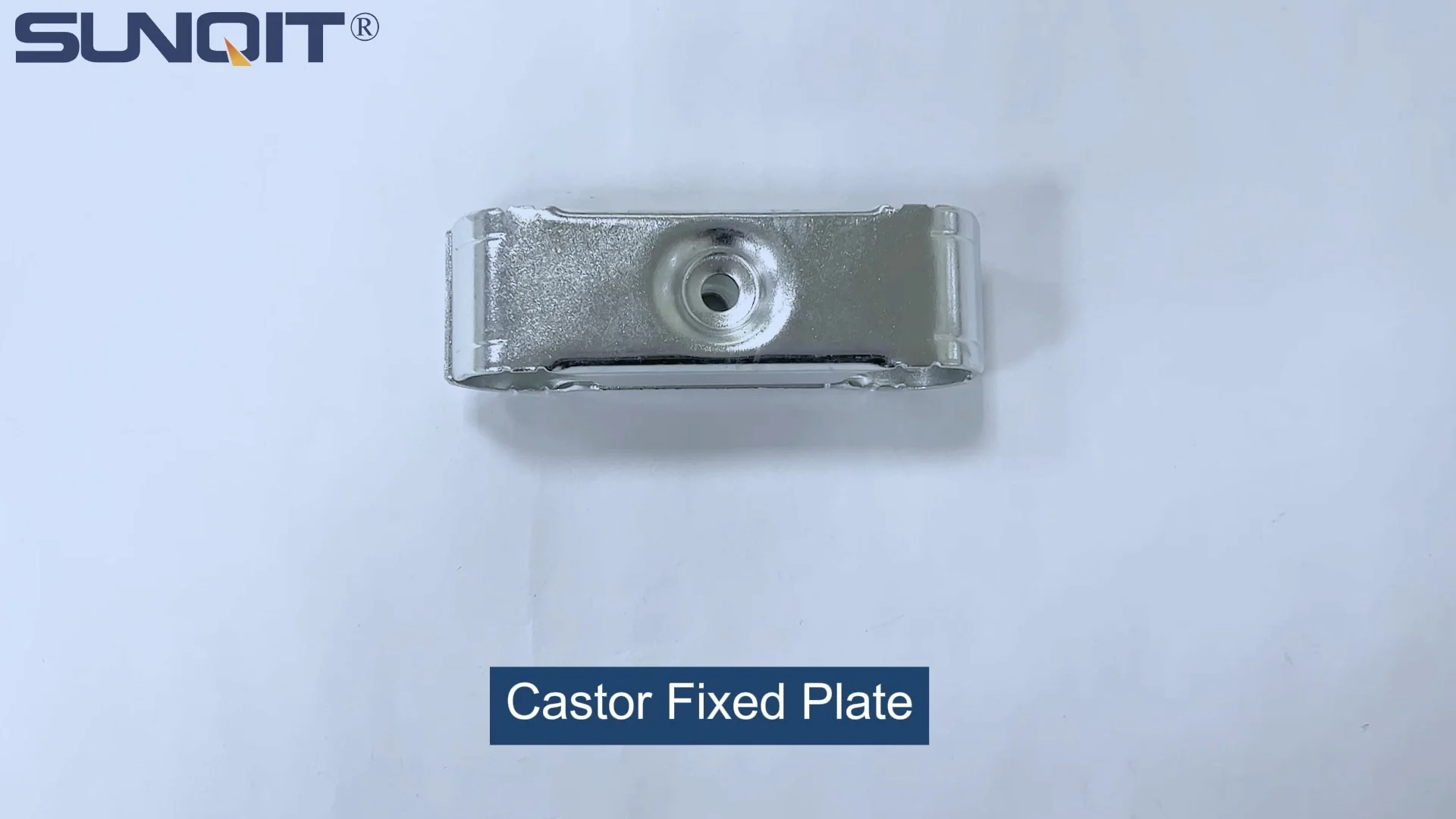
Castor Fixed Plate
Castor fixed plate, used for castor installation, one castor need two pcs castor plate to fix under the workbench, flow rack, and hand trolley.
If you've ever spent a day in a warehouse, factory, or even a busy retail stockroom, you know the unsung heroes keeping operations moving: turnover carts. These hardworking tools ferry parts, materials, and products from one station to another, making sure nothing gets bogged down by manual lifting or disorganized storage. But what happens when your trusty turnover cart starts to wobble mid-roll, or worse, the wheels suddenly lock up? More often than not, the culprit isn't the caster wheel itself—it's the often-overlooked component holding it all together: the castor fixed plate.
Think of the castor fixed plate as the "glue" between your cart and its wheels. It's the metal (or sometimes plastic) plate that bolts the caster wheel to the bottom of the cart, distributing weight evenly and ensuring stability as you push, pull, or maneuver through tight spaces. Get the size wrong, and you're looking at wobbly rides, premature wear on caster wheels, and even safety hazards like carts tipping over. Get it right, though, and your turnover cart becomes a smooth, reliable workhorse that lasts for years. So, let's dive into everything you need to know about castor fixed plate sizes—and how to pick the perfect one for your turnover trolley and rack.
What Even Is a Castor Fixed Plate, Anyway?
Before we get into sizes, let's make sure we're all on the same page. A castor fixed plate—sometimes called a "caster mounting plate"—is a flat, rigid component with pre-drilled holes. Its job? To attach the caster wheel to the frame of your turnover cart (or any piece of equipment that needs wheels, like a workbench or material rack). Without it, your caster wheel would just be a loose part rolling around on the floor—not very useful, right?
These plates come in various materials, but the most common are steel (for heavy-duty use), aluminum (lighter, rust-resistant), and sometimes plastic (for light loads or corrosive environments). The key here is that the plate's size, thickness, and hole pattern directly impact how well it can support weight, resist bending, and keep your caster wheel securely in place. It's not just about "bolting something on"—it's about engineering a connection that can handle the daily grind of your workspace.
Why Size Matters More Than You Think
You might be thinking, "Can't I just grab any plate that fits and call it a day?" Spoiler: No. The size of your castor fixed plate is a make-or-break detail. Here's why:
- Weight Distribution: A larger plate spreads the cart's weight (and whatever it's carrying) over a bigger area of the cart's frame. This reduces stress on both the plate and the frame, preventing cracks or bending.
- Stability: A too-small plate can act like a pivot point, making your cart feel "tippy" when turning or stopping. A properly sized plate keeps the caster wheel aligned with the cart's center of gravity, so you won't feel like you're herding a shopping cart with a broken wheel.
- Durability: Smaller plates are often thinner (to save space), which means they're more likely to warp or snap under heavy loads. A plate that's too big, though, might stick out from the cart frame, getting caught on walls or equipment as you move.
- Safety: Imagine pushing a cart loaded with 500 pounds of materials, only for the castor fixed plate to fail. That's not just a broken cart—it's a potential injury waiting to happen. The right size plate is your first line of defense against accidents.

Common Castor Fixed Plate Sizes: A Cheat Sheet
Castor fixed plates aren't one-size-fits-all, but there are a handful of standard sizes you'll encounter most often. These are based on industry norms, caster wheel dimensions, and typical turnover cart designs. Below is a breakdown of the most common sizes, their uses, and what to watch for when choosing them.
| Size (Length x Width, inches) | Hole Pattern (Center-to-Center) | Typical Load Capacity (per plate) | Best For |
|---|---|---|---|
| 4x4 | 3x3 inches (square pattern) | 200–300 lbs | Small turnover carts, tool trolleys, or lightweight material racks (e.g., carrying office supplies or small parts) |
| 5x5 | 4x4 inches (square pattern) | 300–500 lbs | Medium-duty turnover trolleys, workbench carts, or warehouse racks with 2–3 shelves of parts |
| 6x4 (Rectangular) | 5x3 inches (rectangular pattern) | 500–800 lbs | Heavy-duty turnover carts, industrial material transport, or racks carrying metal components or machinery parts |
| 8x6 (Rectangular) | 6x4 inches (rectangular pattern) | 800–1,200 lbs | Extra-heavy loads: think automotive parts, large equipment, or bulk inventory in manufacturing plants |
| Custom Sizes | Varies (based on cart design) | Varies | Unique cart designs, specialized equipment, or retrofitting old carts with non-standard frames |
Pro tip: Always check the manufacturer's specs for your caster wheels and turnover cart. Many caster wheels list a "recommended mounting plate size," and cart frames often have pre-drilled holes that align with standard plate dimensions. Ignoring these guidelines is like trying to put a square peg in a round hole—frustrating and ultimately ineffective.

How to Choose the Right Size for Your Turnover Cart
Now that you know the basics, let's walk through the steps to find your perfect castor fixed plate. It's easier than you think—just grab a tape measure, a pen, and a few minutes of your time.
Step 1: Calculate Your Total Load
Start by figuring out how much weight your cart will actually carry. This includes the cart's own weight (empty) plus the heaviest load you'll ever put on it. For example, if your empty cart weighs 50 lbs and you regularly load it with 450 lbs of materials, your total load is 500 lbs. Since most carts have 4 caster wheels, each plate will need to support about 125 lbs (500 lbs ÷ 4). But wait—always add a "safety buffer" of 20–30%! That 125 lbs becomes 150–162 lbs per plate, so you'd want a plate rated for at least 200 lbs (to be safe). Check the table above: a 4x4 plate handles 200–300 lbs, which would work here. If your total load is 800 lbs, though, you're looking at 200 lbs per plate (plus buffer), so a 5x5 or 6x4 plate would be better.
Step 2: Measure Your Cart's Mounting Area
Next, measure the space where the plate will attach to the cart's frame. This is usually on the bottom of the cart's legs or crossbars. Note the length and width of the available area—you don't want a plate that hangs over the edge (it could get caught on things) or is so small it looks lost. For example, if your cart's leg is a 3x3 inch square tube, a 4x4 plate would stick out 0.5 inches on each side—not ideal. A 3.5x3.5 inch plate (if available) or a 4x4 with rounded edges might be better. If the frame is a 5x2 inch rectangle, a 6x4 rectangular plate could work, as long as the longer side aligns with the frame's length.
Step 3: Check the Caster Wheel's Mounting Plate Size
Your caster wheel has its own mounting plate (the part that attaches to your cart's fixed plate). The two plates need to match in size and hole pattern! If your caster wheel's plate is 4x4 inches with a 3x3 inch hole pattern, your cart's fixed plate should also be 4x4 inches with the same hole pattern. Mismatched holes mean you'll either have to drill new ones (which weakens the plate) or use "universal" plates with slotted holes (which are less secure). Save yourself the hassle: match the caster's plate size.
Step 4: Think About Your Environment
Will your cart be used in a dry warehouse, a wet factory, or a cleanroom? In damp or corrosive environments, a steel plate might rust—opt for aluminum or a stainless steel plate instead. If you're in a food processing plant, plastic plates (food-grade, of course) could be a better fit. Also, consider floor conditions: rough concrete might require a thicker plate to absorb vibrations, while smooth warehouse floors are more forgiving.

Caster Accessories: The Unsung Helpers
Your castor fixed plate is only as good as the caster accessories that hold it in place. We're talking about bolts, lock washers, nuts, and even shims. Here's what to keep in mind:
- Bolts: Use high-quality, grade 5 or grade 8 bolts (not the cheap ones from the hardware store). The length should be enough to go through the cart frame, the fixed plate, and the caster's plate, with at least 2–3 threads sticking out to attach the nut.
- Lock Washers: These prevent bolts from loosening due to vibration. Split lock washers or star washers work well—just don't skip them!
- Shims: If the cart frame is uneven, thin metal shims can help level the plate, ensuring even weight distribution.
Pro mistake: Apply a small amount of thread locker (like Loctite) to the bolts before tightening. This keeps them from coming loose over time, even with constant jostling.
Real-Life Example: When the Wrong Plate Caused Chaos
Let's say you run a small electronics assembly shop. You have a fleet of 10 turnover carts, each used to carry circuit boards and small components. A few months ago, you noticed the carts were getting wobbly, and one even tipped over, damaging $500 worth of parts. You check the casters—they look fine. Then you look at the fixed plates: someone ordered 4x4 plates rated for 200 lbs, but your carts (loaded) weigh 350 lbs each. That's 87.5 lbs per plate, but with the 20% buffer, you need 105 lbs per plate. The 4x4 plates should handle that, right? Wait—no, because the plates were made of thin, 16-gauge steel (flimsy!), not the 14-gauge steel the manufacturer recommended. The thin plates bent under the load, causing the casters to tilt. Solution: Switch to 5x5 plates with 14-gauge steel and grade 5 bolts. Problem solved—no more wobbles, no more broken parts.
Maintaining Your Castor Fixed Plates
Even the best plate won't last forever if you ignore it. Here's how to keep yours in top shape:
- Inspect Monthly: Look for cracks, bends, or rust on the plate. If you see any, replace it immediately—don't wait for it to fail.
- Tighten Bolts Quarterly: Use a torque wrench to ensure bolts are snug (but not over-tightened, which can strip threads).
- Clean Regularly: Wipe off dirt, grease, or debris that could trap moisture and cause rust.
- Lubricate Threads: A drop of machine oil on bolt threads (before tightening) makes future removal easier.
Final Thoughts: Your Turnover Cart Deserves the Right Plate
At the end of the day, castor fixed plates might not be the most glamorous part of your warehouse or factory, but they're essential. They're the quiet guardians of your turnover carts, ensuring every load is moved safely, smoothly, and efficiently. By taking the time to measure, calculate load capacity, and choose the right size, you'll save yourself from headaches, repairs, and even accidents down the line.
So, the next time you're shopping for caster accessories or upgrading your turnover trolley and rack, remember: the castor fixed plate is more than just a piece of metal. It's the foundation of a reliable, hardworking cart that keeps your operation running like clockwork. Measure twice, buy once, and enjoy the ride!