- Company Articles
- Products and Technology
- Installation And Maintenance
- Common Castor Installation Base Myths: Debunked by Lean Manufacturing Experts

Common Castor Installation Base Myths: Debunked by Lean Manufacturing Experts
Related Product
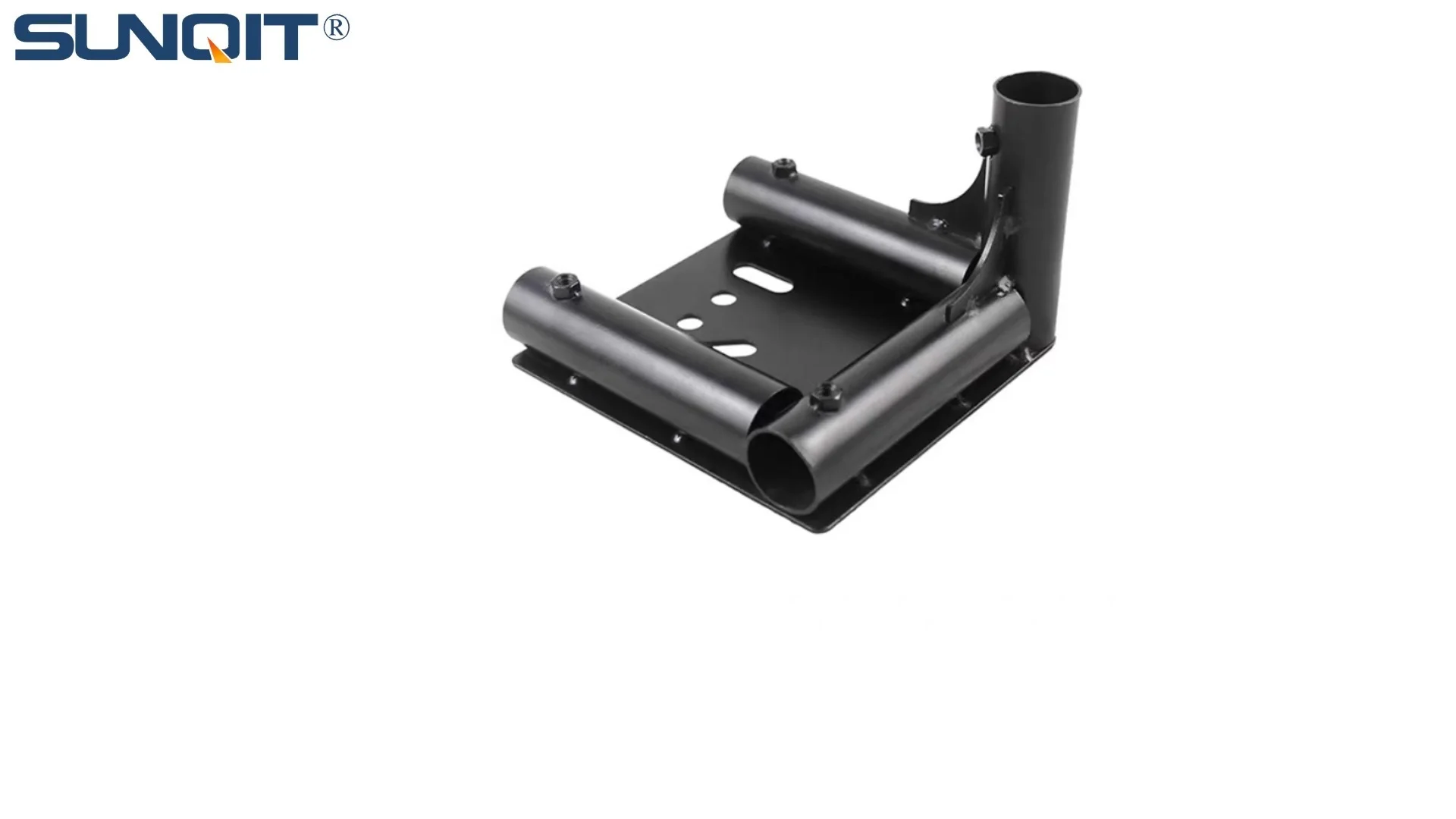
Castor Installation Base
Pipe fitting castor installation base,Well made, precise and strong. Made of high quality of steel,black painting surface treatment for greater resistance to corrosion. It is used for castor or foot lever connection with lean pipe.
In the world of lean manufacturing, where every second counts and waste is the enemy, success hinges on the smallest details. From the layout of production lines to the tools on the factory floor, every component plays a role in keeping operations smooth, efficient, and cost-effective. Yet, some of the most critical parts are often the most overlooked—like the humble castor installation base. These unassuming components, which connect casters to workbenches, trolleys, and racks, are the unsung heroes of mobility in manufacturing. But despite their importance, myths and misconceptions about castor installation bases persist, leading to inefficiencies, downtime, and even safety risks. Today, we're setting the record straight. With insights from lean manufacturing experts and real-world examples, we'll debunk five common myths about castor installation bases and show you why getting these small parts right can make a big difference in your lean system.
Myth 1: "Any Castor Installation Base Works for Any Workbench—It's Just a 'Holder'"
Walk into any hardware store, and you'll find generic castor installation bases labeled as "universal fit." It's easy to assume these one-size-fits-all solutions will work for any workbench, cart, or rack. After all, how different can one base be from another? But in lean manufacturing, "close enough" rarely is. This myth persists because many teams underestimate the unique demands of their equipment—like load capacity, movement frequency, and even the terrain of the factory floor.
Take, for example, a mid-sized electronics manufacturer that recently upgraded its production line with new workbench E units—single-deck workbenches without built-in casters, designed for heavy-duty assembly tasks. To save costs, the team opted for budget-friendly, generic castor bases, assuming they'd handle the workbench's 500-pound load. Within weeks, operators began complaining about wobbly workbenches. The bases, which weren't engineered for that weight, had started to bend under pressure, causing tools to slide off surfaces and slowing down assembly times. "We thought the base was just a simple holder," said the plant manager. "We didn't realize it was the foundation of stability for the entire workbench."
"A castor installation base isn't just a 'holder'—it's a structural component that transfers the load of the equipment to the caster, and ultimately to the floor," explains Maria Gonzalez, a lean systems engineer with 15 years of experience optimizing manufacturing lines. "Workbenches like the workbench E are built for specific weight capacities, and their bases need to match that. A base with insufficient load rating will flex, crack, or fail over time, leading to instability. In lean terms, that's wasted time—time spent readjusting tools, fixing wobbly workbenches, or even replacing damaged bases. It's a classic case of penny-wise, pound-foolish."
The key here is to match the base to the equipment's specifications. For heavy workbenches or turnover trolley and rack units that carry bulk materials, look for bases made from high-strength materials like aluminum or stainless steel (from the stainless steel pipe series) with reinforced mounting points. Lightweight workbenches might use plastic bases, but even then, check the load rating—don't assume "universal" means "unbreakable."
Myth 2: "Caster Installation Bases Don't Need Precision—Tighten the Bolts and Go"
In fast-paced manufacturing environments, installation is often rushed. When adding casters to a turnover trolley or workbench, the attitude is often: "Bolt the base on, tighten the nuts, and get back to production." Precision? Who has time for that? But this myth ignores a critical truth: castor installation bases that aren't aligned or secured properly can turn a mobile asset into a liability.
Consider a food packaging plant that installed castor bases on a set of turnover trolley and rack units used to transport ingredients to the production line. The team skipped aligning the bases with the trolley's frame, assuming "close enough" would work. Within days, the trolleys began veering to one side, requiring extra force to push and pulling operators off their paths. In a lean system designed for smooth flow, this was a disaster. "We were losing 10 minutes per hour per operator just fighting with the trolleys," said the operations supervisor. "That adds up to 80 lost hours a week—all because we didn't take 5 minutes to align the bases properly."
"Precision in installation is non-negotiable," emphasizes James Chen, a senior maintenance manager at a Fortune 500 automotive supplier. "A misaligned base puts uneven stress on the caster wheels, causing premature wear and making the equipment harder to move. In lean manufacturing, movement should be effortless—if an operator has to exert extra force to push a trolley, that's wasted energy, and wasted energy is waste. We call that 'muda' in lean terms. Taking the time to ensure the base is square with the equipment frame, the bolts are torqued to specs, and the mounting holes line up perfectly will save you hours of frustration down the line."
The fix is simple: use a level to ensure the base is flat against the equipment, and torque the bolts to the manufacturer's recommended settings (usually included in the base's manual). For critical applications, consider using lock washers or thread-locking adhesive to prevent bolts from loosening over time—especially on equipment that moves frequently, like turnover trolleys.

Myth 3: "Plastic Bases Are Always Inferior to Metal—Stick to Steel or Aluminum"
Metal has long been the gold standard for industrial equipment, and for good reason: steel and aluminum (from the aluminum pipe series) are strong, durable, and resistant to wear. So it's no surprise that many manufacturers write off plastic castor installation bases as "cheap" or "flimsy." But this myth overlooks the fact that modern engineering has made plastic bases surprisingly robust—and in some cases, better suited for the job than metal.
Take a pharmaceutical manufacturer that switched from aluminum bases to high-grade plastic bases on its cleanroom workbenches. The aluminum bases, while strong, were prone to scratching the floor tiles, creating tiny particles that contaminated sterile environments. The plastic bases, made from a reinforced polypropylene, were non-marring, lightweight, and just as strong as aluminum for the workbench's 300-pound load. "We initially thought plastic was a downgrade," said the facility manager. "But it solved our contamination issue and reduced floor maintenance costs by 40%. Now, we only use plastic bases in cleanrooms."
"Material choice depends on the application—not a one-size-fits-all rule," says Dr. Raj Patel, a materials engineer specializing in industrial components. "Metal bases (like those made from aluminum pipe or stainless steel) are ideal for heavy loads, high temperatures, or environments with chemicals. But plastic bases, when made from reinforced polymers like nylon or polypropylene, excel in settings where weight, noise, or floor protection matter. For example, in hospitals or labs, plastic bases reduce noise from moving trolleys. In warehouses with polished concrete floors, they prevent scratches. The key is to match the material to the environment, not just default to metal."
To choose the right material, ask: What's the load capacity? Will the equipment be used in a wet, corrosive, or sterile environment? Does it need to be lightweight for easy maneuvering? For heavy-duty applications like material racks or industrial workbenches, metal is still the way to go. But for lighter loads, noise-sensitive areas, or environments where floor protection is critical, don't sleep on plastic.

Myth 4: "Once Installed, Castor Bases Don't Need Maintenance—Set It and Forget It"
In lean manufacturing, preventive maintenance is a cornerstone of efficiency—but it's easy to overlook components that seem "out of sight, out of mind," like castor installation bases. After all, once the base is bolted on and the caster is rolling, why check it again? This myth leads teams to ignore signs of wear until it's too late—resulting in sudden breakdowns, costly repairs, and disruptions to the production line.
A furniture manufacturer learned this the hard way when a castor base failed on a heavily used turnover trolley. The base, which had been installed two years prior without maintenance, had developed a hairline crack from repeated stress. One day, while transporting a load of wooden frames, the base snapped, causing the trolley to tip and damage $2,000 worth of inventory. "We never thought to check the base," said the logistics manager. "It was just 'there.' But that small crack cost us a day of production and a lot of money."
"Castor installation bases are under constant stress—from the weight of the equipment, the vibration of movement, and even temperature changes," explains Lisa Wong, a maintenance specialist with a focus on lean operations. "Over time, bolts loosen, materials fatigue, and corrosion sets in (especially on metal bases in humid environments). A 5-minute monthly inspection can catch these issues before they become failures. Look for cracks, bent mounting plates, or loose bolts. If you see rust on metal bases, clean and treat it immediately. For plastic bases, check for warping or brittleness. And don't forget to lubricate moving parts if the base has swivel components—this keeps movement smooth and reduces wear."
Make maintenance part of your lean system by adding castor base checks to your regular equipment inspections. It's a small investment of time that prevents big losses down the line.

Myth 5: "All Caster Installation Bases Fit Standard Casters—No Need to Check Sizing"
Casters come in standard sizes, right? So why wouldn't their bases? Many manufacturers assume that if a caster has a 2-inch stem, any base with a 2-inch hole will work. But this myth ignores the nuances of caster design—like stem length, thread type, and mounting plate dimensions. Mismatched bases and casters can lead to instability, wobbly equipment, and even caster detachment.
A warehouse distributor recently ordered 50 castor bases online, assuming they'd fit the 3-inch casters they already had. When the bases arrived, the team discovered the mounting holes didn't align with the caster plates—requiring them to drill new holes, which weakened the bases and delayed the project by three days. "We thought 'standard' meant 'compatible,'" said the warehouse manager. "We were wrong."
"Caster sizing is more complex than just stem diameter," says Mark Davis, a product manager at a leading caster and accessories supplier. "Casters have different stem lengths (some are 1 inch, others 2 inches), thread types (coarse vs. fine), and mounting plate patterns (square, rectangular, with varying hole spacing). A base that fits a caster with a 2-inch stem might not fit a caster with the same stem diameter but a longer length. Similarly, a base designed for a top plate caster won't work with a stem caster. Always check the caster's specs—stem length, thread size, and mounting plate dimensions—and match them to the base. When in doubt, ask your supplier for a compatibility chart."
| Caster Type | Common Stem Length | Mounting Plate Size | Base Compatibility Tip |
|---|---|---|---|
| Light-Duty Stem Caster | 1 inch | N/A (stem-mounted) | Use bases with threaded holes matching stem thread (e.g., 3/8-16) |
| Medium-Duty Top Plate Caster | N/A (plate-mounted) | 4x4 inches | Match base hole pattern to caster plate (e.g., 3-inch diagonal spacing) |
| Heavy-Duty Brake Caster | 2 inches | 6x6 inches | Ensure base has extra reinforcement for brake lever clearance |
When ordering bases, always reference the caster manufacturer's specs. If you're unsure, request a sample base to test with your casters before placing a bulk order—it's a small step that avoids costly mistakes.
In lean manufacturing, success lies in the details. Castor installation bases may be small, but they're a critical link in the chain of mobility, stability, and efficiency. By debunking these myths—from assuming "any base works" to writing off plastic as inferior—you can make smarter choices that reduce waste, downtime, and costs. Remember: the next time you're setting up a workbench, turnover trolley, or rack, don't overlook the base. It might just be the difference between a lean system that hums and one that stumbles. As the experts say, "Take care of the small parts, and the big picture takes care of itself."