- Company Articles
- Products and Technology
- Installation And Maintenance
- Common Castor Installation Base Problems & Solutions in Flexible Production Lines

Common Castor Installation Base Problems & Solutions in Flexible Production Lines
Related Product
Castor Installation Base
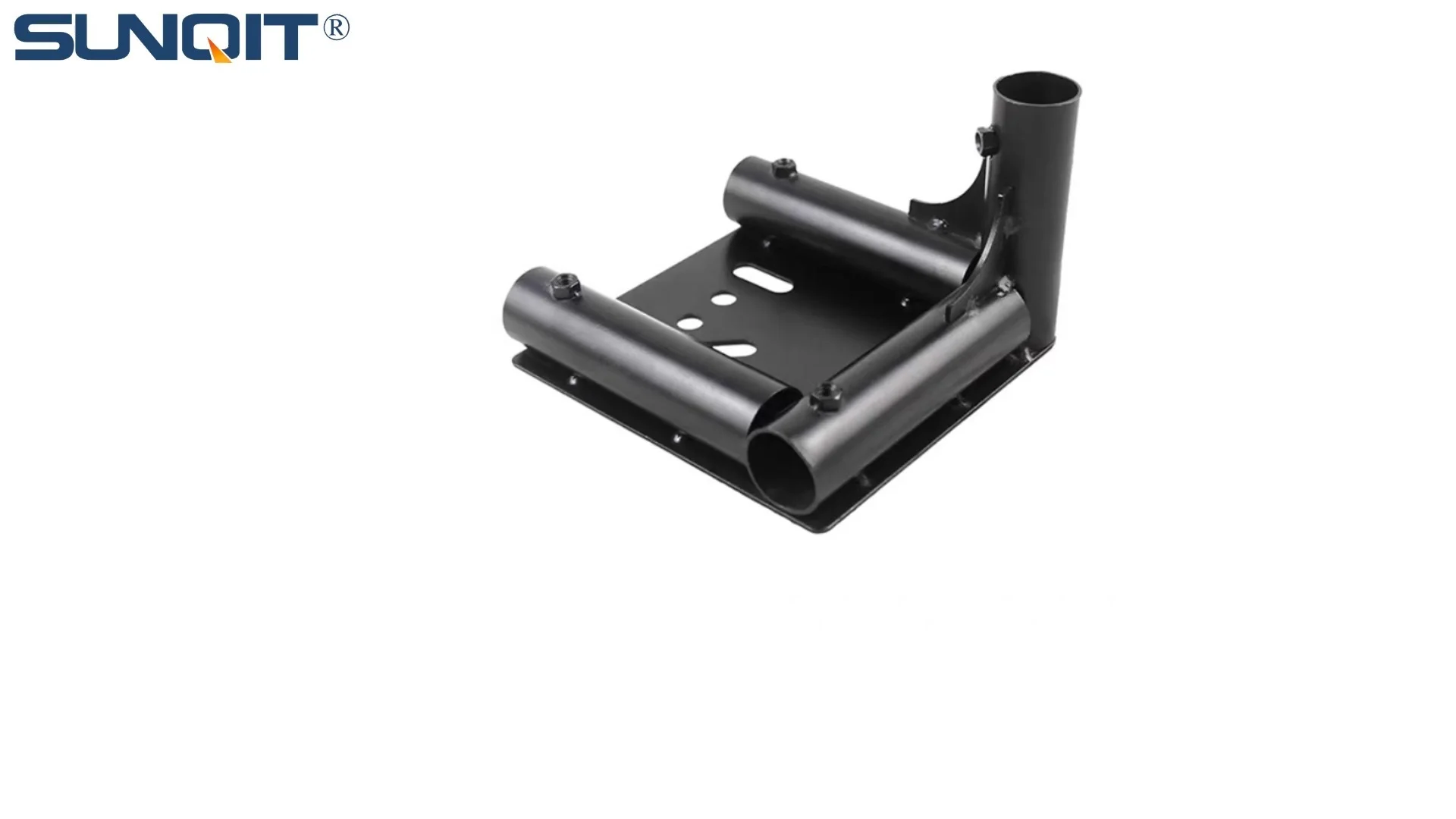
Pipe fitting castor installation base,Well made, precise and strong. Made of high quality of steel,black painting surface treatment for greater resistance to corrosion. It is used for castor or foot lever connection with lean pipe.
In the fast-paced world of flexible production lines, where adaptability and efficiency are paramount, even the smallest components can make or break operational success. Among these unsung heroes are castor installation bases—unassuming yet critical foundations that support everything from mobile workbenches and turnover trolleys to heavy-duty material racks. These bases serve as the bridge between equipment and the floor, ensuring smooth movement, stable positioning, and safe operation of tools and machinery. However, their role is often overlooked until problems arise: a wobbly trolley disrupting workflow, a cracked base halting production, or a misaligned caster causing uneven wear on floors and equipment.
For manufacturers relying on lean systems and agile processes, downtime is costly, and safety is non-negotiable. A faulty castor installation base might seem trivial, but it can lead to cascading issues: increased maintenance costs, worker fatigue from struggling with unsteady equipment, and even accidents. In this article, we'll dive into the most common problems plaguing castor installation bases in flexible production environments, explore their root causes, and provide actionable solutions to keep your operations running smoothly. Whether you're managing a small assembly line or a large-scale manufacturing facility, understanding these challenges and how to address them will help you build a more resilient, efficient, and safe production ecosystem—one solid base at a time.
Why Castor Installation Bases Matter: Beyond the Basics
Before delving into problems and solutions, it's worth emphasizing why castor installation bases deserve careful attention. These components are not just "holders" for caster wheels; they are the backbone of mobility in flexible production. A well-designed base distributes weight evenly, absorbs shocks from uneven floors, and ensures that equipment like aluminum workbenches or stainless steel roller track systems moves predictably. When paired with quality caster and accessories—such as brake mechanisms, swivel locks, and durable wheels—they transform static workspaces into dynamic, adaptable environments.
Consider a typical scenario: a material handler pushes a turnover trolley loaded with electronic components across a factory floor. If the castor installation base is weak or misaligned, the trolley may wobble, causing components to shift or fall. Over time, this instability can damage sensitive parts, slow down workflows, and even lead to repetitive strain injuries for workers. In lean manufacturing, where every second counts, such inefficiencies directly impact throughput and profitability. Simply put, neglecting the base is like building a house on sand—no matter how strong the walls (or caster wheels), the structure will falter.
Common Castor Installation Base Problems: Causes and Real-World Impact
Let's explore the most prevalent issues faced by production managers and maintenance teams when it comes to castor installation bases. Each problem is rooted in design, installation, or maintenance oversights, and each carries distinct risks to operations.
1. Loose or Wobbly Connections: The Silent Saboteur
One of the most frequent complaints is loose or wobbly connections between the castor installation base and the equipment it supports (e.g., workbenches, trolleys). This often starts subtly— a slight rattle during movement, a small gap between the base and the frame—and worsens over time. Left unaddressed, it can lead to full-blown instability, where the equipment shifts unpredictably or even detaches from the casters entirely.
Causes: Loose connections typically stem from inadequate fastening during installation. Using under-torqued bolts, skipping lock washers, or relying on low-quality screws that stretch or strip under load are common culprits. In high-vibration environments (e.g., near stamping machines or conveyor belts), even properly tightened bolts can gradually loosen as constant shaking weakens thread engagement. Additionally, using mismatched fasteners—such as a metric bolt in an imperial thread—creates uneven pressure, accelerating wear.
Impact: Beyond the obvious safety hazard of equipment tipping, loose connections cause uneven weight distribution. This forces some casters to bear more load than others, leading to premature wear on caster wheels and bearings. In precision industries like electronics manufacturing, where ESD workstations are critical, a wobbly base can disrupt static control, risking damage to sensitive microchips. Maintenance teams also bear the brunt, spending hours retightening bolts instead of focusing on proactive tasks.
2. Incompatible Base and Caster Sizes: A Mismatch Disaster
Imagine installing a heavy-duty caster with a 4-inch plate onto a castor installation base designed for 3-inch plates. The result? A precarious setup where the caster overhangs the base, creating stress points that crack the metal over time. Incompatible sizing between bases and casters is a surprisingly common issue, often due to hurried procurement or a lack of standardized component tracking.
Causes: This problem arises when teams prioritize caster specifications (e.g., load capacity, wheel material) over base compatibility. For example, upgrading to a higher-load caster without checking if the existing base can accommodate its mounting plate dimensions is a frequent mistake. Suppliers may also mislabel products, leading to bases with bolt patterns that don't align with caster holes. In facilities with multiple generations of equipment, mixing old and new bases and casters exacerbates the issue, as sizing standards evolve over time.
Impact: An ill-fitting base-caster pair creates uneven stress distribution. The overhanging sections of the caster plate act as levers, bending the base under load and causing cracks at the bolt holes. This not only shortens the base's lifespan but also compromises the caster's ability to swivel or brake effectively. In extreme cases, the caster may pivot on the misaligned bolts, jamming during movement and creating a tripping hazard. For lean pipe workbench suppliers, this mismatch can even damage the lean pipe joints connecting the base to the workbench frame, leading to costly replacements.
3. Poor Weight Distribution: When Bases Buckle Under Pressure
A castor installation base might be rated for 500kg, but if the load isn't distributed evenly across all four casters, it can still fail. Poor weight distribution is a silent killer, causing bases to crack, bend, or collapse—even under loads below their rated capacity.
Causes: Uneven loading often starts with equipment design. For example, a workbench with a heavy tool cabinet mounted on one end will shift most weight to the adjacent casters, overloading their bases. In dynamic environments, where operators frequently add or remove materials, temporary imbalances (e.g., stacking boxes on one side of a turnover trolley) can become chronic. Additionally, using bases with insufficient structural reinforcement—such as thin-gauge steel or missing gussets—exacerbates the problem, as the base cannot flex to distribute load.
Impact: The most visible sign is base deformation: bending along the centerline, cracks at stress points (e.g., where the base attaches to the frame), or even complete fracture. Beyond equipment damage, uneven weight distribution causes "wheel hop"—where overloaded casters lose contact with the floor during movement, leading to jarring stops and starts. This is particularly problematic for roller track systems, where smooth material flow is critical. In warehouses using flow racks, a buckled base can disrupt the roller track alignment, causing boxes to jam or slide unpredictably.
4. Corrosion and Wear: The Hidden Toll of Harsh Environments
Castor installation bases are often exposed to harsh conditions: moisture in food processing plants, chemicals in automotive painting facilities, or abrasive dust in mining operations. Without proper protection, they corrode, rust, or wear away, weakening their structural integrity.
Causes: Corrosion is primarily caused by exposure to water, salt, or chemicals that react with the base material (usually steel). In washdown environments (e.g., pharmaceutical manufacturing), frequent high-pressure cleaning with caustic detergents strips away protective coatings, leaving bare metal vulnerable. Wear, on the other hand, occurs when abrasive particles (e.g., sand, metal shavings) grind against the base, eroding surfaces and creating pits that trap more debris. Even in "clean" environments, humidity can lead to flash rust if bases are not dried properly after cleaning.
Impact: Corroded bases lose strength: rust expands as it forms, cracking the metal and weakening welds. A base that once supported 400kg may suddenly fail at 200kg, risking injury. In food processing, rust flakes can contaminate products, leading to regulatory violations. Wear, meanwhile, creates uneven surfaces, which catch on floor cracks or debris, making movement difficult. For stainless steel pipe series bases, which are supposed to resist corrosion, poor maintenance (e.g., using steel wool that leaves iron particles) can still trigger rust, defeating their purpose.

Solutions: Fixing and Preventing Castor Installation Base Issues
Addressing castor installation base problems requires a mix of proactive design, careful installation, and ongoing maintenance. Below are targeted solutions for each common issue, along with best practices to prevent recurrence.
1. Tightening Up: Solving Loose Connections
Eliminating loose connections starts with proper installation and includes ongoing monitoring to catch issues early.
- Use Locking Hardware: replace standard bolts with flange bolts or add lock washers (e.g., split washers, star washers) to prevent backspin. For high-vibration areas, thread-locking adhesives (e.g., Loctite) create a chemical bond that resists loosening. Apply a small drop to bolt threads before tightening—just enough to fill gaps without oozing out.
- Torque to Specification: Invest in a torque wrench and follow the manufacturer's recommended torque values for base fasteners. Over-tightening can stretch bolts, while under-tightening leaves them loose. For example, M10 bolts in steel bases typically require 40-50 Nm of torque; check the supplier's datasheet for exact figures.
- Regular Inspections: Schedule monthly "bolt checks" in high-use areas. Use a torque wrench to verify tightness, and mark bolts with a paint pen after tightening—if the mark is misaligned later, you'll know the bolt has loosened. In critical zones (e.g., near assembly lines), use vibration-resistant fasteners like wedge-locking nuts, which grip tighter under shaking.
2. Sizing Right: Ensuring Base-Caster Compatibility
Avoiding incompatible base and caster sizes requires upfront planning and clear communication with suppliers.
- Standardize Components: Create a "caster and accessories" specification sheet for your facility, detailing approved base sizes, bolt patterns, and load ratings. For example, mandate that all mobile equipment use 4-inch x 4-inch mounting plates with 10mm bolt holes on 80mm centers. This reduces the risk of mismatched parts.
- Measure Twice, Buy Once: Before purchasing, measure the caster's mounting plate (length, width, bolt hole spacing) and compare it to the base's dimensions. Use a digital caliper for precision, and request samples from suppliers to test fitment. If upgrading casters, check if the existing base can be modified (e.g., drilling new holes) or if a new base is needed.
- Work with Trusted Suppliers: Partner with suppliers who clearly label products with mounting specifications and offer technical support. A reliable castor installation base supplier should provide CAD drawings or templates showing bolt patterns, allowing you to verify compatibility before ordering.
3. Balancing Act: Fixing Poor Weight Distribution
Even the strongest base will fail if overloaded in one area. Use these strategies to distribute weight evenly:
- Add Reinforcements: For bases supporting uneven loads (e.g., a workbench with a heavy tool rack), weld gussets (triangular metal plates) between the base and the frame. Gussets distribute stress across a larger area, preventing bending. For existing equipment, bolt-on gussets are a retrofit option.
- Upgrade to Heavy-Duty Bases: replace thin-gauge steel bases with thicker, structurally sound alternatives. Look for bases with a "U" or "L" cross-section, which resist bending better than flat plates. For example, a 3mm thick steel base with a 50mm flange offers far more rigidity than a 2mm flat base of the same size.
- Use Adjustable Leveling Feet: Install adjustable leveling feet alongside casters to balance loads. These feet can be extended or retracted to compensate for uneven floors or off-center weights. For example, if a trolley leans to one side, extend the leveling foot on the lighter side to shift weight back to the casters. Choose feet with rubber pads to prevent floor damage and reduce vibration.
4. Fighting Corrosion: Protecting Bases in Harsh Environments
Extending base life in tough conditions requires choosing the right materials and maintaining them properly.
- Choose Corrosion-Resistant Materials: For wet or chemical-exposed areas, opt for stainless steel bases (304 or 316 grade) or galvanized steel with a powder-coated finish. Stainless steel resists rust, while powder coating adds a durable, chemical-resistant layer. In food processing, look for bases with smooth, crevice-free designs that are easy to clean—no hidden corners where moisture can collect.
- Regular Cleaning: Hose down bases weekly in dirty environments (e.g., warehouses) to remove abrasive dust. In chemical areas, use neutral pH cleaners to avoid stripping coatings. Dry thoroughly after cleaning—even stainless steel can rust if left wet with saltwater or acidic solutions.
- Apply Protective Coatings: For existing steel bases, touch up chips in paint with a rust-inhibiting primer and topcoat. For extra protection, spray on a clear polyurethane sealant, which forms a barrier against moisture. In outdoor or marine environments, consider hot-dip galvanizing, where the base is dipped in molten zinc to create a thick, corrosion-resistant layer.

Problem-Solution Summary Table
| Common Problem | Key Causes | Immediate Fix | Long-Term Prevention |
|---|---|---|---|
| Loose/Wobbly Connections | Under-torqued bolts, missing lock washers, high vibration | Retighten bolts with torque wrench; add thread-locking adhesive | Use lock washers and vibration-resistant fasteners; monthly torque checks |
| Incompatible Base-Caster Sizes | Mismatched mounting plates, poor supplier labeling | replace with compatible base or caster; use shims for minor gaps | Standardize specs; measure before purchasing; work with trusted suppliers |
| Poor Weight Distribution | Off-center loads, thin-gauge bases, missing reinforcements | Add temporary supports; adjust adjustable leveling feet to balance load | Upgrade to heavy-duty bases; weld gussets; train staff on even loading |
| Corrosion/Wear | Moisture, chemicals, abrasive debris | Clean and repaint rusted areas; replace severely worn bases | Use stainless steel or coated bases; regular cleaning; protective coatings |

Conclusion: Building a Strong Foundation for Flexible Production
Castor installation bases may not grab headlines, but they are the unsung heroes of flexible production lines. A solid base ensures that equipment moves smoothly, lasts longer, and keeps workers safe—all critical for maintaining the efficiency that lean manufacturing demands. By addressing common issues like loose connections, incompatible sizing, and corrosion, and by implementing proactive solutions such as proper torqueing, standardized components, and regular inspections, you can transform these overlooked components into pillars of operational success.
Remember, the goal isn't just to fix problems as they arise, but to prevent them. Invest in quality bases and caster and accessories from reputable suppliers, train your team to recognize early warning signs (e.g., rattling, uneven movement), and make base maintenance part of your regular lean system audits. In the end, a little attention to these foundational components will pay dividends in reduced downtime, lower maintenance costs, and a safer, more efficient workplace.
After all, in flexible production, the best moves start with a solid base.