- Company Articles
- Products and Technology
- Product knowledge
- Common Misconceptions About 40 Roller Track Placon Mount Flat Systems

Common Misconceptions About 40 Roller Track Placon Mount Flat Systems
Related Product
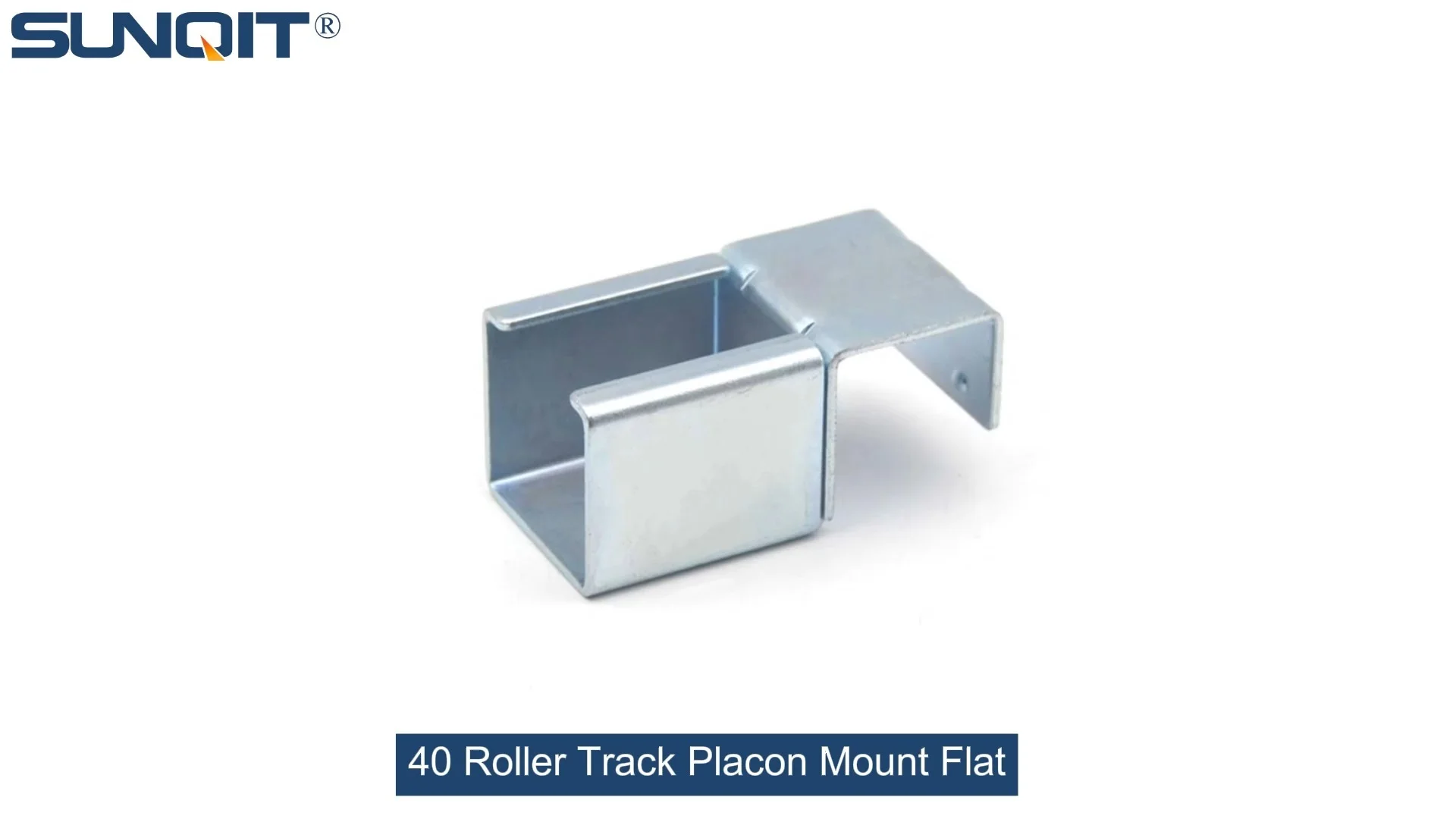
40 Roller Track Placon Mount Flat
Roller track placon mount work as a connector for roller track and pipe or aluminum profile in rack syetem, it is a necessary parts in rack system which widely used in industrial plant and logistic,warehouse storage.
In the fast-paced world of modern manufacturing, where every second counts and efficiency is the backbone of success, the way materials move through a facility can make or break a production line. Enter the 40 Roller Track Placon Mount Flat System—a quiet workhorse that's become a cornerstone of lean manufacturing setups across the globe. Designed to streamline material flow, reduce manual handling, and adapt to evolving production needs, this system sounds like a no-brainer for any operation looking to boost productivity. But here's the catch: despite its growing popularity, many businesses still harbor misconceptions about it. These myths—rooted in outdated info, hearsay, or simple unfamiliarity—often hold companies back from leveraging its full potential.
Whether you're running a small 3C assembly workshop or managing a large-scale automotive parts warehouse, understanding the truth behind these misconceptions could be the key to unlocking smoother workflows, lower costs, and a more agile production process. Let's dive in and separate fact from fiction, so you can decide if this roller track system is the missing piece in your lean manufacturing puzzle.
Myth 1: "It's Only for Big Factories—Small Businesses Don't Need It"
The Misconception:
Walk into a local manufacturing trade show, and you might overhear a small business owner say, "That 40 Roller Track system is nice, but it's probably overkill for us. We're not a massive plant with miles of production lines—we just need something simple to move parts around." This belief—that roller track systems are exclusively for large-scale operations with endless budgets and sprawling facilities—is one of the most common roadblocks preventing smaller businesses from adopting lean solutions.
The Reality:
Nothing could be further from the truth. In fact, small and medium-sized enterprises (SMEs) often stand to gain the most from systems like the 40 Roller Track Placon Mount Flat. Why? Because these businesses typically operate with tighter spaces, leaner teams, and less room for waste—exactly the scenarios where efficient material flow becomes critical.
Let's break it down. The 40 Roller Track Placon Mount Flat System is built on the principles of modularity and flexibility—two traits that align perfectly with the needs of smaller operations. Unlike rigid, one-size-fits-all conveyor belts that require extensive installation and fixed layouts, this roller track system uses lightweight aluminum profiles and easy-to-connect placon mounts. That means you can start small: maybe a single 10-foot section to connect a assembly station to a packing area. As your business grows, you can add more sections, adjust angles, or even reconfigure the entire setup in a matter of hours—no need for expensive contractors or production shutdowns.
Real-World Example: A Small 3C Assembly Workshop
Consider a family-run electronics workshop that assembles smartphone chargers. Before using roller track, their process was chaotic: workers manually carried bins of components from storage to the assembly line, often tripping over cords or wasting time searching for tools. They had limited floor space, so permanent conveyors were out of the question. After installing a compact 40 Roller Track Placon Mount Flat System, they set up a U-shaped path that fit neatly in their 500-square-foot workshop. Components now glide smoothly from the storage shelf to the assembly table, and finished products roll directly to the testing station. The result? A 30% reduction in time spent on material handling, fewer errors, and happier employees who no longer strain their backs lifting heavy bins.
Another angle: cost. Small businesses often worry about upfront investments, but the 40 Roller Track system's modular design means you don't have to buy everything at once. Start with the essentials, and expand as needed. Plus, since it's built with durable aluminum, it lasts for years—so you're not constantly replacing cheap plastic alternatives that crack under daily use. When you factor in the labor savings and reduced product damage from smoother handling, the ROI often kicks in within months, not years.
Myth 2: "Installation Is Too Complicated—We'll Need Experts"
The Misconception:
"We looked into roller track systems before, but the installer quoted us two days of work and a small fortune. Between the technical drawings, drilling into the floor, and wiring, it just seemed like more hassle than it's worth." This fear of complex installation is another major myth keeping businesses from adopting the 40 Roller Track Placon Mount Flat System. Many decision-makers assume that any material handling equipment requires specialized knowledge, heavy machinery, and days of downtime to set up.
The Reality:
Modern roller track systems—especially the 40 Roller Track Placon Mount Flat—are designed with "do-it-yourself" in mind. Gone are the days of needing a team of engineers to assemble a simple material flow solution. Today's systems prioritize user-friendliness, thanks to innovations like pre-drilled aluminum profiles, snap-on placon mounts, and tool-free connectors.
Let's walk through a typical installation process. First, you'll unbox the components: aluminum roller tracks, placon mounts (which act as the "feet" that secure the track to your workspace), and a few basic tools—a rubber mallet, an Allen wrench, and maybe a level. No heavy drilling, no concrete cutting, no electrical wiring. The placon mounts attach to the track via T-slot connections (a common feature in aluminum profile systems), and you can mount them to almost any surface: concrete floors, wooden workbenches, even existing shelving units. Need to adjust the height? Just loosen the placon mount's locking knob, slide it up or down, and tighten—done. Want to add a curve? Use a flexible connector (another modular accessory) to bend the track without kinking or damaging it.
| Installation Step | Time Required | Tools Needed |
|---|---|---|
| Unbox and sort components | 10 minutes | None |
| Attach placon mounts to roller track | 15 minutes (for 10-foot section) | Allen wrench |
| Secure track to workspace surface | 20 minutes | Rubber mallet, level |
| Test and adjust for smooth rolling | 5 minutes | Level |
| Total (for 10-foot section) | 50 minutes | Basic hand tools |
Even better, most suppliers provide detailed instruction manuals with step-by-step photos, and many offer video tutorials online. For SMEs with limited technical staff, this means a single maintenance worker or even a production supervisor can handle installation. And if you do run into a snag? Reputable suppliers offer customer support lines to walk you through any issues—no need to pay for on-site service calls.
The bottom line: Installing a 40 Roller Track Placon Mount Flat System is closer to assembling a piece of IKEA furniture than building a rocket. With a little patience and a basic toolkit, you can have your system up and running in an afternoon—without disrupting your production schedule.

Myth 3: "It's Too Expensive Compared to Cheaper Alternatives"
The Misconception:
"Why spend money on a fancy aluminum roller track when we can just use plastic bins on a wooden shelf? Or even a few PVC pipes and some casters? It's the same thing, right?" This line of thinking—focusing solely on upfront costs while ignoring long-term value—is a classic pitfall for businesses trying to cut corners. Many decision-makers see the price tag of a 40 Roller Track system and immediately compare it to cheaper, makeshift solutions, assuming they're getting the same functionality for less.
The Reality:
Yes, a 40 Roller Track Placon Mount Flat System will cost more upfront than a DIY setup with PVC pipes or second-hand conveyor belts. But here's the critical distinction: it's an investment, not an expense. When you factor in durability, maintenance, flexibility, and efficiency gains, the total cost of ownership (TCO) for the roller track system often ends up being significantly lower than those "cheap" alternatives.
Let's break down the numbers. Suppose you opt for a DIY solution: wooden shelves with plastic bins and a few PVC pipes to "roll" materials. The upfront cost might be $200 for materials. But how long will that last? Wood warps in humid environments, plastic bins crack under heavy loads, and PVC pipes bend or break when exposed to daily use. Within six months, you're replacing bins, sanding warped shelves, and fixing bent pipes—adding another $100 to $150 in replacement costs. Then there's the hidden cost of inefficiency: materials get stuck on rough wooden surfaces, employees waste time jiggling bins free, and the fixed layout means you can't adapt when a new product line requires a different workflow. Over a year, that "cheap" $200 setup could end up costing you thousands in lost productivity and repairs.
Now compare that to the 40 Roller Track Placon Mount Flat System. A 10-foot section might cost $600 upfront—three times the DIY option. But aluminum profiles are resistant to warping, corrosion, and impact; the rollers are made from high-density polyethylene (HDPE) or steel, designed to handle thousands of passes without cracking. Maintenance? Minimal: just an occasional wipe-down and a drop of lubricant on the rollers every few months. And because it's modular, you can reconfigure it whenever your needs change—no need to buy a whole new system. Over five years, the roller track system might cost $600 + $50 in maintenance = $650 total. The DIY setup? $200 initial + $150/year in replacements x 5 years = $950—plus the cost of lost efficiency. Suddenly, the "expensive" option becomes the cheaper one.
The Hidden Cost of Downtime
Consider a medical device manufacturer that switched from a DIY conveyor system to the 40 Roller Track Placon Mount Flat. Their old setup used plastic rollers that frequently jammed, causing 2-3 production delays per week (each delay lasting 15-20 minutes). With 10 employees earning $25/hour, those delays cost $25/employee x 10 employees x (2.5 delays/week x 0.33 hours/delay) = ~$206/week. Over a year, that's $10,712 in lost productivity. The roller track system eliminated jams entirely, paying for itself in less than two months.

Myth 4: "It's Not Versatile—It Only Does One Job"
The Misconception:
"We need something that can handle small electronic components today, but next month we might be assembling larger parts. This roller track system probably only works for one type of product—we'll end up buying multiple systems." This fear of limited versatility is another common myth, driven by the assumption that roller tracks are rigid tools designed for specific, unchanging tasks.
The Reality:
The 40 Roller Track Placon Mount Flat System thrives on versatility. Its modular design and wide range of compatible accessories make it adaptable to almost any material handling task, from tiny circuit boards to heavy metal parts. Let's explore how it can transform to meet different needs.
First, weight capacity. The "40" in the system's name refers to the width of the aluminum profile (40mm), which is strong enough to handle loads up to 220 pounds per linear foot. That means you can use it for lightweight items like 3C components (smartphone screens, circuit boards) by simply adjusting the roller spacing to prevent small parts from slipping through. Need to move heavier items, like automotive parts or medical device housings? Swap out the standard rollers for heavy-duty steel ones, and you're good to go—no need for a separate track.
Then there are the accessories. Want to sort materials? Add dividers to create lanes. Need to stop items at a specific workstation? Install a spring-loaded brake (a small, flip-up barrier that halts the roller when engaged). Dealing with delicate surfaces, like glass panels or polished metal? Use soft, rubber-coated rollers to prevent scratches. The system even integrates seamlessly with other lean tools: pair it with a flow rack for kanban-style inventory management, connect it to a workbench with ESD protection for electronics assembly, or link it to a conveyor system for longer-distance transport. It's not just a roller track—it's a hub that connects different parts of your workflow.
From 3C Assembly to Warehousing: One System, Two Jobs
A electronics manufacturer in Shenzhen uses the same 40 Roller Track system for two tasks. In their assembly area, they've configured it with narrow rollers and ESD-safe materials to transport sensitive circuit boards between soldering and testing stations. Just 50 feet away, in their warehouse, they've reconfigured the same track sections with wider steel rollers and added side guides to move heavy cardboard boxes of finished products to shipping. When a new product line requires a different layout, they simply disconnect the sections, rearrange the placon mounts, and swap accessories—all in under an hour.

Myth 5: "Maintenance Is a Nightmare—It Breaks Down Constantly"
The Misconception:
"We don't have time to deal with broken rollers or jammed tracks. Our production line can't afford the downtime, so we'll stick with manual handling—it's more reliable." This fear of high maintenance and frequent breakdowns is perhaps the most persistent myth, rooted in memories of old, clunky conveyor systems that required constant repairs.
The Reality:
Modern roller track systems like the 40 Roller Track Placon Mount Flat are engineered for minimal maintenance and maximum reliability. Unlike older conveyor belts with hundreds of moving parts (motors, gears, belts that stretch or fray), roller tracks have very few components that can fail—just the rollers, the aluminum frame, and the placon mounts. And each of these is built to last.
Let's start with the rollers. Most 40 Roller Track systems use sealed-bearing rollers, which means no need for regular lubrication (the bearings are pre-lubricated and protected from dust and debris). The rollers themselves are made from either high-density polyethylene (HDPE) or stainless steel—both resistant to wear, corrosion, and impact. Even with daily use, a set of rollers can last 5+ years before needing replacement. When they do wear out? They're designed to pop out with a simple push, so you can swap in a new roller in 30 seconds—no tools required.
The aluminum frame is equally durable. Aluminum profiles are lightweight but incredibly strong, and they resist rust, dents, and warping—even in harsh factory environments with temperature fluctuations or exposure to oils and chemicals. The placon mounts, made from reinforced plastic or aluminum, are designed to absorb shock and distribute weight evenly, preventing cracks or breakage.
Routine maintenance is equally straightforward. A weekly wipe-down with a damp cloth to remove dust and debris is usually enough. Every few months, check the placon mounts to ensure they're tight (just a quick twist with an Allen wrench if they're loose) and inspect the rollers for signs of wear (scratches or uneven rolling). That's it. No expensive service contracts, no specialized technicians, no production halts for repairs.
The Bottom Line: It's Time to Embrace the Truth
The 40 Roller Track Placon Mount Flat System isn't just another piece of factory equipment—it's a tool that empowers businesses of all sizes to work smarter, not harder. By debunking these common myths, we've seen that it's versatile enough for small workshops, easy enough for in-house installation, cost-effective over time, adaptable to changing needs, and low-maintenance in the long run.
In a manufacturing landscape where efficiency and agility are more important than ever, clinging to outdated misconceptions can mean falling behind competitors who've already embraced lean solutions. Whether you're assembling 3C products, packaging medical devices, or managing a warehouse, the 40 Roller Track Placon Mount Flat System offers a path to smoother workflows, lower costs, and a more resilient operation.
So the next time someone tells you roller track systems are "only for big factories" or "too expensive," remember: the truth is in the flexibility, the modularity, and the long-term value. It's not just about moving materials—it's about building a production process that can grow, adapt, and thrive in an ever-changing market. And that's a myth worth busting.