- Company Articles
- Products and Technology
- Product knowledge
- Common Misconceptions About Aluminum Side Guards Debunked

Common Misconceptions About Aluminum Side Guards Debunked
Related Product
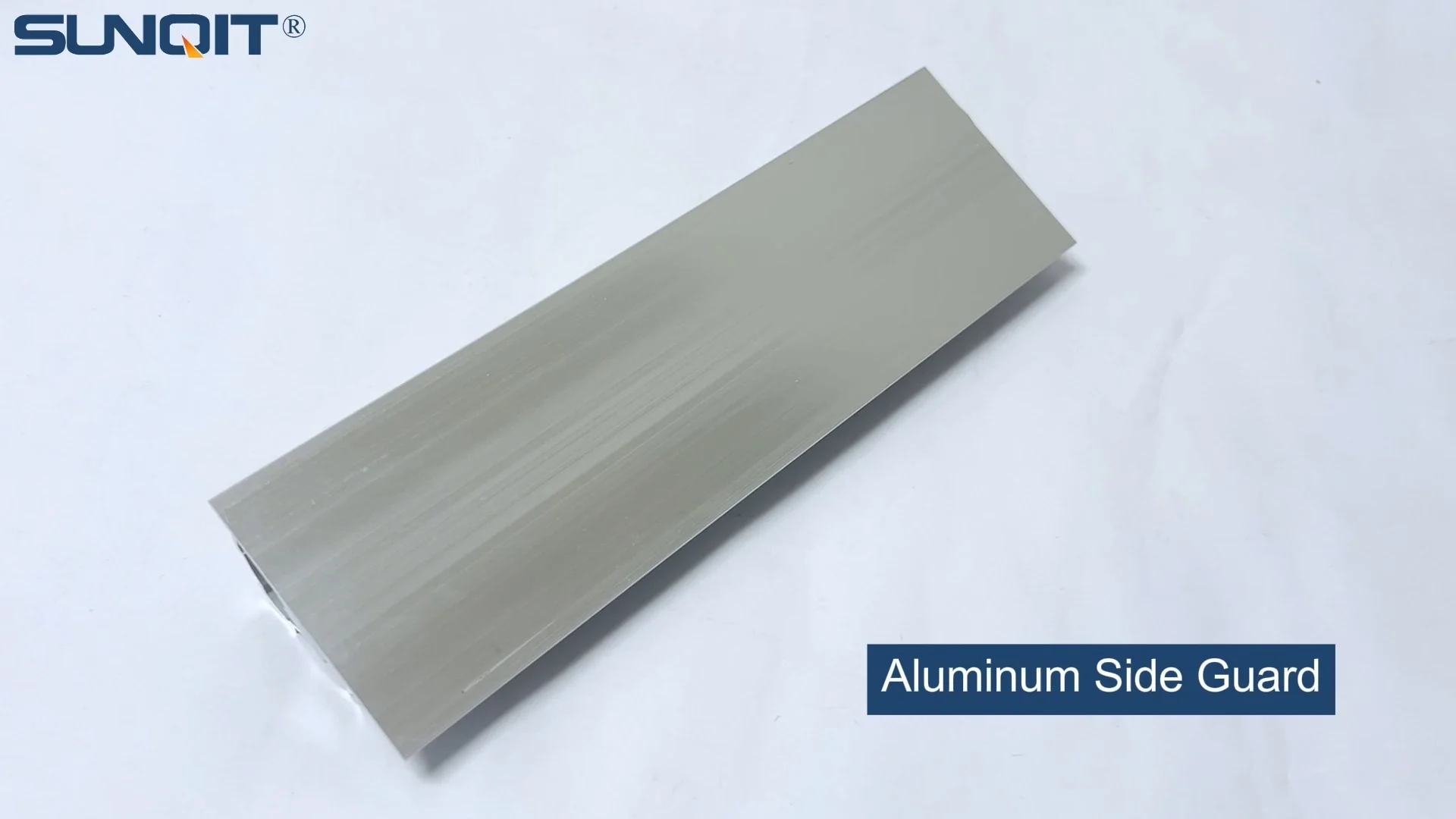
Aluminum Side Guard
Aluminum side guard, it works with a aluminum pipe or a roller track as side guard to prevent material drop,or move to wrong direction.
In the world of manufacturing, warehousing, and logistics, every component of your workspace plays a role in efficiency, safety, and productivity. Aluminum side guards—those unassuming yet critical barriers along workbenches, conveyor systems, and material racks—are no exception. Yet, despite their widespread use, there's a cloud of misconceptions surrounding them. From doubts about their strength to assumptions about cost, these myths often lead businesses to overlook a solution that could transform their operations. Let's cut through the noise and separate fact from fiction. Whether you're a plant manager upgrading your production line, a warehouse supervisor optimizing material flow, or a small business owner setting up a lean workspace, understanding the truth about aluminum side guards could save you time, money, and headaches down the line.
Misconception 1: "Aluminum Side Guards Are Too Expensive Compared to Plastic or Steel Alternatives"
The Myth: "Why pay more for aluminum when plastic is cheaper upfront, or steel is 'tougher'?"
It's easy to look at the price tag of aluminum side guards and balk, especially when plastic options seem lighter on the wallet at first glance. Plastic side guards often cost 30-50% less upfront, and steel—with its reputation for sturdiness—can feel like a "safer" investment. But here's the problem: cost isn't just about the initial purchase. It's about the total cost of ownership (TCO)—and aluminum side guards shine here.
Let's break it down. Plastic side guards, while cheap to buy, have a short lifespan. They crack under impact, warp in high temperatures (common in manufacturing environments), and degrade when exposed to chemicals or UV light. A plastic guard might last 2-3 years before needing replacement, meaning you're buying new ones every few years. Steel, on the other hand, is durable but heavy. Shipping steel guards adds significant costs, and installation requires more labor (think: extra workers to lift and mount them). Worse, steel rusts—unless you invest in expensive coatings or stainless steel, which bumps up the price anyway.
Aluminum, by contrast, offers a sweet spot. Yes, the upfront cost might be 10-20% higher than plastic, but its lifespan is 10-15 years with minimal maintenance. Its lightweight nature (about 1/3 the weight of steel) slashes shipping and installation costs—one worker can often handle an aluminum guard that would require two for steel. And unlike steel, aluminum doesn't rust. Its surface naturally forms a thin oxide layer that resists corrosion, even in humid warehouses or facilities with frequent washdowns. Over a decade, that adds up to fewer replacements, lower labor costs, and zero spending on rust treatments or coatings. For businesses running lean systems—where waste reduction is key—aluminum side guards aren't an expense; they're an investment.
Consider this real-world example: A mid-sized automotive parts manufacturer in Ohio switched from plastic to aluminum side guards on their assembly line workbenches. Initially, they paid $200 more per guard, but over five years, they saved $12,000. How? They avoided replacing cracked plastic guards twice (costing $8,000 total), cut installation time by 40% (saving $3,000 in labor), and eliminated the need for annual touch-up painting (another $1,000). The math speaks for itself: aluminum's "higher" upfront cost was a fraction of the long-term savings.
Misconception 2: "Aluminum Isn't Strong Enough for Heavy-Duty Applications"
The Myth: "Aluminum is flimsy—great for soda cans, but not for protecting equipment or workers from heavy loads."
This is perhaps the most persistent myth, and it couldn't be further from the truth. The confusion stems from conflating "lightweight" with "weak"—a mistake that overlooks the engineering marvel of aluminum extrusion profiles. Unlike generic aluminum tubing, the aluminum used in side guards is often an extrusion profile—meaning it's shaped under high pressure to create a cross-section (like a T, L, or square) that maximizes strength. These profiles are designed to distribute weight and impact force evenly, making them surprisingly robust.
Let's talk numbers. A standard 2-inch aluminum extrusion profile with a 1/8-inch wall thickness can withstand a static load of up to 500 pounds per linear foot. That's more than enough to handle the bumps from a loaded turnover trolley, the weight of stacked boxes leaning against a material rack, or the occasional nudge from a forklift (within reason, of course). When paired with aluminum pipe accessories like heavy-duty joints, brackets, and clamps, the strength only increases. For example, a side guard mounted with internal rotary aluminum joints (designed to reinforce connections) can handle impacts up to 300 pounds without bending—a far cry from the "flimsy" stereotype.
Take the logistics industry, where aluminum side guards are a staple on conveyor systems. A major e-commerce fulfillment center in Texas uses aluminum side guards along their 85 staggered roller tracks (those busy conveyor belts zipping packages around). These guards regularly endure impacts from 50-pound boxes sliding at 10 feet per second, yet they've maintained their shape for over eight years. Why? Because the aluminum extrusion profile they chose has a reinforced lip design that absorbs impact, and the aluminum pipe accessories—like steel-reinforced brackets—secure it firmly to the conveyor frame. The result? Zero downtime from guard damage, even with millions of packages passing through annually.
Another example: automotive manufacturing plants, where heavy parts like engine blocks (weighing 300+ pounds) are moved along roller tracks. Aluminum side guards here don't just "protect"—they support . Some systems integrate aluminum guide rail B (a specialized extrusion) into the side guards, creating a dual-purpose barrier that also keeps parts centered on the track. This design handles the constant friction and weight of metal parts without warping, proving aluminum's mettle in high-stress environments.
The key is choosing the right grade and profile. 6061-T6 aluminum, a common alloy in industrial applications, has a tensile strength of 42,000 psi—comparable to some low-carbon steels. When manufacturers opt for cheap, thin-walled aluminum tubing (the kind used in DIY projects), they'll run into issues. But industrial-grade aluminum side guards, made with precision extrusion profiles and paired with quality aluminum pipe accessories, are built to perform in heavy-duty settings. Don't let the "lightweight" label fool you—this material is tough when it counts.

Misconception 3: "Aluminum Side Guards Are Difficult to Customize or Modify"
The Myth: "Once you install aluminum side guards, they're set in stone. If your needs change, you'll have to buy new ones."
In today's fast-paced business world, adaptability is everything. Production lines retool for new products, warehouses rearrange layouts to accommodate seasonal spikes, and lean systems demand constant optimization. The last thing you need is a rigid workspace component that can't keep up. Yet, many assume aluminum side guards are permanent fixtures—hard to cut, hard to adjust, and impossible to repurpose. Nothing could be further from the truth.
Aluminum's modularity is one of its greatest strengths, thanks in large part to aluminum profile accessories. Unlike steel (which often requires welding to modify) or plastic (which cracks when cut), aluminum can be easily adjusted with basic tools. Need to shorten a side guard? A hacksaw or miter saw cuts through it cleanly. Want to raise the height? Loosen the aluminum pipe clamp securing it to the workbench, slide it up, and retighten. Need to add a notch for a new conveyor belt? A drill and file handle that in minutes. This flexibility is a game-changer for lean operations, where "waste" includes inflexible infrastructure.
Let's dive into the accessories that make this possible. Aluminum profile accessories like 90° aluminum crossing joints, parallel fixation aluminum pipe joints, and roller track placon mount brackets allow you to connect, extend, or reposition side guards without specialized tools. For example, if you need to widen a side guard to accommodate larger boxes, you can add a section of aluminum pipe using a three-way aluminum pipe joint—no welding, no glue, just a few turns of a hex key. Even better, these accessories are standardized, so you can mix and match components from different batches or suppliers without compatibility issues.
A small electronics manufacturer in California demonstrated this adaptability perfectly. When they landed a contract for a new smartphone model, their assembly line needed to accommodate larger circuit board trays. Their existing aluminum side guards on the workbenches were 12 inches high—too short to prevent trays from sliding off. Instead of buying new guards, they added 6-inch extensions using parallel aluminum joint a and aluminum pipe clamps. The entire modification took two workers just three hours, costing $150 in parts—compared to $2,000 for new guards. And when the contract ended, they removed the extensions and reused the original guards elsewhere in the facility. That's the power of aluminum's customization potential.
Even more impressive is how aluminum side guards integrate with other lean system components. Suppose you're setting up a new material rack B (3 rows, 3 floors) and need side guards that align with the rack's height and spacing. Aluminum side guards can be cut to length, and with aluminum guide rail A or B (specialized extrusion profiles), you can create a seamless barrier that matches the rack's dimensions. If next year you add a fourth floor to the rack, simply extend the side guards with additional aluminum pipe and a few connectors. No need to redesign or replace—just adapt.
The bottom line: Aluminum side guards aren't a "set-it-and-forget-it" solution. They're a flexible solution, designed to grow and change with your business. In a world where agility is competitive advantage, that's not just a nice feature—it's a necessity.

Misconception 4: "Aluminum Side Guards Require Constant Maintenance to Prevent Corrosion"
The Myth: "Aluminum rusts too, right? You'll be stuck painting or treating it every few months to keep it looking good."
Rust is the bane of many industrial components. Steel side guards, for all their strength, demand constant attention—scraping off rust, applying primer, repainting—to avoid deterioration. It's a tedious, costly chore that eats into maintenance budgets. So it's natural to assume aluminum, being a metal, would face the same issue. But aluminum and rust are strangers—and that's by nature, not nurture.
Aluminum has a unique defense mechanism: when exposed to oxygen, it forms a thin, invisible layer of aluminum oxide (Al₂O₃) on its surface. This layer is just 0.00001 inches thick, but it's incredibly dense and impermeable. It acts as a shield, preventing further oxidation (rust) from occurring. Unlike steel's rust, which flakes off and exposes fresh metal to corrosion, aluminum oxide stays put—self-healing, in a way. Even if the surface is scratched, the exposed aluminum reacts with oxygen to form a new oxide layer within hours. This means aluminum side guards resist corrosion in rain, humidity, and even mildly acidic or alkaline environments (like warehouses with cleaning chemicals).
Compare this to plastic side guards, which don't rust but degrade from UV exposure, turning brittle and discolored over time. Or stainless steel pipe series, which do resist corrosion but at a premium cost (stainless steel is often 2-3x more expensive than aluminum) and with added weight. Aluminum offers the best of both worlds: corrosion resistance without the price tag or heft.
So, what does maintenance look like for aluminum side guards? In most cases, it's as simple as an occasional wipe-down with soap and water. For dusty environments (like woodworking shops or concrete plants), a quick hose-off or vacuuming removes debris that might hide scratches (though even scratches are self-healing, as we noted). There's no need for paint, coatings, or rust inhibitors—ever. A food processing plant in Minnesota, which uses aluminum side guards around their washdown conveyor systems, hasn't performed any maintenance on them in six years. The guards still look new, and there's zero sign of corrosion, even with daily exposure to water and sanitizing solutions.
The only exception? Extremely harsh environments, like marine settings with saltwater spray, or chemical plants with highly acidic fumes. In those cases, you might opt for anodized aluminum (where the oxide layer is thickened electrolytically) or a specialized coating. But for 99% of manufacturing, warehousing, and logistics operations, standard aluminum side guards are maintenance-free. That's more than a convenience—it's a cost-saver. A survey of maintenance managers found that facilities using aluminum side guards spent 75% less on upkeep than those using steel, freeing up staff to focus on more critical tasks (like repairing machinery or improving safety protocols).
Aluminum vs. Plastic vs. Steel: A Side-by-Side Comparison
| Factor | Aluminum Side Guards | Plastic Side Guards | Steel Side Guards |
|---|---|---|---|
| Upfront Cost | Moderate (10-20% higher than plastic, 20-30% lower than stainless steel) | Lowest | Moderate to high (varies by type; carbon steel is cheaper, stainless steel is expensive) |
| Long-Term Cost (10-year lifespan) | Lowest (minimal replacement, maintenance, and labor costs) | Highest (needs replacement every 2-3 years) | High (ongoing maintenance, repainting, and potential rust damage) |
| Durability | Excellent (10-15 year lifespan; resists impacts and warping) | Poor (cracks, warps, and degrades in 2-5 years) | Good (15+ year lifespan but prone to rust without maintenance) |
| Weight | Lightest (1/3 the weight of steel) | Light (but less rigid, so thicker walls add weight) | Heaviest (increases shipping and installation labor costs) |
| Corrosion Resistance | Excellent (self-healing oxide layer; no rust) | Good (no rust, but UV degradation occurs) | Poor (carbon steel rusts; stainless steel resists but is costly) |
| Customization Ease | Excellent (easily cut, drilled, and modified with aluminum pipe accessories) | Fair (can be cut but prone to cracking; limited accessory compatibility) | Poor (requires welding or specialized tools for modifications) |
| Maintenance Needs | Minimal (occasional cleaning; no painting or rust treatment) | Low (no rust, but may need replacement due to wear) | High (regular rust removal, painting, and coating) |
Misconception 5: "Aluminum Side Guards Don't Offer Enough Design Flexibility for Aesthetic or Branding Needs"
The Myth: "Aluminum is boring—just silver or gray. If I want my workspace to look professional or on-brand, I'll have to go with painted steel."
A workspace isn't just functional—it's a reflection of your brand. A clean, organized, and visually consistent environment boosts employee morale and impresses clients or auditors. So it's understandable to worry that aluminum side guards, with their natural silver finish, might feel cold or generic. But aluminum is surprisingly versatile when it comes to aesthetics—and it doesn't require a paintbrush to prove it.
First, aluminum's natural finish is timeless. Its smooth, matte silver tone complements modern industrial design, pairing well with aluminum profile workbenches, conveyor systems, and material racks. It gives off a sleek, professional vibe that says "precision"—perfect for industries like aerospace, medical device manufacturing, or electronics, where attention to detail matters.
But if you want color, aluminum delivers there too. Anodizing—a process that thickens the oxide layer—can dye aluminum in a range of hues, from bold reds and blues to subtle pastels. Anodized finishes are durable (they won't chip or fade like paint) and come in hundreds of shades, making it easy to match your brand colors. A cosmetics manufacturer in France, for example, uses anodized pink aluminum side guards on their packaging line workbenches, aligning with their brand's playful, feminine aesthetic. The color has held up for six years, even with daily cleaning.
For those who prefer a painted look, aluminum accepts paint beautifully—though, unlike steel, it doesn't need it. Powder coating (electrostatically applying dry paint and curing it with heat) creates a tough, chip-resistant finish in any color. And since aluminum doesn't rust, you won't have to worry about paint peeling to reveal corrosion underneath. A brewery in Colorado powder-coated their aluminum side guards in their signature green, and after three years of exposure to moisture (from steam cleaning kegs), the finish still looks brand-new.
Even better, aluminum's design flexibility extends to shape. Aluminum extrusion profiles can be customized with grooves, lips, or textures to add visual interest. For example, some side guards feature a subtle diamond plate pattern on the surface, adding grip (useful in wet areas) and a rugged, industrial look. Others have rounded edges for a softer, more modern feel. With aluminum, you're not stuck with a one-size-fits-all design—you can tailor it to your workspace's personality.
Aluminum side guards are more than just barriers—they're a smart, forward-thinking choice for businesses that value efficiency, durability, and adaptability. The myths surrounding their cost, strength, customization, and maintenance have kept too many operations stuck with subpar alternatives. But as we've explored, aluminum side guards offer long-term savings, industrial-grade strength, unmatched flexibility, and minimal upkeep—all while supporting lean systems that thrive on optimization.
Whether you're safeguarding workers along a conveyor line, organizing materials on a rack, or securing tools on a workbench, aluminum side guards deliver where it counts: in performance, in cost-effectiveness, and in peace of mind. So the next time you're evaluating workspace components, don't let outdated myths hold you back. Aluminum side guards aren't just a solution—they're an upgrade.