- Company Articles
- Products and Technology
- Product knowledge
- Common Misconceptions About Duplex Aluminum Pipe Joints Debunked

Common Misconceptions About Duplex Aluminum Pipe Joints Debunked
Related Product
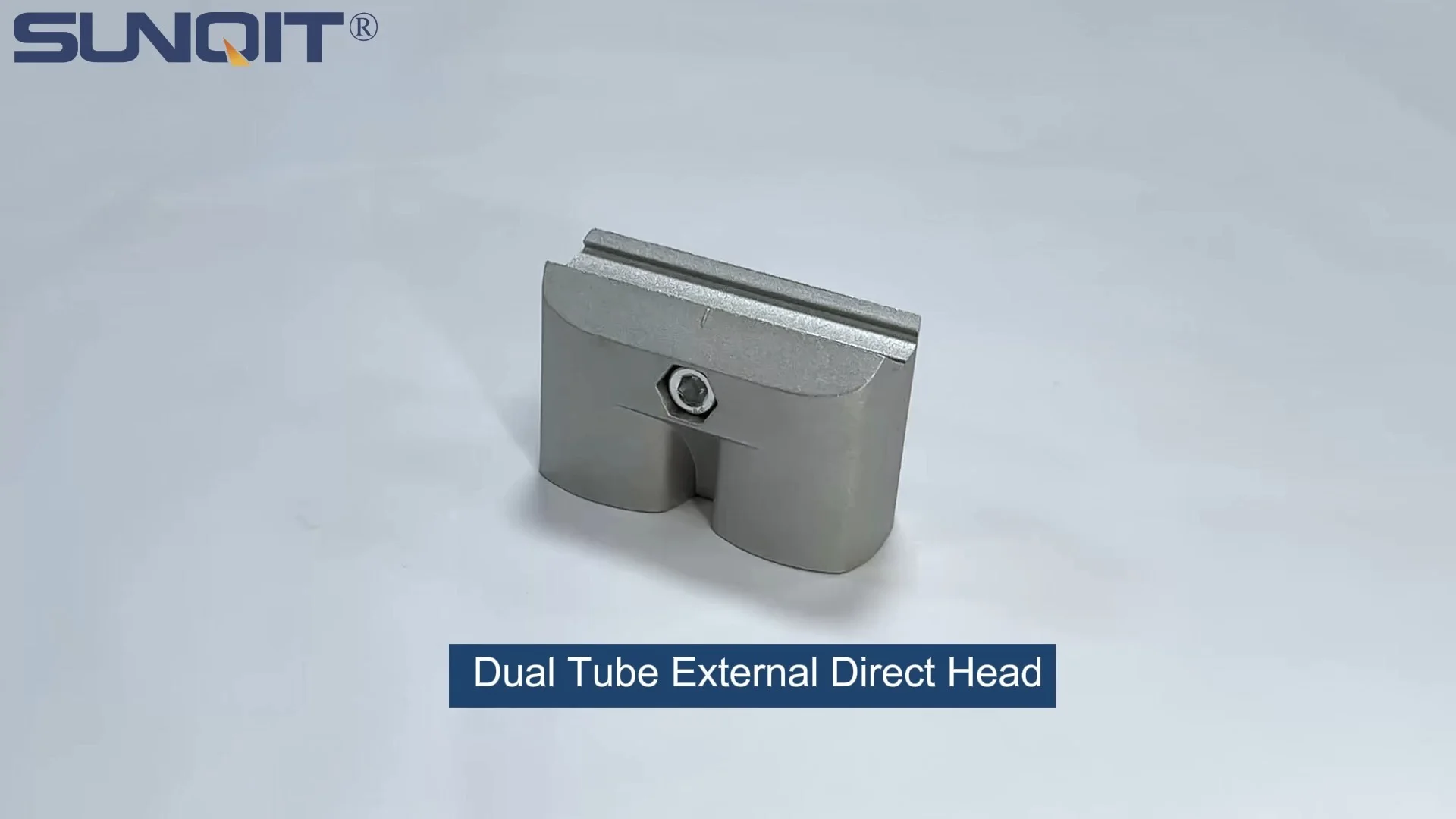
Duplex Aluminum Pipe Joint
Duplex Aluminum pipe joint used for one pcs 28pcs aluminum pipe and one pcs of 28mm duplex pipe connection in straight angle.
In the world of lean manufacturing and modular workspace design, few components are as quietly essential as the humble pipe joint. These unassuming connectors hold together everything from assembly line workbenches to material storage racks, shaping the efficiency and flexibility of modern production floors. Among the various types of joints available, duplex aluminum pipe joints have emerged as a popular choice for businesses aiming to balance durability, adaptability, and cost-effectiveness. Yet, despite their growing use, a cloud of misconceptions still surrounds these components—myths that often prevent teams from fully leveraging their potential.
Whether you're a plant manager looking to revamp your production line, a warehouse supervisor aiming to optimize material flow, or a small business owner building a custom workspace, understanding the truth about duplex aluminum pipe joints can save you time, money, and frustration. In this article, we'll tackle the most persistent myths head-on, separating fact from fiction and showing you why these joints, paired with the right aluminum pipe accessories and aluminum profile, might just be the missing piece in your lean system puzzle.
What Are Duplex Aluminum Pipe Joints, Anyway?
Before diving into the misconceptions, let's clarify what we're actually talking about. Duplex aluminum pipe joints are specialized connectors designed to link aluminum lean pipes (hollow aluminum tubes) into stable, modular structures. Unlike traditional welded joints or rigid plastic connectors, duplex joints are engineered for both strength and flexibility—they can withstand significant weight while allowing for easy disassembly and reconfiguration. Think of them as the "building blocks" of lean manufacturing: simple in design, but infinitely versatile in application.
These joints are typically made from high-grade aluminum alloys, chosen for their lightweight properties and natural resistance to corrosion. They come in various shapes and sizes to accommodate different angles and load requirements, from 90-degree elbows for corner connections to T-joints for branching structures. When paired with aluminum pipe accessories like end caps, clamps, or casters, they transform basic aluminum tubes into fully functional workbenches, mobile trolleys, flow racks, and more. It's this adaptability that makes them a staple in environments where change is constant—think automotive plants updating assembly lines, e-commerce warehouses scaling up for peak seasons, or workshops prototyping new products.
Myth #1: "Duplex Aluminum Pipe Joints Are Too Expensive Compared to Traditional Options"
Let's start with the elephant in the room: cost. It's true that, at first glance, duplex aluminum pipe joints often carry a higher price tag than basic plastic connectors or even some steel lean pipe joints. This sticker shock is enough to make many decision-makers hit pause, assuming they're overpaying for a "premium" product they don't need. But here's the problem with that logic: it only looks at the upfront cost, ignoring the long-term value these joints deliver.
Consider this scenario: A small electronics manufacturer needs to build a temporary assembly station for a 6-month project. They opt for cheap plastic joints, reasoning that "temporary" means "disposable." The plastic joints work initially, but within 3 months, several crack under the weight of tools and components. The team has to stop production to replace them, losing hours of labor and potentially missing deadlines. By the end of the project, they've spent twice as much on replacements and downtime as they would have on a single set of duplex aluminum joints.
Duplex aluminum joints, by contrast, are built to last. Their aluminum construction resists wear and tear, and their precision engineering ensures a tight, stable fit that doesn't loosen over time. This durability translates to fewer replacements and less maintenance—savings that add up quickly. Plus, their modular design means you can reuse them. When that 6-month project ends, you can disassemble the assembly station and repurpose the joints to build a material rack or a mobile trolley. With plastic or low-grade steel joints, you'd likely throw them away, wasting your initial investment.
Another cost factor to consider is weight. Aluminum is significantly lighter than steel, which reduces shipping costs and makes on-site assembly easier. A team of two can assemble a large workbench with aluminum lean pipes and duplex joints in an afternoon; with steel, you might need extra labor or even equipment like forklifts. Over time, these labor and logistics savings further narrow the cost gap.
In short, duplex aluminum pipe joints aren't expensive—they're an investment. And like any good investment, they pay dividends in the form of longevity, flexibility, and reduced operational headaches.

Myth #2: "They're Difficult to Assemble Without Specialized Tools or Expertise"
"We don't have skilled welders on staff, so we can't use aluminum joints." "It'll take forever to figure out how to put these together." These are common objections we hear, and they stem from a misunderstanding of how modern modular systems work. The truth? Duplex aluminum pipe joints are designed for everyday users , not professional engineers or tradespeople. You don't need a welding torch, a degree in metallurgy, or even a fancy toolbox to get the job done.
Let's walk through a typical assembly process. Suppose you want to build a simple workbench using aluminum lean pipes, duplex joints, and a few basic aluminum pipe accessories. Here's how it might go:
- Measure and cut your pipes: Most aluminum lean pipes come pre-cut to standard lengths, but if you need custom sizes, a basic pipe cutter (the same kind used for PVC) works fine.
- Choose your joints: For the workbench legs, you'll need 4-way duplex joints (to connect vertical legs to horizontal supports). For the tabletop frame, 90-degree elbow joints will do.
- Assemble the frame: Slide the pipes into the joint sockets. Most duplex joints use a simple friction fit with set screws—just tighten the screws with a hex key (included with most kits) to lock the pipes in place. No glue, no welding, no hassle.
- Add accessories: Attach a wooden or metal tabletop using pipe clamps (another common aluminum pipe accessory), and add casters to the bottom if you want mobility. Total time? Less than an hour for a basic setup.
Compare this to traditional steel structures, which often require welding, drilling, or bolting with heavy-duty hardware. Even plastic snap-together joints can be finicky, as they're prone to cracking if you don't align the pipes perfectly. Duplex aluminum joints, by contrast, are forgiving. The set screws allow for minor adjustments, and the aluminum pipes are lightweight enough to maneuver without straining your back.
Many manufacturers even provide color-coded joint systems or online assembly guides to simplify the process further. One supplier we spoke to offers a free mobile app with step-by-step tutorials for building common structures like shelving units and material carts—no prior experience required. As one warehouse manager put it: "I gave a kit to my intern, and she had a functional parts bin built by lunch. If she can do it, anyone can."
The bottom line? Duplex aluminum pipe joints are designed to empower, not intimidate. They turn "I need to hire a contractor" into "I can do this myself this afternoon."

Myth #3: "They Lack the Strength for Industrial-Grade Applications"
This is perhaps the most persistent myth of all: "Aluminum is too soft—these joints will bend or break under real weight." It's a fair concern, especially if you're used to the heft of steel lean pipe joints or the rigidity of welded structures. But aluminum's reputation as a "weak" metal is outdated, and duplex joints are engineered to prove it.
First, let's talk about the material itself. The aluminum used in duplex joints isn't the flimsy stuff you find in soda cans. It's an alloy—typically 6061 or 6063 aluminum—reinforced with magnesium and silicon for added strength. This alloy has a tensile strength of around 30,000 psi, which is more than enough for most industrial applications. To put that in perspective: a single 1.5-inch diameter aluminum lean pipe with duplex joints can support over 200 pounds without bending. A properly assembled shelving unit using these pipes and joints can hold thousands of pounds of inventory—more than enough for boxes of parts, tools, or finished goods.
But strength isn't just about raw power—it's about distribution. Duplex joints are designed to evenly distribute weight across the entire structure, reducing stress on individual components. Unlike plastic joints, which can crack at the seams under pressure, aluminum joints spread the load through their solid metal construction. This makes them ideal for dynamic environments where weight shifts (like a mobile trolley being pushed around a warehouse) or vibrations (like near a production line) are common.
Don't just take our word for it. Let's look at real-world examples:
- Automotive assembly lines: Major car manufacturers use duplex aluminum joint structures to hold heavy power tools, torque wrenches, and even small robotic arms. These setups are tested daily under constant use and abuse.
- Warehouse picking stations: Distribution centers often build multi-tiered shelving with aluminum lean pipes and duplex joints to store bulk items. One logistics company reported using such shelving to hold 50-pound boxes stacked 4 high—for over 5 years—with no signs of joint failure.
- Food processing plants: In environments where corrosion resistance is critical, aluminum joints outperform steel (which rusts) and plastic (which can harbor bacteria). These joints support stainless steel work surfaces and heavy mixing equipment without compromising safety or durability.
Of course, no material is indestructible. If you're building a structure to support extreme weights—say, a platform for a 2,000-pound machine—you might need to upgrade to thicker pipes or reinforce the joints with additional brackets (another common aluminum pipe accessory). But for 95% of industrial applications, duplex aluminum pipe joints are more than up to the task.

Myth #4: "There's No Flexibility—Once You Build It, You're Stuck With It"
"What if we need to rearrange the production line next year? We'll have to start from scratch." This fear of permanence is a major barrier for businesses considering modular systems, but it's entirely unfounded when it comes to duplex aluminum pipe joints. In fact, flexibility is where these joints truly shine.
Lean manufacturing is all about adaptability—responding quickly to changes in demand, product design, or workflow. A rigid workspace that can't evolve becomes a liability, not an asset. Duplex aluminum joints are built for this reality. Unlike welded steel structures, which require cutting and rewelding to modify, or glued plastic systems, which are destroyed if you try to take them apart, duplex joints allow for easy disassembly and reconfiguration.
Let's say your company launches a new product line that requires a longer assembly bench. With a welded steel bench, you'd either need to build a whole new bench or hire a welder to extend the existing one (costing time and money). With a duplex aluminum joint setup? Simply unscrew the set screws, add a few extra aluminum lean pipes and joints, and you're done. The old components can be reused elsewhere—maybe to build a smaller parts cart or a temporary storage rack.
This flexibility also makes duplex joints ideal for seasonal businesses. A toy manufacturer, for example, might need extra assembly stations during the holiday rush and can disassemble them in January to free up floor space. A farmer's market vendor could use a mobile aluminum profile cart in the summer and break it down for storage in the winter. The possibilities are limited only by your imagination.
Another aspect of flexibility is compatibility. Duplex aluminum joints aren't proprietary—they work with most standard aluminum lean pipes and aluminum pipe accessories on the market. This means you don't have to stick to one brand or supplier. If you already have aluminum profile shelving from Company A, you can add duplex joints from Company B to expand it. This interoperability keeps costs low and gives you the freedom to shop around for the best deals.
As one small business owner told us: "We've rearranged our workshop three times in two years, and we've never had to buy new joints. We just take apart the old structure and build something new. It's like having a workspace that grows with us."
Myth #5: "They're Prone to Corrosion—Not Suitable for Humid or Industrial Environments"
Aluminum and rust go together like oil and water, right? While it's true that aluminum doesn't rust (rust is iron oxide; aluminum forms aluminum oxide, a different compound), some people still worry that duplex aluminum pipe joints will corrode in damp or chemical-heavy environments. Let's set the record straight: aluminum is actually one of the most corrosion-resistant materials you can use in industrial settings—often outperforming even stainless steel in certain conditions.
Here's why: When aluminum is exposed to air, it forms a thin, invisible layer of aluminum oxide on its surface. This layer acts as a protective barrier, preventing further oxidation. Unlike rust, which flakes off and exposes fresh metal to corrosion, aluminum oxide stays intact, self-healing if scratched. This natural resistance makes aluminum joints suitable for humid warehouses, outdoor loading docks, and even environments with mild chemical exposure (like cleaning solutions or coolants).
For more demanding environments—think food processing plants with daily high-pressure washing or coastal areas with salt air—many manufacturers offer anodized duplex joints. Anodizing is an electrochemical process that thickens the oxide layer, making the joints even more resistant to corrosion and wear. Anodized aluminum can withstand years of exposure to water, salt, and mild acids without showing signs of deterioration.
Compare this to steel lean pipe joints, which require regular painting or galvanizing to prevent rust. Even then, a small scratch can lead to corrosion that spreads quickly. Plastic joints, while corrosion-resistant, can degrade in extreme temperatures or under UV light, becoming brittle over time. Aluminum joints, by contrast, require almost no maintenance to stay corrosion-free—just an occasional wipe-down with a damp cloth to remove dirt or grime.
One chemical plant we visited uses duplex aluminum joint structures in their packaging area, where spills of citrus-based cleaning agents are common. After three years of daily use, the joints still look brand new. "We used to replace steel shelving every two years because of rust," the plant manager told us. "With aluminum, we haven't had to replace a single joint. It's been a game-changer."
Myth vs. Reality: A Quick Reference Guide
| Common Misconception | The Reality |
|---|---|
| "Duplex aluminum pipe joints are too expensive." | While upfront costs may be higher than plastic, their durability, reusability, and low maintenance make them cheaper in the long run. |
| "They're hard to assemble without special tools." | Most joints require only a hex key for assembly, and no welding or advanced skills are needed. |
| "Aluminum isn't strong enough for industrial use." | High-grade aluminum alloys can support hundreds of pounds, making them suitable for most manufacturing and warehousing applications. |
| "Once built, you can't reconfigure the structure." | Duplex joints allow for easy disassembly and reuse, making them ideal for evolving workspaces. |
| "They corrode easily in humid environments." | Aluminum's natural oxide layer resists corrosion, and anodized options are available for harsh conditions. |
Best Practices for Getting the Most Out of Your Duplex Aluminum Pipe Joints
Now that we've debunked the myths, let's talk about how to make sure your duplex aluminum pipe joint setup lives up to its potential. With a few simple best practices, you can maximize durability, flexibility, and efficiency:
1. Choose the Right Joint for the Job
Not all duplex joints are created equal. They come in various configurations—90-degree elbows, T-joints, 4-way connectors, etc.—each designed for specific load and angle requirements. When planning your structure, ask: Where will the weight be concentrated? Do I need to connect pipes at odd angles? Will the structure be static or mobile? A reputable supplier can help you select the right joints, but as a general rule: use 4-way or multi-angle joints for vertical supports (they distribute weight better) and elbow joints for horizontal frames.
2. Don't Over-Tighten the Set Screws
It's tempting to crank down on the set screws to "make sure it's tight," but this can damage the aluminum pipe (stripping the threads or deforming the pipe). Most manufacturers recommend tightening the screws until they're snug—about 15-20 inch-pounds of torque (you can use a torque wrench for precision, but hand-tightening with a hex key is usually sufficient).
3. Invest in Quality Aluminum Pipe Accessories
Your joints are only as good as the accessories that support them. Cheap casters, flimsy clamps, or poorly fitting end caps can undermine the stability of your structure. Look for accessories made from the same high-grade aluminum as your joints, and ensure they're compatible with your pipe diameter (most aluminum lean pipes are 28mm or 30mm in diameter, but sizes can vary).
4. Plan for Future Growth
When designing your structure, leave room to expand. For example, if you're building a shelving unit, add extra joints or pipe stubs that can later be extended. This way, you won't have to disassemble the entire unit when you need more space.
5. Inspect Regularly (But Don't Obsess)
Duplex aluminum joints are low-maintenance, but a quick monthly check can prevent small issues from becoming big problems. Look for loose set screws, bent pipes, or damaged accessories. Tighten screws as needed, and replace any worn parts (like cracked casters) promptly.
Final Thoughts: Why Duplex Aluminum Pipe Joints Deserve a Spot in Your Lean System
At the end of the day, the goal of any lean system is to create a workspace that works for you—not against you. Duplex aluminum pipe joints embody this philosophy: they're strong enough to handle the demands of industrial work, flexible enough to adapt to change, and simple enough for anyone to use. By debunking the myths that surround them, we hope to show you that these joints aren't just a "nice-to-have"—they're a practical, cost-effective solution for businesses of all sizes.
Whether you're building a single workbench or overhauling an entire production line, remember this: the best workspace solutions are the ones that grow with you. Duplex aluminum pipe joints, paired with quality aluminum lean pipes and aluminum pipe accessories, offer exactly that—endless possibilities, without the hassle. So the next time you hear someone say, "Aluminum joints are too weak/expensive/hard to use," you'll know better. You'll know the truth.