- Company Articles
- Products and Technology
- Product knowledge
- Common Misconceptions About One Side Rotatory Parallel Lean Pipe Joints Debunked

Common Misconceptions About One Side Rotatory Parallel Lean Pipe Joints Debunked
Related Product
Parallel Lean Pipe Joint
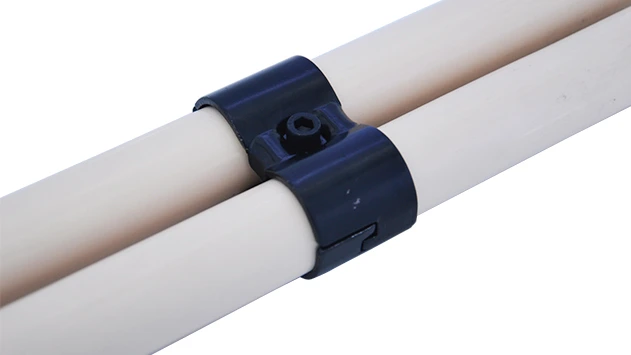
Parallel lean pipe joint used for 2 pcs 28MM lean pipe connection in parallel direction to enhance frame structure, usually for heavy payload requirement for workbench. flow rack, hand trolley.
In the fast-paced world of manufacturing and assembly, where efficiency is king and adaptability is non-negotiable, lean systems have become the backbone of modern production floors. From bustling automotive plants to precision electronics workshops, these systems—built on principles of minimizing waste and maximizing flow—rely on a network of components working in harmony. Yet, among the nuts, bolts, and pipes that make up these setups, there's one unsung hero that often flies under the radar: the lean pipe joint. Specifically, the one side rotatory parallel lean pipe joint, a small but mighty component that plays a critical role in keeping operations flexible and responsive.
Despite their importance, these joints are surrounded by misconceptions that can lead even seasoned operations managers to overlook their potential. Maybe you've heard they're "only for small workshops" or "too flimsy for heavy use." Perhaps someone told you installation is a headache, or they won't play nice with other parts of your lean system. Today, we're setting the record straight. Let's dive into the most common myths about one side rotatory parallel lean pipe joints, separate fact from fiction, and show you why they might just be the missing piece in your quest for a smoother, more efficient workflow.
Misconception #1: "They're Only Suitable for Small-Scale Operations"
Let's start with a big one: the idea that one side rotatory parallel lean pipe joints are little more than lightweight toys, useful only for hobbyists or tiny startups with minimal production needs. This couldn't be further from the truth. The reality is that these joints are engineered to handle the demands of large-scale manufacturing environments, where reliability and load capacity are non-negotiable.
Take, for example, a mid-sized electronics manufacturer in Ohio that recently revamped its assembly line. Previously, they relied on fixed steel joints for their workbenches and material racks, assuming anything with "rotatory" in the name couldn't keep up with their daily throughput of 500+ units. When they switched to one side rotatory parallel lean pipe joints, paired with aluminum lean pipe, they were shocked to find the system not only kept pace but improved efficiency. "We were moving components between stations faster, and the joints never so much as creaked under the weight of our circuit board trays," says Mark, the plant's operations supervisor. "Each joint easily handles the 40kg load of our material bins—sometimes more when we're running peak shifts."
The numbers back this up. Most one side rotatory parallel joints on the market today are rated for vertical loads of 50kg or more, with horizontal shear strength exceeding 30kg. That's more than enough for standard workbenches, mobile trolleys, or even light-duty roller track systems used to transport parts across the factory floor. In fact, many automotive suppliers—known for their rigorous durability standards—use these joints in sub-assembly areas where components like door panels or wiring harnesses are prepped before moving to the main line. If they can stand up to the rigors of automotive manufacturing, they're more than ready for your operation, whether you're churning out 100 units a day or 10,000.
"We used to think rotatory joints were 'too weak' for our material racks. After switching, we've had zero failures in two years—even with 60kg boxes stacked three high. Wish we'd made the change sooner." — Jamie L., Warehouse Manager, Medical Device Co.
Misconception #2: "They Lack Durability Compared to Fixed Joints"
Another persistent myth is that because these joints have moving parts, they're destined to wear out quickly—especially compared to "tough" fixed joints like welded steel or rigid plastic connectors. Let's unpack this. Yes, one side rotatory parallel joints have internal components that allow for rotation (that's the whole point), but modern engineering has solved the durability problem through smart material choices and precision design.
Most high-quality one side rotatory parallel lean pipe joints are constructed from a combination of aluminum alloy and stainless steel. Aluminum provides a lightweight yet strong base, while stainless steel components (like the internal bearings and locking mechanisms) resist corrosion and wear. This makes them ideal for environments where moisture, dust, or chemicals might otherwise degrade lesser materials. Consider a food processing plant in California that uses these joints in their packaging area: the constant washdowns with sanitizing solutions would rust standard steel joints in months, but their aluminum lean pipe setup, complete with one side rotatory joints, has held up for over five years with only minor maintenance.
Compare that to fixed plastic joints, which can become brittle over time, or welded steel joints that, while strong, are prone to cracking at the weld points if the structure undergoes even minor vibrations (a common issue in manufacturing settings). The rotatory joint's design actually reduces stress: instead of all pressure on a single welded point, the load is distributed across the joint's surface area, and the rotating mechanism allows for slight adjustments that prevent strain buildup. It's like the difference between a rigid bridge that cracks in an earthquake and a flexible one that sways but stays intact.
To put it simply: durability isn't about being "fixed" or "moving"—it's about how well a component is built to handle its intended use. And when it comes to withstanding the daily grind of a busy factory, one side rotatory parallel lean pipe joints punch well above their weight.

Misconception #3: "Installation and Adjustment Require Specialized Expertise"
"Oh, we can't use those—our maintenance team isn't trained for all that fancy rotating stuff." Sound familiar? The myth that one side rotatory parallel lean pipe joints are complicated to install or adjust is a major barrier for many teams. But let's be real: if you can use a hex key, you can handle these joints. Installation is designed to be intuitive, even for someone with basic handyman skills.
Here's how simple it is: align your aluminum lean pipe with the joint's connection points, slide the pipe into the joint's socket, and tighten the set screw with a standard hex wrench. No welding, no drilling, no need for a certified technician. Adjustments are just as easy: loosen the screw, rotate the pipe to your desired angle (most joints allow 0-180 degrees of rotation on one side), then retighten. Done. A typical workbench setup with 8-10 joints takes less than an hour to assemble—even for first-timers.
Contrast that with fixed welded joints, which require a skilled welder, protective gear, and hours of work (not to mention the fumes and fire risk in a factory setting). Or even bolt-together fixed joints, which often need precise alignment and multiple tools. Mike, a maintenance tech at a furniture manufacturer in Texas, puts it this way: "I used to dread setting up new workbenches with those old fixed steel joints. It would take half a day, and if we got the angle wrong, we'd have to start over. Now, with the one side rotatory joints, I can build a custom workstation in 45 minutes. Last week, we had a rush order that needed a new material rack—two of us knocked it out during lunch break."
The bottom line? These joints are designed for the people on the floor—your team, not a squad of engineers. They're the ultimate "plug-and-play" component in lean system design, making reconfigurations, repairs, and upgrades faster and less stressful than ever.

Misconception #4: "Their Flexibility Compromises Structural Stability"
"If it moves, it must wobble, right?" This is a common fear when it comes to rotatory joints. Many assume that because these joints allow for rotation, the entire structure will feel unstable—like a wobbly table at a restaurant. But modern one side rotatory parallel lean pipe joints are engineered with stability in mind, thanks to a clever locking mechanism that balances flexibility and rigidity.
Inside each joint is a spring-loaded or cam-style lock that engages when you tighten the set screw. Once locked, the joint becomes rock-solid, with minimal play. Think of it like a camera tripod: the legs fold up for transport (flexibility), but once you lock them in place, they hold steady even in windy conditions. The same principle applies here. When adjusted to your desired angle, the joint locks tight, ensuring your workbench, rack, or trolley doesn't shift under load.
Take a real-world example: a aerospace parts supplier in Washington uses one side rotatory parallel joints on their assembly workbenches. These workbenches need to be slightly tilted (about 5 degrees) to allow gravity to feed small screws and washers toward the operator, reducing picking time. With fixed joints, they'd have to build custom angled brackets—a time-consuming and costly process. With rotatory joints, they simply adjust the angle, lock it, and the bench stays stable all shift long. "We've had operators lean on these benches, set 20kg toolboxes on them, and never had a single issue with wobbling," says Lisa, the plant's lean coordinator. "The lock is so secure, you'd never guess the joint can move at all."
It's also worth noting that stability depends on proper setup. Overloading a joint beyond its rated capacity (which we already established is higher than most people think) or using low-quality knockoff joints can lead to instability—but that's true of any component. Stick to reputable suppliers, follow load guidelines, and you'll have a structure that's both flexible and rock-solid.
Misconception #5: "They're Not Compatible with Other Lean System Components"
The final myth we'll tackle is the idea that one side rotatory parallel lean pipe joints are "one-trick ponies"—great on their own, but useless if you want to integrate them with other parts of your lean system, like roller tracks, workbenches, or material trolleys. This is a dealbreaker for many, as lean systems thrive on interoperability.
The reality? These joints are designed with standardization in mind, meaning they play well with almost all common lean system components. Most one side rotatory parallel joints are sized to fit standard aluminum lean pipe (typically 28mm or 30mm diameter), which is the industry norm for lean systems worldwide. This means you can pair them with roller track for material flow, attach them to workbench frames, or use them to build mobile trolleys—no custom adapters needed.
Consider a automotive parts plant in Michigan that recently upgraded its assembly line. They wanted a system that could switch between producing two different car models (a sedan and an SUV) with minimal downtime. By using one side rotatory parallel joints, they built adjustable workbenches that can tilt to accommodate different part sizes, connected via roller track to move components between stations. When switching models, they simply adjust the angle of the workbench tops and reposition the roller track—all in under an hour. "The joints made the whole system modular," explains Raj, the plant engineer. "We didn't have to buy separate benches or tracks for each model. It was like building with Lego bricks—everything clicked together."
Even specialty components, like ESD (electrostatic discharge) workbenches for electronics manufacturing, are compatible. Many suppliers offer ESD-safe versions of one side rotatory joints, ensuring they integrate seamlessly with anti-static aluminum lean pipe and workbench surfaces. The key is to choose a reputable lean pipe supplier that adheres to industry standards—this ensures all your components, from joints to roller track to casters, will work together harmoniously.
How Do They Stack Up? A Quick Comparison
Still not sure if one side rotatory parallel lean pipe joints are right for you? Let's compare them to two other common joint types: fixed 90-degree joints (the "standard" rigid option) and full-rotary joints (which allow rotation on both sides). This table breaks down their key features to help you decide:
| Joint Type | Load Capacity (kg) | Adjustment Range | Installation Time (per joint) | Best For |
|---|---|---|---|---|
| One Side Rotatory Parallel | 50-75 (vertical) | 0-180° (one side fixed) | 5-10 minutes | Adjustable workbenches, material racks, roller track integration |
| Fixed 90-Degree | 75-100 (vertical) | None (permanent 90° angle) | 15-20 minutes (requires precise alignment) | Static structures, heavy-duty shelving |
| Full-Rotary | 40-50 (vertical) | 360° (both sides rotating) | 10-15 minutes | Highly dynamic setups (e.g., robotic workcells) |
As you can see, one side rotatory parallel joints strike a balance between load capacity, flexibility, and ease of use. They're not the best for every single scenario (nothing is), but for most manufacturing and assembly environments, they offer the versatility needed to adapt to changing demands—without sacrificing strength or compatibility.
Final Thoughts: It's Time to Rethink the Joint
At the end of the day, one side rotatory parallel lean pipe joints are more than just "parts"—they're tools for innovation. They challenge the idea that efficiency and flexibility have to be mutually exclusive, proving that a well-designed component can make your entire lean system smarter, more adaptable, and more resilient.
So, the next time someone tells you these joints are "only for small shops" or "not tough enough," you'll know better. They're built for the big leagues, designed to last, easy to install, stable when you need them to be, and compatible with just about everything in your lean system. Whether you're building a new workbench, revamping a production line, or just looking to squeeze a little more efficiency out of your workflow, don't sleep on the one side rotatory parallel lean pipe joint. It might just be the unsung hero your operation has been waiting for.