- Company Articles
- Products and Technology
- Product knowledge
- Common Misconceptions About Three Way Lean Pipe Joint Performance

Common Misconceptions About Three Way Lean Pipe Joint Performance
Related Product
Three Way Lean Pipe Joint
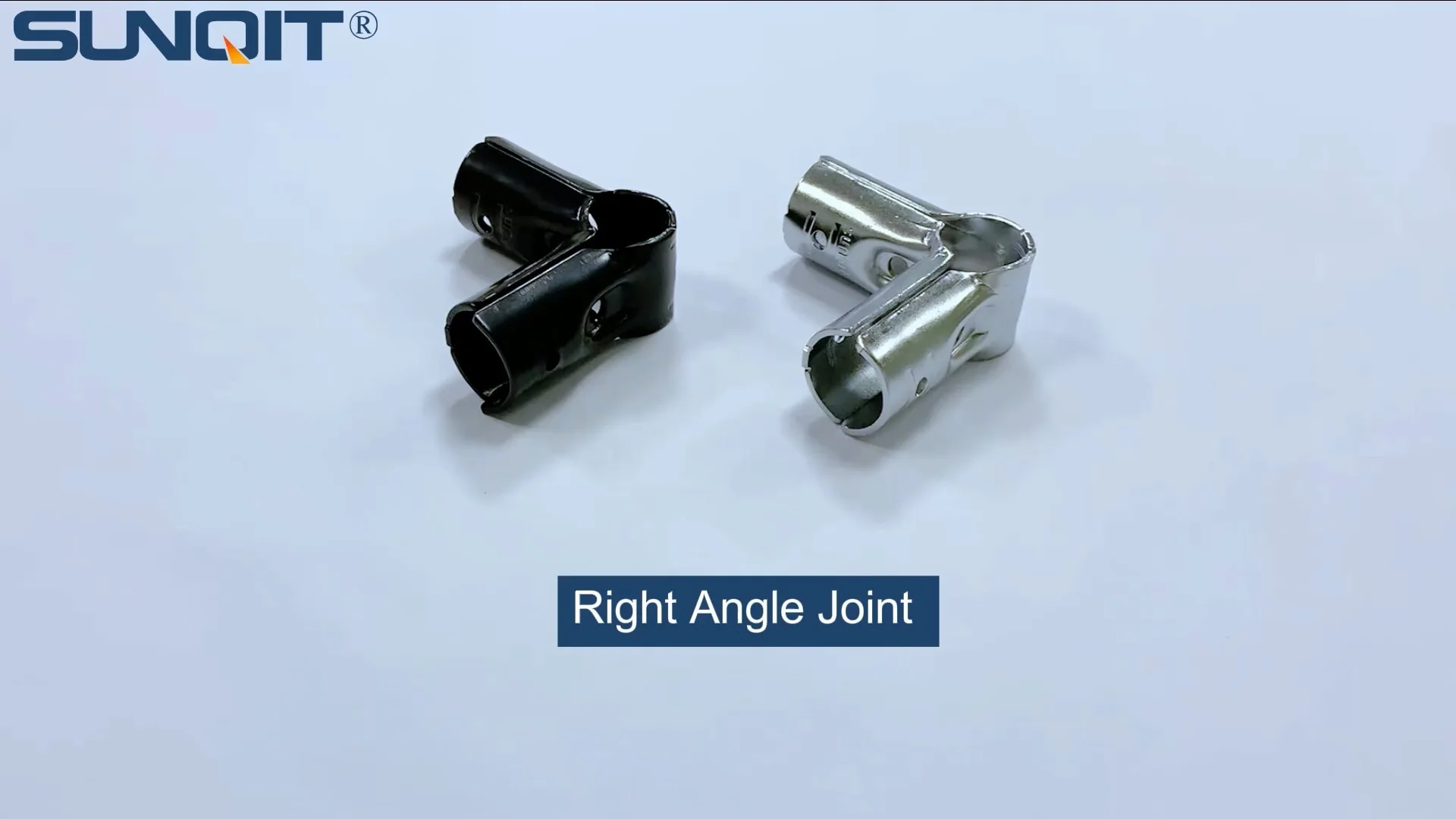
Three way lean pipe joint for 3 pcs 28MM lean pipe connection in straight angle, which used widely in workbench, flow rack, hand trolley frame connection.
In the world of manufacturing and warehouse operations, where efficiency and adaptability reign supreme, lean systems have become the backbone of streamlined workflows. At the heart of these systems lies a seemingly small but critical component: the lean pipe joint. Among the various types of joints, the three way lean pipe joint stands out for its ability to connect three pipes at once, enabling the creation of complex structures like workbenches, flow racks, and material trolleys. Yet, despite its widespread use, there's a surprising amount of misinformation floating around about what these joints can (and can't) do. From assumptions about their load capacity to myths about material compatibility, these misconceptions often lead teams to make poor choices—resulting in unstable workstations, frequent replacements, and unnecessary costs. Today, we're setting the record straight. Let's dive into the most common myths about three way lean pipe joint performance and uncover the truth that can help your operation run smoother, safer, and more efficiently.
Myth 1: "Three Way Lean Pipe Joints Are Only Suitable for Lightweight Applications"
One of the most persistent myths about three way lean pipe joints is that they're flimsy—good for holding small tools or lightweight parts but nowhere near strong enough for heavy-duty tasks. This couldn't be further from the truth. The reality is that modern three way joints, when paired with the right lean pipe and proper assembly, can handle surprisingly heavy loads, making them indispensable in industries ranging from automotive manufacturing to electronics assembly.
Let's start with materials. Three way joints are typically made from steel, aluminum, or high-strength plastic, each engineered to withstand specific stress levels. Steel joints, for example, are often used in environments where durability is non-negotiable. A standard steel three way lean pipe joint, when connected to 2.0mm thick steel lean pipe, can easily support vertical loads of up to 200kg per joint—more than enough for stacking heavy components or mounting power tools on a workbench. Aluminum joints, while lighter, are no slouches either; their anodized coatings strength and corrosion resistance, allowing them to handle loads of 150kg or more in applications like flow racks for automotive parts.
The design of the joint itself also plays a key role. Most three way joints feature a multi-point clamping system, where set screws or bolts grip the pipe from multiple angles, distributing weight evenly across the connection. This isn't just about "holding tight"—it's about engineering stability. For instance, the internal rotatary aluminum joint, a type of three way joint, uses a cam-lock mechanism that tightens as pressure is applied, creating a self-reinforcing connection that becomes more stable under load.
The bottom line? Don't write off three way lean pipe joints as "light-duty only." Check the load ratings provided by your supplier, match the joint material to your needs (steel for max strength, aluminum for a balance of strength and weight), and ensure pipes are properly inserted into the joint (most require inserting the pipe at least 30mm into the joint socket). You'll likely be surprised by what these small components can handle.
Real-World Example: A mid-sized electronics manufacturer in Ohio once avoided using three way joints for their main assembly workbench, assuming they couldn't support the weight of soldering stations, testing equipment, and bulk component bins (total load: ~350kg). Instead, they invested in a custom steel frame, which cost three times more and took weeks to install. After learning about joint load capacities from their lean pipe supplier, they retrofitted a secondary line with aluminum three way joints and 1.5mm aluminum lean pipe. Six months later, the workbench still holds steady, with no signs of bending or loosening—proving that the right joints (and proper installation) can handle heavy loads.
Myth 2: "All Three Way Joints Perform the Same—Material Doesn't Matter"
Walk into any industrial supply store, and you'll find three way lean pipe joints in a rainbow of materials: shiny steel, matte aluminum, even plastic in various colors. A common assumption is that these are all interchangeable—that a plastic joint works just as well as a steel one, or that aluminum is "just a lighter steel." This couldn't be more wrong. The material of a three way joint directly impacts its performance, longevity, and suitability for specific environments. Let's break down the key differences.
Take corrosion resistance, for example. In a warehouse near the coast, where salt air can eat through unprotected metal, a zinc-plated steel joint might start rusting within months, weakening the connection. An anodized aluminum joint, however, forms a protective oxide layer that repels moisture, lasting years in the same environment. Similarly, in ESD-sensitive areas like electronics manufacturing, plastic joints (which are insulative) can cause static buildup, damaging circuit boards. Here, steel or aluminum joints with ESD coatings are non-negotiable, as they dissipate static charge safely to the ground.
Weight is another critical factor. If you're building a turnover trolley that needs to be moved by hand, aluminum joints can reduce the total weight by 30–40% compared to steel, making it easier for workers to maneuver without straining. On the flip side, in a fixed material rack b (3 row and 3 floor) that holds heavy automotive parts, steel joints are worth the extra weight for their unmatched strength.
The takeaway? Material matters—A LOT. Always match the joint material to your environment (humidity, chemicals), load requirements, and mobility needs. Your lean pipe supplier can help you choose, but don't assume "any joint will do."
| Material | Load Capacity (Vertical) | Corrosion Resistance | ESD Compliance | Weight | Best For |
|---|---|---|---|---|---|
| Steel (Zinc-Plated) | 180–250kg | Moderate (prone to rust in humid areas) | Yes (conductive) | Heavy (150–200g per joint) | Heavy machinery, outdoor use (with coating), ESD-sensitive zones |
| Aluminum (Anodized) | 120–180kg | High (resists moisture, chemicals) | Yes (with ESD coating) | Light (80–120g per joint) | Cleanrooms, food processing, mobile trolleys (reduced weight = easier movement) |
| High-Strength Plastic | 50–100kg | Excellent (no rust, resists acids/alkalis) | No (insulative, unless treated) | Lightest (50–70g per joint) | Lightweight shelving, non-ESD environments, temporary structures |

Myth 3: "Tightening the Joint as Much as Possible Ensures Maximum Stability"
If there's one habit that plagues even experienced lean system builders, it's the urge to "crank it tight" when installing three way lean pipe joints. The logic seems sound: the tighter the joint, the more stable the connection, right? Wrong. Over-tightening is one of the biggest causes of joint failure, and it's a mistake that costs operations time and money in repairs and replacements.
Let's start with the physics. Most three way joints rely on friction and mechanical clamping to hold pipes in place. When you tighten a set screw or bolt too much, you're not just "making it tighter"—you're deforming the pipe or the joint itself. For example, steel lean pipe has a certain ductility; over-tightening a steel joint's set screw can dent the pipe, creating weak points that crack under repeated stress. Aluminum pipe is even more vulnerable—its softer metal can be crushed by excessive force, turning a snug fit into a loose, wobbly connection within weeks.
Then there's the issue of material fatigue. Joints that are over-tightened are under constant stress, even when the structure is unloaded. Over time, this stress weakens the joint's metal (a phenomenon called "creep"), leading to sudden failure. A maintenance manager at a Michigan automotive plant once shared that their flow racks kept collapsing until they realized their team was using power drills to tighten joints—applying 3x the recommended torque. After switching to manual hex keys and following the supplier's torque guidelines (15–20 Nm for steel joints, 10–15 Nm for aluminum), failures dropped by 80%.
Another angle: over-tightening makes adjustments impossible. One of the biggest benefits of lean systems is adaptability—reconfiguring a workbench or flow rack as needs change. If a joint is cranked so tight that the pipe is deformed, you'll struggle to disassemble it without damaging the components. This turns a 10-minute adjustment into a 2-hour project, defeating the "lean" purpose. A small bakery in California learned this the hard way when they tried to reposition their ingredient flow rack; over-tightened three way joints made it impossible to move the pipes, forcing them to cut the pipes and buy new ones—wasting $200 and hours of labor.
So, the next time you're installing a three way joint, resist the urge to "make it as tight as possible." Think of it like a handshake—not a death grip. Firm, but not crushing. Your joints (and your budget) will thank you.
Pro Tip: Most reputable lean pipe suppliers provide torque charts for their joints. If yours doesn't, a good rule of thumb is to tighten until the joint "grips" the pipe (you'll feel resistance), then give it a quarter-turn more. For plastic joints, even less—over-tightening can strip the threads entirely. And always check joints after the first week of use; initial vibration or load can cause them to loosen slightly, so a quick "touch-up" tighten ensures long-term stability.

Myth 4: "Three Way Joints Are Incompatible with Other Lean Pipe Accessories"
"We can't use three way joints here—our system uses aluminum profile, and the joints won't fit." "These joints only work with steel pipe, right?" If you've heard (or said) something like this, you're falling for the myth that three way lean pipe joints are one-trick ponies, limited to specific pipes or accessories. The truth is that modern three way joints are designed for versatility, working seamlessly with everything from aluminum profile to stainless steel pipe, and even accessories like roller track and casters.
Let's start with pipe compatibility. Most three way joints are "size-agnostic" within reason, meaning they can accommodate different pipe diameters (16mm, 28mm, 40mm) with the right adapters. For example, a standard steel three way joint designed for 28mm steel lean pipe can work with 20mm aluminum pipe using a plastic pipe sleeve—a small, inexpensive accessory that lines the joint socket, reducing the diameter to fit smaller pipes. Similarly, aluminum profile accessories like the aluminum guide rail a or roller track placon mount can be attached to three way joints using T-slot bolts, which slide into the profile's grooves and thread into the joint's pre-drilled holes.
Then there are cross-material connections. A common scenario: a facility uses steel lean pipe for heavy-duty racks but wants to add an aluminum workbench (for lighter, mobile use) connected to the same system. Can three way joints bridge the gap? Absolutely. By using a duplex aluminum pipe joint (a hybrid joint with steel and aluminum components), you can connect steel pipe to aluminum pipe in seconds, creating a unified structure that leverages the strengths of both materials.
The key here is choosing the right accessories—and not assuming "incompatible" means "impossible." A lean pipe supplier worth their salt will carry a range of adapters, brackets, and connectors to bridge different components. For instance, the roller track placon mount for aluminum profile flat is specifically designed to attach roller track to aluminum profile, which can then be connected to a three way joint using a simple L-bracket. It's not about "forcing" a fit—it's about using the right pieces to create a cohesive system.
So, don't let the "incompatibility myth" limit your lean system's potential. Three way joints are the ultimate team players—they just need the right accessories to shine.
| Accessory Type | How to Connect with Three Way Joints | Common Use Case |
|---|---|---|
| Roller Track | Use roller track placon mount brackets; bolts thread into joint's side holes | Flow racks for part delivery (joints hold track at 45° angle for gravity flow) |
| Casters | Mount caster fixed plate to joint's base using machine screws | Mobile turnover trolleys (joints connect vertical pipes to caster base) |
| Aluminum Profile | Use T-slot bolts through profile grooves into joint's threaded holes | Workbench with tool hanging rails (joints connect profile to workbench frame) |
| Swivel Roller Balls | Attach using plate connectors; joint supports the weight of the ball plate | Conveyor transitions (balls allow smooth part movement between tracks) |
Innovation Story: A Texas-based aerospace supplier needed to connect their existing steel flow rack (using three way steel joints) to a new aluminum workbench (to reduce weight near the assembly line). Their initial plan was to build two separate systems, but their lean pipe supplier suggested using aluminum guide rail b and parallel fixation aluminum pipe joints to bridge the gap. The result? A single, unified system where parts roll directly from the steel flow rack into the aluminum workbench—saving 15 minutes per shift in material handling.

Myth 5: "Replacing Joints Is Always Cheaper Than Repairing Them"
When a three way lean pipe joint starts to loosen or show signs of wear, the knee-jerk reaction is often: "Just replace it—it's cheaper than fixing." But this mindset ignores the hidden costs of replacement (labor, downtime, inventory) and overlooks the fact that many joint issues are repairable with simple maintenance. In most cases, a little TLC can extend a joint's life by years, making repair the smarter financial choice.
Let's break down the costs. A single three way joint costs $5–$15, depending on material. That seems cheap, but multiply that by 50 joints (a typical small warehouse setup), and you're looking at $250–$750 in replacement parts alone. Then there's labor: a technician might take 10 minutes per joint to remove, replace, and retighten—50 joints = 8+ hours of work, at $30–$50/hour = $240–$400. Add downtime (the line or workstation is out of commission during repairs), and suddenly "cheap" replacement costs balloon to $500–$1,150.
Now, compare that to repair. Most joint issues stem from three causes: loose set screws, damaged threads, or surface corrosion. Loose set screws? A 2-minute tighten with a hex key. Damaged threads? A thread repair kit (under $10) can re-thread the joint in 5 minutes. Corrosion? For steel joints, a wire brush and anti-rust spray (under $5) removes rust and prevents future buildup. Even bent joints (from accidental impact) can often be straightened with a vice and rubber mallet—no replacement needed.
Another angle: inventory waste. Keeping replacement joints in stock ties up cash and storage space. A mid-sized manufacturer in Illinois once had a "joint closet" with 200+ spare joints—most of which were never used because the team replaced joints preemptively. After training their maintenance crew to repair instead of replace, they reduced inventory by 70%, freeing up $1,200 in cash and a 4x4ft storage area.
When is replacement necessary? If the joint is cracked (not just bent), the threads are stripped beyond repair, or the clamping mechanism is broken (e.g., a cam-lock that won't engage), then yes, replace it. But 80% of the time, a little maintenance is all it takes. The next time you see a wobbly joint, ask: "Can I fix this?" before reaching for a new one. Your budget (and sustainability goals) will thank you.
Case Study: A food distribution center in Florida was replacing 20–30 aluminum three way joints monthly due to corrosion from humidity. Their lean pipe supplier suggested switching to anodized aluminum joints (which resist corrosion) and implementing a monthly "joint check" routine: wiping joints with a dry cloth and applying a light coat of silicone spray. The result? Monthly replacements dropped to 2–3, saving $400–$600 per month. Over a year, that's $4,800–$7,200 in savings—all from a 15-minute weekly maintenance task.
Three way lean pipe joints may be small, but their impact on your lean system's performance is enormous. By debunking these myths—that they're only for light loads, material doesn't matter, tighter is better, they're incompatible with other accessories, and replacement is always cheaper—you're not just fixing joints; you're building a more efficient, cost-effective, and adaptable operation.
Remember: the key to getting the most from your three way joints lies in understanding their capabilities (check load ratings!), matching materials to your environment, installing them with care (no over-tightening!), leveraging accessories for compatibility, and investing in simple maintenance. And when in doubt, turn to your lean pipe supplier—they're not just selling parts; they're partners in helping you build a system that works as hard as your team does.
At the end of the day, lean manufacturing is about eliminating waste—waste of time, money, and resources. By seeing three way joints for what they really are—versatile, strong, and repairable—you're taking a big step toward a leaner, more successful operation.