- Company Articles
- Products and Technology
- Product knowledge
- Common Misconceptions About Turning Angle Code 2020 Debunked

Common Misconceptions About Turning Angle Code 2020 Debunked
Related Product
Urning Angle Code 2020
The turning angle aluminum profile connector provides a 90 degree hidden corner connection. 2020 it is means this size is used for 20 series aluminum profile.The corner code comes with set screws that allow for quick, easy connections.
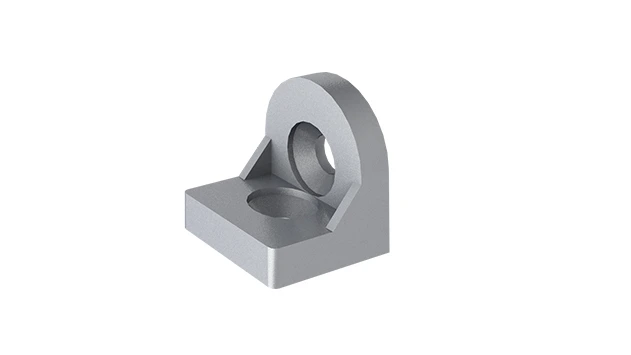
If you've ever rolled up your sleeves to build a workbench, set up a material rack, or design a lean production line, chances are you've encountered aluminum profiles. These versatile, T-slot extrusions are the backbone of countless workshops, factories, and DIY projects—thanks to their strength, adaptability, and ease of assembly. But within the world of aluminum profile systems, there's a small yet critical component that often gets overlooked: the turning angle code. Specifically, the turning angle code 2020, designed for 2020 aluminum profiles, is surrounded by myths that can trip up even experienced builders. Let's pull back the curtain and separate fact from fiction.
Whether you're a small business owner setting up a lean system for the first time, a hobbyist building a custom workbench, or a production manager optimizing workflow, misunderstanding turning angle code 2020 can lead to wobbly structures, wasted time, and even safety risks. Today, we're debunking five of the most common misconceptions to help you build smarter, stronger, and more efficient systems.
Misconception #1: "Turning Angle Code 2020 Is Only for Light-Duty Projects"
Walk into any hardware store or browse an online catalog, and you might see turning angle code 2020 described as a "lightweight connector"—a label that's stuck in the minds of many builders. It's easy to assume that because 2020 aluminum profiles are slimmer (typically 20mm x 20mm) than their larger counterparts (like 4040 or 3030), their angle codes must be flimsy, too. But that couldn't be further from the truth.
Let's start with the material. Most quality turning angle code 2020 components are made from aluminum alloy 6063-T5, the same robust material used in structural aluminum profiles. This alloy undergoes heat treatment to enhance its strength, making it resistant to bending and deformation under load. In fact, when properly installed, a single turning angle code 2020 can support up to 50kg of vertical weight—more than enough for most small to medium projects.
Consider a real-world example: Maria, a small-batch jewelry maker, uses 2020 aluminum profiles and turning angle code 2020 to build a multi-tiered workbench. She stores tools, gemstones, and even a small kiln (weighing 35kg) on the lower shelf. After six months of daily use, the structure remains stable with no signs of sagging. "I was worried it would wobble, but it's held up better than the wooden shelves I had before," she says. Her experience isn't unique—countless workshops rely on turning angle code 2020 for tasks like mounting power tools, organizing inventory, or supporting assembly line components.
The key here is proper installation. Pairing the angle code with high-quality aluminum profile accessories, like T-slot bolts and nuts, ensures a tight, secure fit. Skipping these accessories or using low-grade fasteners is where "light-duty" failures often happen—not because the angle code itself is weak.
Misconception #2: "All Turning Angle Codes Are Interchangeable Across Aluminum Profiles"
A common rookie mistake? Grabbing a turning angle code from a 3030 profile kit and trying to use it with a 2020 aluminum profile. After all, they look similar—small, L-shaped brackets with holes for bolts. But aluminum profiles come in different sizes, and their T-slot dimensions (the grooves that run along the profile length) vary, too. This means turning angle codes are not one-size-fits-all.
To clear things up, let's compare turning angle codes for three popular profile sizes: 2020, 3030, and 4040. The table below breaks down their key differences:
| Aluminum Profile Size | Turning Angle Code Model | Material Thickness (mm) | Compatible T-Slot Width (mm) | Max Load Capacity (kg per joint) | Common Applications |
|---|---|---|---|---|---|
| 2020 | TAC-2020 | 2.5 | 6 | 50 | Small workbenches, shelf units, tool holders |
| 3030 | TAC-3030 | 3.0 | 8 | 80 | Medium-duty racks, assembly stations |
| 4040 | TAC-4040 | 4.0 | 10 | 120 | Heavy workbenches, conveyor supports, industrial shelving |
Notice the T-slot width: 2020 profiles have a 6mm slot, while 3030 and 4040 have 8mm and 10mm slots, respectively. A turning angle code designed for a 10mm slot will rattle loosely in a 6mm slot, creating instability. Conversely, forcing a 2020 angle code into a 4040 profile's slot will strip the threads or crack the bracket—costly mistakes that are easily avoidable by matching the code to the profile size.
John, a production manager at a electronics plant, learned this the hard way. When expanding his team's assembly line, he tried using leftover 3030 turning angle codes with new 2020 profiles to save money. "The joints kept slipping, and we had to stop production twice to fix it," he recalls. "In the end, buying the correct 2020 angle codes was cheaper than the downtime we lost."

Misconception #3: "Installation Requires Specialized Tools or Expertise"
If you're new to aluminum profiles, the idea of assembling a structure with turning angle code 2020 might seem intimidating. You picture complicated diagrams, industrial-grade tools, and a learning curve steeper than a ladder. But in reality, installing these angle codes is surprisingly straightforward—even for beginners.
Let's break down the process step by step. All you need is a hex key (usually 4mm or 5mm, depending on the bolts), a rubber mallet (to tap components into place), and a measuring tape. Here's how it works:
- Slide a T-slot nut into the groove of your 2020 aluminum profile.
- Align the turning angle code 2020 with the profile, making sure the bolt holes line up with the nut.
- insert a T-slot bolt through the angle code and into the nut, then tighten with the hex key until snug (avoid over-tightening, which can strip the threads).
- Repeat for additional joints, using a level to ensure the structure is straight.
That's it! No welding, no drilling, no specialized training. Mike, a hobbyist woodworker who recently switched to aluminum profiles, was shocked by how easy it was. "I built a tool cart in under an hour using turning angle code 2020," he says. "The instructions were so simple, my 12-year-old helped me tighten the bolts."
The only "expertise" needed is patience. Taking time to align the angle code correctly and tighten bolts evenly will prevent misalignment. And if you're worried about finishing touches? Adding a 2020 aluminum profile end cap to the ends of your profiles covers sharp edges and gives the project a polished look—another quick, tool-free step.

Misconception #4: "Generic Brands Offer the Same Quality as Reputable Suppliers"
In the age of online marketplaces, it's tempting to opt for the cheapest turning angle code 2020 you can find. After all, a bracket is a bracket, right? Wrong. The difference between a generic angle code and one from a trusted lean system supplier is like comparing a plastic toy wrench to a steel socket set—both might look similar, but one will break when you need it most.
Reputable suppliers invest in precision manufacturing. Their turning angle code 2020 components are CNC-machined to ensure bolt holes align perfectly with 2020 profile slots, reducing the risk of cross-threading. They also use higher-grade aluminum alloys and apply a clear anodized finish to resist corrosion—critical for workshops with humidity or exposure to chemicals.
On the flip side, generic angle codes often cut corners. They may use thinner aluminum (1.5mm instead of 2.5mm), leading to flexing under load. The holes might be off-center, making installation frustrating and insecure. And without proper finishing, they can develop rust spots or flake, weakening the joint over time.
Consider the case of a local bakery that switched to generic angle codes to save $20 on a workbench. Within three months, the brackets began to bend, causing the shelf holding flour bags (weighing 25kg total) to tilt. "We had to replace the whole structure after a bag fell and spilled everywhere," the bakery owner says. "The 'savings' cost us more in wasted flour and downtime."
When choosing a supplier, look for certifications like ISO 9001 (quality management) or ask for load-testing data. A reliable lean system supplier will happily share this information, while generic brands often can't—or won't. Remember: in lean systems, where efficiency and safety are paramount, skimping on components like turning angle code 2020 is a false economy.
Misconception #5: "You Don't Need Additional Accessories to Use Turning Angle Code 2020"
You've bought your 2020 aluminum profiles, your turning angle code 2020, and a hex key—you're ready to build, right? Not quite. Many builders overlook the importance of aluminum profile accessories, assuming the angle code alone is enough to hold everything together. But these small add-ons are the glue that makes your structure strong, stable, and long-lasting.
Let's start with T-slot bolts and nuts. These aren't just "extra parts"—they're designed to create a friction fit between the angle code and the profile. Using regular bolts (which don't lock into the T-slot) can cause the joint to loosen over time, especially if the structure vibrates (like a workbench with a power saw). High-quality T-slot bolts have a rounded head that sits flush in the profile groove, preventing snags and ensuring a tight connection.
Then there are end caps—like the 2020 aluminum profile end cap. While they might seem purely cosmetic, they serve a practical purpose: covering sharp, unfinished profile ends to prevent cuts and scrapes. They also keep dust, debris, and moisture out of the T-slot, which can corrode nuts and bolts over time. Sarah, a lab technician, learned this the hard way: "We didn't use end caps on our sample storage rack, and dust built up in the slots. A few months later, we couldn't adjust the shelves because the nuts were stuck."
Other useful accessories include gusset plates (to reinforce corners in high-load areas), rubber washers (to reduce vibration), and corner brackets (for adding diagonal support). Even something as simple as a thread-locking compound can extend the life of your structure by preventing bolts from loosening due to daily use.
Think of it like baking a cake: the turning angle code 2020 is the flour, but the accessories are the eggs and sugar—without them, the whole thing falls flat. Investing in these small components ensures your project isn't just functional today, but reliable for years to come.
Conclusion: Small Component, Big Impact
Turning angle code 2020 might be small, but its role in building strong, efficient aluminum profile structures is huge. By debunking these common myths—that it's only for light duty, interchangeable across profiles, hard to install, generic brands are equal, or accessories are unnecessary—we hope you feel more confident using this versatile component in your next project.
Whether you're setting up a lean system in a factory, building a workbench for your garage, or organizing a home workshop, remember: the strength of your structure depends on the details. Choose quality turning angle code 2020, pair it with the right aluminum profile and accessories, and take time to install it properly. The result? A stable, durable setup that saves you time, money, and headaches down the line.
After all, in the world of aluminum profiles, it's the small parts that make the biggest difference.