- Company Articles
- Products and Technology
- Product knowledge
- Common Misconceptions About Vertical Lean Pipe Joint Performance

Common Misconceptions About Vertical Lean Pipe Joint Performance
Related Product
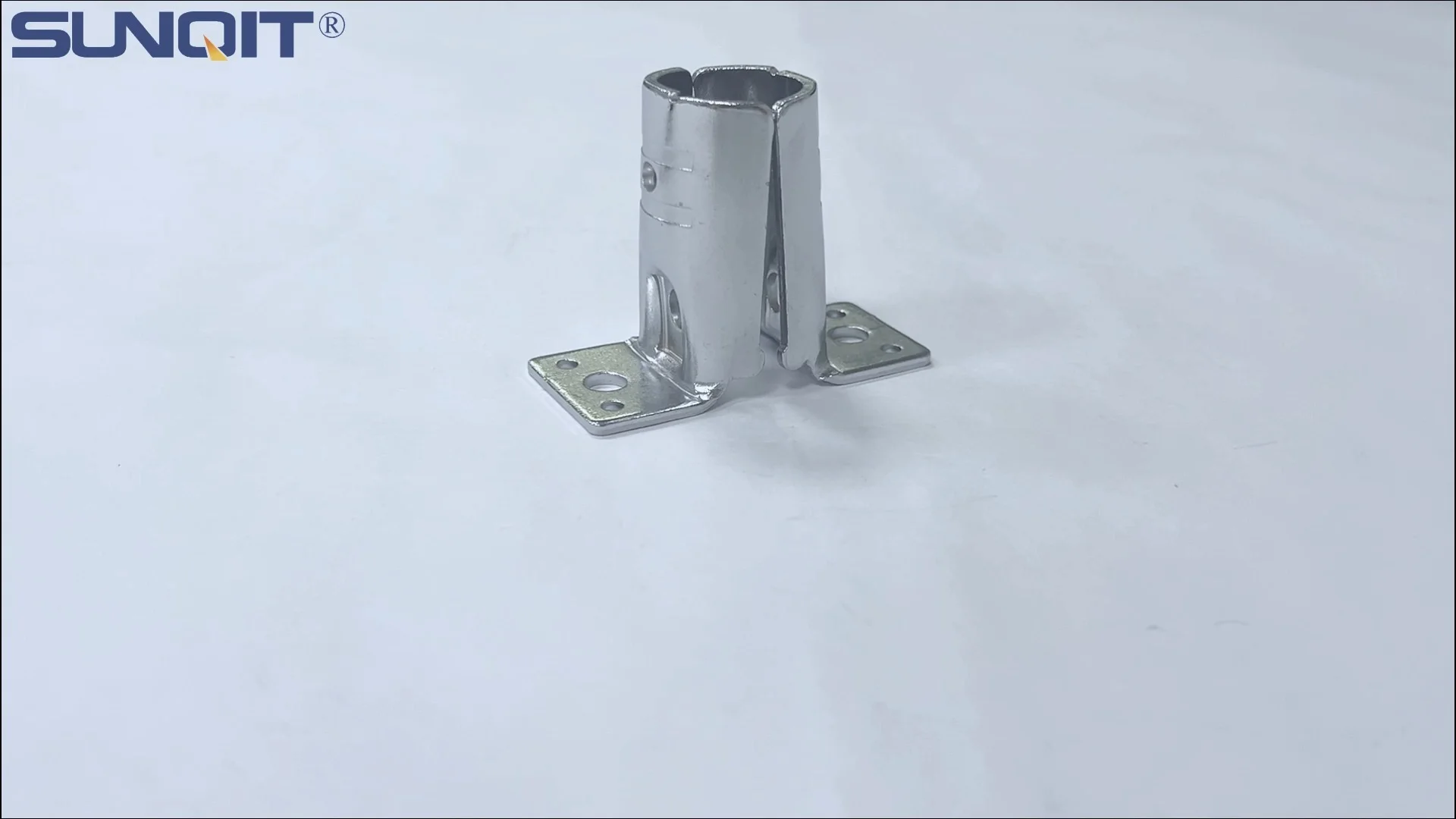
Vertical Lean Pipe Joint
Vertical lean pipe joint is used for 28mm lean pipe fixed on ground and keep it stable.
Introduction: The Backbone of Modern Lean Systems
In today's fast-paced manufacturing and warehousing environments, the shift toward lean principles has never been more critical. Companies across industries are ditching rigid, one-size-fits-all infrastructure in favor of modular, adaptable systems that grow with their needs. At the heart of these systems lies a humble yet indispensable component: the lean pipe joint . And among the various types of joints, vertical lean pipe joints often take center stage—connecting pipes vertically to build workbenches, flow racks, material trolleys, and everything in between.
But here's the thing: despite their ubiquity, vertical lean pipe joints are surrounded by myths and half-truths that can lead teams astray. Maybe you've heard someone say, "All vertical joints are the same—just pick the cheapest one." Or perhaps you've worried, "These joints can't handle heavy loads, so we need to overengineer everything." These misconceptions don't just waste time and money; they can compromise safety, efficiency, and the very flexibility that makes lean systems so valuable.
In this article, we're going to debunk five of the most common myths about vertical lean pipe joint performance. We'll separate fact from fiction, draw on real-world applications, and arm you with the knowledge to make smarter choices for your operations. Whether you're a plant manager upgrading your assembly line, a warehouse supervisor optimizing material flow, or a small business owner building your first workbench, understanding the truth about these joints will help you build systems that work with you—not against you.
Misconception #1: "All Vertical Lean Pipe Joints Are Interchangeable"
Walk into any industrial supply store or browse an online catalog, and you'll see rows of vertical lean pipe joints that look remarkably similar at first glance. A metal connector here, a plastic coating there—what's the difference, right? Many teams fall into the trap of assuming that vertical joints are commodities, interchangeable regardless of brand, material, or design. But this couldn't be further from the truth.
Let's start with materials. The two most common options are steel and aluminum lean pipe joints. Steel joints are durable and cost-effective, making them popular for static applications like fixed workbenches. But they're heavier, which can be a drawback if you need to move the structure later. Aluminum lean pipe joints, on the other hand, are lighter, corrosion-resistant, and often feature smoother finishes—ideal for dynamic environments like food processing or cleanrooms where weight and hygiene matter. Swap a steel joint for an aluminum one in a mobile trolley, and you might end up with a structure that's either too flimsy (if the aluminum joint is underrated) or unnecessarily heavy (if you overcompensate with a beefier steel part).
Design matters too. Not all vertical joints are "fixed." Some are engineered with internal rotation mechanisms, allowing pipes to swivel slightly to accommodate uneven surfaces or dynamic loads. Others are "rigid," designed to lock pipes in place with zero movement—critical for precision workbenches where stability is non-negotiable. Using a rotating joint in a setup that needs rigidity can lead to wobbling, while a rigid joint in a scenario requiring flexibility might crack under stress.
Even within the same material and design category, load ratings vary widely. A small plastic-coated vertical joint might handle 50kg, while a heavy-duty aluminum version could support 200kg or more. Ignore these ratings, and you're asking for trouble—like a shelf collapsing mid-shift or a workbench leg giving way under tooling.
The takeaway? Interchangeability is a myth. Always match the vertical lean pipe joint to your specific use case: material, load, environment, and movement needs. When in doubt, consult the manufacturer's specs—they're not just suggestions.

Misconception #2: "Vertical Lean Pipe Joints Can't Handle Heavy Loads"
"These little joints? They're fine for lightweight stuff, but if we need to support heavy parts, we should weld everything instead." This is a common refrain in workshops where teams have had bad experiences with flimsy connectors in the past. But assuming vertical lean pipe joints are inherently weak is a mistake rooted in outdated information and low-quality products.
Modern vertical lean pipe joints are engineered to punch well above their weight. Let's put this in perspective: a standard aluminum vertical joint with a 30mm diameter can often support static loads of 150–200kg when properly installed. That's enough to hold a full pallet of small parts, a heavy-duty power tool, or even a mini assembly line component. Heavy-duty steel versions? Some can handle up to 500kg or more—rivaling the load capacity of welded steel frames but with the added benefit of modularity.
What makes this possible? It's all in the design. High-quality vertical joints use reinforced stress points, precision-machined threads, and locking mechanisms that distribute weight evenly across the pipe and joint interface. For example, vertical lean pipe joint s with dual-locking bolts (instead of a single set screw) create a tighter grip, reducing the risk of slippage under load. Similarly, joints with a larger contact area between the pipe and connector spread weight more effectively, preventing localized stress that can cause failure.
Real-world applications back this up. In automotive manufacturing plants, vertical lean pipe joints are routinely used in material racks holding engine blocks (which can weigh 200kg or more). In logistics centers, they support flow racks loaded with bulk packages. The key isn't the joint itself—it's choosing the right joint for the load and installing it correctly. Over-tightening bolts can strip threads, while under-tightening leads to movement. Using pipes with insufficient wall thickness (e.g., 0.8mm instead of 1.5mm) will undermine even the strongest joint.
So, if you're hesitant to use vertical lean pipe joints for heavy loads, ask yourself: Are you using a reputable brand? Have you checked the load rating? Is the installation following best practices? Chances are, the joint is more than capable—you just need to set it up for success.

Misconception #3: "Installation Is Too Technical for In-House Teams"
"We need to hire a professional installer—our team can't figure out how to put these vertical joints together without messing up." If this sounds familiar, you're not alone. Many organizations assume that modular lean systems require specialized training or tools, leading them to outsource installation at a premium. But the reality is that vertical lean pipe joint installation is designed to be user-friendly, even for teams with minimal technical experience.
Let's break down the process. Most vertical lean pipe joints connect to pipes using basic hand tools: an Allen wrench, a socket set, maybe a rubber mallet for tapping parts into place. No welding, no drilling, no complex measurements. The joints are often color-coded or labeled for easy identification, and many manufacturers provide step-by-step guides or video tutorials. For example, a simple vertical joint might require inserting the pipe into the connector, aligning the holes, and tightening two bolts—done in under a minute.
Even more complex setups, like workbenches with multiple vertical supports or flow racks with angled joints, follow the same modular logic. Think of it like building with Lego blocks: each piece fits into the next, and adjustments are easy if you make a mistake. Need to raise a shelf by 10cm? Loosen the vertical joints, slide the pipes up, retighten. No need to start over.
The biggest barrier to in-house installation isn't technical skill—it's confidence. Teams that haven't worked with modular systems before may worry about "doing it wrong," but the margin for error is surprisingly low. Most joints feature built-in alignment guides, and over-tightening is easy to avoid with torque specifications (usually provided by the manufacturer). Plus, the flexibility of the system means that even if a joint is slightly misaligned, it can often be adjusted later without compromising the structure.
To make installation even smoother, invest in a basic tool kit (Allen wrenches, torque wrench, level) and set aside 30 minutes for a quick team training session. Have someone who's used lean systems before walk through the process, or watch a tutorial together. You'll be surprised at how quickly your team becomes proficient—and how much money you'll save by avoiding professional installation fees.

Misconception #4: "Once Installed, Vertical Lean Pipe Joints Don't Need Maintenance"
"Set it and forget it" might work for your toaster, but it's a risky mindset when it comes to vertical lean pipe joints. Some teams assume that once a structure is built, the joints will hold forever with no attention. But like any mechanical component, vertical joints require basic maintenance to stay reliable—especially in high-traffic or harsh environments.
Why does maintenance matter? Over time, vibration from machinery, repeated loading/unloading, and environmental factors (like humidity or dust) can loosen bolts, wear down plastic components, or corrode metal parts. A loose vertical joint might start to wobble, leading to uneven weight distribution and, eventually, failure. In extreme cases, this could result in equipment damage, product loss, or even workplace injuries.
The good news is that maintaining vertical lean pipe joints is simple and takes minimal time. Here's a basic routine to follow:
- Monthly Inspections: Walk around your lean structures and check for loose bolts. Give each vertical joint a gentle shake—if it moves, tighten the bolts (but don't overdo it; follow the manufacturer's torque guidelines).
- Quarterly Cleaning: Wipe down joints with a damp cloth to remove dust, grease, or debris. For aluminum joints, this prevents corrosion; for plastic-coated joints, it keeps the surface from becoming slippery.
- Semi-Annual Replacements: Look for signs of wear, like cracked plastic coatings, stripped threads, or bent metal. replace any damaged joints immediately—they're inexpensive compared to the cost of a failure.
- Environmental Adjustments: In humid areas, consider using stainless steel or aluminum joints to resist rust. In cold environments, check that bolts haven't contracted and loosened.
Think of it like maintaining a bicycle: a few minutes of upkeep every month keeps it running smoothly for years. And just as you wouldn't ignore a loose bike chain, don't ignore a loose vertical joint. Your team's safety and your system's longevity depend on it.
Misconception #5: "Vertical Lean Pipe Joints Are Only Useful in Assembly Lines"
When most people picture vertical lean pipe joints, they imagine factory assembly lines—workbenches with tools, material racks beside production lines, maybe a mobile trolley. But limiting these joints to manufacturing is a huge missed opportunity. Vertical lean pipe joints are versatile enough to add value in nearly every industry, from healthcare to retail to education.
Let's explore some unexpected applications:
- Healthcare: Hospitals use vertical lean pipe joints to build mobile medication carts (adjustable height for nurses, easy to clean with aluminum components), patient room organizers, and lab workstations (where corrosion-resistant materials are a must).
- Retail: Stores use vertical joints in custom display racks—adjustable to fit seasonal products, lightweight for easy rearrangement, and durable enough to hold heavy merchandise like electronics or clothing.
- Education: Schools and makerspaces build flexible worktables with vertical joints, allowing students to reconfigure layouts for group projects, art classes, or science experiments.
- Food Service: Commercial kitchens use stainless steel vertical lean pipe joints in shelving units (resistant to moisture and heat) and food prep stations (easy to sanitize, modular to adapt to menu changes).
What makes vertical lean pipe joints so adaptable? Their modularity. Unlike fixed infrastructure, they can be disassembled, reconfigured, or expanded as needs change. A retail display rack for summer clothing can become a holiday gift shelf with a few joint adjustments. A hospital cart used for medications can be repurposed as a mobile PPE station during a crisis.
To unlock this versatility, think beyond "traditional" uses. Ask your team: Where do we need flexibility? What structures are currently fixed but could benefit from being adjustable? Chances are, vertical lean pipe joints can provide the solution—often at a fraction of the cost of custom-built alternatives.
Comparing Vertical Lean Pipe Joints to Other Joint Types
To better understand where vertical lean pipe joints fit, let's compare them to common alternatives:
| Joint Type | Best For | Load Capacity (Typical) | Installation Difficulty | Flexibility |
|---|---|---|---|---|
| Vertical Lean Pipe Joint | Vertical support, workbenches, racks | 50–500kg (static) | Low (hand tools only) | High (easily reconfigured) |
| 90° Crossing Joint | Horizontal/vertical intersections (e.g., shelf corners) | 80–300kg (static) | Low | Medium (fixed angle) |
| Parallel Lean Joint | Parallel pipe setups (e.g., trolley sides) | 30–200kg (static) | Low | High |
| Welded Steel Joint | Permanent, heavy-load structures | 500+ kg | High (requires welding equipment) | None (permanent) |
As the table shows, vertical lean pipe joints strike a balance between load capacity, ease of use, and flexibility that's hard to match with other options. They're not the right choice for every scenario (nothing is), but they're a workhorse in most modular systems.
Conclusion: Getting the Most from Your Vertical Lean Pipe Joints
Vertical lean pipe joints are more than just connectors—they're the building blocks of efficient, adaptable workspaces. By dispelling these common misconceptions, you can unlock their full potential: supporting heavy loads, simplifying installation, reducing maintenance headaches, and expanding into new applications.
Remember: Not all joints are interchangeable—choose based on material, load, and design. They can handle heavy loads when properly selected and installed. Your team can install them in-house with basic tools. They do need maintenance to stay reliable. And they're useful far beyond assembly lines.
At the end of the day, the goal of lean manufacturing (and lean systems) is to eliminate waste—whether that's time, money, or inefficiency. By understanding the truth about vertical lean pipe joints, you're taking a critical step toward building systems that work smarter, not harder. So, the next time you're planning a new workspace or upgrading an existing one, give these small but mighty components the attention they deserve. Your team, your bottom line, and your future self will thank you.