- Company Articles
- Products and Technology
- Procurement Guidelines
- Common Mistakes to Avoid When Selecting Flat Adjustable Swivel Castor Wheels

Common Mistakes to Avoid When Selecting Flat Adjustable Swivel Castor Wheels
Related Product
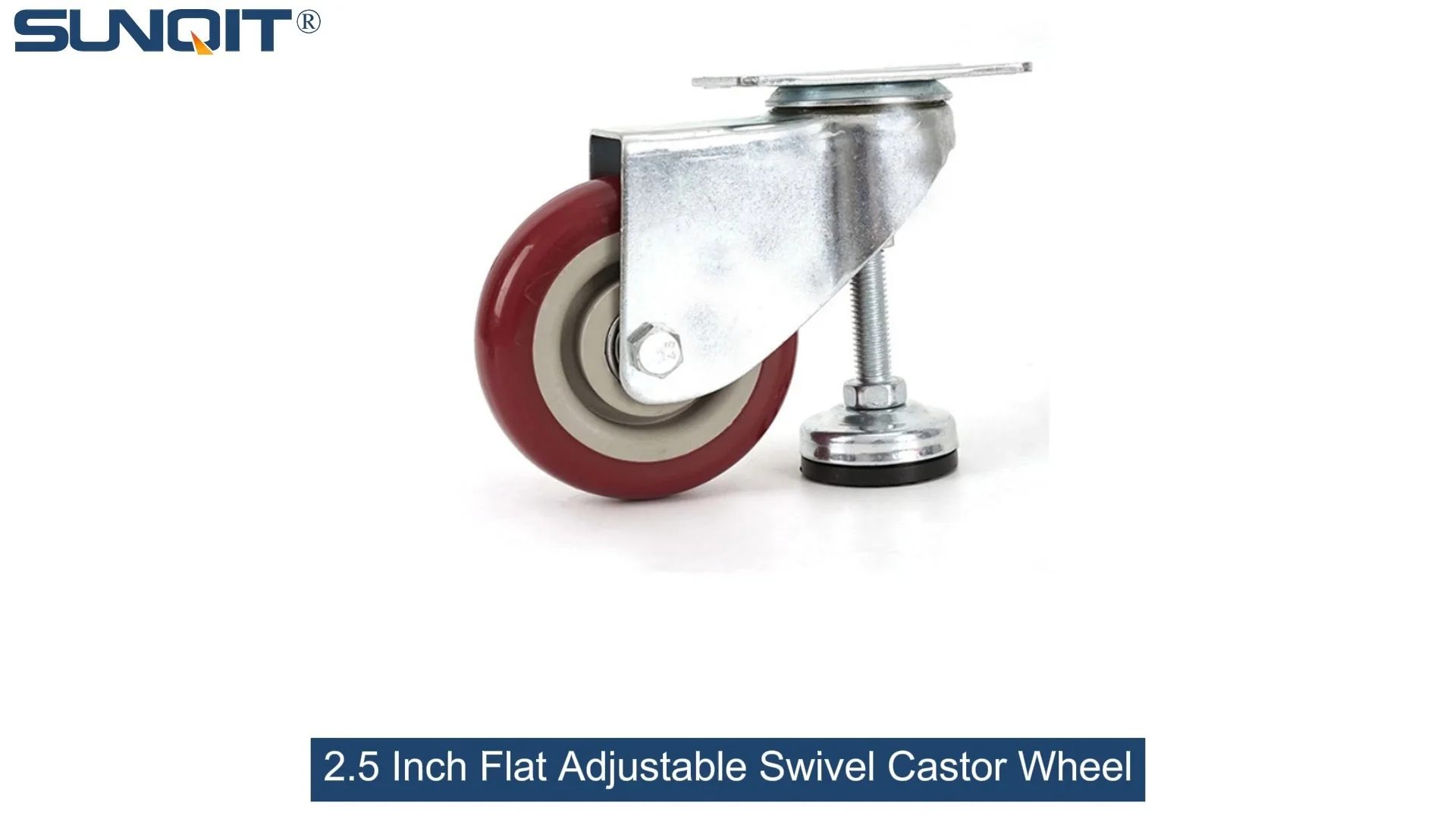
Flat Adjustable Swivel Castor Wheel
Swivel Chair Casters Ball Bearing Wheels Rubber Base with adjustable height function. Resistant to abrasion, impact and corrosion. Heavy payload can hold 80Kgs per pcs,which can make it works at a stable and smooth status.
Castor wheels might seem like a small detail in the grand scheme of your equipment, but anyone who's struggled with a wobbly workbench, a cart that won't roll straight, or a castor that locks up after a month knows better. Flat adjustable swivel castor wheels, in particular, are workhorses in factories, labs, warehouses, and workshops—they're the unsung heroes that keep workbenches mobile, assembly lines flowing, and materials moving smoothly. But choosing the right ones isn't as simple as picking the first option off the shelf. In fact, even seasoned facility managers and procurement teams often fall into common traps that lead to premature failure, safety risks, or frustrating inefficiencies. Let's walk through the most critical mistakes to avoid, so you can select castors that don't just "work" but work well for years to come.
Mistake #1: Underestimating Load Capacity—Why "Close Enough" Gets You Nowhere
One of the biggest myths in castor selection is the idea that "a little extra load won't hurt." Nothing could be further from the truth. Every flat adjustable swivel castor wheel has a rated load capacity, and ignoring that number is like playing roulette with your equipment's safety and longevity. Let's break this down: load capacity isn't just about whether the wheel can hold weight—it's about whether it can hold weight while moving , while swiveling , and over time .
Static load capacity (the weight a castor can support when stationary) and dynamic load capacity (weight while moving) are two different numbers, and both matter. For example, a workbench loaded with tools, parts, and a 50kg operator might weigh 300kg total. If you choose castors rated for 75kg each (four castors, 300kg total), you might think you're safe—but that's only if the load is perfectly evenly distributed, which it never is. In reality, when you push the workbench, most of the weight shifts to the front castors; when you stop suddenly, it slams into the rear ones. Add in uneven floors, and you could easily exceed the dynamic load of those "75kg" castors by 20% or more. The result? Bent axles, cracked mounting plates, or wheels that flatten under pressure—all of which turn your "mobile" workbench into a stationary (and expensive) headache.
Worse, underrated castors don't just fail—they fail dangerously. A workbench that collapses mid-use could injure someone or damage expensive equipment. Even subpar performance, like wheels that start to drag because the bearings are strained, wastes employee time and energy. The fix here is simple: always calculate your total load, then add 30-50% as a safety buffer . If your workbench and its contents weigh 300kg, look for castors rated for at least 100kg each (four castors = 400kg total). It might cost a bit more upfront, but it's nothing compared to replacing damaged castors (or worse, dealing with an accident) six months later.
Mistake #2: Overlooking Floor Conditions—Your Wheels and Floors Need to Get Along
Ever noticed how a cart that glides smoothly on concrete feels like it's stuck in mud on carpet? Or how a steel wheel that works great in a warehouse scratches up your lab's polished epoxy floors? Your floor type is the unsung dictator of which flat adjustable swivel castor wheel you should choose. Ignore it, and you'll end up with either a castor that doesn't roll or floors that need costly repairs.
Let's start with soft floors: carpet, vinyl, or uneven concrete. Hard wheels (like steel or hard plastic) sink into soft surfaces, creating "ruts" that make rolling feel like pushing through sand. They also tear up carpet fibers and leave marks on vinyl. For these surfaces, softer, wider wheels are key. Polyurethane or rubber wheels with a 2-3 inch width spread the load, reducing indentation and making movement effortless. On the flip side, rough floors (like unfinished concrete, gravel, or floors with debris) demand hard, durable wheels. Soft rubber here will pick up grit, which grinds into the wheel material and causes premature wear. Steel or heavy-duty polyurethane (with a Shore hardness of 90A or higher) is better—they're resistant to cuts and can roll over small obstacles without damage.
Then there are specialized environments. Wet or oily floors (like automotive shops) need non-slip wheels—rubber or polyurethane with a tread pattern that channels away liquids. Cleanrooms or labs might require non-marking wheels to avoid contamination, while ESD-sensitive areas (think electronics manufacturing) need conductive wheels to dissipate static. Even temperature matters: if your castors will be in a freezer or near ovens, standard rubber will become brittle or melt. The takeaway? Walk your facility and note every floor type, then match the wheel material to the worst-case scenario . A little observation here saves you from replacing wheels every few months or paying for floor resurfacing.

Mistake #3: Ignoring Adjustability—Why "Flat" Doesn't Always Mean "Level"
The "adjustable" in flat adjustable swivel castor wheel is there for a reason—and it's not just a gimmick. Many buyers assume that if their floor is "mostly flat," adjustability doesn't matter. But in reality, even brand-new warehouses have floor unevenness (up to 3mm per meter is common!), and older facilities can have dips or bumps that throw your equipment off-kilter. A workbench with non-adjustable castors on an uneven floor becomes a (wobbly) mess—tools slide off, measurements are inaccurate, and employees strain to keep materials steady. That's where adjustability saves the day.
Flat adjustable swivel castors let you tweak the height of each wheel individually, so you can level the equipment even if the floor isn't. But here's the mistake: people often confuse "adjustable castors" with "adjustable leveling feet." They're not the same. Leveling feet are fixed (non-rolling), while adjustable castors combine mobility with height adjustment—perfect for equipment that needs to be both movable and stable. For example, a lab workbench might need to roll to a fume hood for certain tasks, then lock in place and level for precise measurements. Without adjustable castors, you'd have to choose between mobility (and wobble) or stability (and immobility).
Another adjustability pitfall is overlooking the adjustment range. A castor that only adjusts +/- 5mm won't help on a floor with a 10mm dip. Look for models with at least 10-15mm of adjustment, and check that the adjustment mechanism is user-friendly—no one wants to struggle with a rusted bolt or a tool that's hard to reach. Also, ensure the adjustment doesn't compromise the castor's load capacity. Some cheap adjustable castors reduce load rating when extended; quality ones maintain their rating across the entire adjustment range.

Mistake #4: Skimping on Swivel Mechanism Quality—Smoothness Isn't Just a Luxury
A swivel castor that doesn't swivel smoothly is worse than no castor at all. Imagine pushing a loaded workbench and having to yank it to change direction because the swivel mechanism is stiff—that's not just annoying; it's a safety hazard. The swivel mechanism is the heart of any flat adjustable swivel castor wheel, and cutting corners here leads to frustration, employee fatigue, and premature failure.
The key difference between a smooth swivel and a stiff one? Bearings. Cheap castors use plastic or plain steel bearings, which generate friction and wear out quickly. Quality castors use precision ball bearings or roller bearings, which reduce friction, distribute weight evenly, and last exponentially longer. You can feel the difference immediately: a ball-bearing swivel will spin with just a light push, even under load, while a cheap one will require significant force and might "catch" or stick.
Another factor is the swivel radius—the distance from the center of the wheel to the center of the swivel joint. A smaller radius makes the castor more maneuverable (great for tight spaces), but it puts more stress on the swivel mechanism. If you're using the castor on a cart that needs to pivot in narrow aisles, don't sacrifice bearing quality for a smaller radius—look for a balance. Also, check for seals: swivel mechanisms exposed to dust, dirt, or liquids will gum up quickly. Sealed bearings or rubber gaskets keep contaminants out, ensuring smooth operation even in dirty environments.
Noise is another clue to swivel quality. A castor that squeaks or grinds when swiveling is telling you the bearings are already wearing down. Over time, that wear leads to play in the swivel (wobble), which then stresses the wheel axles and mounting plate. It's a domino effect that starts with a cheap swivel mechanism and ends with a castor that needs replacement far sooner than it should.

Mistake #5: Forgetting About Caster Accessories—The Little Parts That Keep Things Rolling
When selecting flat adjustable swivel castor wheels, it's easy to focus solely on the wheel and swivel mechanism—and overlook the caster accessories that make them functional and maintainable. Things like locks, axles, mounting plates, and replacement parts might seem secondary, but they're the difference between a castor that's a one-and-done purchase and one that can be repaired, upgraded, or adapted over time.
Take locks, for example. A castor without a reliable lock is a liability. If your workbench needs to stay put during use, a weak lock can fail, causing the bench to roll unexpectedly. Look for locks that engage firmly and are easy to operate—foot-operated locks are better than hand-operated ones, as they let users keep both hands on the load. Also, consider lock type: "total lock" (locks both wheel and swivel) is best for stability, while "wheel-only" locks are sufficient for straight-line braking. Cheap locks use plastic components that crack; quality ones use steel or reinforced nylon, and many have replaceable lock pins (a simple caster accessory that saves you from replacing the entire castor if the lock fails).
Mounting plates are another accessory often overlooked. A castor is only as strong as its connection to the equipment. If the mounting plate is too small, or the bolt holes don't line up with your workbench's frame, you'll end up drilling new holes (weakening the frame) or using adapters that compromise stability. Always check the mounting plate dimensions and bolt pattern before buying—if they don't match your equipment, ask the supplier about custom plates or adapters (many offer them as caster accessories). Similarly, axles should be made of hardened steel, not mild steel, to resist bending under load. Look for axles with retaining clips or nuts that are easy to remove—this makes replacing wheels (another common caster accessory) a 5-minute job instead of a 2-hour ordeal.
Finally, think about long-term maintenance. Can you easily lubricate the swivel bearings? Are replacement wheels available, or do you have to buy a whole new castor when the wheel wears out? Quality suppliers offer a range of caster accessories—from bearings to wheels to locks—so you can repair instead of replace. This not only saves money but reduces downtime, as you won't have to wait for a new castor to ship if a part fails.
Mistake #6: Choosing Based on Price Alone—The "Cheap" Castor That Costs You More
It's tempting to opt for the lowest-priced flat adjustable swivel castor wheel, especially when you're buying in bulk. But castors are one of those areas where "you get what you pay for" rings true. A $15 castor might seem like a steal compared to a $30 one, but let's do the math: if the cheap castor lasts 6 months and the quality one lasts 3 years, you'll buy six cheap castors for every one quality castor—costing you $90 vs. $30, not to mention the labor to replace them, the downtime when equipment is out of service, and the risk of accidents in between.
Cheap castors cut corners in invisible places: thinner steel in the mounting plate, low-grade plastic in the swivel housing, inferior wheel materials that wear quickly, and bearings that aren't heat-treated. They might work for light, occasional use (like a home workshop cart), but in industrial settings—where castors are used daily, under heavy loads, and in harsh conditions—they're a false economy. Quality castors, on the other hand, use high-grade steel, precision bearings, and durable wheel materials (like high-performance polyurethane) that stand up to abuse. They also come with warranties—many reputable suppliers offer 1-3 year warranties, which is a sign they stand behind their product.
That said, "expensive" doesn't always mean "better." Some brands charge a premium for fancy packaging or brand name, not better quality. The key is to compare specs: load capacity, wheel material, bearing type, adjustment range, and included caster accessories. A mid-priced castor with a steel mounting plate, ball bearings, and replaceable wheels is often a better value than the cheapest or most expensive option.
Final Thoughts: Your Castors Deserve as Much Attention as Your Equipment
Flat adjustable swivel castor wheels might not be the most glamorous part of your facility, but they're critical to keeping operations running smoothly. By avoiding these mistakes—underestimating load capacity, ignoring floor conditions, skimping on adjustability or swivel quality, forgetting caster accessories, and choosing based on price alone—you'll select castors that enhance productivity, improve safety, and save money in the long run. Remember: the best castor is the one you never have to think about—because it just works, day in and day out.
So next time you're in the market for castors, take a step back, assess your needs, and ask the tough questions. Your workbench (and your team) will thank you.